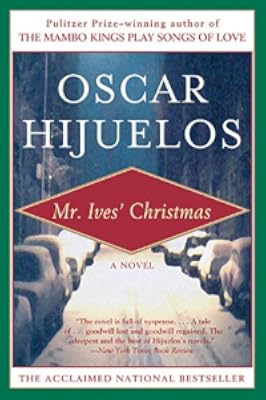
Mr. Ives' Christmas
by Oscar Hijuelos
On This Page
Description
In New York, a father's worst nightmare arrives just before Christmas when Edward Ives learns his son Robert, 17, was murdered in the street for $10 by another teenager. The novel describes his coming to terms with his loss. By the author of The Mambo Kings Play Songs of Love.Tags
Recommendations

















Member Reviews
From the book jacket: Mr Ives has a successful career in advertising, a wife and two children, and believes he has achieved the typical American dream. But that is shattered when his son Robert is killed at Christmas. Overwhelmed by grief and threatened by a loss of faith in humankind, Mr Ives questions the very foundations of his life.
My reactions:
I came across this book only because my Hispanic book club was looking for a Christmas book. I’d read Hijuelos’ Pulitzer-winner The Mambo Kings Play Songs of Love before, but had not heard of this work. I loved it, and was pleasantly surprised to discover that it was a Pulitzer finalist in 1996. It is a lovely, contemplative novel – a character study and philosophical exploration of show more one man’s search for spiritual peace.
Ives (yes, he has a first name – Edward – but he’s always called Ives in the book) starts his life as a foundling, and is adopted by a man who was also a foundling. He never really knows his background – is he Italian? Cuban? Greek? – but he finds a great affinity for the people in the Brooklyn neighborhood where he is raised, and comes to know the Spanish-speaking workers in the printing plant where his adoptive father is a foreman. Hijuelos paints a picture of a gentle man, with a quiet strength born of his circumstances, and of the influences of both the Church and his adoptive father. It is through them that he learns to love and to endure.
There is much sadness in this book. Certainly the murder of his only son is a horrific event (and one which is referenced very early on, so is no spoiler here). But there are also the kinds of daily disappointments and sorrows any one of us might encounter – a friend’s accident, a burglary, a loved one’s illness, a financial setback. These are balanced by the joys of life – blossoming love, great friendships, camaraderie, favorite books, the birth of a child, or success at work. And that balance, that sense of perspective is what this beautifully written novel is all about.
A couple of quotes:
Of course, while contemplating the idea of the baby Jesus, perhaps the most wanted child in the history of the world, Ives would feel a little sad, remembering that years ago someone had left him, an unwanted child, in a foundling home.
A family photo evokes this:
He loved that photograph because he and Robert were holding hands, and although they did not look particularly alike, they were standing in nearly identical positions, their feet planted wide apart, and each regarding the other with a slightly tilting head, eyes a little sad and enchanted at the same time, smiles nearly forming on the edges of their mouths.
A different view of a city snowfall:
Then they rested, side by side, on the frigid pavement like dummies, wistfully looking upward at nature’s swirling activity. A kind of magnificence, heaven, as it were, coming down on them.”
The quiet love between a husband and wife:
She remembered a time when, without saying a word, she would have a sad thought and he, sitting by an easel or by his drawing board, would somehow know. Putting aside his brushes or pen, he would throw on a jacket and step out to hunt down some chocolates, which she loved, and a bouquet of flowers.
I will be thinking about this gem for a long time, and I’m certain I’ll re-read it. show less
My reactions:
I came across this book only because my Hispanic book club was looking for a Christmas book. I’d read Hijuelos’ Pulitzer-winner The Mambo Kings Play Songs of Love before, but had not heard of this work. I loved it, and was pleasantly surprised to discover that it was a Pulitzer finalist in 1996. It is a lovely, contemplative novel – a character study and philosophical exploration of show more one man’s search for spiritual peace.
Ives (yes, he has a first name – Edward – but he’s always called Ives in the book) starts his life as a foundling, and is adopted by a man who was also a foundling. He never really knows his background – is he Italian? Cuban? Greek? – but he finds a great affinity for the people in the Brooklyn neighborhood where he is raised, and comes to know the Spanish-speaking workers in the printing plant where his adoptive father is a foreman. Hijuelos paints a picture of a gentle man, with a quiet strength born of his circumstances, and of the influences of both the Church and his adoptive father. It is through them that he learns to love and to endure.
There is much sadness in this book. Certainly the murder of his only son is a horrific event (and one which is referenced very early on, so is no spoiler here). But there are also the kinds of daily disappointments and sorrows any one of us might encounter – a friend’s accident, a burglary, a loved one’s illness, a financial setback. These are balanced by the joys of life – blossoming love, great friendships, camaraderie, favorite books, the birth of a child, or success at work. And that balance, that sense of perspective is what this beautifully written novel is all about.
A couple of quotes:
Of course, while contemplating the idea of the baby Jesus, perhaps the most wanted child in the history of the world, Ives would feel a little sad, remembering that years ago someone had left him, an unwanted child, in a foundling home.
A family photo evokes this:
He loved that photograph because he and Robert were holding hands, and although they did not look particularly alike, they were standing in nearly identical positions, their feet planted wide apart, and each regarding the other with a slightly tilting head, eyes a little sad and enchanted at the same time, smiles nearly forming on the edges of their mouths.
A different view of a city snowfall:
Then they rested, side by side, on the frigid pavement like dummies, wistfully looking upward at nature’s swirling activity. A kind of magnificence, heaven, as it were, coming down on them.”
The quiet love between a husband and wife:
She remembered a time when, without saying a word, she would have a sad thought and he, sitting by an easel or by his drawing board, would somehow know. Putting aside his brushes or pen, he would throw on a jacket and step out to hunt down some chocolates, which she loved, and a bouquet of flowers.
I will be thinking about this gem for a long time, and I’m certain I’ll re-read it. show less
Recently, Paul Elias wrote an article in the NYT Book Review entitled “Has Fiction Lost Its Faith”. He states that “if any patch of our culture can be said to be post-Christian, it is literature”. Interestingly enough Oscar Hijuelos wrote in response that in fact, his book Mr. Ives’ Christmas refuted Elias’ claim. Indeed, Mr. Ives’ Christmas is at once a very contemporary and very ancient story. By the way, there are no spoilers in this review, since the pivotal incident in the book is described at the beginning of the book.
Major events in Edward Ives’ life all take place around Christmastime. An orphan, he is adopted during the holidays by a very kind man of deep faith who instills in Ives a love of both tradition and show more religion. As an adult, Ives meets the love of his life and together they build a family and a happy life surrounded by good friends. He meets increasing success and fulfillment in his career and all the while, maintains his devotion to his church and beliefs. He relishes accumulating family memories as well the conventions and ceremonial trappings of religion (music, Christmas cards, etc) and almost as a reflection of these mementos, takes pride in his collectibles, notably a first edition signed copies of novels by Charles Dickens.
He shares his love for the church with his family and is very pleased and proud when his son decides to become a priest. After holiday shopping with his wife, one Christmas, he returns home to find that his son has been the fatal victim of a random shooting. He questions his fundamental beliefs and his faith and his life are shattered. This is the story of how he deals with this tragedy, and the nature of his faith.
The reconciliation between divine power and innocent suffering and the question of why bad things happen to good people has been the subject of discussion since (and probably before) the writing of the Book of Job and is an issue that is addressed in every culture and in every faith. Like Job, Ives is surrounded by friends who attempt to address his grief either through retribution or explanations for the tragedy. Like Job too, Ives also experiences a theophany when after a frightening experience, he leaves his Madison Avenue office and has a vision of a gigantic sun and a multi-colored wind. Ives learns to live with faith that isn’t grounded in reason. His clarity doesn’t come from certainty or tradition, but ultimately from passion, compassion, and the courage to embrace spirituality.
Hijuelos may have written about profound concepts, but his writing style is straightforward, quiet, at times humorous, occasionally magical and always very engaging. He is, at heart, a storyteller, but his story leaves one with much more to think about. It is a marvelous book show less
Major events in Edward Ives’ life all take place around Christmastime. An orphan, he is adopted during the holidays by a very kind man of deep faith who instills in Ives a love of both tradition and show more religion. As an adult, Ives meets the love of his life and together they build a family and a happy life surrounded by good friends. He meets increasing success and fulfillment in his career and all the while, maintains his devotion to his church and beliefs. He relishes accumulating family memories as well the conventions and ceremonial trappings of religion (music, Christmas cards, etc) and almost as a reflection of these mementos, takes pride in his collectibles, notably a first edition signed copies of novels by Charles Dickens.
He shares his love for the church with his family and is very pleased and proud when his son decides to become a priest. After holiday shopping with his wife, one Christmas, he returns home to find that his son has been the fatal victim of a random shooting. He questions his fundamental beliefs and his faith and his life are shattered. This is the story of how he deals with this tragedy, and the nature of his faith.
The reconciliation between divine power and innocent suffering and the question of why bad things happen to good people has been the subject of discussion since (and probably before) the writing of the Book of Job and is an issue that is addressed in every culture and in every faith. Like Job, Ives is surrounded by friends who attempt to address his grief either through retribution or explanations for the tragedy. Like Job too, Ives also experiences a theophany when after a frightening experience, he leaves his Madison Avenue office and has a vision of a gigantic sun and a multi-colored wind. Ives learns to live with faith that isn’t grounded in reason. His clarity doesn’t come from certainty or tradition, but ultimately from passion, compassion, and the courage to embrace spirituality.
Hijuelos may have written about profound concepts, but his writing style is straightforward, quiet, at times humorous, occasionally magical and always very engaging. He is, at heart, a storyteller, but his story leaves one with much more to think about. It is a marvelous book show less
This melancholy book is not the one to read if you want a warm, fuzzy kind of Christmas read. In fact, Christmas serves as the yearly reminder of a sad time in the Ives family. A few days before Christmas in 1967, a life-changing tragedy occurs and Edward Ives, his wife Annie, and daughter Caroline have to come to terms of a life without 17-year-old Robert.
Hijuelos examines the depth of a man's grief and gives us a model of what true faith might look like. It is a faith with heart (and legs!) that leads to peace and redemption. If you have an open heart and are receptive to things of the spirit, then this book will probably have great meaning to you. If not, then you will better spend your time reading something else because this is a show more meditation on how to live a Christian life while living in a pit of despair. It is a reminder that not everyone has a merry heart during the holidays. show less
Hijuelos examines the depth of a man's grief and gives us a model of what true faith might look like. It is a faith with heart (and legs!) that leads to peace and redemption. If you have an open heart and are receptive to things of the spirit, then this book will probably have great meaning to you. If not, then you will better spend your time reading something else because this is a show more meditation on how to live a Christian life while living in a pit of despair. It is a reminder that not everyone has a merry heart during the holidays. show less
I loved this book. A huge and sweeping in scope, taking in life, death, love and loss, spiritual ecstacy and loss of faith - in fact everything - and all done in the most understated way. There isn't a spare word in it, but it isn't in the least bit sparse. Ending is both incredibly sad, but magnificent and uplifiting at the same time. An amazing piece of work that I recommend wholeheartedly.
Another wonderful Oscar Hijuelos novel-- so different than "Mambo Kings" yet so powerful. Hijuelos has done what thousands of sermonizers and preachers could never do. He has exemplified faith through the story of a real man in a real world with real problems. Edward Ives is not perfect and his struggle to find God is not dramatic - it takes his entire lifetime, but a simple faith sustains him. I'm not Catholic, but this story demonstrates how the church and those that are a part of it can be God's instrument in an imperfect world -- just the opposite of the tremendous beating the church has taken recently. "Mr. Ives' Christmas" is a beautiful story, the people are real, and the theme is profound. The author has made a powerful show more statement in a calm & quiet manner. show less
12 Books of Christmas
#6 Faith
Mr. Ives’ Christmas is not a Christmas book at all, not in any conventional sense of the word. But because of its title it is always catalogued and shelved along with books of Christmas. It is a book about grief – one man’s grief for his son, a young man entering the priesthood, who was shot and killed freakishly just before Christmas 1967. Though the reader is made aware of this incident early in the book, the narrative swings back and forth in time, and the event itself is not presented until the middle of the book (p111 out of 247pp), only after one is well acquainted with the characters and especially well identified with the father. So the grief is intense and persistent.
And Mr. Ives’ grief is show more not the only one. The story is written in an intentionally fragmented style, the prose reflecting the wandering thoughts of Mr. Ives, now an elderly man: his childhood as a foundling, his courtship and marriage, his work in an advertising agency, his friendship with the Cuban immigrant, Luis Ramirez, the dysfunctional Ramirez family, Mrs. Ives’ troublesome memories and recurrent depression, and their daughter’s on-again, off-again relationship with Pablo (Paul), the Ramirez’ abused son. Then there are detailed digressions dropped into Mr. Ives’ wandering thoughts: the co-worker who experienced the Holocaust, the young woman killed by a fragment falling from a skyscraper, and young woman falling (or jumping?) to her death from a high-rise apartment. Grief all around one: in failing marriages, abusive parents, sexual frustrations. And the other grief – among the family of Daniel Gomez, the youngster who shot Mr. Ives’ son. His mother is distracted and disbelieving; but the faithful abuela is torn with grief for her grandson, for his victim, and for the survivors.
But ultimately Mr. Ives’ Christmas is not a book about grief after all. It’s about life in New York City in the late twentieth century, not the tourist’s NYC or the legendary NYC or the artist’s or politician’s NYC, but the everyday city, its streets and store windows, its subway and sidewalks, its tenements and temptations. One detects a wan nostalgia for a passing way of life, itself a dim form of grief.
Hijuelos writes with such engrossing detail that, even now, after having read the book more than once, I can pick it up and turn to a page randomly, and I am caught up in reading almost immediately.
And his book is that rarity within contemporary literature, a novel of religion. For Mr. Ives is a man of faith – or tries desperately to be, even with his haunting sense of grief, his withdrawal into himself, his lingering doubts.
“He went to church and prayed for guidance, begging God to bring forgiveness into his heart. He would kneel before the crèche, the crucifix, and wonder how and why all these things had happened. . . . [H]e spoke kindly with the priests and repeated to himself a thousand times that God was good and that the manifestations of evil that came to men are ultimately explicable in some divine way” (p141)
Immediately before the section entitled “Christmas 1967” is a section entitled “Mr. Ives’ Mystical Experience.” But it’s distinctively a New Yorker’s experience, triggered by being trapped in an elevator stuck between floors. He would like liked to share this experience with his son Robert, but hesitates to do so: it seems so vague and “un-understandable.” Robert, the young proto-priest, has a lucid, unwavering faith. Ives remembers all this, and reflects upon it, in his years of grief.
Unless I misread the last two paragraphs of the novel – in which the story of the nativity is first quoted explicitly, it is finally not a novel of grief but of transfiguration, of a life beyond. It is not a story of the crèche but of the crucifix, maybe of the empty tomb. The subtitle of this last section is “In Church Again.” But you will have to read it for yourself to determine what it means to you – and reread it. Is it simply a memory of a little boy, a foundling, envisioning a new life for himself? Time, after all, is as elusive as eternity. show less
#6 Faith
Mr. Ives’ Christmas is not a Christmas book at all, not in any conventional sense of the word. But because of its title it is always catalogued and shelved along with books of Christmas. It is a book about grief – one man’s grief for his son, a young man entering the priesthood, who was shot and killed freakishly just before Christmas 1967. Though the reader is made aware of this incident early in the book, the narrative swings back and forth in time, and the event itself is not presented until the middle of the book (p111 out of 247pp), only after one is well acquainted with the characters and especially well identified with the father. So the grief is intense and persistent.
And Mr. Ives’ grief is show more not the only one. The story is written in an intentionally fragmented style, the prose reflecting the wandering thoughts of Mr. Ives, now an elderly man: his childhood as a foundling, his courtship and marriage, his work in an advertising agency, his friendship with the Cuban immigrant, Luis Ramirez, the dysfunctional Ramirez family, Mrs. Ives’ troublesome memories and recurrent depression, and their daughter’s on-again, off-again relationship with Pablo (Paul), the Ramirez’ abused son. Then there are detailed digressions dropped into Mr. Ives’ wandering thoughts: the co-worker who experienced the Holocaust, the young woman killed by a fragment falling from a skyscraper, and young woman falling (or jumping?) to her death from a high-rise apartment. Grief all around one: in failing marriages, abusive parents, sexual frustrations. And the other grief – among the family of Daniel Gomez, the youngster who shot Mr. Ives’ son. His mother is distracted and disbelieving; but the faithful abuela is torn with grief for her grandson, for his victim, and for the survivors.
But ultimately Mr. Ives’ Christmas is not a book about grief after all. It’s about life in New York City in the late twentieth century, not the tourist’s NYC or the legendary NYC or the artist’s or politician’s NYC, but the everyday city, its streets and store windows, its subway and sidewalks, its tenements and temptations. One detects a wan nostalgia for a passing way of life, itself a dim form of grief.
Hijuelos writes with such engrossing detail that, even now, after having read the book more than once, I can pick it up and turn to a page randomly, and I am caught up in reading almost immediately.
And his book is that rarity within contemporary literature, a novel of religion. For Mr. Ives is a man of faith – or tries desperately to be, even with his haunting sense of grief, his withdrawal into himself, his lingering doubts.
“He went to church and prayed for guidance, begging God to bring forgiveness into his heart. He would kneel before the crèche, the crucifix, and wonder how and why all these things had happened. . . . [H]e spoke kindly with the priests and repeated to himself a thousand times that God was good and that the manifestations of evil that came to men are ultimately explicable in some divine way” (p141)
Immediately before the section entitled “Christmas 1967” is a section entitled “Mr. Ives’ Mystical Experience.” But it’s distinctively a New Yorker’s experience, triggered by being trapped in an elevator stuck between floors. He would like liked to share this experience with his son Robert, but hesitates to do so: it seems so vague and “un-understandable.” Robert, the young proto-priest, has a lucid, unwavering faith. Ives remembers all this, and reflects upon it, in his years of grief.
Unless I misread the last two paragraphs of the novel – in which the story of the nativity is first quoted explicitly, it is finally not a novel of grief but of transfiguration, of a life beyond. It is not a story of the crèche but of the crucifix, maybe of the empty tomb. The subtitle of this last section is “In Church Again.” But you will have to read it for yourself to determine what it means to you – and reread it. Is it simply a memory of a little boy, a foundling, envisioning a new life for himself? Time, after all, is as elusive as eternity. show less
“Glorious life ending. There must have been a moment when his son had gasped for air, the last time, as Jesus must. But as Jesus had risen, he wanted his son to rise up, organs and spirit and mind intact, and everything to be as it had been not so long ago.”
When Mr. Ives teenage son is shot down in the street - everything shots down in Ive’s life too. Grief is overwhelming and he becomes a spectator of things happening around him - uninvolved, disinterested. He and his wife drift apart. He struggle to hold onto his faith in God, wrestling with doubt and despair. But slowly we see him come back to life and faith again.
In flashbacks we follow Ives. Almost from birth to grave (or at least as an old man). As an adopthed child, his show more friendships and first love and happy marriage to a wonderful woman full of life.
Hijuelos’ prose is beautiful, nostalgic, dreamy - full of references to classic literature, music and art. show less
When Mr. Ives teenage son is shot down in the street - everything shots down in Ive’s life too. Grief is overwhelming and he becomes a spectator of things happening around him - uninvolved, disinterested. He and his wife drift apart. He struggle to hold onto his faith in God, wrestling with doubt and despair. But slowly we see him come back to life and faith again.
In flashbacks we follow Ives. Almost from birth to grave (or at least as an old man). As an adopthed child, his show more friendships and first love and happy marriage to a wonderful woman full of life.
Hijuelos’ prose is beautiful, nostalgic, dreamy - full of references to classic literature, music and art. show less
Members
- Recently Added By
Lists

Pulitzer Prize for Fiction - Finalists
88 works; 9 members
Author Information

16+ Works 4,863 Members
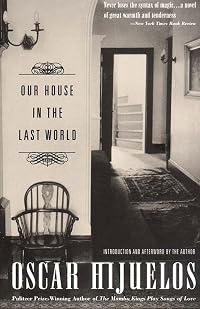
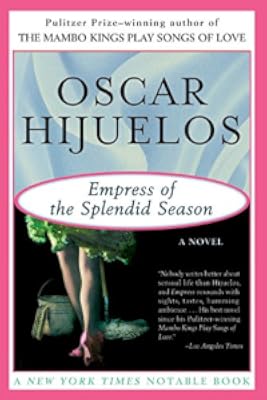
Óscar Jerome Hijuelos was born in Manhattan, New York on August 24, 1951 to Cuban immigrant parents. He received a bachelor's degree and a master of fine arts degree from City College. His first novel, Our House in the Last World, was published in 1983 and won the Rome Prize of the American Academy of Arts and Letters. His other works include The show more Fourteen Sisters of Emilio Montez O'Brien, Mr. Ives' Christmas, Empress of the Splendid Season, A Simple Habana Melody (From When the World was Good), Beautiful Maria of My Soul, Another Spaniard in the Works, and Twain and Stanley Enter Paradise. His novel, The Mambo Kings Play Songs of Love, won the 1990 Pulitzer Prize for fiction and was made into a 1992 movie starring Armand Assante and Antonio Banderas. He also wrote a young adult novel entitled Dark Dude and a memoir entitled Thoughts Without Cigarettes. In 2000, he received the Hispanic Heritage Award for Literature. He died after collapsing with a heart attack while playing tennis on October 12, 2013 at age 62. (Bowker Author Biography) show less
Awards and Honors
Awards
Notable Lists
Common Knowledge
- Canonical title
- Mr. Ives' Christmas
- Original publication date
- 1995
Classifications
Statistics
- Members
- 572
- Popularity
- 51,864
- Reviews
- 12
- Rating
- (3.89)
- Languages
- Dutch, English
- Media
- Paper, Audiobook, Ebook
- ISBNs
- 10
- ASINs
- 7