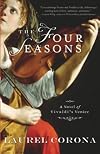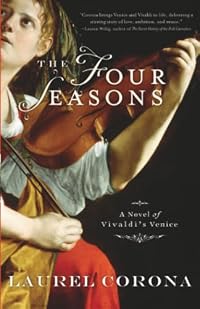
The Four Seasons: A Novel of Vivaldi's Venice
by Laurel Corona
On This Page
Description
Two sisters in 18th century Venice, abandoned as babies, grow up to different futures. One marries into a great aristocratic Venetian family, and the other becomes a violin virtuoso and Antonio Vivaldi's muse.Tags
Recommendations




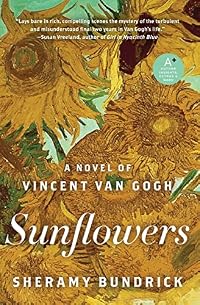
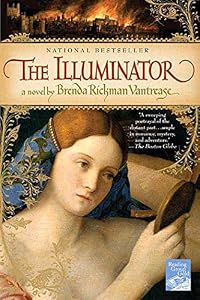
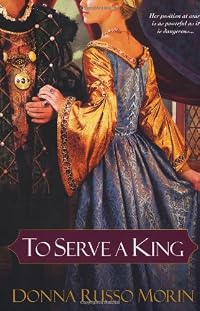
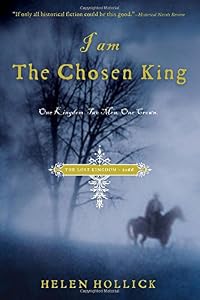
Member Recommendations
Member Reviews
I don't often read historical fiction so was surprised at how much I enjoyed this story of two orphan sisters in 18th century Venice. The story begins in the Pieta, an unusual orphanage oriented towards musical training at the highest level where Chiaretta and Maddalena, abandoned at birth, must find their way in a world of highly restricted choices for women. Enjoyed the re-imagining of the role of Vivaldi in the Pieta, and insights into marriage - Venetian style.
I not only enjoyed this novel, but like all good historicals, I learned a lot about a time and place that I knew nothing about. I read this book because my father, gone now for 5 years, loved Vivaldi's "The Four Seasons" and the music was part of my childhood background. But I found it fascinating to discover that in 17th-century Venice, bastard daughters of the nobility [from their courtesans] were raised in convent-like music academies, but they were not sworn to poverty or chastity. Corona's writing totally brings this obscure culture to life, made even more interesting by its female pov.
3.75 stars
Sisters Maddalena and Chiaretta are left with the Pietra in Venice during the late 17th century. This is an orphanage that brings up girls, in many cases to play music or to sing. Chiaretta grows to be a beautiful singer, but they don’t seem to see any talent in Maddalena, until a priest with red hair, Antonio Vivaldi, plays with her in a lesson and sees something no one else does. He takes her under his wing (at least when he is welcomed at the Pietra for lessons or anything else), but after a while, they both feel something they shouldn’t. As the sisters grow, things change further when Chiaretta is given a choice to marry to enter a convent.
I quite liked this. I love Vivialdi’s music and this was set mostly leading show more up to him composing “The Four Seasons”. I did have a bit of trouble with some of the vocabulary, not sure if some of it was Italian or musical vocabulary that I didn’t know (I don’t sing, nor did I ever learn to play an instrument). There was a detailed author’s note at the end that explained that many of the characters were real people (though they don’t know much about them, nor about any of the girls who were raised at the Pietra), even if the timelines were played with a little bit. There was much I didn’t know about Vivaldi himself that I learned (even that he was a priest). There was also a pronunciation guide and a glossary at the end (I would have loved to see that at the beginning of the book, though). show less
Sisters Maddalena and Chiaretta are left with the Pietra in Venice during the late 17th century. This is an orphanage that brings up girls, in many cases to play music or to sing. Chiaretta grows to be a beautiful singer, but they don’t seem to see any talent in Maddalena, until a priest with red hair, Antonio Vivaldi, plays with her in a lesson and sees something no one else does. He takes her under his wing (at least when he is welcomed at the Pietra for lessons or anything else), but after a while, they both feel something they shouldn’t. As the sisters grow, things change further when Chiaretta is given a choice to marry to enter a convent.
I quite liked this. I love Vivialdi’s music and this was set mostly leading show more up to him composing “The Four Seasons”. I did have a bit of trouble with some of the vocabulary, not sure if some of it was Italian or musical vocabulary that I didn’t know (I don’t sing, nor did I ever learn to play an instrument). There was a detailed author’s note at the end that explained that many of the characters were real people (though they don’t know much about them, nor about any of the girls who were raised at the Pietra), even if the timelines were played with a little bit. There was much I didn’t know about Vivaldi himself that I learned (even that he was a priest). There was also a pronunciation guide and a glossary at the end (I would have loved to see that at the beginning of the book, though). show less
The Four Seasons is a beautiful story about Venice. There may be other main characters (Vivaldi being one of them), but make no mistake - Venice is the draw in the story. Corona lays bare Venice's beauty, as well as her ugliness. Beautiful music vies for attention next to abandoned children and marriages arranged for money and convenience. The two faces of Venice as exemplified by Carnivale...and by Maddalena and her sister Chiaretta.
I was drawn right into this story of the two sisters who were abandoned very young (their mother was a courtesan who was unable to keep them). They then became wards of the state, and were raised by nuns in the Pieta. One goes on to become a singer of some reknown, while the other becomes a gifted violin show more player. The details in the story are wonderful - in one instance, Corona describes Maddalena learning to play the violin:
" By now, when she drew the bows across the strings, the tone was so sweet and rich that she sometimes forgot to breathe. Long after her lessons, she remembered how her fingers had flown and fluttered on the strings, part of something mysterious and sacred."
I enjoyed this novel - it is sensuous without being sexual, and the characters truly seem to come alive in within the imagination. The story of the sisters is so completely intertwined with that of Venice herself that to imagine one without the other would be too difficult. I now find myself looking for other stories that depict Vivaldi and/or the Venice that he knew. I hope that this will not be the last novel that Ms. Corona gives us!
Brava! show less
I was drawn right into this story of the two sisters who were abandoned very young (their mother was a courtesan who was unable to keep them). They then became wards of the state, and were raised by nuns in the Pieta. One goes on to become a singer of some reknown, while the other becomes a gifted violin show more player. The details in the story are wonderful - in one instance, Corona describes Maddalena learning to play the violin:
" By now, when she drew the bows across the strings, the tone was so sweet and rich that she sometimes forgot to breathe. Long after her lessons, she remembered how her fingers had flown and fluttered on the strings, part of something mysterious and sacred."
I enjoyed this novel - it is sensuous without being sexual, and the characters truly seem to come alive in within the imagination. The story of the sisters is so completely intertwined with that of Venice herself that to imagine one without the other would be too difficult. I now find myself looking for other stories that depict Vivaldi and/or the Venice that he knew. I hope that this will not be the last novel that Ms. Corona gives us!
Brava! show less
I was sadly disappointed in this book.
Set in 18th-century Venice, it follows the lives of two sisters who are abandoned at the Ospedali della Pietà, an institution for orphaned, abandoned, illegitimate or indigent girls. It was also famous for its music, its entirely female chorus and orchestra, and at this time the composer Antonio Vivaldi taught there.
The combination of Vivaldi and Venice, both sprightly and beautiful, ought to result in a sprightly and beautiful novel, but it doesn't. Although Corono does a decent job of describing the constricted lives of women in this place and time, the book falls oddly flat. I think it is because, in telling us (rather than showing us) Chiaretta's and Maddalena's thoughts and feelings, she has show more been unable to make either of them (or Vivaldi) come alive. We have no sense of their personalities, what really makes them tick, and, in the end, therefore, we don't care about them.
However, if this book inspires any readers to learn more about its themes, then it's worth the read. Although they are academic, rather than light fiction like this, I'd recommend interested readers to try Mary Laven's Virgins of Venice: Broken Vows and Cloistered Lives in the Renaissance Convent, or the essays on Venetian courtesans in The Courtesan's Arts: Cross-Cultural Perspectives. show less
Set in 18th-century Venice, it follows the lives of two sisters who are abandoned at the Ospedali della Pietà, an institution for orphaned, abandoned, illegitimate or indigent girls. It was also famous for its music, its entirely female chorus and orchestra, and at this time the composer Antonio Vivaldi taught there.
The combination of Vivaldi and Venice, both sprightly and beautiful, ought to result in a sprightly and beautiful novel, but it doesn't. Although Corono does a decent job of describing the constricted lives of women in this place and time, the book falls oddly flat. I think it is because, in telling us (rather than showing us) Chiaretta's and Maddalena's thoughts and feelings, she has show more been unable to make either of them (or Vivaldi) come alive. We have no sense of their personalities, what really makes them tick, and, in the end, therefore, we don't care about them.
However, if this book inspires any readers to learn more about its themes, then it's worth the read. Although they are academic, rather than light fiction like this, I'd recommend interested readers to try Mary Laven's Virgins of Venice: Broken Vows and Cloistered Lives in the Renaissance Convent, or the essays on Venetian courtesans in The Courtesan's Arts: Cross-Cultural Perspectives. show less
When two young sisters are abandoned on the doorstep of the Pietà in Venice in 1695, they enter the care of an extraordinary institution: part foundling hospital, part secular convent, and part conservatorio. The girls of the Pietà learn to love God through the medium of music, whether by playing an instrument or by singing in the weekly Masses, which draw admiring crowds to the chapel beyond the grille that prevents any of the performers being seen. And the soloists of the Pietà become stars, their talents as well-known as any opera singer’s, even though they must remain screened away. Of these two abandoned sisters, one, the playful and exuberant Chiaretta, will turn out to have a voice that wins her legions of admirers. The show more other, Maddalena, looks in vain for an instrument that sparks the inner core of her being. But then she discovers the violin, at around the time that the Pietà hires a young priest to help with giving lessons: a virtuoso violinist and budding composer with flaming red hair, named Antonio Vivaldi...
For the full review, please see my blog:
https://theidlewoman.net/2017/05/14/the-four-seasons-laurel-corona/ show less
For the full review, please see my blog:
https://theidlewoman.net/2017/05/14/the-four-seasons-laurel-corona/ show less
The Four Seasons is set against the backdrop of early-18th century Venice. In it, two sisters are sent to the Ospedale della Pieta, a world-famous orphanage and musical academy. Chiaretta and Maddalena are nothing alike: one marries into one of the wealthiest families in Venice, while the other becomes a musical prodigy and muse for Antonio Vivaldi, the "Red Monk."
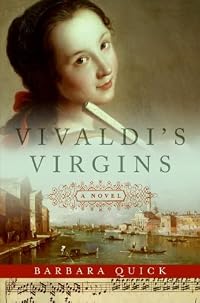
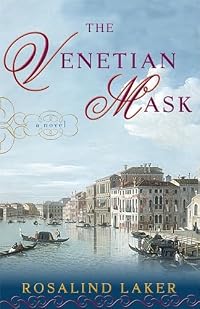
It's a good idea, but we've definitely seen all of this before: Amanda Quick's novel, Vivaldi's Virgins: A Novel, is set in the exact same place with nearly the exact same people, and Rosalind Laker's The Venetian Mask: A Novel is set in the same place seventy-five years later, but with the same romantic themes as The Four Seasons. And Corona's writing style isn't as show more captivating as Laker's is. Corona's descriptions are a little vague, and the city of Venice is a little static, as opposed to the vibrant city it really is.
That said, however, I enjoyed the story. It's derivative, yes, but highly addictive; despite all the book's flaws, I couldn't stop reading. The beginning of the novel is a little shaky and confusing (girls are left at the steps of the orphanage, then go out to the countryside for a reason that wasn't made entirely clear, then come back to the Pieta later), but it picks up once you've read about fifty pages or so. The strongest parts of this book are the musical descriptions; it's clear that Corona is passionate about this subject. show less
It's a good idea, but we've definitely seen all of this before: Amanda Quick's novel, Vivaldi's Virgins: A Novel, is set in the exact same place with nearly the exact same people, and Rosalind Laker's The Venetian Mask: A Novel is set in the same place seventy-five years later, but with the same romantic themes as The Four Seasons. And Corona's writing style isn't as show more captivating as Laker's is. Corona's descriptions are a little vague, and the city of Venice is a little static, as opposed to the vibrant city it really is.
That said, however, I enjoyed the story. It's derivative, yes, but highly addictive; despite all the book's flaws, I couldn't stop reading. The beginning of the novel is a little shaky and confusing (girls are left at the steps of the orphanage, then go out to the countryside for a reason that wasn't made entirely clear, then come back to the Pieta later), but it picks up once you've read about fifty pages or so. The strongest parts of this book are the musical descriptions; it's clear that Corona is passionate about this subject. show less
Members
- Recently Added By
Lists

Authors from the United States
245 works; 3 members
Author Information

25 Works 796 Members
Common Knowledge
- Canonical title
- The Four Seasons: A Novel of Vivaldi's Venice
- Original title
- The Four Seasons: A Novel of Vivaldi's Venice
- Original publication date
- 2008
- People/Characters
- Antonio Vivaldi; Chiaretta Morosini; Maddalena della Pieta; Antonia; Claudio Morosini; Anna Maria Strada (show all 12); Luciana; Andrea Corner; Donata Morosini; Anna Giro; Paolina Giro; Luca Barberigo
- Important places
- Venice, Veneto, Italy
- Dedication*
- Voor Lynn, zonder wie ik niet zou weten wat het betekent om een zuster te hebben. En voor Jim, vanwege zo ongeveer al het andere.
- First words*
- Gedurende het uur dat de baby huilde, eerst van ellende, daarna van woede en ten slotte van uitputting, dacht niemand aan iets anders dan aan hoe God Venetië boven alle steden had bevoorrecht.
- Last words*
- (Click to show. Warning: May contain spoilers.)'Ga,' fluisterde Chiaretta en ze wiegde haar zuster met de muziek mee.
*Some information comes from Common Knowledge in other languages. Click "Edit" for more information.
Classifications
Statistics
- Members
- 209
- Popularity
- 155,818
- Reviews
- 12
- Rating
- (3.51)
- Languages
- Dutch, English, French, German
- Media
- Paper, Ebook
- ISBNs
- 7
- ASINs
- 3