On This Page
Description
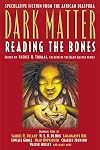
Dark Matter is the first and only series to bring together the works of black SF and fantasy writers. The first volume was featured in the "New York Times," which named it a Notable Book of the Year.Tags
Recommendations

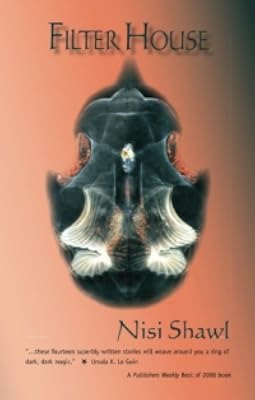
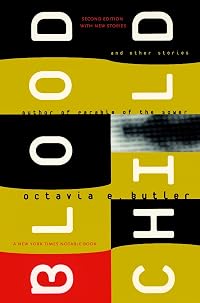
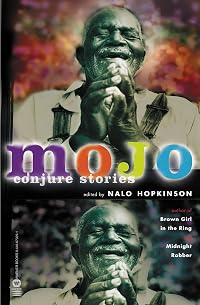
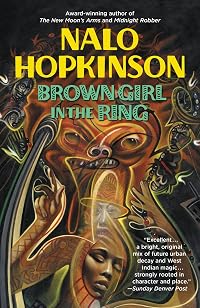
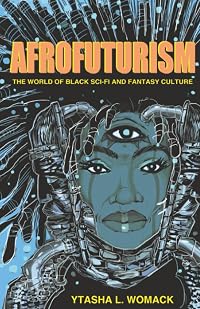
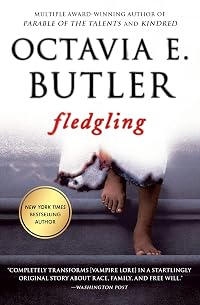
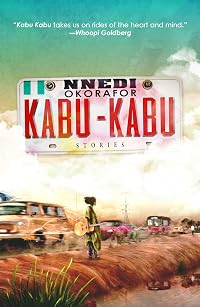
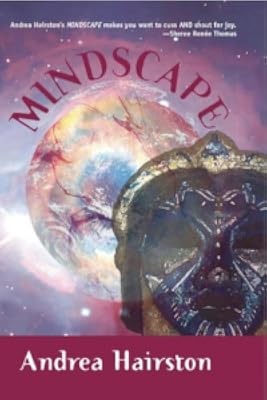
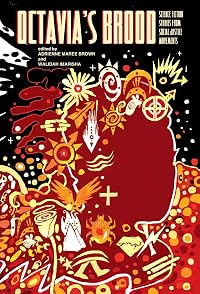
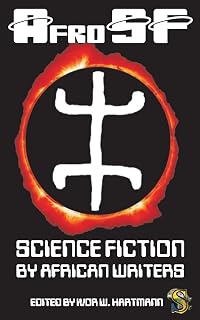
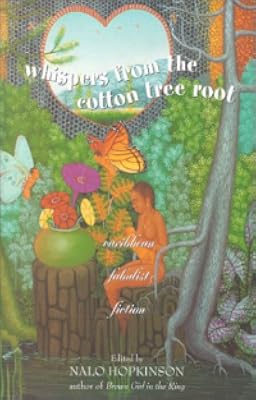
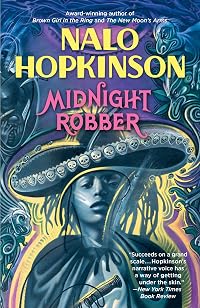

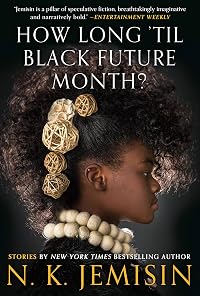
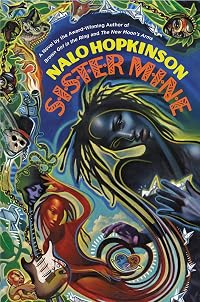
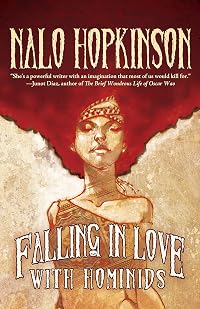

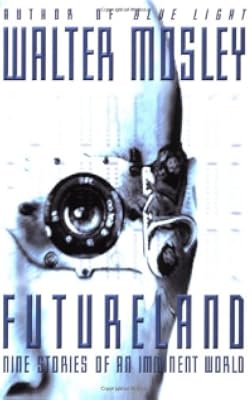
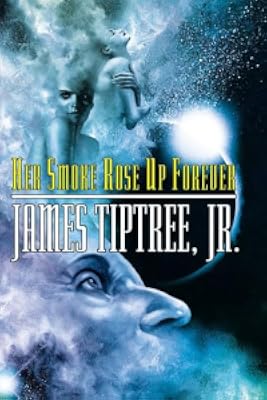
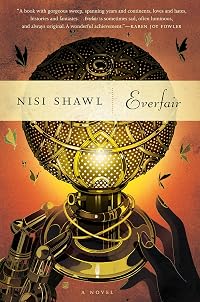
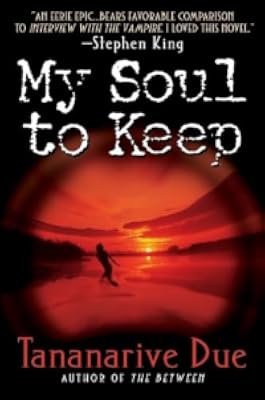
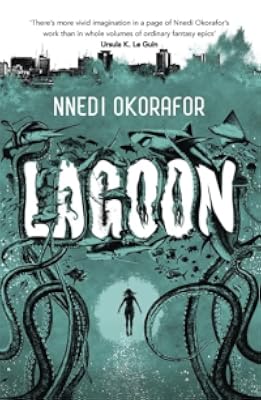
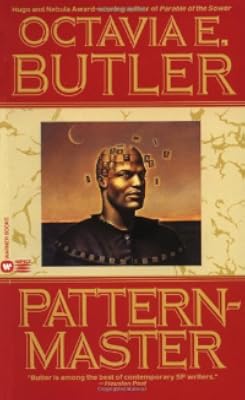
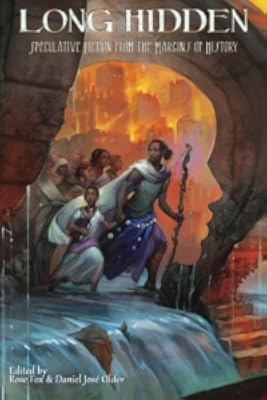
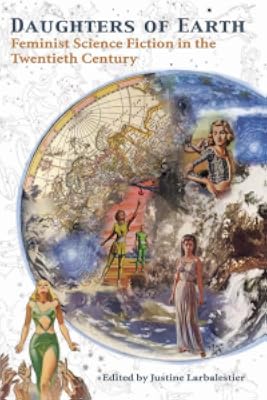


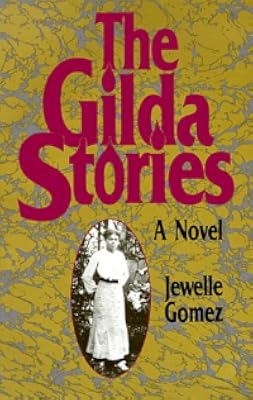

Member Recommendations

Member Reviews
One thing I really appreciated about this anthology was the way it completely belies what Chimamanda Ngozi-Adichie calls the "single story" of Africa: the Western idea of Africa as a homogenous place about which if you've heard one story, you've heard them all. The pieces in Dark Matter make clear the incredible diversity of the African continent, the fact that the indigenous peoples of Africa had and have civilizations with different names, histories, languages, and customs, and even looked different from one another in ways that are meaningful.
For many of these stories, such as Cherene Sherrard's The Quality of Sand, and Kiini Ibura Salaam's "Desire," it felt like discovering jewels, each as brilliant as the last even though show more different. Many of the worlds created here were vivid and engrossing - I would almost describe the sensation of being immersed in them as delicious, and also incredibly empowering. I mean, revolutionary Haitian pirates who are aided by an ancient jinni and sink slave ships, rescuing their cargo? How badass is that?!!
I was also surprised to find a couple of stories towards the end of the book that felt like what I think of as 'classic' SF - compared to earlier lushness, the worlds of Samuel Delany's "Corona" and Charles Johnson's "Sweet Dreams" for example, were sort of sparse, cold and technological. They hit the spot in a way I didn't even know I was missing, reminding me of how SF felt in my childhood. Thoughtful, sad, shaken-up and excited, all at the same time. show less
For many of these stories, such as Cherene Sherrard's The Quality of Sand, and Kiini Ibura Salaam's "Desire," it felt like discovering jewels, each as brilliant as the last even though show more different. Many of the worlds created here were vivid and engrossing - I would almost describe the sensation of being immersed in them as delicious, and also incredibly empowering. I mean, revolutionary Haitian pirates who are aided by an ancient jinni and sink slave ships, rescuing their cargo? How badass is that?!!
I was also surprised to find a couple of stories towards the end of the book that felt like what I think of as 'classic' SF - compared to earlier lushness, the worlds of Samuel Delany's "Corona" and Charles Johnson's "Sweet Dreams" for example, were sort of sparse, cold and technological. They hit the spot in a way I didn't even know I was missing, reminding me of how SF felt in my childhood. Thoughtful, sad, shaken-up and excited, all at the same time. show less
Dark Matter is the first (and only) series collecting sci-fi/fantasy short stories by black authors. Like Booklist says on the cover, it’s a great “who’s who of African American writers”. There were a little over 25 pieces - pretty massive for a short work collection, so it really is an excellent guide or even introduction to black writers.
content warnings:
I started taking notes for individual stories a quarter through, so I don't have warnings for the first bit, sorry!
Jesus Christ in Texas:
- racist slurs
- lynching
The Binary:
- fatphobia
BLACKout:
- the Roma slur
Corona:
- the n slur
Short story collections are usually a gamble, with some stories incredible while others fall short. This one is no different, although some of these show more works soared Very high (Whispers in the Dark) and others were just Not something I enjoyed (The Binary). And although short story collections usually just contain, you know, short stories, this one has transcripts of discussions on what makes science fiction as a genre work, biographies, and even works as short as a page and a half. All are equally as important. I love that the books teach you about the black authors that came before as well as the ones alive and publishing today.
Though there may have been more pieces here I disliked than those I liked, the ones I liked I liked Very Much, and it makes up for the rest. I’m a bit sad this is a library book, and one the library requested from another library, because I’d like to read some of these stories again. A lot of them are incredibly layered and deep, written to make you think a long time after the first read.
Anyway, I’ll definitely be reading the other books in this collection! And taking note of which authors strike a chord with me as I go on. show less
content warnings:
I started taking notes for individual stories a quarter through, so I don't have warnings for the first bit, sorry!
Jesus Christ in Texas:
- racist slurs
- lynching
The Binary:
- fatphobia
BLACKout:
- the Roma slur
Corona:
- the n slur
Short story collections are usually a gamble, with some stories incredible while others fall short. This one is no different, although some of these show more works soared Very high (Whispers in the Dark) and others were just Not something I enjoyed (The Binary). And although short story collections usually just contain, you know, short stories, this one has transcripts of discussions on what makes science fiction as a genre work, biographies, and even works as short as a page and a half. All are equally as important. I love that the books teach you about the black authors that came before as well as the ones alive and publishing today.
Though there may have been more pieces here I disliked than those I liked, the ones I liked I liked Very Much, and it makes up for the rest. I’m a bit sad this is a library book, and one the library requested from another library, because I’d like to read some of these stories again. A lot of them are incredibly layered and deep, written to make you think a long time after the first read.
Anyway, I’ll definitely be reading the other books in this collection! And taking note of which authors strike a chord with me as I go on. show less
Science fiction comes in a number of flavors. There’s “hard” SF, which speculates from a basis in the physical sciences. There’s “soft” SF, which works from a basis in the so-called human sciences (especially anthropology). The market-driven art is further subdivided into horror, fantasy, and sword-and-sorcery. Firing shots across the bow of these main genres, though, are those writers who create what might be called, to borrow a term from today’s music scene, “mash-ups.” Joanna Russ, for instance, is perhaps best known for her feminist SF novel The Female Man, which throws gender into a mix of hard and soft science. Then there’s Samuel R. Delany, whose New Wave classic Dhalgren pointed the way toward a science show more fiction that was truly literary and not merely boilerplate genre fiction. Into this mix we can add what may be the oldest form of speculative fiction: the retelling of myths and legends.
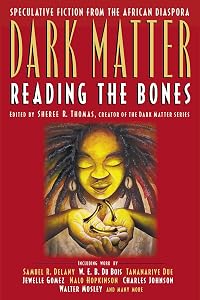
Now take a gander at a collection of “speculative fiction from the African Diaspora” called Dark Matter: Reading the Bones. This unusual collection focuses on the experiences of Africans, and their descendents, in the Americas—and the experiences are chilling, as you would expect. Slavery, racism, poverty and homelessness, magic, myth and religion, and killer jazz feature in this anthology of twenty-four stories and three essays. Most of the stories are by less-published authors (and most of those, seemingly, from the editor’s adopted New York City), but there are some major lights here, too: W.E.B. Dubois, the above-mentioned Delany, the fiery Wanda Colman, and Walter Mosley among them.
Although some of the writing in Reading the Bones is fairly mediocre in execution, none of it is so in content. Cherene Sherrard’s story, for instance, “The Quality of Sand,” is exciting and original. It centers on a group of Haitian revolutionaries who, having captured a slave-transport ship, act as “pirates”, freeing the prisoners of other slave ships. The story takes a magical turn when we learn that one of the protagonists is a jinni. Sherrard renders this magical twist as a moment of spiritual realism, producing a satisfying and tasty ending. Several of the stories are of the “stick it to the (white) man” variety, notably Nnedi Okorafor-Mbachu’s “The Magical Negro.” This very funny short-short starts out on a trajectory of comic-book heroism but quickly (it’s only a couple pages long) resists that narrative line, running instead (so to speak, and in order not to give this little gem totally away) in an “Ain’t Gonna Work on Maggie’s Farm No More” direction.
Perhaps most startling in this fine collection of truly alternative spec lit is W.E.B. Dubois’s story “Jesus Christ in Texas.” “It was in Waco…” the story begins—but “story” is probably the wrong descriptor, since what Dubois spins here is really a parable. Jesus does turn up in Waco, but he’s not the skinny white guy we normally see pinned to a stick. Instead, Dubois manages, in just a few words, to paint a historically plausible Jesus, as a Semitic man with a “coat that looked like a Jewish gabardine” (in contrast to the cowboy’s ankle-length duster) and skin of “olive, even yellow.” This high-yellow Jesus never claims to be the son of God (which idea doesn’t come up until the historically late Gospel of John, anyway), but is, rather, in the business of witnessing and reminding folks it’s not a good idea to steal or murder or rape. It’s the black man who gets this message, of course, and again, as with “The Magical Negro,” the ending provides the satisfying crunch of misguided authority getting its comeuppance while simultaneously offering a salvational vision. Dubois’ story remains startling and relevant in still-racist twenty-first century America, and is even more so when one notices that it was written in 1920.
The anthology concludes with three nonfiction pieces: a writers’ roundtable featuring Delany, Octavia Butler, Jewelle Gomez, Tananarive Due, and the filmmaker William Hudson; an appreciation of African-American writer Virginia Hamilton; and an appreciation of Andre Norton, one of the most prolific science fiction writers ever—and an African American woman, a fact few SF fans realize and that was never revealed in all those old Ace doubles. The author of this last piece, Carol Cooper, pretty well sums up the contribution to Reading the Bones when she writes “that the world was a strange, often cruel, and dangerous place…. We need science fiction to get out of this sort of world.” Amen to that.
Originally published in Curled Up with a Good Book show less
Now take a gander at a collection of “speculative fiction from the African Diaspora” called Dark Matter: Reading the Bones. This unusual collection focuses on the experiences of Africans, and their descendents, in the Americas—and the experiences are chilling, as you would expect. Slavery, racism, poverty and homelessness, magic, myth and religion, and killer jazz feature in this anthology of twenty-four stories and three essays. Most of the stories are by less-published authors (and most of those, seemingly, from the editor’s adopted New York City), but there are some major lights here, too: W.E.B. Dubois, the above-mentioned Delany, the fiery Wanda Colman, and Walter Mosley among them.
Although some of the writing in Reading the Bones is fairly mediocre in execution, none of it is so in content. Cherene Sherrard’s story, for instance, “The Quality of Sand,” is exciting and original. It centers on a group of Haitian revolutionaries who, having captured a slave-transport ship, act as “pirates”, freeing the prisoners of other slave ships. The story takes a magical turn when we learn that one of the protagonists is a jinni. Sherrard renders this magical twist as a moment of spiritual realism, producing a satisfying and tasty ending. Several of the stories are of the “stick it to the (white) man” variety, notably Nnedi Okorafor-Mbachu’s “The Magical Negro.” This very funny short-short starts out on a trajectory of comic-book heroism but quickly (it’s only a couple pages long) resists that narrative line, running instead (so to speak, and in order not to give this little gem totally away) in an “Ain’t Gonna Work on Maggie’s Farm No More” direction.
Perhaps most startling in this fine collection of truly alternative spec lit is W.E.B. Dubois’s story “Jesus Christ in Texas.” “It was in Waco…” the story begins—but “story” is probably the wrong descriptor, since what Dubois spins here is really a parable. Jesus does turn up in Waco, but he’s not the skinny white guy we normally see pinned to a stick. Instead, Dubois manages, in just a few words, to paint a historically plausible Jesus, as a Semitic man with a “coat that looked like a Jewish gabardine” (in contrast to the cowboy’s ankle-length duster) and skin of “olive, even yellow.” This high-yellow Jesus never claims to be the son of God (which idea doesn’t come up until the historically late Gospel of John, anyway), but is, rather, in the business of witnessing and reminding folks it’s not a good idea to steal or murder or rape. It’s the black man who gets this message, of course, and again, as with “The Magical Negro,” the ending provides the satisfying crunch of misguided authority getting its comeuppance while simultaneously offering a salvational vision. Dubois’ story remains startling and relevant in still-racist twenty-first century America, and is even more so when one notices that it was written in 1920.
The anthology concludes with three nonfiction pieces: a writers’ roundtable featuring Delany, Octavia Butler, Jewelle Gomez, Tananarive Due, and the filmmaker William Hudson; an appreciation of African-American writer Virginia Hamilton; and an appreciation of Andre Norton, one of the most prolific science fiction writers ever—and an African American woman, a fact few SF fans realize and that was never revealed in all those old Ace doubles. The author of this last piece, Carol Cooper, pretty well sums up the contribution to Reading the Bones when she writes “that the world was a strange, often cruel, and dangerous place…. We need science fiction to get out of this sort of world.” Amen to that.
Originally published in Curled Up with a Good Book show less
An uneven collection, but some of the stories in here are very much worth reading. I'd definitely recommend trying it. I especially liked the Nisi Shawl story, and the one by Kevin Brockenbrough. Some of the stories seemed a little much of a muchness, a few days after reading them they sort of blurred together in my mind. But there were definitely five or so that stood out for me and at least a couple of authors I'm going to seek out. So if I get that much out of an anthology I'm satisfied.
Ratings
Members
- Recently Added By
Lists

Diversity in Fantasy and Science Fiction
219 works; 32 members

Recommended Speculative Fiction by Women and People of Color
298 works; 45 members
Author Information

Sheree R. Thomas edits the literary journal Anansi: Fiction of the African Diaspora and has contributed to national publications including the Washington Post, Black Issues Book Review, and QBR: The Black Book Review.
All Editions
Awards and Honors
Awards
Series

Work Relationships
Common Knowledge
- Original publication date
- 2005
Classifications
- Genres
- Fiction and Literature, Science Fiction, Horror
- DDC/MDS
- 813.08762 — Literature & rhetoric American literature in English American fiction in English By type Genre fiction Adventure fiction Speculative fiction Science fiction
- LCC
- PS648 .S3 .D376 — Language and Literature American literature American literature Collections of American literature Prose (General)
- BISAC
Statistics
- Members
- 230
- Popularity
- 142,376
- Reviews
- 4
- Rating
- (3.94)
- Languages
- English
- Media
- Paper, Ebook
- ISBNs
- 5
- ASINs
- 4