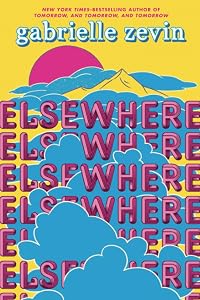
Elsewhere
by Gabrielle Zevin 
On This Page
Description
After fifteen-year-old Liz Hall is hit by a taxi and killed, she finds herself in a place that is both like and unlike Earth, where she must adjust to her new status and figure out how to "live."Tags
Recommendations

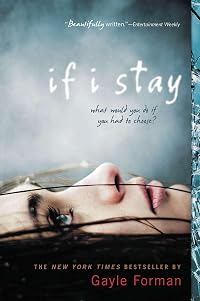
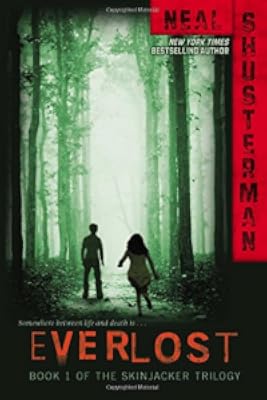
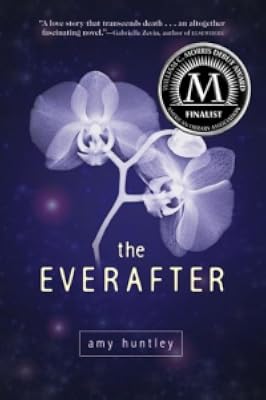
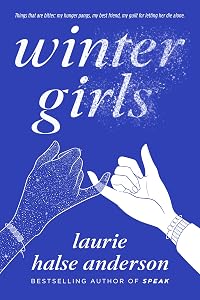
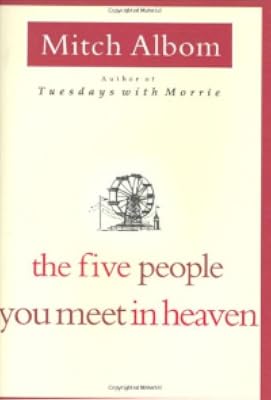
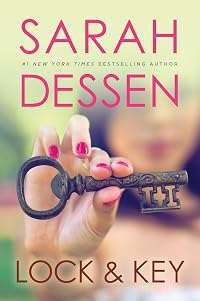
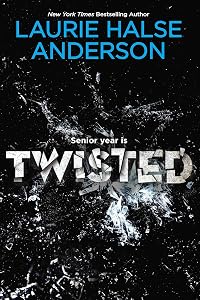
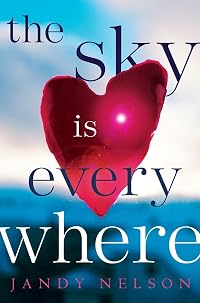



Member Recommendations



Member Reviews
If you have to be dead, it is better to be somewhere, anywhere, than nowhere at all. Page 35
Death came as a surprise and a shock to fifteen year old Lizzie. Just when she thought her life was about to begin, it abruptly ends, leaving her longing and yearning for all the things that she has lost and all the things that could have been. What she comes to discover is that dying is not the end. Sometimes, the end is merely just the beginning of a whole new adventure.
Elsewhere is a shining example of how YA books can be done well, complete with a refreshing and intriguing storyline and executed with both empathy and thoughtfulness. I absolutely loved the twist that Zevin explores when it comes to the subject of death, the afterlife and the show more our notions of what living really looks like. If you have never given YA books a chance, Elsewhere is an excellent place to start. Highly recommended for its originality and readability. show less
Death came as a surprise and a shock to fifteen year old Lizzie. Just when she thought her life was about to begin, it abruptly ends, leaving her longing and yearning for all the things that she has lost and all the things that could have been. What she comes to discover is that dying is not the end. Sometimes, the end is merely just the beginning of a whole new adventure.
Elsewhere is a shining example of how YA books can be done well, complete with a refreshing and intriguing storyline and executed with both empathy and thoughtfulness. I absolutely loved the twist that Zevin explores when it comes to the subject of death, the afterlife and the show more our notions of what living really looks like. If you have never given YA books a chance, Elsewhere is an excellent place to start. Highly recommended for its originality and readability. show less
Sixteen-year-old Liz awakens in a berth aboard a ship with no recollection of how she arrived there, and her fellow passengers initially seem to be as disoriented as she is. Over time, though, as they interact with one another and share their stories some of their most recent memories return, and they come to the reluctant conclusion that they have died. Eventually, the ship docks in Elsewhere, and Liz's grandmother, who passed away before she was born, is there on the dock to welcome her to this new place where everyone is dead and aging backward.
Though a somewhat dark premise on its surface, the story is told in a lighthearted style and is a sweet, poignant and enjoyable page-turner. I laughed out loud (rare for me!) when Liz is show more apprised of what her last words in life had been. Zevin presents some interesting ideas and moral/existential dilemmas to consider as Liz navigates this new "life" and attempts to reconcile it with the one of which she feels she was robbed. show less
Though a somewhat dark premise on its surface, the story is told in a lighthearted style and is a sweet, poignant and enjoyable page-turner. I laughed out loud (rare for me!) when Liz is show more apprised of what her last words in life had been. Zevin presents some interesting ideas and moral/existential dilemmas to consider as Liz navigates this new "life" and attempts to reconcile it with the one of which she feels she was robbed. show less
I read this because a student in my YA literature class asked to do an Honors conversion, and selected this novel as the basis for her supplementary research project. She ended up opting to not complete the research project. I wish she had, partially for the selfish reason that maybe it could have convinced me there was something more to this book. The fundamental idea is okay: when you go to the afterlife, you live there as you age backwards until you're a baby again, and then you get dispatched back to the real world to begin a new life. Zevin's afterlife is weirdly conventional, and conventionally contemporary America at that: people have jobs and drive on highways and stuff. But on the other hand, animals talk? A mundane afterlife show more could work, but in Elsewhere I felt like it was more a lack of imagination than anything else-- there's no coherent logic that backs this up. Like, where does money even come from? Why is everything like middle-class 21st-century America? Where are all the dead Chinese and Indian people, who surely would make up the majority of the residents of Elsewhere? A good book could get away with leaving out this kind of detail, but this book isn't that good. It's not terribly tedious or anything, but it sure takes its time with things. The sparse style is going for literary, I think, but it mostly comes across as underwritten. show less
Reread June 2019 because I needed a hug and an ugly cry and if possible I love it more. I'd forgotten just how every sentence is worthy of highlighting and so perfectly constructed. And I think I wrote this review in like 2014, but it should be known that I have no fewer than three copies in my office right now, just waiting for some unsuspecting human to come along needing this in their life.
--
Elsewhere is my favourite book of all time. I've read a lot of books in my days, and this is the book that I keep coming back to.I'm glad I read it when I was younger, however, as I think if I were to pick it up as an adult it wouldn't quite speak to me the way it did then. Despite no longer being a teenager, however, this book makes me bawl my show more eyes out every single time I read it. Zevin knows how to make you think without you realising she's doing so. She raises questions of life and death and love, as well as what happens when we age, how we can grow out of love and how experiences and memories really influence our age. Her writing is gorgeous--very precise and never entering the minds of her characters. She shows us what's happening and allows us to make our own inferences and come to our own realisations. This book makes me feel hopeful and in love and naive all over again. I own two physical copies in addition to my kindle edition just so I can force people to read it. It's an easy read, and well worth the time show less
--
Elsewhere is my favourite book of all time. I've read a lot of books in my days, and this is the book that I keep coming back to.I'm glad I read it when I was younger, however, as I think if I were to pick it up as an adult it wouldn't quite speak to me the way it did then. Despite no longer being a teenager, however, this book makes me bawl my show more eyes out every single time I read it. Zevin knows how to make you think without you realising she's doing so. She raises questions of life and death and love, as well as what happens when we age, how we can grow out of love and how experiences and memories really influence our age. Her writing is gorgeous--very precise and never entering the minds of her characters. She shows us what's happening and allows us to make our own inferences and come to our own realisations. This book makes me feel hopeful and in love and naive all over again. I own two physical copies in addition to my kindle edition just so I can force people to read it. It's an easy read, and well worth the time show less
The story of what happens to fifteen-year-old Elizabeth Marie Hall, of Massachusetts, after she is killed in a bicycle accident, Elsewhere is lovely and imaginative. Liz wakes to find herself on a boat ("Could death be a boat?" -Rosencrantz and Guildenstern Are Dead), and believes she's dreaming; only slowly does she realize that she's dead.
When she arrives in Elsewhere, she is met by her maternal grandmother, Betty, who died from breast cancer before Liz was born. Betty takes her in, but Liz has a hard time adjusting to Elsewhere and spends much of her time watching her family and friends back on Earth: her parents, her younger brother Alvy, her best friend Zooey, her ex-boyfriend Edward.
There are many delightful, inventive touches show more throughout: Liz's ability to speak Canine (a language all dogs speak, but most humans don't know), communication via plumbing (Elsewhere to Earth) and message in a bottle (Earth to Elsewhere), "avocations" (not a job; something you do because you like it), and of course, aging backward: everyone in Elsewhere ages backward from the age at which they arrived until they are babies, ready to go back to Earth again.
One is naturally reminded of The Lovely Bones and Benjamin Button, but Elsewhere is lighter and sweeter than either, thoughtful without being dark. It would be an excellent book discussion pick for any age group.
Quotes:
How long, she wonders, does hair take to grow? How long does a dream have to last before it's just life? (23)
In a way, it feels more like she is still alive and the only guest at the collective funeral for everyone she has ever known. (32)
...she reflects on her last words....Um means nothing. Um is what you say while you're thinking of what you'll really say. Um suggests someone interrupted before they'd begun. (81)
The scent, Liz things, is sweet and melancholy. A bit like dying, a bit like falling in love. (125)
There is a world of difference between twenty-six and fifteen. Twenty-six does things that fifteen only dreams of. (146)
"I guess I'm a little homesick, but it's the worst kind of homesickness because I know I can't ever go back there or see them ever again."
"That doesn't happen just on Elsewhere, Liz," says Owen. "Even on Earth, it's difficult to ever go back to the same places or people. You turn away, even for a moment, and when you turn back around, everything's changed." (167)
"No one actually needs another person or another person's love to survive. Love...is when we have irrationally convinced ourselves that we do." (Curtis to Lizzie, 180)
As many have discovered, it is entirely possible (though not particularly desirable) to love two people with all your heart. It is entirely possible to long for two lives, to feel that one life can't come close to containing it all. (192)
Almost fifteen years was a long time. Almost fifteen years was a gift. Anything could happen here in Elsewhere, the place where Liz's life had supposedly ended.
If I interrupt this life, I will never know how my life was supposed to turn out. A life is a good story, Liz realizes, even a crazy, backward life like hers. To cling to her old forward life was pointless. She would never have her old forward life. This backward life was her forward life when she really thought about it. It isn't her time, and her desire to know how the story will end is too strong. (220)
"I think she felt the conditions here were not likely to result in a lasting love....Then again, the conditions are rarely very good anywhere, but love still happens all the time." (Curtis to Betty, 223)
If you are going to forgive a person, Liz decides, it is best to do it sooner rather than later. Later, Liz knows from experience, could be sooner than you thought. (235)
Wherever you are, whatever it's called (Zooey's invitation addressed to Lizzie, via message in a bottle) (243)
There is no difference in quality between a life lived forward and a life lived backward, she thinks. She had come to love this backward life. (275)
There was a time Liz was afraid that she would forget things, but by the time she truly began to forget, she forgot to be afraid to forget. Life is kind... (276) show less
When she arrives in Elsewhere, she is met by her maternal grandmother, Betty, who died from breast cancer before Liz was born. Betty takes her in, but Liz has a hard time adjusting to Elsewhere and spends much of her time watching her family and friends back on Earth: her parents, her younger brother Alvy, her best friend Zooey, her ex-boyfriend Edward.
There are many delightful, inventive touches show more throughout: Liz's ability to speak Canine (a language all dogs speak, but most humans don't know), communication via plumbing (Elsewhere to Earth) and message in a bottle (Earth to Elsewhere), "avocations" (not a job; something you do because you like it), and of course, aging backward: everyone in Elsewhere ages backward from the age at which they arrived until they are babies, ready to go back to Earth again.
One is naturally reminded of The Lovely Bones and Benjamin Button, but Elsewhere is lighter and sweeter than either, thoughtful without being dark. It would be an excellent book discussion pick for any age group.
Quotes:
How long, she wonders, does hair take to grow? How long does a dream have to last before it's just life? (23)
In a way, it feels more like she is still alive and the only guest at the collective funeral for everyone she has ever known. (32)
...she reflects on her last words....Um means nothing. Um is what you say while you're thinking of what you'll really say. Um suggests someone interrupted before they'd begun. (81)
The scent, Liz things, is sweet and melancholy. A bit like dying, a bit like falling in love. (125)
There is a world of difference between twenty-six and fifteen. Twenty-six does things that fifteen only dreams of. (146)
"I guess I'm a little homesick, but it's the worst kind of homesickness because I know I can't ever go back there or see them ever again."
"That doesn't happen just on Elsewhere, Liz," says Owen. "Even on Earth, it's difficult to ever go back to the same places or people. You turn away, even for a moment, and when you turn back around, everything's changed." (167)
"No one actually needs another person or another person's love to survive. Love...is when we have irrationally convinced ourselves that we do." (Curtis to Lizzie, 180)
As many have discovered, it is entirely possible (though not particularly desirable) to love two people with all your heart. It is entirely possible to long for two lives, to feel that one life can't come close to containing it all. (192)
Almost fifteen years was a long time. Almost fifteen years was a gift. Anything could happen here in Elsewhere, the place where Liz's life had supposedly ended.
If I interrupt this life, I will never know how my life was supposed to turn out. A life is a good story, Liz realizes, even a crazy, backward life like hers. To cling to her old forward life was pointless. She would never have her old forward life. This backward life was her forward life when she really thought about it. It isn't her time, and her desire to know how the story will end is too strong. (220)
"I think she felt the conditions here were not likely to result in a lasting love....Then again, the conditions are rarely very good anywhere, but love still happens all the time." (Curtis to Betty, 223)
If you are going to forgive a person, Liz decides, it is best to do it sooner rather than later. Later, Liz knows from experience, could be sooner than you thought. (235)
Wherever you are, whatever it's called (Zooey's invitation addressed to Lizzie, via message in a bottle) (243)
There is no difference in quality between a life lived forward and a life lived backward, she thinks. She had come to love this backward life. (275)
There was a time Liz was afraid that she would forget things, but by the time she truly began to forget, she forgot to be afraid to forget. Life is kind... (276) show less
2.5
I really love theorizing about what could happens after death. Will we go to heaven or to hell? Or is there just nothing? Or perhaps something completely different than what we have thought could ever be?
I already have lots of theories, except this one. Well, the ending (in the book) was actually something I thought about before, but not the beginning. How, when you die, you’re on a cruise to that island called Elswhere. It’s really interesting, which is why it’s also really disappointing that i can’t rate this higher than 2.5 stars.
I definitely want to rate this higher and I’ve thought about it a lot. But 3 stars just seem too much. Overall, it was just little things that I’ve enjoyed reading about; everything else show more wasn’t for me, which were sadly the most and main parts.
It’s such a great and interesting world, worth exploring, but what does the author focuses on? Minor things like romance and getting married and get your drivers license, etc, which are such earth-like things. You already have those on earth, why go through them after death as well?
At some point, I do get it. I suppose the author wanted to convey the message that death is not an ending, and even though you’ve died young, that doesn’t mean you’re gonna loose out on all the things that you experience at certain ages. I suppose the author also wanted to say that death could as well be another life, just a bit different. They never meant to make it a fantasy world where everything is possible. And god doesn’t exist after all. Death is just like life on earth.
I do respect her theory though, as we don’t know how things are after death. I get that, and that part I think was executed well. It just didn’t suit me.
Especillay because I’m so disappointed in the lazy writing when it comes to world-building. I’ll say it again: this “elsewhere” is goddamn interesting and really worth to be explored!
Yet, there were so many grounds to dive deeper into this world and establish actually something.
For example, the mysterious part of it. I noticed lots of characters there saying “I don’t know why, it just is” or “it’s always been that way”.
That seems a bit fishy there. Why would they not be interested in finding out “why” it is that way? Why are they just accepting their new life? There’s more to the world than the people seem to tell you and I want to find out.
Matters like these are always good grounds and most authors have used that before. It might be a little cliche I guess, but it works. Especially when the protagonist is new to the world and doesn’t want to accept the fact that things just seem to »be«, without knowing the reason.
But the protagonists apparently is oblivious to that and doesn’t care about it. She does asks “why” sometimes, but accepts the answer “I don’t know”.
That’s not good enough for me.
~
Another thing that upset me a lot was the romance. Now, for all the romance-lovers out there it might actually be a good thing, but for me, it definitely wasn’t. But I generally don’t like to read about romance, so there’s that.
Maybe I shouldn’t have read it in the first place, but I guess I just didn’t think it would be that much of a major topic in the book (more than half of it, that is).
And by the way, Liz is really cringe when it comes to love or dates. Teenagers are always cringe, but particular lines from her had me want to puke a bit.
For example. “You could tattoo my name on your arm, if you want.”
The context: she’s been with her date for a couple of weeks and the guy has a tattoo with his wife’s name on his arm (the wife is still on earth and he’s been in elsewhere (aka dead) for about 10 years). Liz looks at it and then concludes, now that they are dating, that he should tattoo her name on his arm.
What the actual fuck?
Another sentence, because Liz was jealous: “everything is changing, all because stupid Emily couldn’t be bothered to wash her hands properly.” (Emily had the flu btw and is Owen’s wife.)
But the most cringe part must be when Owen and Liz actually kiss. And let me tell you, that is after Emily and Owen reunited. So he literally cheated on her. And it wasn’t during a fight. The cliche and cringe way to shit someone up.
Fuck romance, I don’t ever want to have anything to do with it and for once I want to read a story that has its loyalties in check.
Emily is the best character probably because she sees it in a very mature way and handles the situation the best. Still, it’s very disappointing and makes me hate romance even more.
That line at the end though – “life is better with a little romance, you know.” – bugs me a lot.
No, romance is not better. Ever heard of aromantics? Well, google it, if not. Life can be just as happy for those who have never experienced romance, than those who have. And besides, I’m so sick of all media always putting romance above friendships. Because at the end, friendships are much stronger. It’s time authors write about that.
~
Another thing, not about romance this time, is Liz and her insensitivity towards other people’s decisions.
With Curtis, she doesn’t want to accept the fact that he doesn’t want to sing anymore.
For context: Curtis was in a band called “machine” and then died pretty much the same time when Liz did, so they kinda became friends. Yet, Curtis chose to be a fisherman instead of continuing singing or writing songs.
It’s normal, isn’t it? Some things are fun while they lasted, but even hobbies, that were there your whole life, eventually stop making you happy and you quit. And sometimes you even do something completely else, something you’ve never tried before.
I’m sure we all had that feeling in some way or another.
But Liz? She’s just completely like this: “you’re from my favorite band and I completely don’t understand why you don’t want to continue doing music!” And when he explains, she’s like: “but that’s stupid!”
Yet, her own reasons don’t make much sense anyway, and she even expects people to have empathy for her. But she doesn’t have for others.
~
So, in conclusion, the book suffers from the protagonist-syndrome (or main character syndrome) and the fact that the world is only half-built. The author decided to fill the pages with cliche teenage romance, instead of exploring and diving deeper into the mysteries.
It had potential, but the way it was executed is not worth the read, to be honest. The theory in itself is interesting, and the first 100 pages mostly had me going, but then it just went downhill... show less
I really love theorizing about what could happens after death. Will we go to heaven or to hell? Or is there just nothing? Or perhaps something completely different than what we have thought could ever be?
I already have lots of theories, except this one. Well, the ending (in the book) was actually something I thought about before, but not the beginning. How, when you die, you’re on a cruise to that island called Elswhere. It’s really interesting, which is why it’s also really disappointing that i can’t rate this higher than 2.5 stars.
I definitely want to rate this higher and I’ve thought about it a lot. But 3 stars just seem too much. Overall, it was just little things that I’ve enjoyed reading about; everything else show more wasn’t for me, which were sadly the most and main parts.
It’s such a great and interesting world, worth exploring, but what does the author focuses on? Minor things like romance and getting married and get your drivers license, etc, which are such earth-like things. You already have those on earth, why go through them after death as well?
At some point, I do get it. I suppose the author wanted to convey the message that death is not an ending, and even though you’ve died young, that doesn’t mean you’re gonna loose out on all the things that you experience at certain ages. I suppose the author also wanted to say that death could as well be another life, just a bit different. They never meant to make it a fantasy world where everything is possible. And god doesn’t exist after all. Death is just like life on earth.
I do respect her theory though, as we don’t know how things are after death. I get that, and that part I think was executed well. It just didn’t suit me.
Especillay because I’m so disappointed in the lazy writing when it comes to world-building. I’ll say it again: this “elsewhere” is goddamn interesting and really worth to be explored!
Yet, there were so many grounds to dive deeper into this world and establish actually something.
For example, the mysterious part of it. I noticed lots of characters there saying “I don’t know why, it just is” or “it’s always been that way”.
That seems a bit fishy there. Why would they not be interested in finding out “why” it is that way? Why are they just accepting their new life? There’s more to the world than the people seem to tell you and I want to find out.
Matters like these are always good grounds and most authors have used that before. It might be a little cliche I guess, but it works. Especially when the protagonist is new to the world and doesn’t want to accept the fact that things just seem to »be«, without knowing the reason.
But the protagonists apparently is oblivious to that and doesn’t care about it. She does asks “why” sometimes, but accepts the answer “I don’t know”.
That’s not good enough for me.
~
Another thing that upset me a lot was the romance. Now, for all the romance-lovers out there it might actually be a good thing, but for me, it definitely wasn’t. But I generally don’t like to read about romance, so there’s that.
Maybe I shouldn’t have read it in the first place, but I guess I just didn’t think it would be that much of a major topic in the book (more than half of it, that is).
And by the way, Liz is really cringe when it comes to love or dates. Teenagers are always cringe, but particular lines from her had me want to puke a bit.
For example. “You could tattoo my name on your arm, if you want.”
The context: she’s been with her date for a couple of weeks and the guy has a tattoo with his wife’s name on his arm (the wife is still on earth and he’s been in elsewhere (aka dead) for about 10 years). Liz looks at it and then concludes, now that they are dating, that he should tattoo her name on his arm.
What the actual fuck?
Another sentence, because Liz was jealous: “everything is changing, all because stupid Emily couldn’t be bothered to wash her hands properly.” (Emily had the flu btw and is Owen’s wife.)
But the most cringe part must be when Owen and Liz actually kiss. And let me tell you, that is after Emily and Owen reunited. So he literally cheated on her. And it wasn’t during a fight. The cliche and cringe way to shit someone up.
Fuck romance, I don’t ever want to have anything to do with it and for once I want to read a story that has its loyalties in check.
Emily is the best character probably because she sees it in a very mature way and handles the situation the best. Still, it’s very disappointing and makes me hate romance even more.
That line at the end though – “life is better with a little romance, you know.” – bugs me a lot.
No, romance is not better. Ever heard of aromantics? Well, google it, if not. Life can be just as happy for those who have never experienced romance, than those who have. And besides, I’m so sick of all media always putting romance above friendships. Because at the end, friendships are much stronger. It’s time authors write about that.
~
Another thing, not about romance this time, is Liz and her insensitivity towards other people’s decisions.
With Curtis, she doesn’t want to accept the fact that he doesn’t want to sing anymore.
For context: Curtis was in a band called “machine” and then died pretty much the same time when Liz did, so they kinda became friends. Yet, Curtis chose to be a fisherman instead of continuing singing or writing songs.
It’s normal, isn’t it? Some things are fun while they lasted, but even hobbies, that were there your whole life, eventually stop making you happy and you quit. And sometimes you even do something completely else, something you’ve never tried before.
I’m sure we all had that feeling in some way or another.
But Liz? She’s just completely like this: “you’re from my favorite band and I completely don’t understand why you don’t want to continue doing music!” And when he explains, she’s like: “but that’s stupid!”
Yet, her own reasons don’t make much sense anyway, and she even expects people to have empathy for her. But she doesn’t have for others.
~
So, in conclusion, the book suffers from the protagonist-syndrome (or main character syndrome) and the fact that the world is only half-built. The author decided to fill the pages with cliche teenage romance, instead of exploring and diving deeper into the mysteries.
It had potential, but the way it was executed is not worth the read, to be honest. The theory in itself is interesting, and the first 100 pages mostly had me going, but then it just went downhill... show less
I mooched Elsewhere for my sister; it had been recommended somewhere for young adults, and I am trying to interest her in something other than Twilight and its offshoots. When it arrived, I thought I ought to read it first – we have recently had a death in the family and I didn’t want to post off a tragedy without knowing what I was responsible for. So I sat down to read it.
And looked up three hours later, having finished it.
A relatively simple structure, based around the idea that Heaven (or “Elsewhere” here – there is no alternative for bad people) is much like Earth, but that people age backwards from death until infancy and are then dispatched back to Earth. Possibly not a revolutionary idea, but certainly an interesting show more one.
It was this same not overly ambitious, rather efficient manner with which Zevin described life, romance and set-backs in Elsewhere, and apart from some people being born with the innate ability to speak canine, with which I struggled, I found this a delightful take on tragedy (our heroine Liz dies aged 15 in a cycling accident). Characters were reasonable – everyday members of the family and community, nothing extraordinary – and well-developed, only as far as was necessary, which I felt was very appropriate for a YA novel.
I haven’t sent it on to my sister, but I will do once things are a bit less emotional in the family. show less
And looked up three hours later, having finished it.
A relatively simple structure, based around the idea that Heaven (or “Elsewhere” here – there is no alternative for bad people) is much like Earth, but that people age backwards from death until infancy and are then dispatched back to Earth. Possibly not a revolutionary idea, but certainly an interesting show more one.
It was this same not overly ambitious, rather efficient manner with which Zevin described life, romance and set-backs in Elsewhere, and apart from some people being born with the innate ability to speak canine, with which I struggled, I found this a delightful take on tragedy (our heroine Liz dies aged 15 in a cycling accident). Characters were reasonable – everyday members of the family and community, nothing extraordinary – and well-developed, only as far as was necessary, which I felt was very appropriate for a YA novel.
I haven’t sent it on to my sister, but I will do once things are a bit less emotional in the family. show less
Members
- Recently Added By
Lists

Best Fantasy Novels
821 works; 357 members

Best Young Adult
399 works; 101 members

Books That Made Me Cry
199 works; 105 members

Top Five Books of 2020
982 works; 350 members

Main Character is aged 10-19
362 works; 6 members

Dead narrators
50 works; 4 members

Books Read in 2007
326 works; 8 members

Death of human -- children's/young adult fiction
86 works; 5 members

Books Read in 2017
4,249 works; 130 members

READ in 2024
262 works; 1 member

Books Read in 2025
4,092 works; 98 members
Author Information

15+ Works 25,919 Members
Gabrielle Zevin was born in New York City on October 24, 1977. She received a degree in English and American literature from Harvard University in 2000. She has written both adult and young adult novels. Her debut, Margarettown, was a selection of the Barnes and Noble Discover Great New Writers program. Her other works include The Hole We're In, show more Memoirs of a Teenage Amnesiac, and The Storied Life of A. J. Fikry. Her young adult novel Elsewhere was an American Library Association Notable Children's Book. She has also written for the New York Times Book Review and NPR's All Things Considered. She is the screenwriter of Conversations with Other Women starring Helena Bonham Carter and Aaron Eckhart, for which she received an Independent Spirit Award Nomination. In 2009, she and director Hans Canosa adapted her novel Memoirs of a Teenage Amnesiac into the Japanese film, Dareka ga Watashi ni Kiss wo Shita. (Bowker Author Biography) show less
Gabrielle Zevin is a LibraryThing Author, an author who lists their personal library on LibraryThing.
Some Editions
Awards and Honors
Awards
Distinctions
Work Relationships
Is abridged in
Common Knowledge
- Canonical title
- Elsewhere
- Original title
- Elsewhere
- Alternate titles*
- Het was best een fijn leven
- Original publication date
- 2005-09-09
- People/Characters
- Liz Hall (Elizabeth Hall); Owen; Curtis Jest; Grandma Betty; Aldous Ghent; Thandi (show all 7); Amadou Bonamy
- Important places
- Elsewhere; Medford, Massachusetts, USA; Cambridge, Massachusetts, USA
- Dedication
- To HCC
- First words
- Prologue
The end came quickly, and there wasn't any pain.
Elizabeth Hall wakes in a strange bed in a strange room with the strange feeling that her sheets are trying to smother her. - Quotations
- Liz considers what the strange little boy has said. As much as she longs to be with her family and her friends, she doesn't want to be a ghost. She certainly doesn't want to cause more pain to the people she loves. She knows ... (show all)there is only one thing to do.
- Last words
- (Click to show. Warning: May contain spoilers.)And in response, this baby, who is Liz and not Liz at the same time, laughs.
- Publisher's editor
- Janine O'Malley
- Blurbers
- Mackler, Carolyn
- Original language*
- Engels
*Some information comes from Common Knowledge in other languages. Click "Edit" for more information.
Classifications
Statistics
- Members
- 3,985
- Popularity
- 3,937
- Reviews
- 211
- Rating
- (3.89)
- Languages
- 17 — Bulgarian, Catalan, Czech, Dutch, English, French, German, Hebrew, Italian, Japanese, Farsi/Persian, Polish, Spanish, Swedish, Portuguese (Portugal), Portuguese (Brazil), Chinese, simplified
- Media
- Paper, Audiobook, Ebook
- ISBNs
- 41
- ASINs
- 7