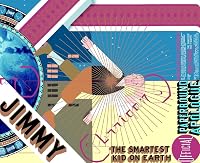
Jimmy Corrigan: The Smartest Kid on Earth
by Chris Ware
The Acme Novelty Library (Collections and Selections — 5, 6, 8, 9, 11, 12, 13, 14)
On This Page
Description
A graphic novel chronicles four generations of the Corrigan men, from 1893 to 1983. "This first book from Chicago author Chris Ware is a pleasantly-decorated view at a lonely and emotionally-impaired 'everyman' (Jimmy Corrigan: The Smartest Kid on Earth), who is provided, at age 36, the opportunity to meet his father for the first time. An improvisatory romance which gingerly deports itself between 1890's Chicago and 1980's small town Michigan, the reader is helped along by thousands of show more colored illustrations and diagrams, which, when read rapidly in sequence, provide a convincing illusion of life and movement. The bulk of the work is supported by fold-out instructions, an index, paper cut-outs, and a brief apology, all of which concrete to form a rich portrait of a man stunted by a paralyzing fear of being disliked."--Publisher's website. show lessTags
Recommendations

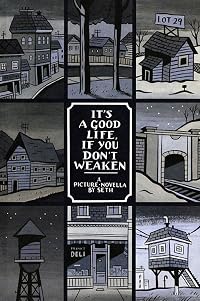
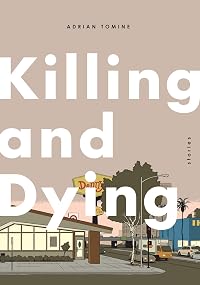
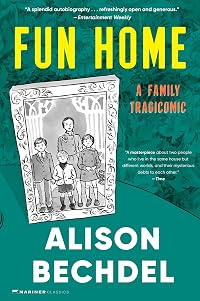
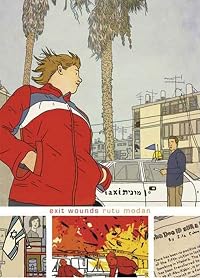
Member Recommendations
by Percevan
Member Reviews
This first book from Chicago author Chris Ware is a pleasantly-decorated view at a lonely and emotionally-impaired "everyman" (Jimmy Corrigan: The Smartest Kid on Earth), who is provided, at age 36, the opportunity to meet his father for the first time. An improvisatory romance which gingerly deports itself between 1890's Chicago and 1980's small town Michigan, the reader is helped along by thousands of colored illustrations and diagrams, which, when read rapidly in sequence, provide a convincing illusion of life and movement. The bulk of the work is supported by fold-out instructions, an index, paper cut-outs, and a brief apology, all of which concrete to form a rich portrait of a man stunted by a paralyzing fear of being disliked.
A hauntingly sad epic of vaguely auto-biographical fiction that takes place over the course of several generations within a family. At the center is Jimmy Corrigan, the name given to the eldest son in each generation. The present days Jimmy is a depressed office dweller who is contacted by his estranged father out of the blue right before Thanksgiving. Invited for an impromptu visit, Jimmy agrees though he is not enthusiastic. His father is disappointing in many ways but also full of secrets and insights, chief among them is the existence of a sister previously unknown to Jimmy.
Throughout the book we see flashbacks to the life of Jimmy's grandfather, who was a boy when the Chicago World's Fair was being constructed. Grandfather Jimmy show more was also lived a brutal and sad life dominated by a deeply disappointing father.
Dream, memory, and fantasy intertwine tightly within this novel's narrative, lending it the surreal quality of a nightmare. Although vaguely disgusting, the characters all have a certain pathetic charm that his hard to resist. The author's tone is light, playful, and cynical which brightens the material somewhat. I wouldn't say I enjoyed it, exactly, but I was moved by this strange and winding tale. show less
Throughout the book we see flashbacks to the life of Jimmy's grandfather, who was a boy when the Chicago World's Fair was being constructed. Grandfather Jimmy show more was also lived a brutal and sad life dominated by a deeply disappointing father.
Dream, memory, and fantasy intertwine tightly within this novel's narrative, lending it the surreal quality of a nightmare. Although vaguely disgusting, the characters all have a certain pathetic charm that his hard to resist. The author's tone is light, playful, and cynical which brightens the material somewhat. I wouldn't say I enjoyed it, exactly, but I was moved by this strange and winding tale. show less
This may be the saddest book that I have ever read. Not in terms of how many sad things happen; there are plenty of books out there where tons of sad things happen. Sad things all over the place. No, Jimmy Corrigan is the saddest book that I have ever read in the sense that when I finished it, I felt utterly miserable, depressed, alone in the world. Very rarely has a book been capable of altering my emotional state as much as this one did. I could natter on a lot about how Chris Ware achieves this through his masterful use of the comics medium (I like how he keeps a figure the same size, but suddenly enlarges the panel to show how alone the character is; I like how he uses repeated imagery; I like how he has large, anchorless words show more float above the characters' heads right in the panels; I like how he parallels the present, the past, and fantasies, especially how he makes time pass in the latter), but I suspect wiser brains than mine have already explicated on this at length.
I do want to give a shoutout to two specific aspects of the story. The first is Ware's clever use of utopian motifs, in the 1893 Chicago Exposition (also known as "White City") and the appearances of Superman (looking like his 1930s self). Seeing these ostensibly triumphal figures in a story like this only makes everything worse, in a good way. They also edge Jimmy Corrigan from being the story of one man's loneliness to something bigger. As does the second thing I want to talk about: the text on the back of a set of depressing picture postcards from Waukosha, Michigan, a blackly humorous skewering of American values. (Actually, all the paratextual stuff is quite funny; I also enjoyed the mocking of literary folks who like comics on the inside front cover.)
I've been avoiding recommending this to people because of how it will make them feel, but it really is quite excellent. If you consider great literature to be something that moves you, be that positively or negatively, then pick up Jimmy Corrigan. (Then again, a friend of mine thinks it's one of the funniest books he's ever read, so what do I know?)
added September 2013:
What struck me about Jimmy Corrigan on this reread (I am teaching the book to freshmen) was how difficult the beginning of it is, which quickly becomes smoothed out as the novel progresses. The early sections are replete with strange fantasies (Jimmy is a robot, Jimmy must kill a horse, Jimmy is an English gentlemen who drinks G&Ts on yachts), but these trickle away until we're left with just the parallel tracks of Jimmy and his Victorian ancestor. Part of the way through, though, Ware actually stops the story to spell out which bits are real; prior to that, I don't think there's any clue that Victorian Jimmy is actually real. By the end, though, the book is positively easy to comprehend. Is this just because Ware was making it up as he went along (it is "an improvisatory romance," after all), or is some other reason at work? show less
I do want to give a shoutout to two specific aspects of the story. The first is Ware's clever use of utopian motifs, in the 1893 Chicago Exposition (also known as "White City") and the appearances of Superman (looking like his 1930s self). Seeing these ostensibly triumphal figures in a story like this only makes everything worse, in a good way. They also edge Jimmy Corrigan from being the story of one man's loneliness to something bigger. As does the second thing I want to talk about: the text on the back of a set of depressing picture postcards from Waukosha, Michigan, a blackly humorous skewering of American values. (Actually, all the paratextual stuff is quite funny; I also enjoyed the mocking of literary folks who like comics on the inside front cover.)
I've been avoiding recommending this to people because of how it will make them feel, but it really is quite excellent. If you consider great literature to be something that moves you, be that positively or negatively, then pick up Jimmy Corrigan. (Then again, a friend of mine thinks it's one of the funniest books he's ever read, so what do I know?)
added September 2013:
What struck me about Jimmy Corrigan on this reread (I am teaching the book to freshmen) was how difficult the beginning of it is, which quickly becomes smoothed out as the novel progresses. The early sections are replete with strange fantasies (Jimmy is a robot, Jimmy must kill a horse, Jimmy is an English gentlemen who drinks G&Ts on yachts), but these trickle away until we're left with just the parallel tracks of Jimmy and his Victorian ancestor. Part of the way through, though, Ware actually stops the story to spell out which bits are real; prior to that, I don't think there's any clue that Victorian Jimmy is actually real. By the end, though, the book is positively easy to comprehend. Is this just because Ware was making it up as he went along (it is "an improvisatory romance," after all), or is some other reason at work? show less
I'm starting to get that the broken American family is really the Big Theme of a lot of contemporary, stylistically ambitious works by US authors. Chris Ware fits right in there with his logophiliac brothers Mark Danielewski and David Foster Wallace; even though his narrative experimentation is done in the sequential art form of the comic, it's just as challenging in some ways, but the lonely-man-as-product-of-the-loveless-home is the old wine in his new bottle. Ware is less scared of presenting pathos without smothering it in irony, which isn't to say that he doesn't use irony and pastiche, both visually and verbally, just as defensively as the other guys when he does employ it, which is still quite a lot. Another good thing about this show more book is that it understands how central race is to the great American social disaster, and does for race what does Alison Bechdel's Fun Home does for sexuality: show the repression and hypocrisy around it right at the center of the dysfunctional family. But Ware takes that back through the generations, which makes this a great social and historical novel as well. And at the end of it, you muse on how little time it took to go so deep, instead of wondering where your life went as you as plowed through page 974 of somebody else's great American novel. The story's my interest, but the art is crisp and clean and lovely in its precise depictions of unloveliness--that helps a lot. show less
I'll start with the artwork, because it's basically astounding. The scenes from the 1893 Chicago World's Fair would probably be enough to warrant giving this book 5 stars. The sense of scale and the utter smallness of the people, the drawings are strikingly beautiful.
Now the story. It's consumed with loneliness and grief and is deeply affecting. The whole clan of Corrigan men will stick with you like signposts for mistakes to avoid. There was a danger as I got close to the end that it would be too bleak for me, but there are hints of hope in it, which is maybe all you need.
Now the story. It's consumed with loneliness and grief and is deeply affecting. The whole clan of Corrigan men will stick with you like signposts for mistakes to avoid. There was a danger as I got close to the end that it would be too bleak for me, but there are hints of hope in it, which is maybe all you need.
I have read other graphic novels, but none with the quiet and lonely sadness that this book conveyed. I have read comic books where I skim the text and stare deeply at the pictures. I have also read comic books where I devour the text and almost skip over the pictures. Neither of these types were able to convince me that graphic novels are something more than the sum of the aforementioned parts. But this book was able to. It is a masterpiece for this reason. As it says on the cover (in a statement typical of the dry humor of the author): "Winner of the American Book Award and the Guardian Prize 2001 (the consumer will note that these honors are generally only bestowed on those authors who refuse to learn how to draw)"
And draw he did! show more Chris Ware's book is filled with gorgeous artwork, both geometric and very personal at once, as well as being art deco without being grandiose. The artist is very clean, and manages to go from having profuse detail in one frame to having a relatively featureless frame without either looking too busy. In addition, the artist has a great eye for framing. The comic looks almost like storyboard for film because of how successfully it employs dramatic framing, ominous headroom, cut aways, intercutting, close-ups, and other tropes that, as a film major in university, I was trained to look for in film. Occasional diagrams including information on a person's age, and from which parents they came, etc. were brilliant. The comic book also used a color language to convey memory or daydream, which was an interesting trope. Because the story was so haunting, the stilted "ha ha" lettering that representing laughter was awkward, and though at first I didn't like it, by the end I understood. This wasn't a book where laughing was supposed to be natural. In fact, it took me a while to get used to other aspects of the book. Sometimes, the frame layout wasn't intuitive, and so for about the first half of the book, I had to be conscious of which frame I would choose to read next, which is quite distracting. At that point, I was not enamored with the story. But once my eyes and brain adjusted to seeing such fragmented pages, and being able to quickly move from one frame to the next without much thought, I really enjoyed reading it.
The plot is very sad, and poor Jimmy is frightened at all times, and in all situations. Jimmy's time with the father he never knew is tragic and haunting. Jimmy's grandfather's childhood was the most compelling part of the book, seeing a lonely child deal with his terrible father and the cruelty of other children. And in the final pages, it is beautiful to see how all the strings of the story come together, in an almost cyclical way. show less
And draw he did! show more Chris Ware's book is filled with gorgeous artwork, both geometric and very personal at once, as well as being art deco without being grandiose. The artist is very clean, and manages to go from having profuse detail in one frame to having a relatively featureless frame without either looking too busy. In addition, the artist has a great eye for framing. The comic looks almost like storyboard for film because of how successfully it employs dramatic framing, ominous headroom, cut aways, intercutting, close-ups, and other tropes that, as a film major in university, I was trained to look for in film. Occasional diagrams including information on a person's age, and from which parents they came, etc. were brilliant. The comic book also used a color language to convey memory or daydream, which was an interesting trope. Because the story was so haunting, the stilted "ha ha" lettering that representing laughter was awkward, and though at first I didn't like it, by the end I understood. This wasn't a book where laughing was supposed to be natural. In fact, it took me a while to get used to other aspects of the book. Sometimes, the frame layout wasn't intuitive, and so for about the first half of the book, I had to be conscious of which frame I would choose to read next, which is quite distracting. At that point, I was not enamored with the story. But once my eyes and brain adjusted to seeing such fragmented pages, and being able to quickly move from one frame to the next without much thought, I really enjoyed reading it.
The plot is very sad, and poor Jimmy is frightened at all times, and in all situations. Jimmy's time with the father he never knew is tragic and haunting. Jimmy's grandfather's childhood was the most compelling part of the book, seeing a lonely child deal with his terrible father and the cruelty of other children. And in the final pages, it is beautiful to see how all the strings of the story come together, in an almost cyclical way. show less
The only thing separating Chris Ware from William Faulkner is the fact that Ware draws his characters with ink and uses little balloons for dialogue to tell his story of one dysfunctional family’s sound and fury.
To the best of my knowledge, Mr. Yoknapatawpha never drew a comic strip; but if he had, the results surely would have been as powerful as what’s on the 380 pages of Ware’s Jimmy Corrigan, the Smartest Kid on Earth.
Actually, the term “comic bookâÂ? cheapens WareâÂÂs magnificent artistry. Calling Jimmy Corrigan a comic strip reduces it to the dime digests of our childhood. This is about as far from Archie and Jughead as you can get. Some people call Ware and other artists like Art Spiegelman (Maus) and Ben show more Katchor (Julius Knipl, Real Estate Photographer) âÂÂgraphic novelists.âÂ? ThatâÂÂs fine, but when it comes to something as profound as Jimmy Corrigan, I think I prefer the term âÂÂillustrated novel.âÂ?
As you hold this volume of âÂÂcomic stripsâÂ? in your hand for the first time, you may not realize it, but youâÂÂve got something as deep and genuinely moving as anything youâÂÂll find in the words of John Updike, Raymond Carver or any other contemporary scribe bound by the rigid, old-fashioned black-and-white prison of text. The story here is complex and multi-layered in ways that âÂÂtraditionalâÂ? American literature often aspires to (and just as often fails). Once you step inside JimmyâÂÂs pastel world, donâÂÂt be surprised if you have a hard time finding your way out again. In fact, this book is the kind that canâÂÂt be adequately described (though IâÂÂll try). It must be experienced.
So, letâÂÂs start with the experienceâ¦The hardcover edition of Jimmy Corrigan has the strangest and cleverest dust jacket IâÂÂve ever seenâÂÂit looks like the aftermath of a horrible paper-folding accident at the bindery. Unfold it and youâÂÂll discover a collage of seemingly-random panels showing what looks like a family tree of sorts, a doctorâÂÂs report of a patient (âÂÂ36-year-old male who has arrived with acute muscular sprain to right foot following a fallâÂ?) and instructions for making paper dolls. You can read the microscopic text now if you like (âÂÂWith the many recent technological breakthroughs in pictorial linguistics [as exemplified by airline safety cards, battery diagrams and feminine protection directions], such heretofore-dormant skills of Comic Strip Apprehension [or CSA] are being reawakened in the adult mind,âÂ? etc.), but youâÂÂll really appreciate it when you return after finishing whatâÂÂs inside. (By the way, WareâÂÂs tiny-print writing is as smart and funny as anything youâÂÂd find in Dave Eggersâ copyright page disclaimers).
Look on the front cover, lower right corner, and youâÂÂll find these words: âÂÂA bold experiment in reader tolerance, disguised as a gaily-colored illustrated romance in which TINY PICTURES seem to COME ALIVE, DANCE, SING and WEEP.âÂ? Dancing, singing and weepingâÂÂyep, thatâÂÂs what I was doing by the end of my Jimmy Corrigan experience. Well okay, IâÂÂm not exactly what youâÂÂd call a âÂÂweeping man,âÂ? but if I was, then IâÂÂd be a sobbing wreck by the end of the book. In these 380 pages, youâÂÂll find pain, desire, hope, humiliation and the sweet surprise of forgiveness and reconciliation. WareâÂÂs satiric tone on the dustjacket and inside covers is a bit misleadingâÂÂthereâÂÂs nothing riotously funny about the pathetic, boring life of Jimmy Corrigan. Sure, there are moments of great humor, but overall this is the serious stuff of the most intense Oprah show you can imagine.
Ware knowingly juxtaposes the soul-scraping agony of JimmyâÂÂs family history with the âÂÂgaily-colored illustrationsâÂ? and while it took me some time to adjust to the fact that this is not a âÂÂSunday funniesâÂ? yuk-it-up, I was soon immersed in JimmyâÂÂs world.
And hereâÂÂs what youâÂÂll find in JimmyâÂÂs worldâ¦
The book tells the tale of three generations of CorrigansâÂÂall of them named James: James Reed Corrigan (b. 1883), who is beaten and neglected by his father, a crippled, bitter Civil War veteran; James William Corrigan (b. 1921), a Marine vet, bartender and deadbeat dad; and our âÂÂhero,âÂ? Jimmy (b. 1941), a virginal Chicago office worker who is terrified of women. Jimmy is a therapistâÂÂs dream come true: heâÂÂs painfully shy, tongue-tied, full of neuroses and has a set of âÂÂmother issuesâÂ? that would make Norman Bates look like a patsy. Jimmy lives by himself, talks to his mother every day on the phone whether he wants to or not (he usually doesnâÂÂt), eats CapâÂÂn Crunch for breakfast and either picks his nose or bites his nails (itâÂÂs hard to tell from WareâÂÂs depiction). He rarely speaks in complete sentences; most of his word balloons are filled with just the nervous âÂÂHa haâÂ? or âÂÂUh.âÂ?
One day, he gets a letter in the mail which begins âÂÂDear Son, I think itâÂÂs about time we fellas get to know each other, what do you say?âÂ? JimmyâÂÂs life turns into a Tilt-o-Whirl. He hasnâÂÂt seen his father since he was 6, and his vague memories get the man confused with, alternately, Superman or a serial killer. Eventually, the two men do meet and the story turns into an excruciating inward journey toward healing wounds. As they work through their issues, Ware delves back into the Corrigan family history and we witness 9-year-old James IâÂÂs rough childhood which has a glorious and heartbreaking climax at the 1893 Chicago Columbian Exposition.
[Note: Jimmy Corrigan is not for young eyesâÂÂprofanity, sex and lots of toilet-sitting all have a place in the narrative.]
The tale unfolds like a surreal Walter Mitty, only this time JimmyâÂÂs daydreams are filled with lurid images of cruelty and humiliation. In one sequence, he imagines he has a son, a gigantic Superman shows up and plucks their house out of the neighborhood, his son is killed, he realizes heâÂÂs on a theater stage and then thereâÂÂs some business about a horse he must kill. Symbolism abounds as Ware gives subtle weight to the simplest objects: a peach, a crutch and most especially the Columbian Exposition, a fair which was designed in honor of the 500th anniversary of Christopher Columbusâ arrival in the New World. The exposition celebrated where America had come from and looked ahead to where it was going; and the same goes for the CorrigansâÂÂthough Jimmy has absolutely no idea whatâÂÂs ahead on his perilously icy road.
Visually, Ware is at the opposite end of the spectrum from R. Crumb. WareâÂÂs panels are light, airy and simple while CrumbâÂÂs are thick and heavy (though Ware and Crumb do explore the same themes of dysfunction). In Jimmy Corrigan, you might be reminded of the âÂÂclear lineâÂ? artistry you see in The Adventures of Tin-Tin. Jimmy III, in fact, reminds me a bit of Henry, the bulbous-headed comic strip kid who never said a wordâÂÂexcept, of course, heâÂÂs an older version of Henry, one with jowls and a Prozac prescription.
Ware, whose work has appeared in Raw magazine and was previously collected by Fantagraphic Books in a series called the ACME Novelty Library, is an artist of the highest caliber, using simple lines and muted colors to present a world that leaps off the page. At one point, James I is on his way to see the Columbian Exposition for the first time, but he wonders whether this is just another of his fatherâÂÂs broken promises. These worries are cramped into tiny, postage-stamp-sized panels. Then suddenly thereâÂÂs a birdâÂÂs-eye view of the palatial exposition grounds filling the entire next page. To call it âÂÂbreathtakingâÂ? is a gross understatement.
Another thing I liked about Jimmy Corrigan was the use of sound effects. Ware shows heâÂÂs really listened to the world around him and he transcribes that music onto the page. Here, for instance, is the sound of a man nervously playing with the pop top of a soda can: pk pk pk; or, turning on a faucet: tsssssh; or inserting a set of keys into the door: chngle chng. ItâÂÂs details like these that set Jimmy Corrigan apart from anything else youâÂÂll read this year.
My one and only quibble with the novel is that itâÂÂs sometimes hard to follow the flow of the action. Ware crowds your vision with panels of varying sizes, occasionally guiding you with arrows, but there are times when I got them out of sequence and had to backtrack to the start of the page. But thatâÂÂs such a minor quibble in the face of the big picture. There is far too much beauty at stake hereâÂÂboth visually and textuallyâÂÂto be nitpicking.
Ah yes, the textâÂÂanother quality of WareâÂÂs to admire. Every so often, especially in the 1890s story, the panels are scripted with a narration composed of obsolete language. Just listen to some of the poetry Ware employs:
on this humid morning, [the city] shimmers with the smell of cattle, chocolate and garbage
and, when James I, anticipating another beating from his father, is sitting alone on the back porch with his head on his knees:
A distant roll of thunder and cooling breeze bearing the slur of neighborhood voices emerging from the stale house heat. Crickets, firefliesâ¦all ruined by a stomach-turning sense of dread. It makes his toes hurt (and the familiar sniff of his own kneecaps which always precedes any punishment). SOMETIMES if he pushes on his eyeballs hard enough he sees picturesâÂÂred splotches and patterns of purple green sparkles, silvery smears.
Now you see what I mean about Faulkner?
ItâÂÂs rare that literature as deep and moving as this comes along and I hope that by now IâÂÂve convinced you to at least consider running out to your neighborhood Books-R-Us to hunt down Jimmy Corrigan. In the space of three panels, Ware is able to convey what some novelists struggle to describe in entire books: the heartbreak, the struggle and, finally, the glimmer of hope in our dark, dull lives.
Yes, all that (and more) in a âÂÂcomic book.âÂ? show less
To the best of my knowledge, Mr. Yoknapatawpha never drew a comic strip; but if he had, the results surely would have been as powerful as what’s on the 380 pages of Ware’s Jimmy Corrigan, the Smartest Kid on Earth.
Actually, the term “comic bookâÂ? cheapens WareâÂÂs magnificent artistry. Calling Jimmy Corrigan a comic strip reduces it to the dime digests of our childhood. This is about as far from Archie and Jughead as you can get. Some people call Ware and other artists like Art Spiegelman (Maus) and Ben show more Katchor (Julius Knipl, Real Estate Photographer) âÂÂgraphic novelists.âÂ? ThatâÂÂs fine, but when it comes to something as profound as Jimmy Corrigan, I think I prefer the term âÂÂillustrated novel.âÂ?
As you hold this volume of âÂÂcomic stripsâÂ? in your hand for the first time, you may not realize it, but youâÂÂve got something as deep and genuinely moving as anything youâÂÂll find in the words of John Updike, Raymond Carver or any other contemporary scribe bound by the rigid, old-fashioned black-and-white prison of text. The story here is complex and multi-layered in ways that âÂÂtraditionalâÂ? American literature often aspires to (and just as often fails). Once you step inside JimmyâÂÂs pastel world, donâÂÂt be surprised if you have a hard time finding your way out again. In fact, this book is the kind that canâÂÂt be adequately described (though IâÂÂll try). It must be experienced.
So, letâÂÂs start with the experienceâ¦The hardcover edition of Jimmy Corrigan has the strangest and cleverest dust jacket IâÂÂve ever seenâÂÂit looks like the aftermath of a horrible paper-folding accident at the bindery. Unfold it and youâÂÂll discover a collage of seemingly-random panels showing what looks like a family tree of sorts, a doctorâÂÂs report of a patient (âÂÂ36-year-old male who has arrived with acute muscular sprain to right foot following a fallâÂ?) and instructions for making paper dolls. You can read the microscopic text now if you like (âÂÂWith the many recent technological breakthroughs in pictorial linguistics [as exemplified by airline safety cards, battery diagrams and feminine protection directions], such heretofore-dormant skills of Comic Strip Apprehension [or CSA] are being reawakened in the adult mind,âÂ? etc.), but youâÂÂll really appreciate it when you return after finishing whatâÂÂs inside. (By the way, WareâÂÂs tiny-print writing is as smart and funny as anything youâÂÂd find in Dave Eggersâ copyright page disclaimers).
Look on the front cover, lower right corner, and youâÂÂll find these words: âÂÂA bold experiment in reader tolerance, disguised as a gaily-colored illustrated romance in which TINY PICTURES seem to COME ALIVE, DANCE, SING and WEEP.âÂ? Dancing, singing and weepingâÂÂyep, thatâÂÂs what I was doing by the end of my Jimmy Corrigan experience. Well okay, IâÂÂm not exactly what youâÂÂd call a âÂÂweeping man,âÂ? but if I was, then IâÂÂd be a sobbing wreck by the end of the book. In these 380 pages, youâÂÂll find pain, desire, hope, humiliation and the sweet surprise of forgiveness and reconciliation. WareâÂÂs satiric tone on the dustjacket and inside covers is a bit misleadingâÂÂthereâÂÂs nothing riotously funny about the pathetic, boring life of Jimmy Corrigan. Sure, there are moments of great humor, but overall this is the serious stuff of the most intense Oprah show you can imagine.
Ware knowingly juxtaposes the soul-scraping agony of JimmyâÂÂs family history with the âÂÂgaily-colored illustrationsâÂ? and while it took me some time to adjust to the fact that this is not a âÂÂSunday funniesâÂ? yuk-it-up, I was soon immersed in JimmyâÂÂs world.
And hereâÂÂs what youâÂÂll find in JimmyâÂÂs worldâ¦
The book tells the tale of three generations of CorrigansâÂÂall of them named James: James Reed Corrigan (b. 1883), who is beaten and neglected by his father, a crippled, bitter Civil War veteran; James William Corrigan (b. 1921), a Marine vet, bartender and deadbeat dad; and our âÂÂhero,âÂ? Jimmy (b. 1941), a virginal Chicago office worker who is terrified of women. Jimmy is a therapistâÂÂs dream come true: heâÂÂs painfully shy, tongue-tied, full of neuroses and has a set of âÂÂmother issuesâÂ? that would make Norman Bates look like a patsy. Jimmy lives by himself, talks to his mother every day on the phone whether he wants to or not (he usually doesnâÂÂt), eats CapâÂÂn Crunch for breakfast and either picks his nose or bites his nails (itâÂÂs hard to tell from WareâÂÂs depiction). He rarely speaks in complete sentences; most of his word balloons are filled with just the nervous âÂÂHa haâÂ? or âÂÂUh.âÂ?
One day, he gets a letter in the mail which begins âÂÂDear Son, I think itâÂÂs about time we fellas get to know each other, what do you say?âÂ? JimmyâÂÂs life turns into a Tilt-o-Whirl. He hasnâÂÂt seen his father since he was 6, and his vague memories get the man confused with, alternately, Superman or a serial killer. Eventually, the two men do meet and the story turns into an excruciating inward journey toward healing wounds. As they work through their issues, Ware delves back into the Corrigan family history and we witness 9-year-old James IâÂÂs rough childhood which has a glorious and heartbreaking climax at the 1893 Chicago Columbian Exposition.
[Note: Jimmy Corrigan is not for young eyesâÂÂprofanity, sex and lots of toilet-sitting all have a place in the narrative.]
The tale unfolds like a surreal Walter Mitty, only this time JimmyâÂÂs daydreams are filled with lurid images of cruelty and humiliation. In one sequence, he imagines he has a son, a gigantic Superman shows up and plucks their house out of the neighborhood, his son is killed, he realizes heâÂÂs on a theater stage and then thereâÂÂs some business about a horse he must kill. Symbolism abounds as Ware gives subtle weight to the simplest objects: a peach, a crutch and most especially the Columbian Exposition, a fair which was designed in honor of the 500th anniversary of Christopher Columbusâ arrival in the New World. The exposition celebrated where America had come from and looked ahead to where it was going; and the same goes for the CorrigansâÂÂthough Jimmy has absolutely no idea whatâÂÂs ahead on his perilously icy road.
Visually, Ware is at the opposite end of the spectrum from R. Crumb. WareâÂÂs panels are light, airy and simple while CrumbâÂÂs are thick and heavy (though Ware and Crumb do explore the same themes of dysfunction). In Jimmy Corrigan, you might be reminded of the âÂÂclear lineâÂ? artistry you see in The Adventures of Tin-Tin. Jimmy III, in fact, reminds me a bit of Henry, the bulbous-headed comic strip kid who never said a wordâÂÂexcept, of course, heâÂÂs an older version of Henry, one with jowls and a Prozac prescription.
Ware, whose work has appeared in Raw magazine and was previously collected by Fantagraphic Books in a series called the ACME Novelty Library, is an artist of the highest caliber, using simple lines and muted colors to present a world that leaps off the page. At one point, James I is on his way to see the Columbian Exposition for the first time, but he wonders whether this is just another of his fatherâÂÂs broken promises. These worries are cramped into tiny, postage-stamp-sized panels. Then suddenly thereâÂÂs a birdâÂÂs-eye view of the palatial exposition grounds filling the entire next page. To call it âÂÂbreathtakingâÂ? is a gross understatement.
Another thing I liked about Jimmy Corrigan was the use of sound effects. Ware shows heâÂÂs really listened to the world around him and he transcribes that music onto the page. Here, for instance, is the sound of a man nervously playing with the pop top of a soda can: pk pk pk; or, turning on a faucet: tsssssh; or inserting a set of keys into the door: chngle chng. ItâÂÂs details like these that set Jimmy Corrigan apart from anything else youâÂÂll read this year.
My one and only quibble with the novel is that itâÂÂs sometimes hard to follow the flow of the action. Ware crowds your vision with panels of varying sizes, occasionally guiding you with arrows, but there are times when I got them out of sequence and had to backtrack to the start of the page. But thatâÂÂs such a minor quibble in the face of the big picture. There is far too much beauty at stake hereâÂÂboth visually and textuallyâÂÂto be nitpicking.
Ah yes, the textâÂÂanother quality of WareâÂÂs to admire. Every so often, especially in the 1890s story, the panels are scripted with a narration composed of obsolete language. Just listen to some of the poetry Ware employs:
on this humid morning, [the city] shimmers with the smell of cattle, chocolate and garbage
and, when James I, anticipating another beating from his father, is sitting alone on the back porch with his head on his knees:
A distant roll of thunder and cooling breeze bearing the slur of neighborhood voices emerging from the stale house heat. Crickets, firefliesâ¦all ruined by a stomach-turning sense of dread. It makes his toes hurt (and the familiar sniff of his own kneecaps which always precedes any punishment). SOMETIMES if he pushes on his eyeballs hard enough he sees picturesâÂÂred splotches and patterns of purple green sparkles, silvery smears.
Now you see what I mean about Faulkner?
ItâÂÂs rare that literature as deep and moving as this comes along and I hope that by now IâÂÂve convinced you to at least consider running out to your neighborhood Books-R-Us to hunt down Jimmy Corrigan. In the space of three panels, Ware is able to convey what some novelists struggle to describe in entire books: the heartbreak, the struggle and, finally, the glimmer of hope in our dark, dull lives.
Yes, all that (and more) in a âÂÂcomic book.âÂ? show less
Members
- Recently Added By
Published Reviews
ThingScore 100
Some will find Jimmy Corrigan slow and depressing; they will be wrong. It is thrilling, moving, profoundly sympathetic — and it is the most beautiful-looking book of the year.
added by Shortride
In Ware's world, lost boys grow up (or fail to do so), turning into lost men. Grey waves of depression cascade endlessly down though lost generations. No feel- good endings here: what prevents the bleakness of Ware's vision from overwhelming the reader in a flood of cosmic pessimism is the sheer craftsmanship, imagination, inventiveness and compassion with which it is realised.
added by Shortride
While so many similar projects are little more than strings of striking images, Jimmy Corrigan forces you to pause, flick back a few pages and read again, rewarding you with another insight, another overdue connection. It is a rare and uplifting example of an artistic vision pushed to the limits.
added by Shortride
Lists

Recommended Comics / Graphic Novels
595 works; 122 members

Best Science Fiction Comics and Graphic Novels
144 works; 11 members

Best Stand-Alone Graphic Novels
107 works; 19 members

100 books to read in a lifetime
102 works; 37 members

The Guardian's 1000 Novels Everyone Must Read
1,005 works; 550 members

Read
293 works; 4 members
Drawn Out: The 50 Best Non-Superhero Graphic Novels
175 works; 8 members

100 New Classics
101 works; 13 members

The Guardian's 100 best books of the 21st century
100 works; 21 members

Top Five Books of 2020
982 works; 350 members

00
23 works; 1 member
Talk Discussions
Past Discussions
Jimmy Corrigan in Comics (July 2007)
Author Information

68+ Works 10,343 Members
Some Editions
Awards and Honors
Awards
Series

Belongs to Publisher Series
Common Knowledge
- Canonical title
- Jimmy Corrigan: The Smartest Kid on Earth
- Original title
- Jimmy Corrigan: The Smartest Kid on Earth
- Original publication date
- 2000-09-12
- People/Characters
- Jimmy Corrigan
- Important places
- Chicago, Illinois, USA; Waukosha, Michigan, USA
- Important events
- Chicago World's Fair
- Dedication
- DEDICATION (dĕd'ə-kā'shən) n. In this semi-autobiographical work of fiction, I fear I may have potentially impugned (at least, perhaps, in a careless, reader's comprehension of the book) some "real life" alter-eg... (show all)os, most notable of whom might be my mother, who, being thoughtful, intelligent, and supportive woman thus bears no resemblance whatsoever to the miserable wretch who dominates poor Jimmy. As such, this book is dedicated to her, especially as it is wholly characterized by her absence.
- First words
- Jimmy, come ON!
- Last words
- (Click to show. Warning: May contain spoilers.)GOSH...It sure is pretty...isn't it?
- Blurbers
- Sedaris, David
Classifications
- Genre
- Graphic Novels & Comics
- DDC/MDS
- 741.5973 — Arts & recreation Drawing & decorative arts Drawing Comic books, graphic novels, fotonovelas, cartoons, caricatures, comic strips History, geographic treatment, biography North American United States (General)
- LCC
- PN6727 .W285 .J56 — Language and Literature Literature (General) Literature (General) Collections of general literature Comic books, strips, etc.
- BISAC
Statistics
- Members
- 3,447
- Popularity
- 4,834
- Reviews
- 58
- Rating
- (4.11)
- Languages
- 12 — Chinese, Czech, Danish, Dutch, English, French, German, Italian, Norwegian (Bokmål), Norwegian, Spanish, Portuguese (Portugal)
- Media
- Paper
- ISBNs
- 21
- ASINs
- 9