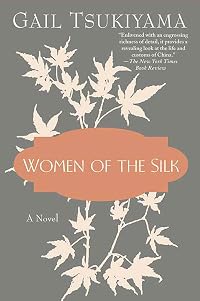
Women of the Silk
by Gail Tsukiyama
On This Page
Description
Spanning the years between the world wars, this tale of a young Chinese girl forced to work in a silk factory describes the sisterhood of workers she discovers there.Tags
Recommendations
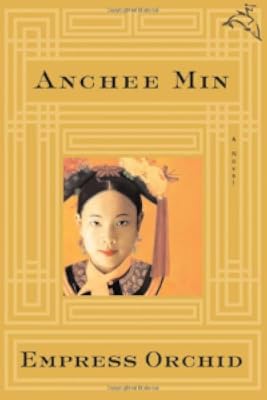
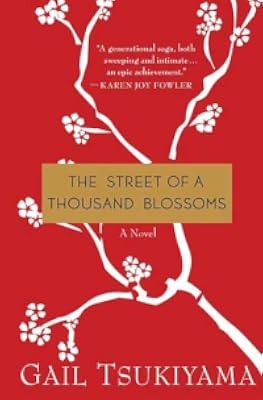
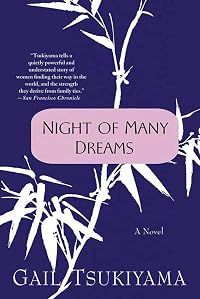
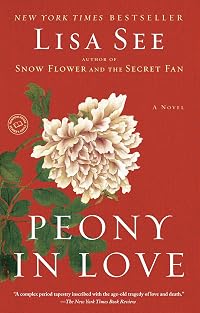

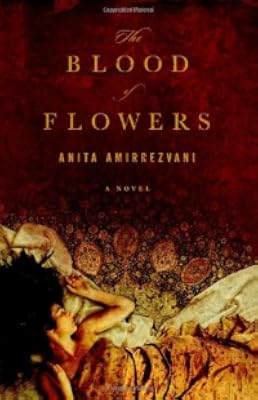
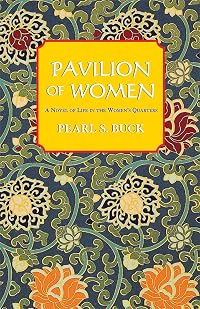
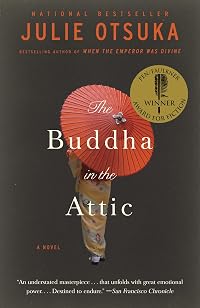
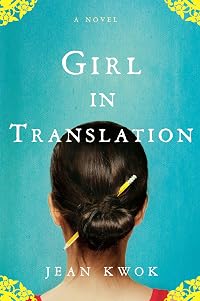
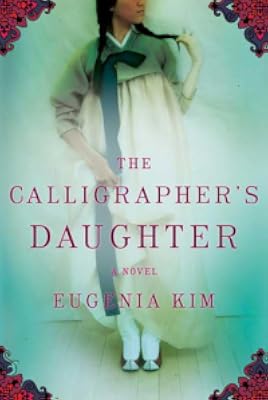
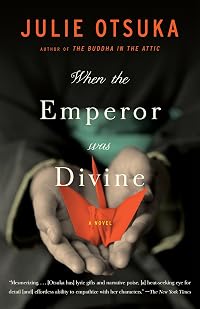
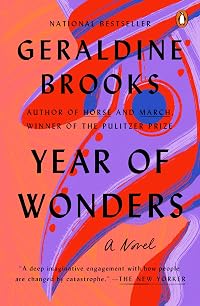
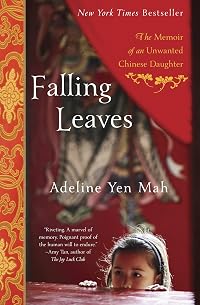
Member Recommendations
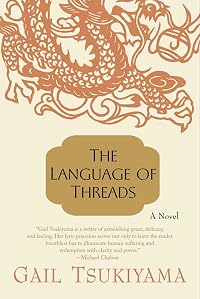
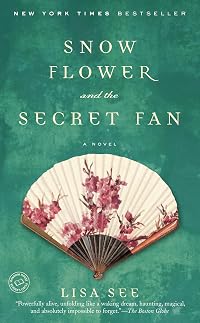
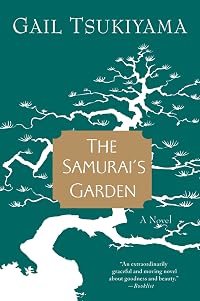
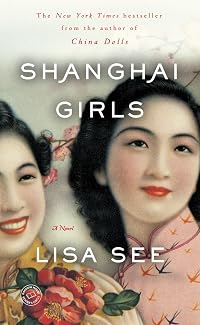
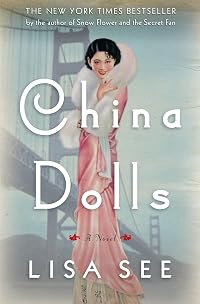
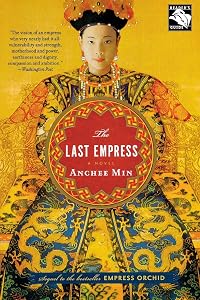
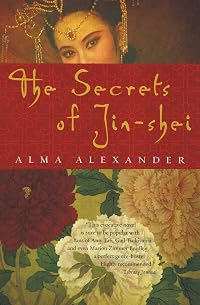
BookshelfMonstrosity Although set in the late 1920's in China, Women of Silk pairs well China Dolls because both are literary and character-driven historical novels focusing on Chinese culture. The strength of friendship during difficult situations is key, and rich historical detail permeates both stories.
Member Reviews
Women of the Silk by Gail Tsukiyama is an impressive debut novel. The author’s background in poetry shows clearly as the writing here is very evocative and lyrical. The book opens in 1919 China and tells the story of Pei a young girl from rural China as she, at age 8, is sent to a silk factory to work there among all the other young girls whose families need their wages more than they need the presence of another daughter. At first lonely and homesick, Pei eventually finds comfort and support in the kindness of the other girls who band together to nurture each other and their friendship brings the inquisitive and quick witted Pei the family love that she needs.
Covering twenty years in Pei’s life, this book also touches on the show more conditions in China at that time. The warlords are losing control, the communist are gathering power and the Japanese have invaded and are spreading horror in their path. While these events seem far away to Pei and her friends, they eventually find themselves caught in the changing times. On a more personal level, Pei’s story explores the close bonds among the sisterhood of silk workers and offers a great deal of detail about the process of spinning silk. This quiet, traditional way of life is in sharp contrast to the upheaval that is on their horizon.
I found Women of the Silk to be a fascinating read and the author’s meticulous research helps to create a picture of China in years leading up to the communist take-over. The one drawback to the story was the author’s failure to really breath life into her characters. The book is very much a descriptive rather than emotional narrative. However, this was a very worth while read and I fully intend to read the sequel to this book The Language of Threads at some point. show less
Covering twenty years in Pei’s life, this book also touches on the show more conditions in China at that time. The warlords are losing control, the communist are gathering power and the Japanese have invaded and are spreading horror in their path. While these events seem far away to Pei and her friends, they eventually find themselves caught in the changing times. On a more personal level, Pei’s story explores the close bonds among the sisterhood of silk workers and offers a great deal of detail about the process of spinning silk. This quiet, traditional way of life is in sharp contrast to the upheaval that is on their horizon.
I found Women of the Silk to be a fascinating read and the author’s meticulous research helps to create a picture of China in years leading up to the communist take-over. The one drawback to the story was the author’s failure to really breath life into her characters. The book is very much a descriptive rather than emotional narrative. However, this was a very worth while read and I fully intend to read the sequel to this book The Language of Threads at some point. show less
This work of historical fiction takes us to early 20th century China and the unique position of the women who worked in the silk factories in lieu of marriage, in order to help their families survive hard times.
Pei is but a child, about 9 years old, when her father, a struggling farmer, takes her to Auntie Yee’s house in the “large” village that has several silk factories. Unaware that this is more than just a visit, an adventure with her father, Pei goes with the kind Auntie Yee to “see the house” only to realize too late that her father has left her there. While she is heartbroken at first, she does eventually accept the kindness and friendship of other girls in the house and begins to learn the work of the silk factory. show more More importantly, she forms a close bond with the girls and women she comes to view as her new family.
I loved the unexpected strength and determination of these young women as they made their own way in a culture that restricted opportunities for women. The independence they gained, though initially forced on them, became their most prized attribute. They forged strong bonds and were successful in going against the male owners of the plant to demand better working conditions and shorter work hours.
The novel ends just as the Japanese invasion in 1938 ends their way of life, and Pei, along with a younger “sister” heads out for the next phase of their life’s journey.
This is one of Tsukiyama’s earlier works. It was interesting and engaging, and I’m glad I read it, but it isn’t up to the excellence so evident in her later novels. show less
Pei is but a child, about 9 years old, when her father, a struggling farmer, takes her to Auntie Yee’s house in the “large” village that has several silk factories. Unaware that this is more than just a visit, an adventure with her father, Pei goes with the kind Auntie Yee to “see the house” only to realize too late that her father has left her there. While she is heartbroken at first, she does eventually accept the kindness and friendship of other girls in the house and begins to learn the work of the silk factory. show more More importantly, she forms a close bond with the girls and women she comes to view as her new family.
I loved the unexpected strength and determination of these young women as they made their own way in a culture that restricted opportunities for women. The independence they gained, though initially forced on them, became their most prized attribute. They forged strong bonds and were successful in going against the male owners of the plant to demand better working conditions and shorter work hours.
The novel ends just as the Japanese invasion in 1938 ends their way of life, and Pei, along with a younger “sister” heads out for the next phase of their life’s journey.
This is one of Tsukiyama’s earlier works. It was interesting and engaging, and I’m glad I read it, but it isn’t up to the excellence so evident in her later novels. show less
Women of the Silk is set in rural China from 1919 to 1938. The novel follows the life of Pei, a young girl sent by her impoverished family to work in the silk factories. It covers Pei’s experiences within the sisterhood of silk workers. It is a story of personal growth, as Pei suffers the initial trauma of parental abandonment, acquires increased confidence through skilled work, and cultivates her ability to make independent choices. She bonds with Lin, who serves as both mentor and surrogate mother. The silk sisterhood provides a refuge for the women where they develop friendships and a mutual support system. Themes include empowerment, chosen family, and resilience.
The silk industry represented one of the few opportunities for women show more to achieve economic independence in a society that offered them limited options. Themes include empowerment, chosen family, and resilience. This novel beautifully portrays female friendships. It provides a welcome change from more conventional novels centered on marriage and motherhood. Through Pei's journey, we see how economic conditions shape lives, how community can constitute family, and how women in a patriarchal society can, under the right conditions, forge their own paths. It is a quiet, reflective novel that I very much enjoyed. show less
The silk industry represented one of the few opportunities for women show more to achieve economic independence in a society that offered them limited options. Themes include empowerment, chosen family, and resilience. This novel beautifully portrays female friendships. It provides a welcome change from more conventional novels centered on marriage and motherhood. Through Pei's journey, we see how economic conditions shape lives, how community can constitute family, and how women in a patriarchal society can, under the right conditions, forge their own paths. It is a quiet, reflective novel that I very much enjoyed. show less
Spanning the years between the world wars, this tale of a young Chinese girl, Pei, forced to work in a silk factory describes the sisterhood of workers she discovers there. (summary from ISBN 0312099436).
I found much of the history in this book fascinating, but as a novel, it seemed rather flat. None of the characters were fully developed and it was difficult to care about them. A major theme in this story was the women organizing to strike against the owner of the factory for better working conditions and wages. I wasn't sure if that was a fact...it seemed early in history for labor strikes, especially among Asian women. Interesting story, but not compelling.
I found much of the history in this book fascinating, but as a novel, it seemed rather flat. None of the characters were fully developed and it was difficult to care about them. A major theme in this story was the women organizing to strike against the owner of the factory for better working conditions and wages. I wasn't sure if that was a fact...it seemed early in history for labor strikes, especially among Asian women. Interesting story, but not compelling.
Gail Tsukiyama's story of a little girl whose farmer father must virtually sell her to the silk factory in order to keep his farm and the rest of his family to survive is surprisingly gentle for all the harshness and cruelty that its inhabitants suffer. But that was the culture of the time. A China struggling through the depression, the threat of Japanese invasion, and Chiang Kai-shek, just trying to hold on to who and what they were in the midst of chaos.
Tsukiyama does not shy from telling the reality and yet also retains that gentleness in her main character of Pei. It is definitely a story of innocence lost in many ways. There is a longing for what was and yet an acceptance of the changes tomorrow may bring.
This was the first of show more Tsukiyama's books I've read and I will definitely return for more. show less
Tsukiyama does not shy from telling the reality and yet also retains that gentleness in her main character of Pei. It is definitely a story of innocence lost in many ways. There is a longing for what was and yet an acceptance of the changes tomorrow may bring.
This was the first of show more Tsukiyama's books I've read and I will definitely return for more. show less
I purchased this book used from eBay in October after it was recommended by a friend as a good book club selection. I picked it up now since I thought it would be an interesting follow-up to Snow Flower and the Secret Fan by Lisa See.
And so it was.
Snow Flower and the Secret Fan ends in the 1920s just as Women of the Silk is beginning. Both books are set in the same general area of the country so many of the customs portrayed in Women of the Silk were already familiar.
Women of the Silk is the story of Pei, a headstrong, inquisitive middle daughter of a poor farmer who is sold to work in the silk factories to help her family survive a near famine. While this is traumatic for both Pei and her parents, in Pei's case, it turns out to be a show more positive and possibly life-saving move.
The book has a strong but subtle feminist streak and it does not dwell on the negative aspects of the silk workers' lives.
Neither the ups nor downs are presented in an overly emotionally gripping fashion but the author does create a well-crafted sense of foreboding towards the end of the book that enhances the book's page-turning appeal. show less
And so it was.
Snow Flower and the Secret Fan ends in the 1920s just as Women of the Silk is beginning. Both books are set in the same general area of the country so many of the customs portrayed in Women of the Silk were already familiar.
Women of the Silk is the story of Pei, a headstrong, inquisitive middle daughter of a poor farmer who is sold to work in the silk factories to help her family survive a near famine. While this is traumatic for both Pei and her parents, in Pei's case, it turns out to be a show more positive and possibly life-saving move.
The book has a strong but subtle feminist streak and it does not dwell on the negative aspects of the silk workers' lives.
Neither the ups nor downs are presented in an overly emotionally gripping fashion but the author does create a well-crafted sense of foreboding towards the end of the book that enhances the book's page-turning appeal. show less
I chose to read Women of the Silk because I thought it would be one of those stories that touches you emotionally. By the midway point, I had become disenchanted with it. I continued solely out of a sick compulsion to finish what I'd started.
WotS has chapters but, within those chapters, it also occasionally switches viewpoints. The result is a feeling of reading many disjointed short stories, few of which I care about. Tsukiyama just didn't devote enough time to any one character for me to feel emotionally attached. It feels less like she's telling a story and more like she's merely reporting facts, sort of like you might do when recounting your day's activities in a personal diary.
Pei, the "main" character with whom we spend the most show more time, is too squeaky clean for me to connect with. She refers to herself as a disobedient child - compared to her sister Li - and yet the most disobedient thing she ever does is ask questions. I understand this would have been strongly frowned upon during that time in China but her character feels disappointingly flat. I don't even feel her aging as there was never any point in the story where I felt anything had changed.
By the end of the book, Tsukiyama is routinely skipping through the years at what feels like a rapid pace. I noticed a trend of jumping two years ahead which she likely adopted in order to stay true to historical events (the book ends in 1938, just before the start of World War II). Tsukiyama even shifts scenes abruptly within individual chapters; it was so jarring that I practically began speed reading, no longer caring to take notice of smaller details. And that ending! We meet a new character, again abruptly, and then the book ends...
It also feels like she tried to cover one too many topics for any single one to matter. That isn't to say that a book must focus on one or two topics; life is complex, I totally get it. But I don't feel that I got enough depth to appreciate the story she was trying to create. By my count, she touched upon the terrible work conditions at silk factories, the abuse of women in general, World War II, and lesbianism (I think?). In addition to there being too many topics and not enough coverage, my main character is just so bland that I really don't care what she thinks. She's so plastic, how could I be anything but indifferent? Her manner of relating things to us is robotic, I can't bring myself to feel for her even when she's describing feelings of anxiety. In fact, there are a number of passages in which all that is being described is how she feels; these passages left me wondering what the point was of writing a standalone paragraph letting us know that Pei had had a nightmare...and not a single one made me feel for her!
A minor issue would be the repeated use of the wrong tense for the word "seem". At least half a dozen times, Tsukiyama intended to say that something "seemed" this way or "seemed" that way. What got printed, however, was "seem" over and over again...
While I didn't detest the book, if given the chance to choose again, I would have picked a different book to read. show less
WotS has chapters but, within those chapters, it also occasionally switches viewpoints. The result is a feeling of reading many disjointed short stories, few of which I care about. Tsukiyama just didn't devote enough time to any one character for me to feel emotionally attached. It feels less like she's telling a story and more like she's merely reporting facts, sort of like you might do when recounting your day's activities in a personal diary.
Pei, the "main" character with whom we spend the most show more time, is too squeaky clean for me to connect with. She refers to herself as a disobedient child - compared to her sister Li - and yet the most disobedient thing she ever does is ask questions. I understand this would have been strongly frowned upon during that time in China but her character feels disappointingly flat. I don't even feel her aging as there was never any point in the story where I felt anything had changed.
By the end of the book, Tsukiyama is routinely skipping through the years at what feels like a rapid pace. I noticed a trend of jumping two years ahead which she likely adopted in order to stay true to historical events (the book ends in 1938, just before the start of World War II). Tsukiyama even shifts scenes abruptly within individual chapters; it was so jarring that I practically began speed reading, no longer caring to take notice of smaller details. And that ending! We meet a new character, again abruptly, and then the book ends...
It also feels like she tried to cover one too many topics for any single one to matter. That isn't to say that a book must focus on one or two topics; life is complex, I totally get it. But I don't feel that I got enough depth to appreciate the story she was trying to create. By my count, she touched upon the terrible work conditions at silk factories, the abuse of women in general, World War II, and lesbianism (I think?). In addition to there being too many topics and not enough coverage, my main character is just so bland that I really don't care what she thinks. She's so plastic, how could I be anything but indifferent? Her manner of relating things to us is robotic, I can't bring myself to feel for her even when she's describing feelings of anxiety. In fact, there are a number of passages in which all that is being described is how she feels; these passages left me wondering what the point was of writing a standalone paragraph letting us know that Pei had had a nightmare...and not a single one made me feel for her!
A minor issue would be the repeated use of the wrong tense for the word "seem". At least half a dozen times, Tsukiyama intended to say that something "seemed" this way or "seemed" that way. What got printed, however, was "seem" over and over again...
While I didn't detest the book, if given the chance to choose again, I would have picked a different book to read. show less
Members
- Recently Added By
Lists

Childhood: Books for or about children in different cultures around the wor
345 works; 17 members
Author Information

12 Works 7,374 Members
Gail Tsukiyama was born in San Francisco, where she later pursued her B. A. and M. A. at San Francisco State University. Tsukiyama is a lecturer at the San Francisco State University and a book reviewer for the San Francisco Chronicle. Tsukiyama has written Night of Many Dreams, Women of the Silk, and The Samurai's Garden. She is also the show more recipient of an Academy of American Poets award. (Bowker Author Biography) show less
Work Relationships
Is contained in
Has as a student's study guide
Common Knowledge
- Canonical title
- Women of the Silk
- Original publication date
- 1991
- Important places
- Hong Kong; China
- Epigraph
- Wind, light and time ever revolve,
Let us then enjoy life as best we can.
--Tu Fu, "The Winding River" - Dedication
- TO MY MOTHER who taught me to embrace the past
- First words
- 1919
Her first memory of pain was an image of her mother. - Last words
- (Click to show. Warning: May contain spoilers.)Pei took a deep breath and could feel Lin's presence there besideher, watching and smiling as the boat danced upon the water toward Hong Kong.
- Original language
- English
Classifications
Statistics
- Members
- 1,558
- Popularity
- 14,652
- Reviews
- 34
- Rating
- (3.78)
- Languages
- Dutch, English, French, German
- Media
- Paper, Audiobook, Ebook
- ISBNs
- 16
- ASINs
- 5