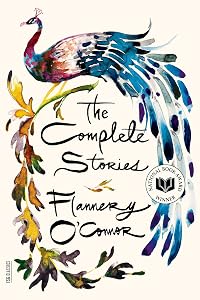
Complete Stories
by Flannery O'Connor 
On This Page
Description
Winner of the National Book Award The publication of this extraordinary volume firmly established Flannery O'Connor's monumental contribution to American fiction. There are thirty-one stories here in all, including twelve that do not appear in the only two story collections O'Connor put together in her short lifetime--Everything That Rises Must Converge and A Good Man Is Hard to Find. O'Connor published her first story, "The Geranium," in 1946, while she was working on her master's degree at show more the University of Iowa. Arranged chronologically, this collection shows that her last story, "Judgement Day"--sent to her publisher shortly before her death—is a brilliantly rewritten and transfigured version of "The Geranium." Taken together, these stories reveal a lively, penetrating talent that has given us some of the most powerful and disturbing fiction of the twentieth century. Also included is an introduction by O'Connor's longtime editor and friend, Robert Giroux. show lessTags
Recommendations
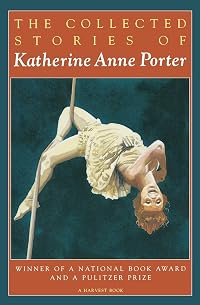
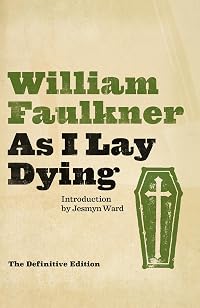

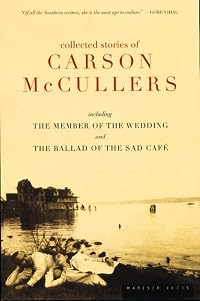
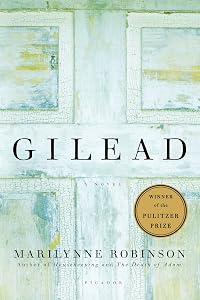

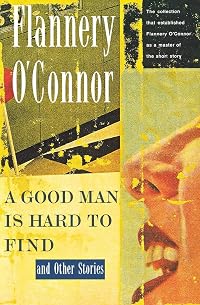


Member Recommendations

by Cecrow
Member Reviews
Flannery O’Connor more than earns the label of “required reading” (particularly for the Southern Christian), but she comes with a warning label, as well. She’s anything but safe. To a culture that invokes Jesus as the polite god of manners and tradition, O’Connor violently introduces the God of confrontational grace. Her stories serve as windows of revelation, through which an upsetting and redemptive Christ is burning off His whitewash and reclaiming His place as King. Prepare to work a bit with an O’Connor story, as she never lays all her cards on the table. Revelation is probably the best starting place, as she most openly does in that story what she’s attempting to do in all her stories. And, as a prolific writer, she show more has quite a following; so, I would recommend reading her alongside the guidance of the many podcasts and videos that break down her work. Also, this particular collection is arranged in chronological order, which means that O’Connor’s least mature work is offered first; it might be more advantageous to read the book from back to front. show less
What I love about Flannery O’Connor is this certain realistic and raw approach to storytelling she had which I find seldom elsewhere in literature. You don’t find this kind of liberality very often, where the author’s characters aren’t all angels (God forbid). O’Connor, though a Christian, wasn’t afraid to show things as they are and as she saw them, regardless of how “immoral” or “shocking” it might have been to her audience. Why should a writer mar her or his characters just to be decent and destroy the underlying message?
I had heard so much about Flannery O'Connor I thought I'd check her out. Lordamercy! If you're ever having a wonderful time: enjoying a cool breeze on a warm day, the dogs are running, the birds are singing, your children have made you feel like a good mother - she'll slap those feelings of joy and hope right out of you. I think this line from A Good Man is Hard to Find pretty much defines her view of people: "She would have been a good woman," the Misfit said "if it had been somebody there to shoot her every minute of her life."
I read 5 of her stories:
The Enduring Chill
Everything That Rises Must Converge
A Good Man Is Hard to Find
Judgment Day
A View of the Woods
and I think that'll be enough, unless my life begins to go off on such a show more wild spree of happiness that I need to bring myself down a peg or two. show less
I read 5 of her stories:
The Enduring Chill
Everything That Rises Must Converge
A Good Man Is Hard to Find
Judgment Day
A View of the Woods
and I think that'll be enough, unless my life begins to go off on such a show more wild spree of happiness that I need to bring myself down a peg or two. show less
I usually find short stories unsatisfying, 'stunted novels' that are over before the characters can develop, but Flannery O' Connor's writing has opened my eyes to how the right words used effectively are far more powerful than a novel's worth of page-filling dialogue and description. She really mastered the art of capturing a character perfectly in a paragraph or two, so that the reader is aware of their backstory and can view the story from their perspective, though not always in sympathy with their thoughts and actions. Whether old or young, male or female, parent or child, O'Connor projects human fantasies and fears via the introspection of her characters, who go through the ugly, petty and cynical emotions and moods that we can all show more relate to but few will admit to. The gothic dramas played out in some of the stories, particularly those that form part of her novel 'Wise Blood', may be far from common experience, but the characters and their feelings are very real - the isolation of the old man in 'The Geranium'/'Judgement Day', the frustration of Mrs Cope in 'A Circle in the Fire' and self-destructive jealousy of the son in 'The Comforts of Home'.
Flannery O'Connor's thirty-one short stories, written over twenty years until her death in 1964, tackle larger themes such as religion and segregation through the personal dilemmas of single characters. Her approach is direct and unflinching, but without being obvious - I was rather worried about the religious undertone of her writing, but she wasn't trying to correct or instruct, only illustrate. The 'n' word crops up so often that her stories have no doubt been nominated for the banned books list in the US, but the use of racial slurs by that isolated breed of poor ignorant southerners left behind by the twentieth century only insults the narrator, not the reader. I view novels and stories like this not as a continuation or commendation of the past, but as a warning to contemporary readers; nor do I believe that Flannery O'Connor, a native of Georgia, was criticising or stereotyping all southerners as old-fashioned, proud and narrow-minded, but she was probably writing from experience. 'The Geranium', 'The Artificial Nigger', and 'Everything That Rises Must Coverge' deal with racial segregation and tensions, but 'Greenleaf' and 'Revelation' are also about social prejudice, and 'The Displaced Person' refers to the Holocaust in Europe.
There is so much hidden depth in this collection, and every story really made me think. My favourites, if it is possibly to choose, are the more 'ordinary' tales - 'A Stroke of Good Fortune', 'A Good Man is Hard to Find' (for the shocking yet oddly satisfying ending), General Sash in 'A Late Encounter with the Enemy', the little boy 'Bevvvuuuul' in 'The River', the horrible children in 'The View of the Woods' and 'The Lame Shall Enter First', and 'The Crop', as a study of the writer at work. Flannery O'Connor also has a talent for similes that I admire - eyes like silver fish caught in a net of red threads, and 'he seemed mute and patient, like an old sheep waiting to be let out'.
Wonderful - a lesson in writing, and a joy to read. show less
Flannery O'Connor's thirty-one short stories, written over twenty years until her death in 1964, tackle larger themes such as religion and segregation through the personal dilemmas of single characters. Her approach is direct and unflinching, but without being obvious - I was rather worried about the religious undertone of her writing, but she wasn't trying to correct or instruct, only illustrate. The 'n' word crops up so often that her stories have no doubt been nominated for the banned books list in the US, but the use of racial slurs by that isolated breed of poor ignorant southerners left behind by the twentieth century only insults the narrator, not the reader. I view novels and stories like this not as a continuation or commendation of the past, but as a warning to contemporary readers; nor do I believe that Flannery O'Connor, a native of Georgia, was criticising or stereotyping all southerners as old-fashioned, proud and narrow-minded, but she was probably writing from experience. 'The Geranium', 'The Artificial Nigger', and 'Everything That Rises Must Coverge' deal with racial segregation and tensions, but 'Greenleaf' and 'Revelation' are also about social prejudice, and 'The Displaced Person' refers to the Holocaust in Europe.
There is so much hidden depth in this collection, and every story really made me think. My favourites, if it is possibly to choose, are the more 'ordinary' tales - 'A Stroke of Good Fortune', 'A Good Man is Hard to Find' (for the shocking yet oddly satisfying ending), General Sash in 'A Late Encounter with the Enemy', the little boy 'Bevvvuuuul' in 'The River', the horrible children in 'The View of the Woods' and 'The Lame Shall Enter First', and 'The Crop', as a study of the writer at work. Flannery O'Connor also has a talent for similes that I admire - eyes like silver fish caught in a net of red threads, and 'he seemed mute and patient, like an old sheep waiting to be let out'.
Wonderful - a lesson in writing, and a joy to read. show less
It takes a lot more these days to get a rise out of me than formerly. Maybe I should feel gratitude for the warmth when I find an author who can still light a fire. Initially my impression was positive: Flannery O'Conner is plainly a brilliant writer, as proven by her very earliest stories written for her Master thesis. Most of my favourites in this collection came early on, like 'The Geranium', 'The Barber' and 'The Turkey'. Things lagged a bit through stories that later became the novel Wise Blood, but I still liked 'The Peeler' and 'Enoch and the Gorilla'. I hesitate to judge how fair she is with her depiction of black characters. It may be true to the time and settings, but there's heavy use of the vernacular, and unfortunate show more language choices that made me uncomfortable. I'm sure no author today would do it this casually.
The impact of 'A Good Man is Hard to Find' struck me breathless. It was wonderful for being so disturbing, but then she returned to that well again and again. I began to see a downward trend developing. Flannery was deeply Catholic, with little regard for material wealth. By her lights, the only moral good is in preparing for the life hereafter. This theme comes to predominate her work, in which she introduces characters (usually self-confessed heathens) whom she deems in need of spiritual awakening. The surest path to imposing this awakening is by some irrationally violent act, to demonstrate the ephemeral value of what they treasure and correct their values. In this author's hands, gangsters and ruffians are practically avenging angels sent to fix what's wrong with the self-satisfied. I found this repugnant by the time it was beating me over the head in 'A Circle in the Fire', the nadir of this collection. Any reader running light on spirituality (self included) is being targeted as if by somebody waving a knife under your nose.
I was more at ease with the tales about children's misperceptions of religious concepts, as in 'The River' and 'A Temple of the Holy Ghost', or how they can be miseducated as in 'You Can't Be Any Poorer Than Dead', but she just could not stop returning to the same punish-the-heathen trough again and again: witness 'The Displaced Person', 'Good Country People', 'Greenleaf', 'A View of the Woods' ... tiresomely predictable, and apparently there was rarely anything else to write about even with blatant racism sitting right there on the page. It's plainly described as is, and only rarely explored as in 'Everything that Rises Must Converge' and 'Judgement Day'.
In her essay “Novelist and Believer” (not in this anthology), O'Connor cautions novelists to use religious concerns in ways that do not alienate the reader, so that even those who don't care for a particular metaphor can still be moved by it. An intriguing observation from her, since she didn't fare well at demarcating this line. Some stories are open to takeaways besides their main point. There are quiet messages here about the importance of honesty, attentiveness to good parenting, etc. Unfortunately these are frequently lost in the background while she is marching once again to the same tired foreground's beat. The quality is spot on and admirable, but for me her content was not.
*Asterisk indicates stories to revisit if I return to this collection.
The Geranium* - a man looks out his window into his lost past.
The Barber* - the hopelessness of applied logic in an irrational argument.
Wildcat - a metaphor for aging and death, its inevitable stalking
The Crop - writer prefers her imagination, even when it overlaps with reality
The Turkey* - the Lord giveth, and the Lord taketh away.
The Train - Haze boards a train; he seems to have a mental disorder, an abandoned adult child mind.
The Peeler* - Haze demonstrates his difficult relationship with God.
The Heart of the Park - Haze's friend perceives something mystical in a run down museum.
A Stroke of Good Fortune - a woman is confronted with a health issue that promises good fortune.
Enoch and the Gorilla* - Enoch is beyond frustrated with his inability to connect.
A Good Man is Hard to Find* - this story took a big lurch sideways. I read it twice.
A Late Encounter with the Enemy - a man can hardly exist without his history.
The Life You Save May Be Your Own - could read two ways: regret or the lack of it for abandoning a would-be family.
The River - a child misconstrues the power of baptism.
A Circle in the Fire - the epitome of 'salvation by violence'; my least favourite in this collection.
The Displaced Person - continuing the 'salvation by violence' theme, with a slightly improving twist or two.
A Temple of the Holy Ghost - child's mixed perception of a trite Catholic phrase.
The Artificial Nigger* - unfortunate name for a good story about how we instill our fears and prejudices in the next generation.
Good Country People* - book smart meets street smart.
You Can't Be Any Poorer Than Dead - a boy both challenges and succumbs to the fears and prejudices of the previous generation.
Greenleaf - another landowner heathen gets her comeuppance, redux. Getting tired of this.
A View of the Woods* - materialism versus salvation; a more tolerable variant of her heathen comeuppance theme.
The Enduring Chill - a heathen falls victim to a self-fulfilling prophecy.
The Comforts of Home - a heathen learns a lesson about Christian charity. No one is surprised, including the sheriff.
Everything that Rises Must Converge - a heathen learns (too late?) to respect his elder. I was underwhelmed.
The Partridge Festival* - this one rises above, despite the usual trimmings. A man identifies with a shooter, or thinks he does.
The Lame Shall Enter First - a heathen learns where he should have been focusing his efforts.
Why Do the Heathen Rage? - perhaps because you keep mercilessly victimizing them, Flannery.
Revelation - a heathen learns a lesson about egocentricity.
Parker's Back* - at last, another good one. Parker wants for some direction in life, and trusts his instincts to lead him to it.
Judgement Day* - a good note to end on; a rewrite of 'The Geranium' and its stronger focus on racism. show less
The impact of 'A Good Man is Hard to Find' struck me breathless. It was wonderful for being so disturbing, but then she returned to that well again and again. I began to see a downward trend developing. Flannery was deeply Catholic, with little regard for material wealth. By her lights, the only moral good is in preparing for the life hereafter. This theme comes to predominate her work, in which she introduces characters (usually self-confessed heathens) whom she deems in need of spiritual awakening. The surest path to imposing this awakening is by some irrationally violent act, to demonstrate the ephemeral value of what they treasure and correct their values. In this author's hands, gangsters and ruffians are practically avenging angels sent to fix what's wrong with the self-satisfied. I found this repugnant by the time it was beating me over the head in 'A Circle in the Fire', the nadir of this collection. Any reader running light on spirituality (self included) is being targeted as if by somebody waving a knife under your nose.
I was more at ease with the tales about children's misperceptions of religious concepts, as in 'The River' and 'A Temple of the Holy Ghost', or how they can be miseducated as in 'You Can't Be Any Poorer Than Dead', but she just could not stop returning to the same punish-the-heathen trough again and again: witness 'The Displaced Person', 'Good Country People', 'Greenleaf', 'A View of the Woods' ... tiresomely predictable, and apparently there was rarely anything else to write about even with blatant racism sitting right there on the page. It's plainly described as is, and only rarely explored as in 'Everything that Rises Must Converge' and 'Judgement Day'.
In her essay “Novelist and Believer” (not in this anthology), O'Connor cautions novelists to use religious concerns in ways that do not alienate the reader, so that even those who don't care for a particular metaphor can still be moved by it. An intriguing observation from her, since she didn't fare well at demarcating this line. Some stories are open to takeaways besides their main point. There are quiet messages here about the importance of honesty, attentiveness to good parenting, etc. Unfortunately these are frequently lost in the background while she is marching once again to the same tired foreground's beat. The quality is spot on and admirable, but for me her content was not.
*Asterisk indicates stories to revisit if I return to this collection.
The Geranium* - a man looks out his window into his lost past.
The Barber* - the hopelessness of applied logic in an irrational argument.
Wildcat - a metaphor for aging and death, its inevitable stalking
The Crop - writer prefers her imagination, even when it overlaps with reality
The Turkey* - the Lord giveth, and the Lord taketh away.
The Train - Haze boards a train; he seems to have a mental disorder, an abandoned adult child mind.
The Peeler* - Haze demonstrates his difficult relationship with God.
The Heart of the Park - Haze's friend perceives something mystical in a run down museum.
A Stroke of Good Fortune - a woman is confronted with a health issue that promises good fortune.
Enoch and the Gorilla* - Enoch is beyond frustrated with his inability to connect.
A Good Man is Hard to Find* - this story took a big lurch sideways. I read it twice.
A Late Encounter with the Enemy - a man can hardly exist without his history.
The Life You Save May Be Your Own - could read two ways: regret or the lack of it for abandoning a would-be family.
The River - a child misconstrues the power of baptism.
A Circle in the Fire - the epitome of 'salvation by violence'; my least favourite in this collection.
The Displaced Person - continuing the 'salvation by violence' theme, with a slightly improving twist or two.
A Temple of the Holy Ghost - child's mixed perception of a trite Catholic phrase.
The Artificial Nigger* - unfortunate name for a good story about how we instill our fears and prejudices in the next generation.
Good Country People* - book smart meets street smart.
You Can't Be Any Poorer Than Dead - a boy both challenges and succumbs to the fears and prejudices of the previous generation.
Greenleaf - another landowner heathen gets her comeuppance, redux. Getting tired of this.
A View of the Woods* - materialism versus salvation; a more tolerable variant of her heathen comeuppance theme.
The Enduring Chill - a heathen falls victim to a self-fulfilling prophecy.
The Comforts of Home - a heathen learns a lesson about Christian charity. No one is surprised, including the sheriff.
Everything that Rises Must Converge - a heathen learns (too late?) to respect his elder. I was underwhelmed.
The Partridge Festival* - this one rises above, despite the usual trimmings. A man identifies with a shooter, or thinks he does.
The Lame Shall Enter First - a heathen learns where he should have been focusing his efforts.
Why Do the Heathen Rage? - perhaps because you keep mercilessly victimizing them, Flannery.
Revelation - a heathen learns a lesson about egocentricity.
Parker's Back* - at last, another good one. Parker wants for some direction in life, and trusts his instincts to lead him to it.
Judgement Day* - a good note to end on; a rewrite of 'The Geranium' and its stronger focus on racism. show less
My eye has passed over this book many a time in our home library, a leftover from one of my wife's college literature classes. I always assumed Flannery O'Connor was some Irish dude, but imagine my surprise when I finally cracked the book open and found the author was a woman from Georgia intent on giving Mark Twain a run for his money on how many times she could use the N-word.
These are mean and moody short stories that occasionally take a stab at cheesy shock ending but often meander into a helpless shrug about the crappiness of humanity. There's a whole lot of racism and portraits of characters that will feed anyone's general misanthropy.
I'm not sure I could handle this tone over the course of any of O'Connor's novels (two of which show more were expanded out of some of the stories here) but it was interesting to parse this collection out into a single short story every day or two over the last couple months. Dreary, but interesting.
FOR REFERENCE:
Contents: The Geranium -- The Barber -- Wildcat -- The Crop -- The Turkey -- The Train -- The Peeler -- The Heart of the Park -- A Stroke of Good Fortune -- Enoch and the Gorilla -- A Good Man Is Hard to Find -- A Late Encounter with the Enemy -- The Life You Save May Be Your Own -- The River -- A Circle in the Fire -- The Displaced Person -- A Temple of the Holy Ghost -- The Artificial Nigger -- Good Country People -- You Can't Be Any Poorer Than Dead -- Greenleaf -- A View of the Woods -- The Enduring Chill -- The Comforts of Home -- Everything That Rises Must Converge -- The Partridge Festival -- The Lame Shall Enter First -- Why Do the Heathen Rage? -- Revelation -- Parker's Back -- Judgment Day show less
These are mean and moody short stories that occasionally take a stab at cheesy shock ending but often meander into a helpless shrug about the crappiness of humanity. There's a whole lot of racism and portraits of characters that will feed anyone's general misanthropy.
I'm not sure I could handle this tone over the course of any of O'Connor's novels (two of which show more were expanded out of some of the stories here) but it was interesting to parse this collection out into a single short story every day or two over the last couple months. Dreary, but interesting.
FOR REFERENCE:
Contents: The Geranium -- The Barber -- Wildcat -- The Crop -- The Turkey -- The Train -- The Peeler -- The Heart of the Park -- A Stroke of Good Fortune -- Enoch and the Gorilla -- A Good Man Is Hard to Find -- A Late Encounter with the Enemy -- The Life You Save May Be Your Own -- The River -- A Circle in the Fire -- The Displaced Person -- A Temple of the Holy Ghost -- The Artificial Nigger -- Good Country People -- You Can't Be Any Poorer Than Dead -- Greenleaf -- A View of the Woods -- The Enduring Chill -- The Comforts of Home -- Everything That Rises Must Converge -- The Partridge Festival -- The Lame Shall Enter First -- Why Do the Heathen Rage? -- Revelation -- Parker's Back -- Judgment Day show less
I am not given to rereading books, but after decades of book collecting, I go back to Flannery O'Connor's extraordinary stories again and again. If my house was on fire, I'd get the kids out, grab my dog-eared first edition, (God willing, in that order) and run.
Members
- Recently Added By
Lists

Top-Rated Books on LibraryThing
272 works; 116 members

Radcliffe's 100 Best Novel of the 20th Century
100 works; 32 members

501 Must-Read Books
529 works; 72 members
Favourite Books
1,819 works; 308 members

20th Century Literature
1,161 works; 55 members

The Top Ten: Writers Pick Their Favorite Books
240 works; 30 members

Short Story Collections and Anthologies
261 works; 42 members

National Book Award - Fiction
78 works; 10 members

Unread books
1,063 works; 87 members
Harold Bloom - The Western Canon: D. The Chaotic Age
833 works; 24 members

1970s
657 works; 23 members

Llibres que he llegit el 2012
28 works; 1 member

Literary Witches
86 works; 4 members
American Lit for Eng 11 Research Project
368 works; 6 members

Summer Reading 2015
18 works; 1 member

Books Read in 2021
5,361 works; 113 members

Mustich's 1000 Books to Read Before You Die: A Life Changing List
1,001 works; 19 members

The 150 Greatest Novels of All Time
150 works; 6 members

.
396 works; 1 member
Author Information

168+ Works 29,885 Members
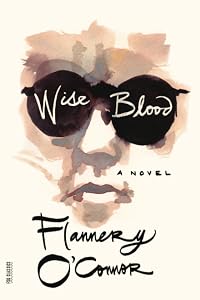
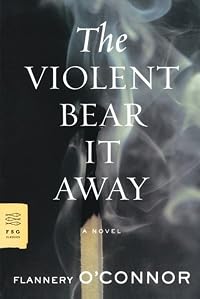
Flannery O'Connor was born in Savannah, Georgia. She had a quiet, bookish life as a child before attending Georgia State College for Women and going on tot he Writers Workshop at the State University of Iowa, where she earned a Master of Fine Arts degree. Her 1949 dissertation consisted of six short stories, one of which she developed into her show more first novel, Wise Blood (1952). Wise Blood is the story of a fanatical, wandering preacher who sets out to found a "church of truth without Jesus Christ crucified." The book introduces some of the religious themes that run throughout O'Connor's later work. Her second novel, The Violent Bear It Away (1960), is the story of murder involving a Tennessee backwoods preacher and a small boy. Once again, O'Connor explores unusual manifestation of religion and human eccentricities. Although O'Connor produced only a small body of work during her relatively brief lifetime, she has received much critical attention. O'Connor suffered from lupus, an inherited disease, which crippled her and cut short her life, and so her creative work was largely compressed within a decade of the 1950's. Her father also dies of Lupus when she was 15 years old. O'Connor is frequently praised as being the most creative and distinctive writer of this period. The two most notable aspects of her fiction are its religious themes and its commentary on the oppressive traditions of the mid-twentieth-century Deep South. (Bowker Author Biography) show less
Flannery O'Connor has a Legacy Library. Legacy libraries are the personal libraries of famous readers, entered by LibraryThing members from the Legacy Libraries group.
Some Editions
Awards and Honors
Awards
Notable Lists
Series
Belongs to Publisher Series
Work Relationships
Contains
Has as a student's study guide
Common Knowledge
- Canonical title
- Complete Stories
- Original title
- The Complete Stories
- Original publication date
- 1971
- People/Characters
- Enoch Emery; Francis Marion Tarwater; Hazel Motes (a/k/a Hazel Weaver); Asa Hawks (as Asa Shrike and Asa Moats); Sabbath Lily Hawks (as Sabbath Moats); Francis Marion Tarwater
- Important places
- Georgia, USA; New York, New York, USA
- Related movies
- The Displaced Person (1977), Wise Blood (1979). (1977 | 1979)
- First words
- Old Dudley folded into the chair he was gradually molding to his own shape and looked out the window fifteen feet away into another window framed by blackened red brick.
- Last words
- (Click to show. Warning: May contain spoilers.)Now she rests well at night and her good looks have mostly returned.
- Blurbers
- Koontz, Dean; Pritchett, V S; Lee, Hermione; Clemons, Walter
- Original language
- English
- Disambiguation notice
- Contents: The Geranium -- The Barber -- Wildcat -- The Crop -- The Turkey -- The Train -- The Peeler -- The Heart of the Park -- A Stroke of Good Fortune -- Enoch and the Gorilla -- A Good Man Is Hard to Find -- A Late Encoun... (show all)ter with the Enemy -- The Life You Save May Be Your Own -- The River -- A Circle in the Fire -- The Displaced Person -- A Temple of the Holy Ghost -- The Artificial Nigger -- Good Country People -- You Can't Be Any Poorer Than Dead -- Greenleaf -- A View of the Woods -- The Enduring Chill -- The Comforts of Home -- Everything That Rises Must Converge -- The Partridge Festival -- The Lame Shall Enter First -- Why Do the Heathen Rage? -- Revelation -- Parker's Back -- Judgment Day
Classifications
Statistics
- Members
- 7,746
- Popularity
- 1,464
- Reviews
- 74
- Rating
- (4.45)
- Languages
- 6 — English, French, Italian, Polish, Portuguese, Spanish
- Media
- Paper, Ebook
- ISBNs
- 28
- ASINs
- 37