
Roots: The Saga of an American Family
by Alex Haley
On This Page
Description
It begins with a birth in an African village in 1750, and ends two centuries later at a funeral in Arkansas. And in that time span, an unforgettable cast of men, women, and children come to life, many of them based on the people from Alex Haley's own family tree. When Alex was a boy growing up in Tennessee, his grandmother used to tell him stories about their family, stories that went way back to a man she called the African who was taken aboard a slave ship bound for Colonial America. As an show more adult, Alex spent twelve years searching for documentation that might authenticate what his grandmother had told him. In an astonishing feat of genealogical detective work, he discovered the name of the "African"--Kunta Kinte--as well as the exact location of the village in West Africa from where he was abducted in 1767. Roots is based on the facts of his ancestry, and the six generations of people. show lessTags
Recommendations

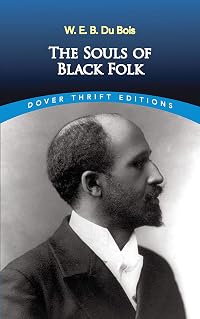
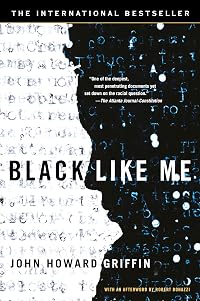
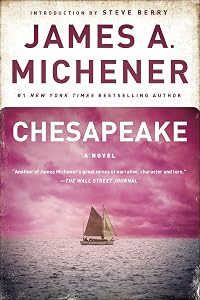
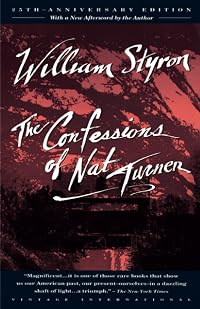
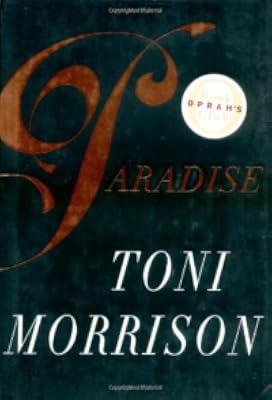

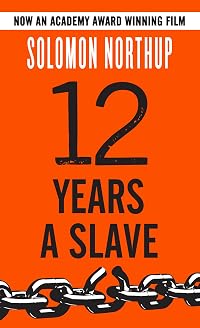
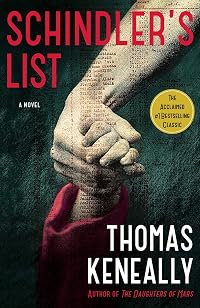
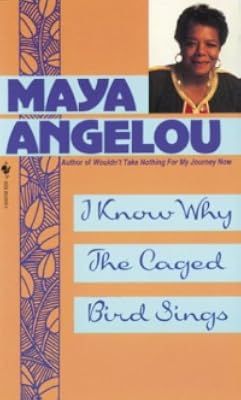
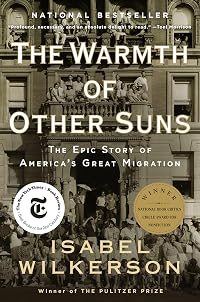


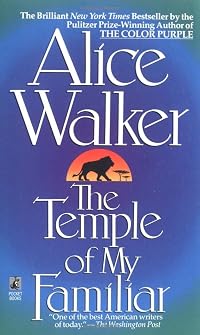
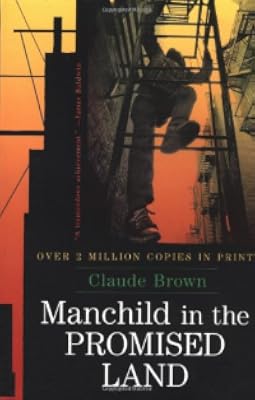
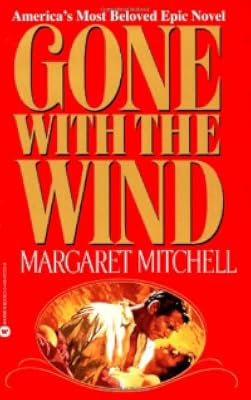
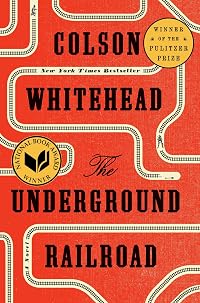

Member Recommendations

by Clurb
mariamreza Also leads the reader through an emotional roller coaster, experiencing the hope and despair of the characters from poor/ oppressed communities.
21
Member Reviews
The concept of this book is ambitious, and intriguing. There are both advantages and disadvantages of this narrow approach to telling black America's history—what it lacks in breadth, it makes up for in depth. And vice-versa, it must be said. The conditions of slavery described here seem—to my imperfect understanding—to be a sort of median among the range of conditions that existed. But having some sense of the extremes makes for a much fuller understanding. That said, of course, it can hardly be the job of one single book to create that fuller understanding. And the depth of experience described here is really valuable.
I loved the book, and highly recommend it. But since I don't have much to say about that which hasn't already show more been said before, let me point out two things I wasn't wild about. The first is the technique Haley used to try and locate the narrative in time for his readers. Slave conversations full of names, locations, and other specific details did the expository work he wanted them to do, I suppose, but they were jarringly unrealistic. Especially in a book with so much rich detail, they really took me out of the narrative. I would much rather he simply named the years at the beginning of each chapter, or something along those lines. His characters could then have made vague allusions to events (as they surely would have in real life), rather than speaking about them as though they were teaching a survey course.
The second issue I have is more significant. Haley deals with the most recent generation or two in about as much space as it takes him to describe individual days and nights earlier in the book. It's not hard to imagine why he might do this. He may have just been ready to move on. Perhaps he thought his reader would be familiar enough with recent history so that his description wouldn't add much, and perhaps he thought recent history was simply less important than previous generations. Surely he also felt some (economic, professional, literary) pressure to get the thing done and to keep the length manageable. I have to wonder whether there was ever a discussion of making it a two-volume work, to allow more space for this part of the story, but I doubt it was seriously considered. I'm conscious of this lack, though, and it feels like a real one, partly because of Isabel Wilkerson's The Warmth of Other Suns. She points out quite well, I think, the way this chapter of America's race history has been underestimated and undervalued. She also shows quite well how individual stories can be used to illuminate it. It's a shame, really, that Haley didn't do the same.
But again, I really liked this book, those two complaints notwithstanding. I'm also aware of the controversy surrounding Haley's claims about how factual the book is. I'm put off by that, certainly. But I never assumed the book was at all factual until I finally reached the end (where he makes that claim). So I'm judging it here on its merits as a work of historical fiction, and on that ground I think it stands pretty firmly. show less
I loved the book, and highly recommend it. But since I don't have much to say about that which hasn't already show more been said before, let me point out two things I wasn't wild about. The first is the technique Haley used to try and locate the narrative in time for his readers. Slave conversations full of names, locations, and other specific details did the expository work he wanted them to do, I suppose, but they were jarringly unrealistic. Especially in a book with so much rich detail, they really took me out of the narrative. I would much rather he simply named the years at the beginning of each chapter, or something along those lines. His characters could then have made vague allusions to events (as they surely would have in real life), rather than speaking about them as though they were teaching a survey course.
The second issue I have is more significant. Haley deals with the most recent generation or two in about as much space as it takes him to describe individual days and nights earlier in the book. It's not hard to imagine why he might do this. He may have just been ready to move on. Perhaps he thought his reader would be familiar enough with recent history so that his description wouldn't add much, and perhaps he thought recent history was simply less important than previous generations. Surely he also felt some (economic, professional, literary) pressure to get the thing done and to keep the length manageable. I have to wonder whether there was ever a discussion of making it a two-volume work, to allow more space for this part of the story, but I doubt it was seriously considered. I'm conscious of this lack, though, and it feels like a real one, partly because of Isabel Wilkerson's The Warmth of Other Suns. She points out quite well, I think, the way this chapter of America's race history has been underestimated and undervalued. She also shows quite well how individual stories can be used to illuminate it. It's a shame, really, that Haley didn't do the same.
But again, I really liked this book, those two complaints notwithstanding. I'm also aware of the controversy surrounding Haley's claims about how factual the book is. I'm put off by that, certainly. But I never assumed the book was at all factual until I finally reached the end (where he makes that claim). So I'm judging it here on its merits as a work of historical fiction, and on that ground I think it stands pretty firmly. show less
Born in the mid-1700s into a Ghanaian village, Kunta had been warned time after time of the dangers of the toubob, pale men who would kidnap and steal you away if you weren't careful. He'd never seen a toubob yet, but suddenly one morning following sentinel duty he is captured and packed aboard a ship to suffer months of immobility, indignities and revoltingly foul conditions. Little is he aware that his miseries are only just beginning.
First, a few issues: Following extensive genealogic, geographic and historical research, Haley wrote and published this book as a work of nonfiction. As far as I can tell, it is catalogued as nonfiction by most libraries, though dialogue, which takes up a significant portion of the book, is 100% show more imagined. This is problematic. I can think of no other work of nonfiction in which all conversations are completely invented and most events are pure speculation. In addition, though I won't go into detail here, scholars have discovered documents which contradict essential components of the lineage presented. I can understand Haley's motivation — unlike most descendants of enslaved people, he was able to trace his ancestry back to a real, identifiable individual, and that person's story deserved to be told.
Academic reservations aside, this is a phenomenal, well-written book, and even as "merely" fiction it would be enough. I was surprised early on by how much of the story takes place before Kunta's capture and descent into slavery, but in hindsight it was a genius move on Haley's part. In taking the time to flesh out Kunta's life and family from birth, as well as complex aspects of his culture regarding food, religion, farming, social norms and morality, the reader becomes invested in his humanity. The savage brutality of the white people he encounters while subsequently enslaved provides a stark and ironic contrast. Make no mistake, this book will break your heart. Over and over, just when it seems that Kunta's family's circumstances marginally improve, something always occurs that obliterates any semblance of security that had dared germinate. show less
First, a few issues: Following extensive genealogic, geographic and historical research, Haley wrote and published this book as a work of nonfiction. As far as I can tell, it is catalogued as nonfiction by most libraries, though dialogue, which takes up a significant portion of the book, is 100% show more imagined. This is problematic. I can think of no other work of nonfiction in which all conversations are completely invented and most events are pure speculation. In addition, though I won't go into detail here, scholars have discovered documents which contradict essential components of the lineage presented. I can understand Haley's motivation — unlike most descendants of enslaved people, he was able to trace his ancestry back to a real, identifiable individual, and that person's story deserved to be told.
Academic reservations aside, this is a phenomenal, well-written book, and even as "merely" fiction it would be enough. I was surprised early on by how much of the story takes place before Kunta's capture and descent into slavery, but in hindsight it was a genius move on Haley's part. In taking the time to flesh out Kunta's life and family from birth, as well as complex aspects of his culture regarding food, religion, farming, social norms and morality, the reader becomes invested in his humanity. The savage brutality of the white people he encounters while subsequently enslaved provides a stark and ironic contrast. Make no mistake, this book will break your heart. Over and over, just when it seems that Kunta's family's circumstances marginally improve, something always occurs that obliterates any semblance of security that had dared germinate. show less
Here clearly is a powerful read, full of emotions grabbing you by the throat, the heart, the soul, and that can only leave a mark as deep as that left by slavery upon history. The author, in fact, has here fictionalised the story of his own ancestors, embedding a family history within History itself.
The book, for sure, suffers from unbalance, as, out of 700 pages at least, roughly 400 alone are solely dedicated to Kunta Kinte, the key ancestor, torn away from his motherland (Gambia) to be sold as a slave in Virginia. At first, I found such structuring very clumsy; but then why not? Wasn't such uprooting the birth certificate of African-Americans people themselves, and so the period, in their past, deserving the most attention when it show more comes to such tearing apart? What is undeniable, thought, is how dramatic and compelling is the driving narrative.
The inhumanity of the slave trade is truly harrowing. Many, of course, will think here about the authors' depictions of rapes and violence, although I was particularly moved by auctions, exposing to the full how degrading such institution was not only for Black, but for Whites also (having truly lost their humanity within such system). And indeed, slavery as recounted here truly is incomprehensible, enraging, evil and vile, making it impossible to don't feel nauseous at times because of the cowardice, scorn, cruelty underpinning it all. And yet...
And yet, it's also a story of hope, bravery, and strength. 'Roots', after all, is more than about slavery per se. It's about the human will to survive, to remain dignified even when stripped of all humanity, and to refuse to be broken by a hostile society, generation after generation. A great book indeed. show less
The book, for sure, suffers from unbalance, as, out of 700 pages at least, roughly 400 alone are solely dedicated to Kunta Kinte, the key ancestor, torn away from his motherland (Gambia) to be sold as a slave in Virginia. At first, I found such structuring very clumsy; but then why not? Wasn't such uprooting the birth certificate of African-Americans people themselves, and so the period, in their past, deserving the most attention when it show more comes to such tearing apart? What is undeniable, thought, is how dramatic and compelling is the driving narrative.
The inhumanity of the slave trade is truly harrowing. Many, of course, will think here about the authors' depictions of rapes and violence, although I was particularly moved by auctions, exposing to the full how degrading such institution was not only for Black, but for Whites also (having truly lost their humanity within such system). And indeed, slavery as recounted here truly is incomprehensible, enraging, evil and vile, making it impossible to don't feel nauseous at times because of the cowardice, scorn, cruelty underpinning it all. And yet...
And yet, it's also a story of hope, bravery, and strength. 'Roots', after all, is more than about slavery per se. It's about the human will to survive, to remain dignified even when stripped of all humanity, and to refuse to be broken by a hostile society, generation after generation. A great book indeed. show less
Our vicious history of slavery & the toll it took on our country is handled so beautifully and delicately in this brilliant genealogical story of Alex Haley’s roots. Where he could have dwelt on the worst of slavery, Haley focused on family life. It made it more real, to really feel with these characters what slavery was like. I especially appreciated the postscripts to this edition telling how Haley uncovered his roots and how he wrote this Novel—particularly his voyage to recreate Kunte Kinte’s trip across the ocean. There is no doubt in my mind why this won the Pulitzer Prize & why it is essential reading. It’s just so beautifully written especially about Gambia. We learn so so much about the lives of Africans and I just show more loved diving so deeply into that history. show less
Roots is one of those books that's been around so long that I thought I knew a lot about it before I picked it up to read it. I had always assumed it was a novel, so I was very surprised to learn that the publisher markets it as non-fiction, and that the Library of Congress classifies it as non-fiction. Alex Haley called it "faction". Now that I've read it, my opinion hasn't changed. I would call it historical fiction. While the last 35 pages, where the author himself makes his appearance, is more memoir than fiction, those 35 pages represent less than 4% of the book's total. The rest of the book tells the story of Haley's ancestors embellished with thoughts, feelings, conversations, and detailed descriptions of their physical show more appearance. Although Haley does discuss his research process and some of his sources, he does not provide enough detail for other researchers to easily retrace his steps. These are characteristics of fiction, not non-fiction.
Even though I disagree with the way the book is marketed, I do like the way it's written. The characteristics that make it questionable as non-fiction are what give the book its emotional impact. Who can read it without being moved by the tragedy and dignity of Kunta Kinte's life, or Matilda's faith, or Tom's quiet strength, or the family's joy when freedom finally comes? It's one of the most influential books of the last quarter of the 20th century, and it continues to inspire Americans of all ethnicities to learn more about our own family histories and how our lives are shaped by those who came before us. show less
Even though I disagree with the way the book is marketed, I do like the way it's written. The characteristics that make it questionable as non-fiction are what give the book its emotional impact. Who can read it without being moved by the tragedy and dignity of Kunta Kinte's life, or Matilda's faith, or Tom's quiet strength, or the family's joy when freedom finally comes? It's one of the most influential books of the last quarter of the 20th century, and it continues to inspire Americans of all ethnicities to learn more about our own family histories and how our lives are shaped by those who came before us. show less
3.5 stars
In the mid-18th century, Kunta Kinte grew up in “The” Gambia, Africa. When he is about 17 “rains”, he is kidnapped and taken on a boat across the “big water” and finds himself in a strange new world; he doesn’t even understand the language. He tries to escape multiple times, but the 4th time, he is caught and punished severely. The book follows not only the rest of his life, but the lives of some of his descendants. Next up, his daughter, Kizzy; one of her sons, who later becomes known as “Chicken George”, as he raises and fights roosters; George’s son Tom becomes a blacksmith…
It’s starts of as fiction, but the last few chapters chronicle Alex Haley’s genealogical research and findings. I know there show more was controversy, but Haley even says himself that the people are real and as many situations as he could find in his research as possible are real; obviously specific conversations, etc. are fictionalized. I’ve added tags for historical fiction and biographical fiction, but also memoir for the last chapters. This had nothing to do with my rating, though.
3.5 stars for me is good. I liked it. It’s also very long. I don’t often rate really long books much higher than 3.5 stars. I think that it’s hard to sustain “really good” in a book over 800+ pages! (And keep in mind, I’m generally a tough rater, anyway.) I admire that this was a groundbreaking book at the time it was published, and it reached a wider audience with the tv mini-series. I only watched the movie as an adult (I was a kid when it would have originally aired on tv). There was a longer section in Africa than I’d expected. I wasn’t crazy about the cockfighting (though, obviously it happened – and sadly, still does). Overall, though, good book. I’m glad I finally read it. show less
In the mid-18th century, Kunta Kinte grew up in “The” Gambia, Africa. When he is about 17 “rains”, he is kidnapped and taken on a boat across the “big water” and finds himself in a strange new world; he doesn’t even understand the language. He tries to escape multiple times, but the 4th time, he is caught and punished severely. The book follows not only the rest of his life, but the lives of some of his descendants. Next up, his daughter, Kizzy; one of her sons, who later becomes known as “Chicken George”, as he raises and fights roosters; George’s son Tom becomes a blacksmith…
It’s starts of as fiction, but the last few chapters chronicle Alex Haley’s genealogical research and findings. I know there show more was controversy, but Haley even says himself that the people are real and as many situations as he could find in his research as possible are real; obviously specific conversations, etc. are fictionalized. I’ve added tags for historical fiction and biographical fiction, but also memoir for the last chapters. This had nothing to do with my rating, though.
3.5 stars for me is good. I liked it. It’s also very long. I don’t often rate really long books much higher than 3.5 stars. I think that it’s hard to sustain “really good” in a book over 800+ pages! (And keep in mind, I’m generally a tough rater, anyway.) I admire that this was a groundbreaking book at the time it was published, and it reached a wider audience with the tv mini-series. I only watched the movie as an adult (I was a kid when it would have originally aired on tv). There was a longer section in Africa than I’d expected. I wasn’t crazy about the cockfighting (though, obviously it happened – and sadly, still does). Overall, though, good book. I’m glad I finally read it. show less
Roots is a great novel regardless of the hoax genealogy. I assumed it was fiction anyway. It doesn't take away from an archetypal story of millions of black Americans. Haley can tell a powerful story while at the same time revealing history. For example having recently read The Internal Enemy, a history of slavery in Virginia from the 1770s to 1830s, the place and times come alive in personal color through Roots. Haley correctly emphasizes white fear of the "internal enemy". Indeed Roots is comparable to Schindler's List how it introduced and educated generations of Americans to a hard topic; and serves as a corrective to romanticized white literature about the antebellum south.
Members
- Recently Added By
Lists

Best Historical Fiction
620 works; 262 members

501 Must-Read Books
529 works; 72 members

Gen X Library
245 works; 4 members

BitLife
212 works; 4 members

Shaykh Hamza's Book Recommendations
439 works; 3 members

Must-Read Books by Black Authors
114 works; 92 members

Black Authors
386 works; 28 members

Top Five Books of 2019
387 works; 111 members

Best books made into television
66 works; 4 members

Race and Racism in America
23 works; 1 member

Page Turners
185 works; 11 members

Blue Pyramid 1,276 Best Books of All Time
1,248 works; 32 members
Top-Rated Books on LibraryThing
272 works; 117 members

Read the book and saw the movie
1,170 works; 195 members

The American Experience
173 works; 18 members
Historical Fiction
889 works; 91 members

Time-Sweep Novels
28 works; 3 members

Tennessee Writings
5 works; 1 member

Best family sagas
244 works; 34 members

1970s
657 works; 23 members

Carole's List
445 works; 13 members
Best Family Stories
241 works; 22 members

Unread books
1,063 works; 83 members
School Made Us Read It
380 works; 197 members
Author Information

32+ Works 20,592 Members
Alex Haley's full name was Alexander Palmer Haley. He was born in Ithaca, N.Y. in 1921, and grew up in Henning, Tenn. Educated at Elizabeth City Teacher's College in North Carolina, Haley became a journalist while serving in the United States Coast Guard from 1939 to 1959. After retiring from the service, Haley moved to Los Angeles, finding show more fulltime employment as a freelance writer. First known for his work as co-author and editor of the highly regarded Autobiography of Malcolm X, Haley's biggest success stemmed from his Pulitzer Prize-winning book, 'Roots: The Saga of an American Family.' Extensively researched and based in part on Haley's own African roots, the work became a national bestseller and, in addition to the Pulitzer, won the Springarn Medal in 1977. Roots was also adapted into one of the first television miniseries and garnered some of the highest ratings in television history. His next book, "Queen", told the story of Queen Haley, Alex Haley's paternal grandmother. He died before this work was completed and it was finished by David Stevens. This was also adapted for television. Another work, "Mama Flora's Family" compiled from Haley's unpublished writings, continues the family saga and was published in 1998. Alex Haley died in 1992 in Seattle, Washington. He was 71 years old. (Bowker Author Biography) show less
Some Editions
Awards and Honors
Awards
Distinctions
Series
Belongs to Publisher Series
Work Relationships
Is contained in
Contains
Has the adaptation
Is abridged in
Has as a study
Has as a supplement
Has as a student's study guide
Has as a teacher's guide
Common Knowledge
- Canonical title
- Roots; Roots: The Saga of an American Family
- Original title
- Roots
- Original publication date
- 1976
- People/Characters
- Kunta Kinte; Kizzy; Bell; Chicken George; Omoro Kinte (father of Kunta); Binta Kinte (mother of Kunta) (show all 7); Lamin (younger brother of Kunta)
- Important places
- The Gambia; North Carolina, USA; Jufureh, The Gambia (as Juffure)
- Related movies
- Roots (1977 | IMDb); Roots: The Next Generations (1979 | IMDb); Roots: The Gift (1988 | IMDb)
- Epigraph*
- Wij zwarten
- Dedication
- It wasn't planned that Roots' researching and writing finally would take twelve years. Just by chance it is being published in the Bicentennial Year of the United States. So I dedicate Roots as a birthday offe... (show all)ring to my country within which most of Roots happened.
- First words
- Early in the spring of 1750, in the village of Juffure, four days upriver from the coast of The Gambia, West Africa, a manchild was born to Omoro and Binta Kinte.
- Last words
- (Click to show. Warning: May contain spoilers.)So Dad has joined the others up there. I feel that they do watch and guide, and I also feel that they join me in the hope that this story of our people can help to alleviate the legacies of the fact that preponderantly the histories have been written by the winners.
- Publisher's editor*
- Bart, István
- Blurbers
- Baldwin, James
- Original language
- English
- Canonical LCC
- E185.97.H24 A33 2015
*Some information comes from Common Knowledge in other languages. Click "Edit" for more information.
Classifications
- Genre
- Fiction and Literature
- DDC/MDS
- 929.20973 — History & geography Biographies, Genealogy, Heraldry Genealogy, Flags, Heraldry, Civil Records Families Families Geographic Treatment (Families) North America (Families) United States (Families)
- LCC
- E185.97 .H24 .A33 — History of the United States United States Elements in the population Afro-Americans Biography. Genealogy
- BISAC
Statistics
- Members
- 7,638
- Popularity
- 1,505
- Reviews
- 100
- Rating
- (4.26)
- Languages
- 21 — Arabic, Czech, Danish, Dutch, English, Finnish, French, German, Hungarian, Italian, Japanese, Norwegian (Bokmål), Norwegian, Panjabi, Polish, Portuguese, Spanish, Swahili, Swedish, Tamil, Turkish
- Media
- Paper, Audiobook, Ebook
- ISBNs
- 117
- UPCs
- 4
- ASINs
- 96