
Demian
by Hermann Hesse
On This Page
Description
A brilliant psychological portrait of a troubled young man's quest for self-awareness, this coming-of-age novel achieved instant critical and popular acclaim upon its 1919 publication. A landmark in the history of twentieth-century literature, it reflects Hermann Hesse's preoccupation with the duality of human nature and the pursuit of spiritual fulfillment.Tags
Recommendations
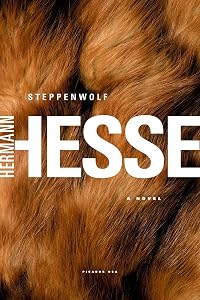
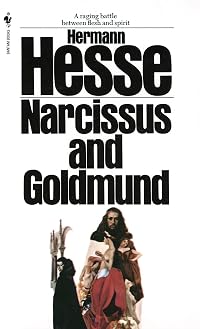


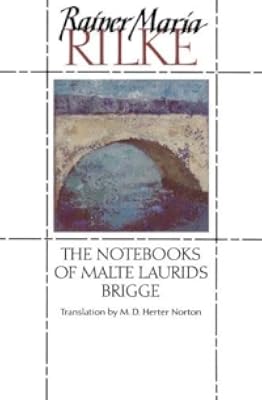

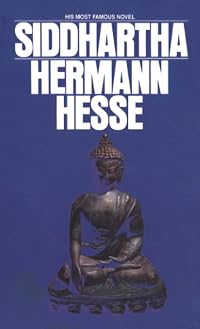

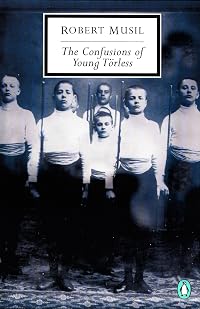
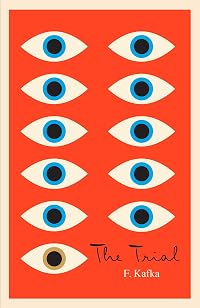




















Member Recommendations

Member Reviews
This year I have read several works of fiction set in the years approaching the Great War more than a century ago. There were Pynchon's Against the Day and Buchan's The Thirty-Nine Steps. More than either of those, Hesse's Demian is known as a defining work of that time--and yet my appreciation for it is set well outside of its historical framing.
There's no question that Demian has esoteric dimensions. The mental powers and Cainite heresy of Max and the deviant Gnostic hieraticism of Pistorius--even the pathetic asceticism of Knauer--are redolent of occult initiation. But more particularly Max Demian and Eva Demian are the embodiments of the protagonist Emil's two critical tasks in coming to himself: embracing his genius and overcoming show more his personality.
I first read the opening chapter of Demian in German when I was doing language study in high school. I have an initiate's guidance to thank for my return to it some forty-four years later, after I have subsequently read Hesse's later major novels. It is as compelling and significant as they are, and on many counts, more accessible. show less
There's no question that Demian has esoteric dimensions. The mental powers and Cainite heresy of Max and the deviant Gnostic hieraticism of Pistorius--even the pathetic asceticism of Knauer--are redolent of occult initiation. But more particularly Max Demian and Eva Demian are the embodiments of the protagonist Emil's two critical tasks in coming to himself: embracing his genius and overcoming show more his personality.
I first read the opening chapter of Demian in German when I was doing language study in high school. I have an initiate's guidance to thank for my return to it some forty-four years later, after I have subsequently read Hesse's later major novels. It is as compelling and significant as they are, and on many counts, more accessible. show less
"If it cannot break its egg's shell, a chick will die without being born. We are the chick. The world is our egg. If we don't crack the world's shell, we will die without being born. Smash the world's shell! For the revolution of the world!"
This is not a quote from the book, but from Revolutionary Girl Utena, a show that changed my life and referenced Demian extensively. Now I can see why.
I would call it one of my favourite reads of the year - so why the five star? Because I believe as bildungsroman it fails in some respects. Those who grow up alienated from their peers all face the same seduction - the idea that you are better than Them, the ones who turn their nose at you and can't seem to understand the largeness of life like you show more can. It's one I struggle with, one I've seen my loved ones struggle with. But the more we lean into it, the more we alienate ourselves.
This book was a wonderful sort of catharsis for that idea. I enjoy Gnosticism and Jungian psychology, so I had fun with all how the book engaged with those ideas. The way Hesse describes that inner world and outer world speaks to an unspoken perception of the world I sometimes forget others share. Emil and Demian's relationship is a touch homoerotic and fascinating to follow over the years. In many, many, many respects, it's a very satisfying book.
However it fails for me in propagating that seduction; There are more mature ways to go about it. In my head I couldn't help but compare Emil to Raskolnikov.
If you've watched RGU: I find it very fitting that the Student Council should quote extensively from Demian, in ways I will go into another time. show less
This is not a quote from the book, but from Revolutionary Girl Utena, a show that changed my life and referenced Demian extensively. Now I can see why.
I would call it one of my favourite reads of the year - so why the five star? Because I believe as bildungsroman it fails in some respects. Those who grow up alienated from their peers all face the same seduction - the idea that you are better than Them, the ones who turn their nose at you and can't seem to understand the largeness of life like you show more can. It's one I struggle with, one I've seen my loved ones struggle with. But the more we lean into it, the more we alienate ourselves.
This book was a wonderful sort of catharsis for that idea. I enjoy Gnosticism and Jungian psychology, so I had fun with all how the book engaged with those ideas. The way Hesse describes that inner world and outer world speaks to an unspoken perception of the world I sometimes forget others share. Emil and Demian's relationship is a touch homoerotic and fascinating to follow over the years. In many, many, many respects, it's a very satisfying book.
However it fails for me in propagating that seduction; There are more mature ways to go about it. In my head I couldn't help but compare Emil to Raskolnikov.
If you've watched RGU: I find it very fitting that the Student Council should quote extensively from Demian, in ways I will go into another time. show less
First published in 1919, I think Demian would have hit me differently had I been reading it in the postwar ethos. Unlike Narcissus and Goldmund, this felt rather dated, but intriguing enough as a love child of Catcher in the Rye and the Sorrows of Young Werther with a dash of Nietzche and Freud thrown in.
The book was originally published under the alias "Emil Sinclair" who is, in fact, the novel's protagonist. The book isn't really so much about Max Demian, the weirdly prophetic and enigmatic figure who pops up in Sinclair's life, but more about Sinclair's psychological and spiritual growth---or journey (that might be more apt). Hesse isn't subtle about light vs. dark, but what is refreshing about the story is that the two aren't show more diametrically opposed, or at least that seems to be the insinuation. Women are used as functional figures rather than significant characters, and I can't help but think that the beautiful Beatrice was a nod to Dante and Frau Eva seemed connected to Eden's Eve. Given that one of Demian's first expositions is a reinterpretation of Cain and Abel's story, this sort of intertextuality wouldn't surprise me. Sinclair's dreams are fairly central features to the story, and Hesse's exposure to Freud and Jung is laid bare: "...dreams that had emanated from the unconscious, of dreams in which humanity groped after its intimations of future potentialities" (123).
Sinclair is young and impressionable, at least at first, and Demian rocks his world with his individualistic interpretation of Biblical stories and way of living. The organist Pistorius is a transitional figure, as Sinclair is still looking for a mentor, but also feeling the tug of a need to make his own path. When Sinclair stays with Demian's mother (Frau Eva), things get a bit Oedipal, and fairly cultish. It is hard to connect to Sinclair, who seems to become increasingly Übermenschisch (in some ways), but he's interesting enough (as we are privy to his every rumination and dream). I'd reckon that this would not be the best introduction to Hesse for the uninitiated, but a worthwhile read for those who loved his other works. show less
The book was originally published under the alias "Emil Sinclair" who is, in fact, the novel's protagonist. The book isn't really so much about Max Demian, the weirdly prophetic and enigmatic figure who pops up in Sinclair's life, but more about Sinclair's psychological and spiritual growth---or journey (that might be more apt). Hesse isn't subtle about light vs. dark, but what is refreshing about the story is that the two aren't show more diametrically opposed, or at least that seems to be the insinuation. Women are used as functional figures rather than significant characters, and I can't help but think that the beautiful Beatrice was a nod to Dante and Frau Eva seemed connected to Eden's Eve. Given that one of Demian's first expositions is a reinterpretation of Cain and Abel's story, this sort of intertextuality wouldn't surprise me. Sinclair's dreams are fairly central features to the story, and Hesse's exposure to Freud and Jung is laid bare: "...dreams that had emanated from the unconscious, of dreams in which humanity groped after its intimations of future potentialities" (123).
Sinclair is young and impressionable, at least at first, and Demian rocks his world with his individualistic interpretation of Biblical stories and way of living. The organist Pistorius is a transitional figure, as Sinclair is still looking for a mentor, but also feeling the tug of a need to make his own path. When Sinclair stays with Demian's mother (Frau Eva), things get a bit Oedipal, and fairly cultish. It is hard to connect to Sinclair, who seems to become increasingly Übermenschisch (in some ways), but he's interesting enough (as we are privy to his every rumination and dream). I'd reckon that this would not be the best introduction to Hesse for the uninitiated, but a worthwhile read for those who loved his other works. show less
I read this book as a teenager and loved it. Inspired me to read a good bit more Hesse- Siddhartha, Magister Ludi, Narcissus .... but .... i hated this book now that i am older. Throughout the book we learn that Emil thinks deeper, feels deeper, carries the mark of god and is, of course, right to look down on all the common people everywhere and everywhen. That is except, for the special Demian, his bland mother, Napoleon, Loyola, Nietzsche and perhaps a couple of others - they were ok, after all- but - the rest- pshaw... away with them. How stupid and silly they all seem with their loves, their work, their gods. Thankfully we are so far above that - though it is so painful and lonely. Ack! While i can accept and appreciate this book show more for what i got out of it at 17- the pain of growing up and dealing with feeling out of place, etc., I assumed the book would move past that at some point- to some adult viewpoint ... but no. We do- mercifully, as it turns out, have WWI come up and that puts a stop to the whiny self indulgent blathering- and it turns out Demian himself wasn't too bad- it was always Emil that most especially grated. Yes, i should have stopped half way through, but i did finish because i remembered loving it long ago and wanted to give it the full go. show less
"So this was how I looked inside!" (pg. 70)
An eloquent bildungsroman and philosophical fever dream rolled into one, laced with Jungian archetypes. That might sound like the most uncompelling summary ever recorded, but Hermann Hesse's Demian is surprisingly bracing and easy to read. The titular Max Demian serves as a sort of teacher for our protagonist, Emil Sinclair, and it is likely no coincidence that his name is so close to 'daemon', that word for a guiding spirit or quasi-divine tutor. Emil is a turbulent youth and, through Demian, Hesse calmly and compassionately introduces us to great concepts in easily digestible form.
It is not perfect; it is improbable as a story and it is often difficult to work out what is real and what is show more being viewed through a proto-psychedelic haze. The characters don't talk like real people (particularly the teenagers talking like sophisticated philosophers) and the book has a flaw in that it is mystic rather than realistic; in my opinion, it would be more powerful in its message if it was Emil Sinclair's experiences we were parsing rather than his dreams/visions.
That said, it is a heady brew that nevertheless should prove tolerable even to those who can't usually hold their philosophical drink. Its Jungian worldview was prescient in 1919 and is one that can increasingly be seen to apply in 2019. When Hesse writes of how "the whole possession of humanity so far consisted of ideals that emanated from the unconscious soul, dreams in which humanity groped after the vague notions they had of their future potentialities" (pg. 138) and how one must "reconcile the godly and the satanic" (pg. 88), we see the sort of Logocentric philosophy that has its contemporary advocacy in the popular person of Jordan B. Peterson. Like Peterson, Hesse gives the ideas practical application – that is, in how his characters use them to influence their approaches to life. With its approachable and lyrical advocacy of individuality and moving forward into the world, accepting both the light and the dark, Demian should hold the place that the likes of The Catcher in the Rye currently occupies as a teenage rite of passage. show less
An eloquent bildungsroman and philosophical fever dream rolled into one, laced with Jungian archetypes. That might sound like the most uncompelling summary ever recorded, but Hermann Hesse's Demian is surprisingly bracing and easy to read. The titular Max Demian serves as a sort of teacher for our protagonist, Emil Sinclair, and it is likely no coincidence that his name is so close to 'daemon', that word for a guiding spirit or quasi-divine tutor. Emil is a turbulent youth and, through Demian, Hesse calmly and compassionately introduces us to great concepts in easily digestible form.
It is not perfect; it is improbable as a story and it is often difficult to work out what is real and what is show more being viewed through a proto-psychedelic haze. The characters don't talk like real people (particularly the teenagers talking like sophisticated philosophers) and the book has a flaw in that it is mystic rather than realistic; in my opinion, it would be more powerful in its message if it was Emil Sinclair's experiences we were parsing rather than his dreams/visions.
That said, it is a heady brew that nevertheless should prove tolerable even to those who can't usually hold their philosophical drink. Its Jungian worldview was prescient in 1919 and is one that can increasingly be seen to apply in 2019. When Hesse writes of how "the whole possession of humanity so far consisted of ideals that emanated from the unconscious soul, dreams in which humanity groped after the vague notions they had of their future potentialities" (pg. 138) and how one must "reconcile the godly and the satanic" (pg. 88), we see the sort of Logocentric philosophy that has its contemporary advocacy in the popular person of Jordan B. Peterson. Like Peterson, Hesse gives the ideas practical application – that is, in how his characters use them to influence their approaches to life. With its approachable and lyrical advocacy of individuality and moving forward into the world, accepting both the light and the dark, Demian should hold the place that the likes of The Catcher in the Rye currently occupies as a teenage rite of passage. show less
For years I've been looking for a book that is similar to The Picture of Dorian Gray. I've read other works by Oscar Wilde, I've read other gothic Victorian era books. Nothing can quite scratch the itch.
This scratched it. Something about the philosophy and morality explored was just so deeply personal and intensely introspective on the same level. A certain beautiful loneliness that was extremely striking in both books.
However it was still a thoroughly different journey, an exploration of the human soul, and the spiritual, intellectual, physical, and emotional pains of adolescence.
I have a feeling I will being thinking about this book for a very long time.
This scratched it. Something about the philosophy and morality explored was just so deeply personal and intensely introspective on the same level. A certain beautiful loneliness that was extremely striking in both books.
However it was still a thoroughly different journey, an exploration of the human soul, and the spiritual, intellectual, physical, and emotional pains of adolescence.
I have a feeling I will being thinking about this book for a very long time.
Demian waxes and wanes poetically about the human spirit, but in contrast to Siddhartha, it is surprisingly direct in its focus on individualism and self-reliance.
The story is relatively simple – a bullied, questioning, and morally grey protagonist encounters an aloof individual named Demian, who takes a peculiar interest in him and makes him question Biblical allegories. He gains such an outsized influence in the protagonist’s life that even his dreams and art are dictated by him. It is worth mentioning that the novel contains so much Freudian influence that it should list him as a second author.
However, the meat of the story lies in its subtext – its glorification of individualism to insufferability, the “Mark of Cain” show more through which society’s disaffected individuals find each other, and its focus on dreams as a tool for discovering oneself. While it is hard to disagree with the novel’s aims and its unsubtle hints for people to start finding spiritual meaning, Demian sometimes becomes too heavy-handed, and it doesn’t have nearly as interesting characters, monologues, and plotlines as those in Siddhartha. I’d recommend Demian only because it makes note of the fact that solitude is important in one’s life and cannot be found in the company of others, however evident this sounds. show less
The story is relatively simple – a bullied, questioning, and morally grey protagonist encounters an aloof individual named Demian, who takes a peculiar interest in him and makes him question Biblical allegories. He gains such an outsized influence in the protagonist’s life that even his dreams and art are dictated by him. It is worth mentioning that the novel contains so much Freudian influence that it should list him as a second author.
However, the meat of the story lies in its subtext – its glorification of individualism to insufferability, the “Mark of Cain” show more through which society’s disaffected individuals find each other, and its focus on dreams as a tool for discovering oneself. While it is hard to disagree with the novel’s aims and its unsubtle hints for people to start finding spiritual meaning, Demian sometimes becomes too heavy-handed, and it doesn’t have nearly as interesting characters, monologues, and plotlines as those in Siddhartha. I’d recommend Demian only because it makes note of the fact that solitude is important in one’s life and cannot be found in the company of others, however evident this sounds. show less
Members
- Recently Added By
Lists

Unread books
1,063 works; 87 members

20th Century Literature
1,161 works; 54 members

1910s
90 works; 16 members

Favorite Coming of Age Novels.
164 works; 51 members

Existentialism
90 works; 9 members

Books Read in 2016
4,666 works; 197 members

Llibres que he llegit el 2017
49 works; 1 member

Jenny, read this!
6 works; 1 member

CH-Autoren (Swiss Authors)
265 works; 9 members

The Essential Western Mystics
66 works; 4 members

At the Library
217 works; 1 member

Florida
366 works; 3 members

Recommended Reading : 600 Classics Reviewed, Editors of Salem Press, 2015
634 works; 6 members

Gen X Library
245 works; 4 members

Works referenced in Welcome to the Hyunam-Dong Bookshop
19 works; 1 member
Talk Discussions
Past Discussions
English Boy Thinks He Finds Eden in Name that Book (January 2012)
Author Information

1,012+ Works 93,749 Members
Hermann Hesse (July 2, 1877 -- August 9, 1962) was a German poet, novelist, essayist and painter. His best-known works included Steppenwolf, Siddhartha, and The Glass Bead Game, each of which explores an individual's search for authenticity, self-knowledge and spirituality. In 1946, he received the Nobel Prize in Literature. Hess publicly show more announced his views on the savagery of World War I, and was considered a traitor. He moved to Switzerland where he eventually became a naturalized citizen. He warned of the advent of World War II, predicting that cultureless efficiency would destroy the modern world. His theme was usually the conflict between the elements of a person's dual nature and the problem of spiritual loneliness. His first novel, Peter Camenzind, was published in 1904. His masterpiece, Death and the Lover (1930), contrasts a scholarly abbot and his beloved pupil, who leaves the monastery for the adventurous world. Steppenwolf (1927), a European bestseller, was published when defeated Germany had begun to plan for another war. It is the story of Haller, who recognizes in himself the blend of the human and wolfish traits of the completely sterile scholarly project. During the 1960s Hesse became a favorite writer of the counter culture, especially in the United States, though his critical reputation has never equaled his popularity. Hermann Hesse died in 1962. (Bowker Author Biography) show less
Some Editions
Awards and Honors
Notable Lists
Series
Belongs to Publisher Series
Suhrkamp Geschenkbuch (suhrkamp taschenbuch 4353)
Work Relationships
Is contained in
Has as a commentary on the text
Has as a student's study guide
Common Knowledge
- Canonical title
- Demian
- Original title
- Demian
- Original publication date
- 1919
- People/Characters
- Emil Sinclair; Max Demian; Frau Eva; Pistorius; Franz Kromer; Knauer
- Important places
- Black Forest, Baden-Württemberg, Germany
- Important events
- World War I
- Epigraph
- I wanted only to try to live in accord with the promptings which came from my true self. Why was that so very difficult?
- First words
- I cannot tell my story without reaching a long way back. If it were possible I would reach back farther still - into the very first years of my childhood, and beyond them into distant ancestral past.
- Last words
- (Click to show. Warning: May contain spoilers.)But when on the many such occasions I find the key and look deep down into myself where the images of destiny lie slumbering in the dark mirror, I only need to bend my head over the black mirror to see my own image which now wholly resembles him, my friend and leader.
- Blurbers
- Leary, Timothy
- Original language
- German
- Disambiguation notice
- 3518367064 1974 softcover German suhrkamp taschenbuch 206
3518463535 2012 softcover German suhrkamp taschenbuch 4353 (Geschenkbuch)
3518765809 2011 eBook German suhrkamp
Classifications
- Genres
- Fiction and Literature, General Fiction
- DDC/MDS
- 833.912 — Literature & rhetoric German & related literatures German fiction 1900- 1900-1990 1900-1945
- LCC
- PT2617 .E85 .D413 — Language and Literature German, Dutch and Scandinavian literatures German literature Individual authors or works 1860/70-1960
- BISAC
Statistics
- Members
- 8,406
- Popularity
- 1,314
- Reviews
- 125
- Rating
- (3.92)
- Languages
- 32 — Albanian, Armenian, Catalan, Chinese, Czech, Danish, Dutch, English, Esperanto, Estonian, Finnish, French, German, Greek, Hungarian, Italian, Japanese, Korean, Latvian, Lithuanian, Norwegian (Bokmål), Farsi/Persian, Polish, Portuguese, Russian, Serbian, Croatian, Slovenian, Spanish, Swedish, Thai, Turkish
- Media
- Paper, Audiobook, Ebook
- ISBNs
- 247
- UPCs
- 2
- ASINs
- 118