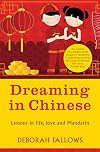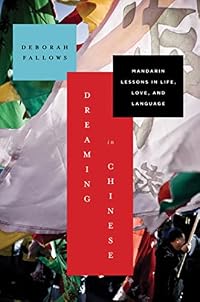
Dreaming in Chinese
by Deborah Fallows
On This Page
Description
Fallows unravels Chinese culture by explaining the intricacies and subtleties of Mandarin, devoting each chapter to a particular linguistic quirk.Tags
Recommendations











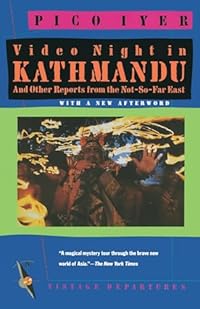
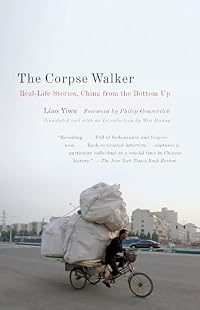



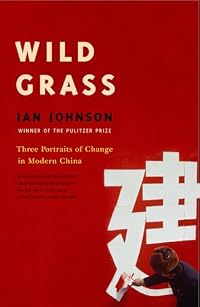













Member Recommendations
Member Reviews
This book is utterly delightful and full of many truths. As someone who has studied Chinese, I found sections of this book laugh out loud funny and others where I just had to shake my head knowingly in agreement. In “When rude is polite”, Ms. Fallows described exactly the way I think about and speak Chinese. Chinese does seem rude to a mannered Southern girl, so I’m constantly peppering it with qǐng (please) and xiѐxie (thank you.) My Chinese teacher finally told me at one point to stop saying thank you so much. Thankfully, Ms. Fallows points out an alternative and one that I’ve always wondered about—ending a sentence with ahhh. It changes the meaning so that you seem to ask someone to do something rather than demand as it show more seems to non-native Chinese speakers. I’ll remember that for the future.
What Chinese student hasn’t fumbled as Ms. Fallows describes when trying to pronounce tones. I found her story of trying to ask for take-away at Taco Bell very familiar. She practiced “Yǒu dǎbāo ma?” before she asked the greeter, who didn’t understand, and when others joined him, she tried every tone available before the greeters and kitchen finally understood that she was asking if they did take-away.
I, too, have felt the “cheap thrill of using language like an insider,” when I am able to ask which word is meant by using something similar to “Xīnnián de xīn?” and I have used a crowd of people to be able to cross a busy street in China. Not only does Ms. Fallows use these vignettes to show the complexities of the language and our understanding of each other, but as a linguist she presents information on the implementation of Putonghua, or common language, throughout China, a country with many different dialects. She also describes the construction of characters and their radicals. She doesn't go into great detail but keeps it at an introductory level. In all, she does a great job of weaving together the culture and language which my lǎoshī (teacher) said is absolutely crucial to learn Chinese. She doesn't cover every aspect, but this is a small book after all.
I recommend this book for both those who are studying or have studied Chinese as well as those who would like to know more about China, its language and its culture. show less
What Chinese student hasn’t fumbled as Ms. Fallows describes when trying to pronounce tones. I found her story of trying to ask for take-away at Taco Bell very familiar. She practiced “Yǒu dǎbāo ma?” before she asked the greeter, who didn’t understand, and when others joined him, she tried every tone available before the greeters and kitchen finally understood that she was asking if they did take-away.
I, too, have felt the “cheap thrill of using language like an insider,” when I am able to ask which word is meant by using something similar to “Xīnnián de xīn?” and I have used a crowd of people to be able to cross a busy street in China. Not only does Ms. Fallows use these vignettes to show the complexities of the language and our understanding of each other, but as a linguist she presents information on the implementation of Putonghua, or common language, throughout China, a country with many different dialects. She also describes the construction of characters and their radicals. She doesn't go into great detail but keeps it at an introductory level. In all, she does a great job of weaving together the culture and language which my lǎoshī (teacher) said is absolutely crucial to learn Chinese. She doesn't cover every aspect, but this is a small book after all.
I recommend this book for both those who are studying or have studied Chinese as well as those who would like to know more about China, its language and its culture. show less
 This review was written for LibraryThing Early Reviewers.
I enjoyed this book immensely. Having been an expat in Shanghai, I readily identified with many of the author's insights into the Chinese language (or, to be exact, the Mandarin version of it), such as the lack of verb tense, the use of double verbs, compound words, and so on. Not being as gifted at picking up languages as Fallows is, however, I also had a few "Aha!" moments while reading this book, such as realizing that while an English speaker might hear little difference between the same sound spoken in the four different tones of Mandarin, to a Chinese listener, your use of the wrong tone is just as confusing as if you used a totally unrelated word in an English conversation. Thus explaining why I can say something in Chinese that show more makes sense to me, but draws blank stares from a native speaker. Fallows' other observations on Chinese culture, Chinese character, and life in the big cities (such as the ever-dangerous motorbikes) are also right on target, as is her insight into the differences between various Chinese "dialects"--which are in fact different languages. The only jarring note for me was when she said that Beijing had nary a building with a 4th, 14th, or 24th floor (4 being the most unlucky number in Chinese because it has the same sound as the Chinese word for "die".) In Shanghai, at least, I remember a lot of floors ending in 4. But this is a very small quibble. This is a very engaging, well-written book. The chapter on the earthquake in Sichuan and the efforts of the rescuers will move you at least near to tears (there was someone else in the room with me at the time and I had to hold them back....)
It would have been a great thing to have read a book like this one years ago when I was first moving to China, and I highly recommend it to anyone planning to spend more than a few days there. show less
It would have been a great thing to have read a book like this one years ago when I was first moving to China, and I highly recommend it to anyone planning to spend more than a few days there. show less
This review was written for LibraryThing Early Reviewers.If only every book about the expat experience in Asia could be as good as this! Dreaming in Chinese is not about how tough life in China is for Westerners because the food is weird and China gets everything wrong compared to Western culture. It is not about the author's disappointment that China is a modern nation instead of a giant Tang-dynasty theme park. It is not about the awesome time the author had partying at expat bars or sampling a string of Chinese girlfriends. Instead, Dreaming in Chinese is about the interplay between adapting to life in a foreign country while slowly gaining confidence in its language, and I can't think of a single book that has mirrored my experience of China with greater accuracy.
Fallows, a linguist by show more trade, does an excellent job explaining the various elements of Mandarin Chinese--the tones, the characters, the grammar, the regional variations--that make it such a challenging and rewarding language to learn. Moreover, she does so in a wonderfully crisp and precise fashion--interested readers without any background studying Chinese should have no problem understanding the complicated concepts she's discussing. Finally, Fallows has integrated these various explications with historical examples or anecdotes from her own experiences of daily life in China, elevating what could have been a simple language text or run-of-the-mill memoir to a truly enriching reading experience.
My only complaint is the haphazard way Fallows handles the Chinese words and phrases she discusses throughout the volume. In most cases, the Pinyin and Chinese characters are presented alongside their English translations; however, she omits the characters in many instances. In other places, Fallows give the characters and their translation, but no Pinyin. Then there are the times when only translations, but no characters or Pinyin are offered. Diacritical marks indicating tones are usually--but not always--included; in a few instances, phonetic English transliterations are offered after the Pinyin, but not always. The order in which these elements are introduced also varies considerably. Fallows would have done best to choose a single format (i.e. Pinyin, characters, translation, with transliterations in the appendix) and to stick to it throughout.
This is a minor complaint, however, in what is otherwise a delightful book to read. It is sure to appeal to students of Mandarin of any level, readers who have lived or traveled in China, students of modern Asia or linguistics, or anyone who's ever wondered what shopping in a Shanghai Walmart is like. You will definitely not want to miss this book. show less
Fallows, a linguist by show more trade, does an excellent job explaining the various elements of Mandarin Chinese--the tones, the characters, the grammar, the regional variations--that make it such a challenging and rewarding language to learn. Moreover, she does so in a wonderfully crisp and precise fashion--interested readers without any background studying Chinese should have no problem understanding the complicated concepts she's discussing. Finally, Fallows has integrated these various explications with historical examples or anecdotes from her own experiences of daily life in China, elevating what could have been a simple language text or run-of-the-mill memoir to a truly enriching reading experience.
My only complaint is the haphazard way Fallows handles the Chinese words and phrases she discusses throughout the volume. In most cases, the Pinyin and Chinese characters are presented alongside their English translations; however, she omits the characters in many instances. In other places, Fallows give the characters and their translation, but no Pinyin. Then there are the times when only translations, but no characters or Pinyin are offered. Diacritical marks indicating tones are usually--but not always--included; in a few instances, phonetic English transliterations are offered after the Pinyin, but not always. The order in which these elements are introduced also varies considerably. Fallows would have done best to choose a single format (i.e. Pinyin, characters, translation, with transliterations in the appendix) and to stick to it throughout.
This is a minor complaint, however, in what is otherwise a delightful book to read. It is sure to appeal to students of Mandarin of any level, readers who have lived or traveled in China, students of modern Asia or linguistics, or anyone who's ever wondered what shopping in a Shanghai Walmart is like. You will definitely not want to miss this book. show less
This review was written for LibraryThing Early Reviewers.As always, I was happy to receive another book via LibraryThing Early Reviewers. But, alas, I was not among the intended audience for Deborah Fallows's Dreaming in Chinese, given that I have a background in Asian studies. Knowing that the author has a PhD in linguistics, I certainly expected much more than a string of occasionally repetitive essays offering oversimplifications and surface reflections on life in China. (Untrue, as various blurbers cited in the book attest, is that this sort of offering--a book that uses language as a window into Chinese culture--had not been made before. For example, A. Zee's Swallowing Clouds: A Playful Journey through Chinese Culture, Language, and Cuisine, originally published by Simon & Schuster in show more 1990 and reissued by the University of Washington Press in 2002, is much more fascinating and detailed; readers of Zee's book will learn much more about the Chinese language.) And, as I see at least one other reviewer has commented, the essays aren't models of the essay form: the language isn't particularly inspired; the bridging of ideas is sometimes clumsy; the interweaving of themes doesn't always work out that well. (I'm tempted to think that the chapters had former lives, perhaps in slightly different form, in a periodical of some sort.) I didn't jot down all instances of repetition that I noticed, but some examples are here: pp. 42, 53; pp. 48–49, 152; pp. 146–47, 186. (And, while I'm being picky, I'll point out that the word "anaerobic" on the top of p. 58 should be "aerobic"; and the image on p. 119 runs into the text, cutting off a letter and punctuation mark. Such issues are typically addressed before a book is printed in paperback.) I also wasn't too keen on the author's jabs at the Japanese. (She must not have had as pleasant an experience when she lived in Japan?) One thing I did find interesting, though, was the (too-brief) discussion of orphans' names on pp. 92–93. Yes, much of what flirts with the interesting in this book is dropped as quickly as it is introduced, perhaps in the name of parsimony (or short attention spans of the imaginary audience, or a perception that the "average" American doesn't want anything more than a superficial presentation). (Oh, I must be wrong here, though, since the brief "Q&A" with the author at the end of the book offers a commentary on the audience--and Fallows states that she found that she became her own "best audience" [p. 206]. Anyone with a Ph.D. would normally demand more detail, more probing of issues, more critical reflection, more analysis, and more reliance on scholarly [not just anecdotal] sources.) Yes, the idea behind this book was indeed a good one. But, for me, the execution did not live up to the potential I envisioned (and would have found much more engaging and enlightening). show less
This review was written for LibraryThing Early Reviewers."Dreaming in Chinese" is Deborah Fallows' memoir of living and traveling in China for three years and her struggle to learn to speak and understand Mandarin Chinese. Fallows is no stranger to language-learning, being a professional linguist with a doctorate degree in the field, but Chinese is one of the world's most difficult languages for Westerners to learn.
There are all kinds of oddities about Chinese (oddities to non-native speakers, of course) that make it uniquely difficult to learn for those not raised with it from birth or from a very early age -- starting with the fact that the Chinese language is actually many different languages and dialects. Mandarin is China's official language, but there are also Cantonese, Shanghainese, show more Wu, and scores of others. Most are as different from each other as German is from English. Chinese also has a very small stock of syllables -- about 400, as opposed to 4,000 in English -- from which all Chinese words are built. The result, as you might guess, is literally countless homonyms -- words built from syllables that sound alike but have different meanings. Since the number of syllables Chinese has to work with is so small, each syllable can have dozens of different meanings. Chinese also uses tones to convey meaning, so that the same syllable spoken with a falling tone, or a rising tone, or a falling-then-rising tone, can mean very different things. The result, not surprisingly, is endless opportunities for confusion and misunderstanding, even after years of studying the language.
Fallows knew from the get-go that mastering the tones, grammar, and syllabic structure of Mandarin would not be easy. What she did not realize when she started out, and only began to understand over many months and years of living in Shanghai and Beijing, was the intensity of the connection between the Chinese language and the Chinese people. What she discovered was that the quirks and peculiarities of Chinese grammar, word usage, and tonal pronunciation were windows into the Chinese soul.
Fallows' informal, conversational writing style and her sense of humor make this book an enormous pleasure to read. As her understanding of Mandarin grows and deepens, so does her appreciation for Chinese culture and history, and just for the sheer wondrous complexity of what it means to be Chinese. show less
There are all kinds of oddities about Chinese (oddities to non-native speakers, of course) that make it uniquely difficult to learn for those not raised with it from birth or from a very early age -- starting with the fact that the Chinese language is actually many different languages and dialects. Mandarin is China's official language, but there are also Cantonese, Shanghainese, show more Wu, and scores of others. Most are as different from each other as German is from English. Chinese also has a very small stock of syllables -- about 400, as opposed to 4,000 in English -- from which all Chinese words are built. The result, as you might guess, is literally countless homonyms -- words built from syllables that sound alike but have different meanings. Since the number of syllables Chinese has to work with is so small, each syllable can have dozens of different meanings. Chinese also uses tones to convey meaning, so that the same syllable spoken with a falling tone, or a rising tone, or a falling-then-rising tone, can mean very different things. The result, not surprisingly, is endless opportunities for confusion and misunderstanding, even after years of studying the language.
Fallows knew from the get-go that mastering the tones, grammar, and syllabic structure of Mandarin would not be easy. What she did not realize when she started out, and only began to understand over many months and years of living in Shanghai and Beijing, was the intensity of the connection between the Chinese language and the Chinese people. What she discovered was that the quirks and peculiarities of Chinese grammar, word usage, and tonal pronunciation were windows into the Chinese soul.
Fallows' informal, conversational writing style and her sense of humor make this book an enormous pleasure to read. As her understanding of Mandarin grows and deepens, so does her appreciation for Chinese culture and history, and just for the sheer wondrous complexity of what it means to be Chinese. show less
This review was written for LibraryThing Early Reviewers.I think that 'memoir' might not actually be the most accurate description of Dreaming in Chinese . I didn't feel like the book was about Deborah Fallows or even her experiences, and it did not tell a story; the language itself, and to a certain extent culture, took center stage. I think the book is better described as a collection of essays about studying Mandarin, and the insights one might gain into Chinese culture by doing so. This is by no means a criticism; I thought the book was absolutely fascinating, and have been sharing bits of information I read in the book with my family and friends. I think a particular strength was Fallows's linguistic background and ability to contrast Mandarin with other languages. The book is also show more quite readable, and not a dry study in linguistics.
Of course, I think language and culture is interesting in and of itself. A description of the book as a collection of essays as opposed to memoir might help the book find readers of a similar mindset. I also think that the subtitle, 'Mandarin Lessons in Life, Love, and Language' might lead a reader to expect some sort of romance, which is not at all the case; 'love' is discussed in Dreaming in Chinese, but in the abstract. Although someone looking for a story would be disappointed, I think a person who is interested in the Mandarin language and Chinese culture will be fascinated; I know I was. show less
Of course, I think language and culture is interesting in and of itself. A description of the book as a collection of essays as opposed to memoir might help the book find readers of a similar mindset. I also think that the subtitle, 'Mandarin Lessons in Life, Love, and Language' might lead a reader to expect some sort of romance, which is not at all the case; 'love' is discussed in Dreaming in Chinese, but in the abstract. Although someone looking for a story would be disappointed, I think a person who is interested in the Mandarin language and Chinese culture will be fascinated; I know I was. show less
This review was written for LibraryThing Early Reviewers.If you love learning languages and think that the best way to learn about people and culture is through language, you will love this little book. It's basically a language learner's diary. The chapters cover topics like dialects, tones, different Chinese words and expressions. Despite the fact that the author is a linguist, this is not a book that focuses specifically on linguistics. It simply attempts to show how culture is reflected in language and vice versa.
I think if you are learning Chinese and finding it quite difficult, this book will be quite encouraging. The author herself says that it is quite challenging for her, particularly the visual part of it, i.e. writing and reading. Despite this, she obviously enjoys learning the show more language.
It's a very quick read, and I found it quite entertaining. I thought the chapter endings were rather abrupt and at times sort of awkward, like the type of endings you find in school essays, but overall a very enjoyable read, particularly if you are interested in language learning or thinking about learning Mandarin. show less
I think if you are learning Chinese and finding it quite difficult, this book will be quite encouraging. The author herself says that it is quite challenging for her, particularly the visual part of it, i.e. writing and reading. Despite this, she obviously enjoys learning the show more language.
It's a very quick read, and I found it quite entertaining. I thought the chapter endings were rather abrupt and at times sort of awkward, like the type of endings you find in school essays, but overall a very enjoyable read, particularly if you are interested in language learning or thinking about learning Mandarin. show less
This review was written for LibraryThing Early Reviewers.Members
- Recently Added By
Lists

Really Good Narrative Non-Fiction
65 works; 24 members
Author Information

6+ Works 799 Members
Deborah Fallows has lived in Shanghai and Beijing, and traveled throughout China for three years with her husband, the writer James Fallows. A Harvard graduate with a PhD in linguistics, she is the author of A Mother's Work. She has worked in research and polling for the Pew Internet American Life Project and in data architecture for Oxygen Media. show more She lives in Washington, DC. show less
Common Knowledge
- Canonical title
- Dreaming in Chinese
- Original publication date
- 2011
- People/Characters
- Deborah Fallows
- Important places
- Shanghai, China; Beijing, China; China
Classifications
Statistics
- Members
- 445
- Popularity
- 68,430
- Reviews
- 60
- Rating
- (3.63)
- Languages
- English
- Media
- Paper, Ebook
- ISBNs
- 9
- ASINs
- 7