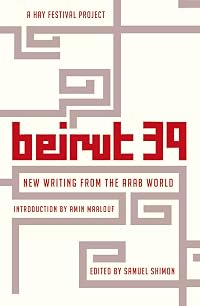
Beirut 39: New Writing from the Arab World
by Samuel Shimon (Editor)
On This Page
Description
Beirut39 is a project which aims to select and celebrate 39 of the best young Arab writers as a centrepiece of the Beirut World Capital festivities in April 2010. Following the successful launch of 'Bogota 39', which identified many of the most interesting upcoming Latin American talents, including Wendy Guerra, Junot Diaz (Pulitzer Prize), Santiago Roncagliolo and Juan Gabriel Vasquez (short-listed for the IFFP), Beirut39 will bring to worldwide attention the best work from the Arab world. show more The book will be published in English throughout the world (except the Arab world) by Bloomsbury, and in Arabic throughout the world and in English in the Arab World by Bloomsbury Qatar Foundation Publishing. show lessTags
Recommendations




Member Reviews
This book collects works from thirty-nine different Arab writers, selected by the Hay Festival in honor of Beirut's selection as the World Book Capital in 2009. Over 450 authors submitted work, which was whittled down to the thirty-nine young writers featured here; "young" being relative, as the youngest writer in the book is actually the same age as myself, and most of them were born in the 1970s.
The problem of the book, however, can be found right in the title. With thirty-nine authors to showcase in a mere 286 pages (once you subtract all the endmatter), that means each writer gets on average seven pages! That doesn't just limit writers to short stories, but short short stories. And this means that that novelists suffer particularly show more badly-- there are ten novel excerpts in the book, and most of them never quite got around to grabbing me. Several of them felt similar, with a precocious child growing up in a oppressive household. Which is okay, as I imagine a lot of these are (semi)autobiographical, and they probably go off in different directions, but I'll never know, as I only read the first seven pages. The excerpts from Abdelkader Benali's The Trip to the Slaughterhouse (about a young boy growing up, admittedly, but it was funny and painful) and Kamel Riahi's The Scalpel (about murder and intrigue involving a female university professor) were the only ones that worked for me. Oh, and I liked Ahmad Saadawi's Frankenstein in Baghdad, though more for the promise of the title than what bit of the story I got to read. (Unfortunately, the only bits of these novels that have been translated into English are those in this book; there's no way for me to read the rest of them.)
As you might imagine, the type of the material that works the best is the short story. Naturally, the page restrictions favor shorter short stories, which is a little disappointing, but though there were several stories I found forgettable, there were also several that I really liked. Adania Shibli's "At the Post Office," about a girl who censors the mail for her overbearing father, was fun and depressing. Faïza Guène's "The Start of Dying" consists of the clever recollections and observations of a newborn about her time in the womb. Mansoura Ez Eldin's "The Path to Madness" was Kafkaesque and left me wishing there was more-- I wanted to know what happened next! Probably better I never will, though, because the answer can only be disappointing. "The Pools and the Piano," by Najwa Binshatwan, was one of my favorites, about a family in a country where foreign languages and foreigners are becoming increasingly unwanted. Wajdi al Ahdal's "A Crime in Mataeem Street" was strange, but ultimately enjoyable, about a rich banker giving a virtuous person a lot of money to commit a crime just to prove that it can be done. And of the two stories by Yassin Adnan, I really liked "Small Talk in Shades of White," a one-sided conversation showing what a woman says to a man trying to pick her up in a bar.
The best entry of any sort was Abdellah Taia's "The Wounded Man," which told of a young, gay Moroccan watching an erotic film on French television without his mother knowing-- while she was in the same room! Honest (maybe too honest), but very real.
And despite my usual aversion to poetry, there were still even a few poems that I enjoyed. The ones by Abderrahim Elkhassar stand out most now that I finished.
On the other hand, though there were more that I enjoyed than I mentioned, there were definitely ones that were slogs to get through, even at their short lengths. Some I couldn't figure out what was happening-- or I just didn't care enough to try. The book's arrangement and endmatter were also a source of annoyance. The writings were arranged alphabetically by author, which I think is a lazy cop-out; I like my anthologies to provide me with a reading experience. And the endnotes, ostensibly there to explain cultural references, insulted me when in "The Wounded Man" they told me that The Wounded Man was a French erotic film, something only someone completely oblivious could have missed! That was when I stopped reading them. (They also were not indicated in-text, a pet peeve of mine.)
Though the book was often frustrating or slow, there was enough good material to make it worthwhile. My biggest disappointment with Beirut 39 is that I'll probably never be able to pick up other work by the authors I enjoyed. show less
The problem of the book, however, can be found right in the title. With thirty-nine authors to showcase in a mere 286 pages (once you subtract all the endmatter), that means each writer gets on average seven pages! That doesn't just limit writers to short stories, but short short stories. And this means that that novelists suffer particularly show more badly-- there are ten novel excerpts in the book, and most of them never quite got around to grabbing me. Several of them felt similar, with a precocious child growing up in a oppressive household. Which is okay, as I imagine a lot of these are (semi)autobiographical, and they probably go off in different directions, but I'll never know, as I only read the first seven pages. The excerpts from Abdelkader Benali's The Trip to the Slaughterhouse (about a young boy growing up, admittedly, but it was funny and painful) and Kamel Riahi's The Scalpel (about murder and intrigue involving a female university professor) were the only ones that worked for me. Oh, and I liked Ahmad Saadawi's Frankenstein in Baghdad, though more for the promise of the title than what bit of the story I got to read. (Unfortunately, the only bits of these novels that have been translated into English are those in this book; there's no way for me to read the rest of them.)
As you might imagine, the type of the material that works the best is the short story. Naturally, the page restrictions favor shorter short stories, which is a little disappointing, but though there were several stories I found forgettable, there were also several that I really liked. Adania Shibli's "At the Post Office," about a girl who censors the mail for her overbearing father, was fun and depressing. Faïza Guène's "The Start of Dying" consists of the clever recollections and observations of a newborn about her time in the womb. Mansoura Ez Eldin's "The Path to Madness" was Kafkaesque and left me wishing there was more-- I wanted to know what happened next! Probably better I never will, though, because the answer can only be disappointing. "The Pools and the Piano," by Najwa Binshatwan, was one of my favorites, about a family in a country where foreign languages and foreigners are becoming increasingly unwanted. Wajdi al Ahdal's "A Crime in Mataeem Street" was strange, but ultimately enjoyable, about a rich banker giving a virtuous person a lot of money to commit a crime just to prove that it can be done. And of the two stories by Yassin Adnan, I really liked "Small Talk in Shades of White," a one-sided conversation showing what a woman says to a man trying to pick her up in a bar.
The best entry of any sort was Abdellah Taia's "The Wounded Man," which told of a young, gay Moroccan watching an erotic film on French television without his mother knowing-- while she was in the same room! Honest (maybe too honest), but very real.
And despite my usual aversion to poetry, there were still even a few poems that I enjoyed. The ones by Abderrahim Elkhassar stand out most now that I finished.
On the other hand, though there were more that I enjoyed than I mentioned, there were definitely ones that were slogs to get through, even at their short lengths. Some I couldn't figure out what was happening-- or I just didn't care enough to try. The book's arrangement and endmatter were also a source of annoyance. The writings were arranged alphabetically by author, which I think is a lazy cop-out; I like my anthologies to provide me with a reading experience. And the endnotes, ostensibly there to explain cultural references, insulted me when in "The Wounded Man" they told me that The Wounded Man was a French erotic film, something only someone completely oblivious could have missed! That was when I stopped reading them. (They also were not indicated in-text, a pet peeve of mine.)
Though the book was often frustrating or slow, there was enough good material to make it worthwhile. My biggest disappointment with Beirut 39 is that I'll probably never be able to pick up other work by the authors I enjoyed. show less
 This review was written for LibraryThing Early Reviewers.
Sometimes a book provides you with a dusty window into a world that is very distant from your own. Distant not just in space, but in psychology. And for that, regardless of its imperfections, Beirut 39 is a jewelbox.
More a collection of vignettes than stories, I found myself wandering down scirocco-blown streets, through hostile European squares, and sitting in tiny, dark living rooms with people I would like to understand but wasn't sure I could.
Perhaps these little keyholes are enough to see that there are differences, and that differences can be respected.
"The Twentieth Terrorist" is particularly fascinating for an American. It's presentation of a brutal, violant school for martyrs so at odds with what we expect, and yet so show more believable.
There were stories by women, and those I studied to see where we, in that universal sisterhood of women, overlapped. I could find it in ways that both shocked and saddened me, and sometimes gave me hope.
I wish the pieces were longer, and perhaps fewer, but then they might not have the urgency of communications sent with great difficulty from a very long way off. show less
More a collection of vignettes than stories, I found myself wandering down scirocco-blown streets, through hostile European squares, and sitting in tiny, dark living rooms with people I would like to understand but wasn't sure I could.
Perhaps these little keyholes are enough to see that there are differences, and that differences can be respected.
"The Twentieth Terrorist" is particularly fascinating for an American. It's presentation of a brutal, violant school for martyrs so at odds with what we expect, and yet so show more believable.
There were stories by women, and those I studied to see where we, in that universal sisterhood of women, overlapped. I could find it in ways that both shocked and saddened me, and sometimes gave me hope.
I wish the pieces were longer, and perhaps fewer, but then they might not have the urgency of communications sent with great difficulty from a very long way off. show less
This review was written for LibraryThing Early Reviewers.I cracked this book with a touch of skepticism. That feeling was based on two facts - the first, that I knew there would be, well, 39 different voices being introduced. The second, there would be excerpts from novels. In the first case, my worries were unfounded - there were 39 different voices, but they're the best voices from that generation. The second worry had some reinforcement, but not due to my original rationale. I was worried that an excerpt from a novel wouldn't provide enough to really flesh-out the story. Somehow, the editor and the writers managed to offer excerpts that stand alone well enough to give a whole story. My new problem is, that out of the (I believe nine) excerpts, I've written down seven of the titles in order show more to try to locate the full novels - as if my "to-be-read" list wasn't long enough!
So, 39 writers, poets, authors....39 works all well-worth the read.
I've passed the book onto a co-worker who shares my passion for reading, I believe she'll enjoy it just as much.
Finally, I never do this, but I wanted to make note of this somewhere because I think it'll continue to make me laugh....
Probably my favorite line in a book all year:
"Don't call her Kenyan though; let's avoid geopolitical problems that cost us our sandwiches." show less
So, 39 writers, poets, authors....39 works all well-worth the read.
I've passed the book onto a co-worker who shares my passion for reading, I believe she'll enjoy it just as much.
Finally, I never do this, but I wanted to make note of this somewhere because I think it'll continue to make me laugh....
Probably my favorite line in a book all year:
"Don't call her Kenyan though; let's avoid geopolitical problems that cost us our sandwiches." show less
This review was written for LibraryThing Early Reviewers.This book is like being surrounded by a bunch of chefs, all offering you platters of their signature amuse-bouches. Basically, it's a little overwhelming, and my suggestion is not to have too many at one time or you won't be able to enjoy them properly. Read a few passages, digest, then read some more. Some of these short texts really pop out, but, unfortunately, mainly due to their brevity, many get lost. I understand the 39-under-39-idea and it's interesting, but I think the book suffered a little for it - fewer writers presenting longer pieces would have been preferable to me. Still, I've come away with a list of new writers to look out for, so it was a book I wouldn't have wanted to miss.
This review was written for LibraryThing Early Reviewers.In this book you will find a composite of some of the best writing of 39 Arab authors under the age of 39. I enjoyed the variety of writing styles, genres and points of view. This book offers a real potpourri of topics and after reading it i have a better understanding of Arab culture. The editor, Samuel Shimon, was born in Iraq and he is responsible for selecting the pieces in this collection.
What is unique about this book is that it represents a cross cultural perspective of the Arab community. These writings have been translated from works written by authors from many Arab countries in the MIddle East and North Africa. I particularly enjoyed the poetry of Bassim el Ansar and Nagat Ali. Many of the short stories were excellent. This show more is a book worth perusing as it offers a real sampling of the writing of Arab authors. The only objection I have with the book is that the excerpts from novels are sometimes difficult to put into any real context since they are short writing samples. Perhaps it would have worked better to have had only poetry and short stories in this book.
Kudos to the translators for doing an excellent job. I enjoyed the book and would recommend it. show less
What is unique about this book is that it represents a cross cultural perspective of the Arab community. These writings have been translated from works written by authors from many Arab countries in the MIddle East and North Africa. I particularly enjoyed the poetry of Bassim el Ansar and Nagat Ali. Many of the short stories were excellent. This show more is a book worth perusing as it offers a real sampling of the writing of Arab authors. The only objection I have with the book is that the excerpts from novels are sometimes difficult to put into any real context since they are short writing samples. Perhaps it would have worked better to have had only poetry and short stories in this book.
Kudos to the translators for doing an excellent job. I enjoyed the book and would recommend it. show less
This review was written for LibraryThing Early Reviewers.After finishing a book, I usually know exactly what I want to say about it. This was not the case with Beirut 39. I have been agonizing over my review since I completed the book. Part of what I am wrestling with is my emotions over the content. Throwing political correctness to the winds, I am writing it as I feel it.
The majority of the stories left me cold. I had no common frame of reference with the characters. I was reading just so many words on a page, nothing more. There were a few gems to be found in this collection, but most of these had a Western flavor to them, nothing I could clearly point to as being Middle Eastern. I very much enjoyed Age of Orphans and Sword of Medina, so it was not the setting that bothered me or left me show more feeling isolated.
What bothered me was the hatred that seemed to permeate most of the writings. One of the stories mentioned local customs of revenge, how during a fight one person would try to scratch another’s face to leave their mark. This also was the basis for a blood feud between the families and demanded the injured party kill the person who marked them. This story was allegedly set in modern times, so I am left to wonder even more about this part of the world. Is this really the way it is? And yet, if you read foreign media you can readily find accounts of “honor killings”, women killed because they simply looked at someone who was not their husband or family.
Perhaps the most grievous example of this type of story, one that borders on pure propaganda, was a story entitled Coexistence. In this story, our main character is writing to the unnamed head of some terrorist group planning suicide bombings in Haifa. Our letter writer is writing a letter of protest about these planned bombings. He is upset, not that the bombings are being planned at all, but he is upset that non-Jews may be killed. If this story was intended as satire, it was lost on me. I do not believe this piece is anything other than what it reads as: hatred against Jews. I almost quit reading the book at this point.
If I had, I would have missed one of the better short stories I’ve ever read, one that almost seemed like an homage to Kafka. A Crime in Mataeem Street is based on the premise that everyone has a price and given the proper incentive, anyone can be forced into abandoning their morals. What intrigued me were the rich descriptions, the characters rapidly sketched out for you in bold strokes of a pen. While you knew the ending of the story from the outset, the journey was enjoyable and satisfying. I also enjoyed the exotic locals described by the author. Truly an inspired piece. If all the stories had been of this caliber, I would have nothing but high praise for Beirut 39.
This book is a work of fiction; at least I hope it is given the political sentiment of many of the stories. I had no idea that the concept of fiction would extend to the authors themselves. At least three of the authors listed in the Notes on the Authors at the end of the book, are described as being born in Palestine in the 1970s. I have consulted several maps and cartographic sources and I have yet to find this place. It does not exist. I also note that these same authors live in countries outside the Middle East. I openly question that they ever lived there at all.
There was some discussion recently about some memoirs being less than true memories and these books, and the authors, have come under pressure and fallen out of literary favor. Shouldn’t that same standard be imposed on works with fictitious authors? I feel this is only fair.
I have received a fair number of books through Early Review. All have gone on to take a place in my personal library. That is not going to happen with this volume. Despite the one treasure I did find in the collection, I am not keeping this one. I am offended by enough of these stories I do not want to it to propagate further, so I am not even taking to a used book store or giving it away. This one is going into the shredder. I cannot recommend this book to anyone.
I said I had a long emotional struggle with this work. These are my opinions. You are free to form your own. show less
The majority of the stories left me cold. I had no common frame of reference with the characters. I was reading just so many words on a page, nothing more. There were a few gems to be found in this collection, but most of these had a Western flavor to them, nothing I could clearly point to as being Middle Eastern. I very much enjoyed Age of Orphans and Sword of Medina, so it was not the setting that bothered me or left me show more feeling isolated.
What bothered me was the hatred that seemed to permeate most of the writings. One of the stories mentioned local customs of revenge, how during a fight one person would try to scratch another’s face to leave their mark. This also was the basis for a blood feud between the families and demanded the injured party kill the person who marked them. This story was allegedly set in modern times, so I am left to wonder even more about this part of the world. Is this really the way it is? And yet, if you read foreign media you can readily find accounts of “honor killings”, women killed because they simply looked at someone who was not their husband or family.
Perhaps the most grievous example of this type of story, one that borders on pure propaganda, was a story entitled Coexistence. In this story, our main character is writing to the unnamed head of some terrorist group planning suicide bombings in Haifa. Our letter writer is writing a letter of protest about these planned bombings. He is upset, not that the bombings are being planned at all, but he is upset that non-Jews may be killed. If this story was intended as satire, it was lost on me. I do not believe this piece is anything other than what it reads as: hatred against Jews. I almost quit reading the book at this point.
If I had, I would have missed one of the better short stories I’ve ever read, one that almost seemed like an homage to Kafka. A Crime in Mataeem Street is based on the premise that everyone has a price and given the proper incentive, anyone can be forced into abandoning their morals. What intrigued me were the rich descriptions, the characters rapidly sketched out for you in bold strokes of a pen. While you knew the ending of the story from the outset, the journey was enjoyable and satisfying. I also enjoyed the exotic locals described by the author. Truly an inspired piece. If all the stories had been of this caliber, I would have nothing but high praise for Beirut 39.
This book is a work of fiction; at least I hope it is given the political sentiment of many of the stories. I had no idea that the concept of fiction would extend to the authors themselves. At least three of the authors listed in the Notes on the Authors at the end of the book, are described as being born in Palestine in the 1970s. I have consulted several maps and cartographic sources and I have yet to find this place. It does not exist. I also note that these same authors live in countries outside the Middle East. I openly question that they ever lived there at all.
There was some discussion recently about some memoirs being less than true memories and these books, and the authors, have come under pressure and fallen out of literary favor. Shouldn’t that same standard be imposed on works with fictitious authors? I feel this is only fair.
I have received a fair number of books through Early Review. All have gone on to take a place in my personal library. That is not going to happen with this volume. Despite the one treasure I did find in the collection, I am not keeping this one. I am offended by enough of these stories I do not want to it to propagate further, so I am not even taking to a used book store or giving it away. This one is going into the shredder. I cannot recommend this book to anyone.
I said I had a long emotional struggle with this work. These are my opinions. You are free to form your own. show less
This review was written for LibraryThing Early Reviewers.Beirut 39 gives a tasting menu of contemporary Arab writing, with selections from 39 writers under age 39, from Syria to Sudan, Iraq to the U.S. These are twenty-first century writers who, whether exploring tradition or rebelling against it, write with passion.
Because the prose selections are short, they often give the impression of vignettes rather than satisfying, complete works. The anthology provides huge diversity, although many of the prose selections seem to draw on a postmodern Kafkaesque sensibility (sometimes surrealist or absurdist), including the tales of an official obsessed by reports of empty nooses being left around the city; a civil servant compelled to commit a crime, any crime; and a modern-day Baghdadi Frankenstein. show more (Although a helpful notes section explains references that may be unfamiliar to American readers, there were some times when I wondered whether my confusion was part of an author's design or due to a lack of cultural context.) Prose standouts were Abdelkader Benali, whose excerpt "Trip to the Slaughterhouse" left me wanting more, and Yassin Adnan, whose two short-short stories are complex character sketches.
Poets perhaps fare better than prose writers, as most are able to include several complete poems. Again, there's a wide range of style and tone. Selections from Ahmad Yamani's The Utopia of Cemetaries are eerily chilling, while the affirmations Joumana Haddad's "The Geology of the I" approach the shamanic. Three poems by Bassim Al Ansar include "A Panorama of Wonder," which begins:
Ah!
Boys peek at windows through holes in the day
and men lick fortune-tellers' palms.
Ah!
The soldiers eat their rifles
and street vendors bear stars above their carts. (p. 71)
Thanks to the Hay Festival for sponsoring this varied collection! show less
Because the prose selections are short, they often give the impression of vignettes rather than satisfying, complete works. The anthology provides huge diversity, although many of the prose selections seem to draw on a postmodern Kafkaesque sensibility (sometimes surrealist or absurdist), including the tales of an official obsessed by reports of empty nooses being left around the city; a civil servant compelled to commit a crime, any crime; and a modern-day Baghdadi Frankenstein. show more (Although a helpful notes section explains references that may be unfamiliar to American readers, there were some times when I wondered whether my confusion was part of an author's design or due to a lack of cultural context.) Prose standouts were Abdelkader Benali, whose excerpt "Trip to the Slaughterhouse" left me wanting more, and Yassin Adnan, whose two short-short stories are complex character sketches.
Poets perhaps fare better than prose writers, as most are able to include several complete poems. Again, there's a wide range of style and tone. Selections from Ahmad Yamani's The Utopia of Cemetaries are eerily chilling, while the affirmations Joumana Haddad's "The Geology of the I" approach the shamanic. Three poems by Bassim Al Ansar include "A Panorama of Wonder," which begins:
Ah!
Boys peek at windows through holes in the day
and men lick fortune-tellers' palms.
Ah!
The soldiers eat their rifles
and street vendors bear stars above their carts. (p. 71)
Thanks to the Hay Festival for sponsoring this varied collection! show less
This review was written for LibraryThing Early Reviewers.Members
- Recently Added By
Published Reviews
ThingScore 50
[T]he publication of Beirut 39 – 39 pieces by Arab writers under 40 – is timely and worthwhile. The 39 writers are winners of a contest organised by Banipal magazine and the Hay festival. The book contains short stories, novel extracts and poems, often brimming with exuberance and sparkling with innovation. The quality of translation ranges from acceptable to excellent.
Beirut 39 is a rich show more and varied feast, but some of the extracts were too brief for this reader to appreciate fully – 15 longer pieces might have been wiser. The book offers a disconnected and slightly frustrating reading experience, but it motivates you to search out the writers' full-length works. Insha'allah it will motivate publishers to publish more Arab writing, and all of us to understand a little more. show less
Beirut 39 is a rich show more and varied feast, but some of the extracts were too brief for this reader to appreciate fully – 15 longer pieces might have been wiser. The book offers a disconnected and slightly frustrating reading experience, but it motivates you to search out the writers' full-length works. Insha'allah it will motivate publishers to publish more Arab writing, and all of us to understand a little more. show less
added by kidzdoc
Lists

Middle East Fiction
179 works; 16 members

Eton's list - the books every bright 16 year-old should read
40 works; 6 members

Short Story Collections and Anthologies
261 works; 42 members

Best of World Literature
435 works; 52 members

Middle Eastern Literature & Non-Fiction
99 works; 3 members
Author Information

The pieces in Beirut 39 were selected by Samuel Shimon in collaboration with the writers. Born in Iraq, Shimon is cofounder and editor of Banipal, a magazine of new Arab writing in English translation, and founder and editor of kikah.com, the most popular cultural Web site in Arabic.
All Editions
Classifications
- Genre
- Fiction and Literature
- DDC/MDS
- 892.70808953 — Literature & rhetoric Literatures of other languages Afro-Asiatic literatures Arabic (Egypt, Lebanon, Palestine, Saudi Arabia, Sudan) Arabic literature Collections
- LCC
- PJ7694 .E1 .B45 — Language and Literature Oriental languages and literatures Oriental philology and literature Arabic Arabic literature
- BISAC
Statistics
- Members
- 97
- Popularity
- 332,281
- Reviews
- 23
- Rating
- (3.24)
- Languages
- Arabic, English
- Media
- Paper, Ebook
- ISBNs
- 6
- ASINs
- 2