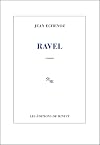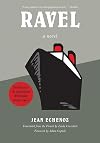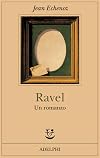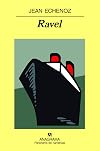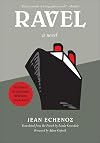
Ravel
by Jean Echenoz
On This Page
Description
Ravel is a beguiling and original evocation of the last ten years in the life of the musical genius Ravel, written by novelist Jean Echenoz.The book opens in 1928 as Maurice Ravel?dandy, eccentric, curmudgeon?crosses the Atlantic abroad the luxury liner the SS France to begin his triumphant grand tour of the United States. A ?master magician of the French novel" (The Washington Post), Echenoz captures the folly of the era as well as its genius, including Ravel's personal life?sartorially and show more socially splendid?as well as his most successful compositions from 19 show lessTags
Recommendations



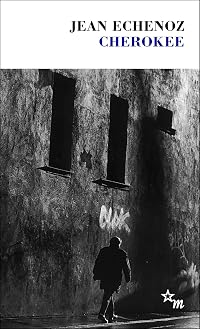

















Member Recommendations
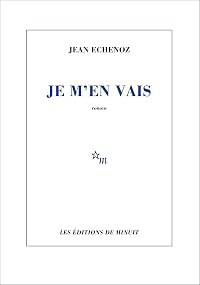
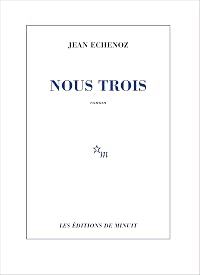
lewbs Another biography by the same author.
Member Reviews
This is, I suppose, technically a novella, but in actual fact it's more a series of vignettes or impressions: suitable, given that many of the subject's best works are episodic piano works such as Le Tombeau de Couperin and Valses nobles et sentimentales. I loved this book, not just because I enjoy Ravel's music, but because of the way Echenoz deftly weaves together minor themes -- the composer's patent-leather shoes ("without which he is nothing") and passion for very rare steaks -- with the major ones of creativity and mortality.
Echenoz chose to skim over the last decade of Ravel's life; after showing the reader the composer about to embark on a triumphal tour of the United States at the outset, he states bluntly that Ravel would show more live for only another decade. And the final third of the book, indeed, shows us his gradual mental and physical deterioration and the impact of frustrated creativity in a few heartbreakingly well-chosen words. The writing is sometimes jarringly vivid, as when Echenoz describes Ravel's hands ("too-short, gnarled, somewhat squared-off fingers" and "exceptionally powerful thumbs, the thumbs of a strangler, easily dislocated and set high on the palm"), sometimes laugh-out-loud witty, as when several young women, acolytes, hoist Ravel's suitcase into a first-class train carriage ("The luggage is quite heavy, but these young women are so very fond of music") or a pianist's mangling of Ravel's careful composition (he was "ornamenting phrases that never hurt a soul.")
Echenoz describes the composition of some of Ravel's latest and best-known works, including Bolero ("a thing that self-destructs, a score without music, an orchestral factory without a purpose, a suicide whose weapon is the simple swelling of sound"), but what he is really describing is the slow death of a creative genius. At first the topic is that of insomnia and Ravel's battles with it, such as his attempts to find "the best position, the ideal accomodation of the organism called Ravel to the piece of furniture called Ravel's bed". But really, sleep is a proxy for death, which also elude Ravel as his creative faculties fade. Like sleep, of which Echenoz writes "In a pinch you can feel it settling in, but you can't any more see it than you can look directly at the sun. It will be sleep that grabs you from behind, or from just out of sight", death is an elusive surcease. An impressive and beautifully-written book; I'm off to seek out more of Echenoz's work. 4.6 stars, highly recommended show less
Echenoz chose to skim over the last decade of Ravel's life; after showing the reader the composer about to embark on a triumphal tour of the United States at the outset, he states bluntly that Ravel would show more live for only another decade. And the final third of the book, indeed, shows us his gradual mental and physical deterioration and the impact of frustrated creativity in a few heartbreakingly well-chosen words. The writing is sometimes jarringly vivid, as when Echenoz describes Ravel's hands ("too-short, gnarled, somewhat squared-off fingers" and "exceptionally powerful thumbs, the thumbs of a strangler, easily dislocated and set high on the palm"), sometimes laugh-out-loud witty, as when several young women, acolytes, hoist Ravel's suitcase into a first-class train carriage ("The luggage is quite heavy, but these young women are so very fond of music") or a pianist's mangling of Ravel's careful composition (he was "ornamenting phrases that never hurt a soul.")
Echenoz describes the composition of some of Ravel's latest and best-known works, including Bolero ("a thing that self-destructs, a score without music, an orchestral factory without a purpose, a suicide whose weapon is the simple swelling of sound"), but what he is really describing is the slow death of a creative genius. At first the topic is that of insomnia and Ravel's battles with it, such as his attempts to find "the best position, the ideal accomodation of the organism called Ravel to the piece of furniture called Ravel's bed". But really, sleep is a proxy for death, which also elude Ravel as his creative faculties fade. Like sleep, of which Echenoz writes "In a pinch you can feel it settling in, but you can't any more see it than you can look directly at the sun. It will be sleep that grabs you from behind, or from just out of sight", death is an elusive surcease. An impressive and beautifully-written book; I'm off to seek out more of Echenoz's work. 4.6 stars, highly recommended show less
A novel that seems more like a biography, Ravel has everything within its pages that makes you want to travel and explore, want to listen to music or do something grand. The story begins letting you know how it will end, telling you exactly how long it will be until Ravel's death, but then you want more. By the very nature of the writing, you want to find out what is going to happen, even the tiny little details are made somehow magical with the style the author has used. It is good to see someone depicted as a human with flaws as well as greatness and it was interesting to see how others related to him as things happened that they could not control. A short novel that lengthens everything in just the right places, even if they are show more sometimes unusual ones. show less
Performers are slaves.
Ravel's three word rebuttal ended the disagreement about license in Paul Wittgenstein's improvisations in performing the composer's Concerto For Left Hand. Such is one of the few eruptions of actual emotion in this wonderful novel, one which drifts from joy to boredom and back through a taxonomy of detail. Such is the lovely melody before the unfortunate conclusion. Ravel's degeneration and demise is often rather painful to read, and yet there is a lyricism to such. The normal habits of the composer's day are distilled down to series of omissions and forgotten definitions. This is masterful prose and the perfect book for a Sunday.
Ravel's three word rebuttal ended the disagreement about license in Paul Wittgenstein's improvisations in performing the composer's Concerto For Left Hand. Such is one of the few eruptions of actual emotion in this wonderful novel, one which drifts from joy to boredom and back through a taxonomy of detail. Such is the lovely melody before the unfortunate conclusion. Ravel's degeneration and demise is often rather painful to read, and yet there is a lyricism to such. The normal habits of the composer's day are distilled down to series of omissions and forgotten definitions. This is masterful prose and the perfect book for a Sunday.
I'll start by saying I'm not much of a classical music fan. This novella by the French writer Jean Echenoz fictionalizes elements of Maurice Ravel's biography and is actually (like all of Echenoz' work) quite good. Echenoz in some ways reminds me a bit of the late and very great Raymond Queneau and in other ways of Vladimir Nabokov. Echenoz has made quite a career out of writing thrillers that tend more towards wit and keen observation about human frailty than menace and action for the sake of action. He has a very light touch which is probably not for everybody but is something I tend to appreciate. His work is always well concieved--always set out with a kind of deadpan emotion but with a sophisticated humor underpinning it. He is a show more real writer--or at least IMHO.
Here we start out in Ravel's bathtub as the artist starts out his day which will take him to the train station in Paris to the port of Le Havre where he will set out on his first and last journey to America to give a series of concerts. Echenoz' portrait of this artist is hardly exhaustive. This is a short work. He goes into detail but is highly selective about what he chooses. This seems deliberate and doesn't IMO hurt the work or the subject--besides it is beautifully written and ends with this line:
'He goes back to sleep, he dies ten days later; they clothe his body in black tails, white vest, wing collar, white bow tie, pale gloves; he leaves no will, no image on film, not a single recording of his voice.'
Anyway--anything by Echenoz is recommended and in particular 'I'm gone', 'Big Blondes' and 'Cherokee'. show less
Here we start out in Ravel's bathtub as the artist starts out his day which will take him to the train station in Paris to the port of Le Havre where he will set out on his first and last journey to America to give a series of concerts. Echenoz' portrait of this artist is hardly exhaustive. This is a short work. He goes into detail but is highly selective about what he chooses. This seems deliberate and doesn't IMO hurt the work or the subject--besides it is beautifully written and ends with this line:
'He goes back to sleep, he dies ten days later; they clothe his body in black tails, white vest, wing collar, white bow tie, pale gloves; he leaves no will, no image on film, not a single recording of his voice.'
Anyway--anything by Echenoz is recommended and in particular 'I'm gone', 'Big Blondes' and 'Cherokee'. show less
Echenoz's Ravel is a tiny man who dresses immaculately. Indeed his wardrobe is a character in itself. "In his youth he was observed wearing formal black with a stunning vest, a jabot at his neck, an opera hat, and butter-yellow gloves."
Having never secured an intimate relationship M.Ravel is dependent upon his friends and acquaintances for socialising and succour. He can be difficult, for example, refusing to perform without a particular pair of shoes, and yet his star shines so brightly that someone is always around to solve such problems. Ravel is constantly collected, delivered, reminded and invited.
The novel takes us on Ravel's only tour of the USA. We are also present, though not in the room, when he writes Bolero and Piano show more Concerto For the Left Hand.
What's interesting about Ravel, the novel, is the pace at which Echenoz races through the last ten years of the composer's life. At first I thought that the story was too superficial, skipping over months and years. But Echenoz's writing has a magic which left me feeling moved, and sad to farewell dear M.Ravel who gave this world some of its most beautiful music. show less
Having never secured an intimate relationship M.Ravel is dependent upon his friends and acquaintances for socialising and succour. He can be difficult, for example, refusing to perform without a particular pair of shoes, and yet his star shines so brightly that someone is always around to solve such problems. Ravel is constantly collected, delivered, reminded and invited.
The novel takes us on Ravel's only tour of the USA. We are also present, though not in the room, when he writes Bolero and Piano show more Concerto For the Left Hand.
What's interesting about Ravel, the novel, is the pace at which Echenoz races through the last ten years of the composer's life. At first I thought that the story was too superficial, skipping over months and years. But Echenoz's writing has a magic which left me feeling moved, and sad to farewell dear M.Ravel who gave this world some of its most beautiful music. show less
A novella-length description of the last ten years of Maurice Ravel’s life, from his successful tour of the US in 1927 to his death, aged 62, in December 1937. Echenoz is oddly detached, making little use of either a novelist’s freedom to enter inside his character’s head or a biographer’s opportunity to be analytical. On the two celebrated puzzles in Ravel’s life — his sexuality and the nature of the brain illness that eventually killed him — Echenoz takes no position at all, merely repeating the known facts. A mildly interesting little book, especially if you don’t know anything about Ravel’s life, but it leaves you wondering what Echenoz was trying to achieve with it.
This novel by the award winning French author was shortlisted for this year's IMPAC Dublin Literary Award. It consists of nine snapshots of the composer Maurice Ravel during the last 10 years of his life. In the first chapter we find Ravel reclining in his bathtub on the day he is set to embark on a four month tour of the United States, in 1927. He is contemplative and quite reluctant to leave his aqueous cocoon:
'Leaving the bathtub is sometimes quite annoying. First of all, it's a shame to abandon the soapy lukewarm water, where stray hairs wind around bubbles among the scrubbed-off skin cells, for the chill atmosphere of a poorly heated house. Then, if one is the least bit short, and the side of that claw-footed tub the least bit show more high, it's always a challenge to swing a leg over the edge to feel around, with a hesitant toe, for the slippery tile floor. Caution is advised, to avoid bumping one's crotch or risking a nasty fall. The solution to this predicament would be of course to order a custom-made bathtub, but that entails expenses, perhaps even exceeding the cost of the recently installed but still inadequate cnetral heating. Better to remain submerged up to the neck for hours, if not forever, using one's right foot to periodically manipulate the hot-water faucet, thus adjusting the thermostat to maintain a comfortable amniotic ambience.'
Subsequent chapters describe the creation of Boléro and Piano Concerto for the Left Hand for Paul Wittgenstein, who lost his right arm during World War I and earned the wrath of Ravel by embellishing the concerto, and Ravel's rapid decline before his premature death.
Despite the book's small size, Echenoz provides fascinating and exquisite detail into the life and mind of Ravel, with rich descriptions of the luxury liner that carries him to America and the cross-country trains that take him from one city to the next on his tour, and the despair he experiences toward the end of his life.
This is a book that begs to be reread, and I would imagine that the reader would glean greater insight and enjoyment on repeated readings, similar to repeated listening to a fine piece of music. show less
'Leaving the bathtub is sometimes quite annoying. First of all, it's a shame to abandon the soapy lukewarm water, where stray hairs wind around bubbles among the scrubbed-off skin cells, for the chill atmosphere of a poorly heated house. Then, if one is the least bit short, and the side of that claw-footed tub the least bit show more high, it's always a challenge to swing a leg over the edge to feel around, with a hesitant toe, for the slippery tile floor. Caution is advised, to avoid bumping one's crotch or risking a nasty fall. The solution to this predicament would be of course to order a custom-made bathtub, but that entails expenses, perhaps even exceeding the cost of the recently installed but still inadequate cnetral heating. Better to remain submerged up to the neck for hours, if not forever, using one's right foot to periodically manipulate the hot-water faucet, thus adjusting the thermostat to maintain a comfortable amniotic ambience.'
Subsequent chapters describe the creation of Boléro and Piano Concerto for the Left Hand for Paul Wittgenstein, who lost his right arm during World War I and earned the wrath of Ravel by embellishing the concerto, and Ravel's rapid decline before his premature death.
Despite the book's small size, Echenoz provides fascinating and exquisite detail into the life and mind of Ravel, with rich descriptions of the luxury liner that carries him to America and the cross-country trains that take him from one city to the next on his tour, and the despair he experiences toward the end of his life.
This is a book that begs to be reread, and I would imagine that the reader would glean greater insight and enjoyment on repeated readings, similar to repeated listening to a fine piece of music. show less
Members
- Recently Added By
Lists

Best of French Literature
138 works; 27 members

International IMPAC Dublin Literary Award
179 works; 6 members

Short and Sweet
246 works; 24 members
Author Information

38+ Works 3,375 Members
Some Editions
Awards and Honors
Common Knowledge
- Canonical title
- Ravel
- Original title
- Ravel
- Original publication date
- 2005
- People/Characters
- Maurice Ravel; Hélène Jourdan-Morhange; Marguerite Long; Jacques de Zogheb; Ida Rubenstein; Paul Wittgenstein
- Important places
- Paris, France; Vienna, Austria; Montford-l'Amaury, Île-de-France, France
- First words
- Leaving the bathtub is sometimes quite annoying.
- Last words
- (Click to show. Warning: May contain spoilers.)He goes back to sleep; he dies ten days later; they clothe his body in black tails, white vest, wing collar, white bow tie, pale gloves; he leaves no will, no image on film, not a single recording of his voice.
- Blurbers*
- Dijkgraaf, Margot
- Original language
- French
*Some information comes from Common Knowledge in other languages. Click "Edit" for more information.
Classifications
- Genres
- Fiction and Literature, General Fiction, Historical Fiction
- DDC/MDS
- 843.914 — Literature & rhetoric French Literature French fiction 1900- 20th Century 1945-1999
- LCC
- PQ2665 .C5 .R3813 — Language and Literature French, Italian, Spanish and Portuguese literatures French literature Modern literature 1961-2000
- BISAC
Statistics
- Members
- 392
- Popularity
- 79,915
- Reviews
- 18
- Rating
- (3.65)
- Languages
- 13 — Catalan, Czech, Dutch, English, French, German, Greek, Italian, Latvian, Norwegian, Portuguese, Spanish, Turkish
- Media
- Paper, Audiobook, Ebook
- ISBNs
- 24
- ASINs
- 6