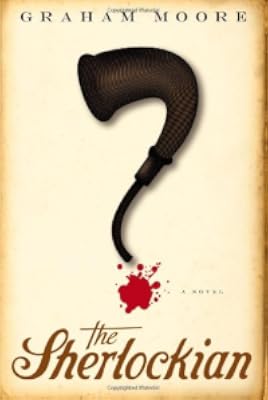
The Holmes Affair
by Graham Moore
On This Page
Description
Hurtling from present day New York to Victorian London, The Sherlockian weaves the history of Sherlock Holmes and Sir Arthur Conan Doyle into an inspired and entertaining double mystery that proves to be anything but "elementary."In December 1893, Sherlock Holmes-adoring Londoners eagerly opened their Strand magazines, anticipating the detective's next adventure, only to find the unthinkable: his creator, Arthur Conan Doyle, had killed their hero off. London spiraled into mourning-crowds show more sported black armbands in grief-and railed against Conan Doyle as his assassin.
Then in 1901, just as abruptly as Conan Doyle had "murdered" Holmes in "The Final Problem," he resurrected him. Though the writer kept detailed diaries of his days and work, Conan Doyle never explained this sudden change of heart. After his death, one of his journals from the interim period was discovered to be missing, and in the decades since, has never been found.... Or has it?
When literary researcher Harold White is inducted into the preeminent Sherlock Holmes enthusiast society, The Baker Street Irregulars, he never imagines he's about to be thrust onto the hunt for the holy grail of Holmes-ophiles: the missing diary. But when the world's leading Doylean scholar is found murdered in his hotel room, it is Harold-using wisdom and methods gleaned from countless detective stories-who takes up the search, both for the diary and for the killer. show less
Tags
Recommendations
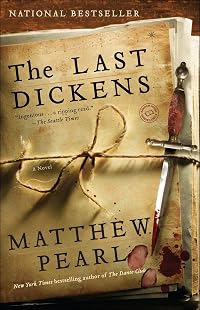
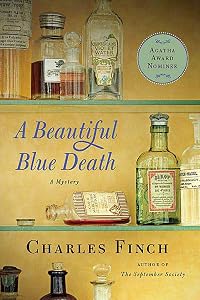
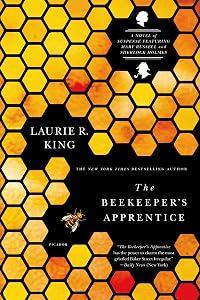
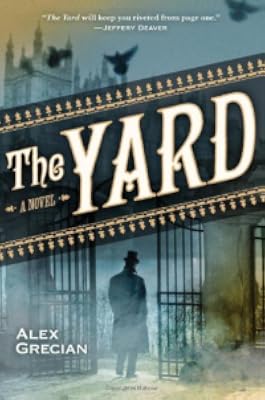
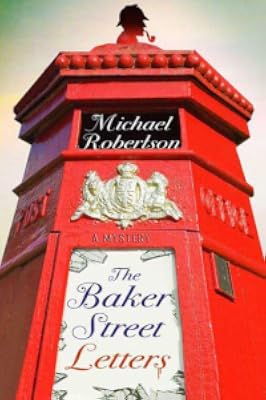
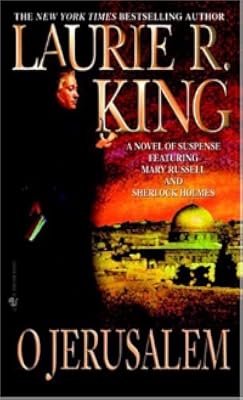
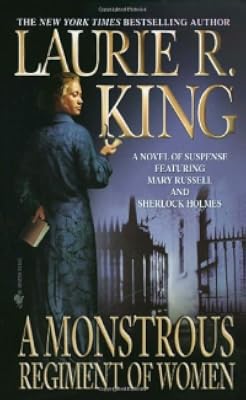

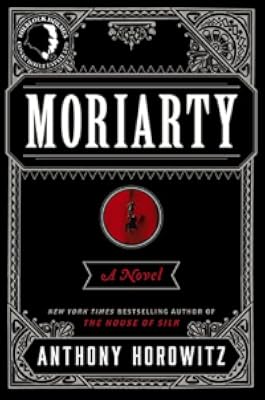
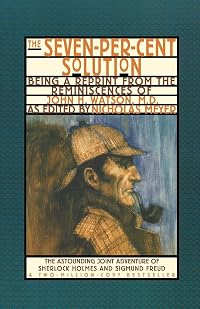
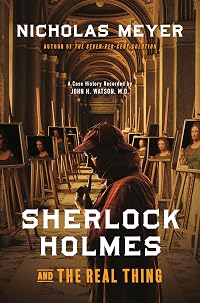
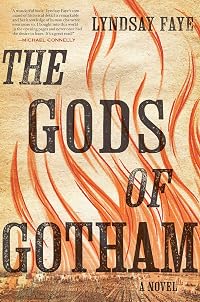
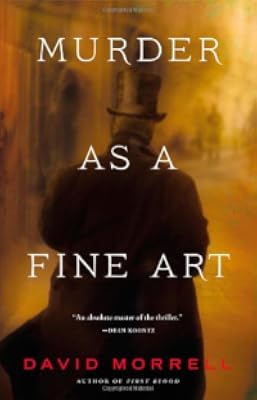



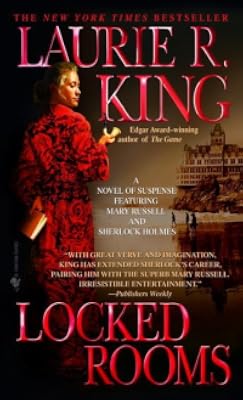

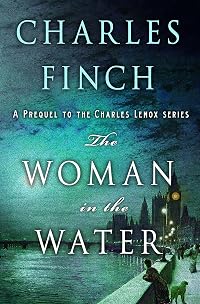
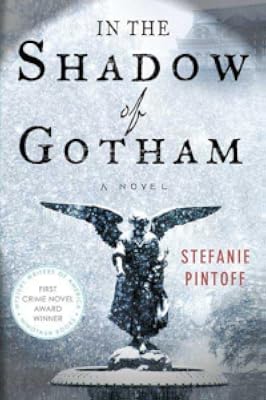
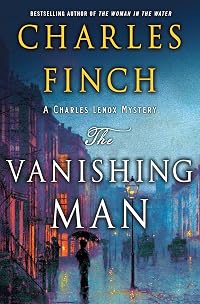
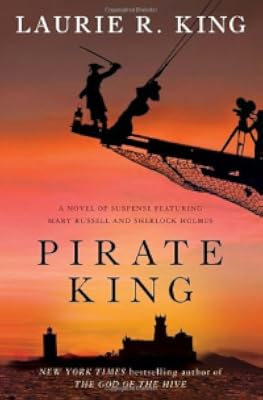
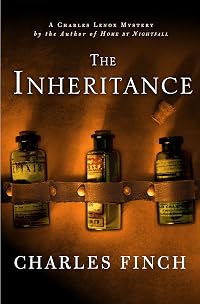
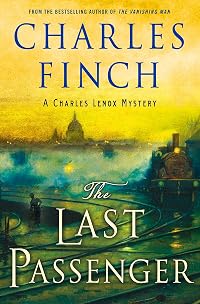
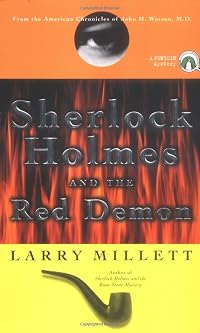
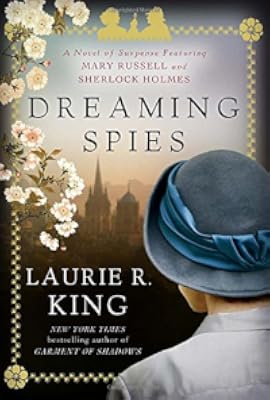
Member Recommendations
bookfitz Another historical, mystery novel centered on a famous author.
anonymous user More exploits of Conan Doyle
Member Reviews
In the dining room of New York’s Algonquin Hotel, Harold White has just become the newest member of The Baker Street Irregulars; an elite Sherlockian society that he has labored to enter since he first read Sherlock Holmes as a teenager. Now, as its youngest member, the newly installed Princeton graduate is about to step into the mind of Sherlock Holmes because one their members has been found dead in their hotel room. The corpse belongs to a member who claimed to have found Arthur Conan Doyle’s lost diary-a journal that every Sherlockian has tried to find for generations. While examining the body and the room, Harold meets a journalist named Sarah, and together they work to solve the mystery. Along with this story is another show more mystery beginning in 1900 involving Arthur Conan Doyle, years after he killed off Sherlock Holmes. This storyline is injected between the chapters about Harold’s mystery, so the reader is quickly shuttled between the present and the past, which I personally liked. Arthur Conan Doyle teams up with his friend Bram Stoker to solve the mystery of a young woman’s murder. While all of England is still disgusted with him for killing Holmes, and Scotland Yard is just humoring him; he and Bram are pulled deeply into a dangerous and sinister mystery that the inspectors at Scotland Yard have written off as a death of a harlot in a bad neighborhood.
Great writing; I underlined quite a few lines that stood out and one of my favorites is: “Sebastian conveyed the impression that your number was already up and he was just waiting for the right moment to let you know.” The book is loaded with little gems that I know readers and writers will love. This is a book for lovers of challenging mysteries, Sherlock Holmes fans, and England past and present. 5 stars. show less
Great writing; I underlined quite a few lines that stood out and one of my favorites is: “Sebastian conveyed the impression that your number was already up and he was just waiting for the right moment to let you know.” The book is loaded with little gems that I know readers and writers will love. This is a book for lovers of challenging mysteries, Sherlock Holmes fans, and England past and present. 5 stars. show less
Graham Moore's first novel, The Sherlockian, is a well-researched and imaginative journey into a brief period in the life of Arthur Conan Doyle and also into the modern community that worships his most well-known creation, Sherlock Holmes.
This novel alternates chapters between the present and the past. The present day story is that of Harold White, a twenty-nine year old researcher who is inducted into the prestigious Baker Street Irregulars at their annual meeting in New York City. His dedication to Conan Doyle and deep knowledge of Sherlock Holmes is quickly put to the test when a fellow scholar is found dead after announcing he has found the single missing volume of Conan Doyle's journal. Is White up to the task of finding the now show more missing-again journal and identifying Alex Cale's murderer?
The story in the past is the account of what happened to Arthur Conan Doyle (and his friend Bram Stoker) in August 1893, when Doyle killed-off the beloved Holmes, and then from October through December of 1900, the period covered in the missing journal. What happened to the author during this time that led him to join forces with Scotland Yard and eventually resurrect Sherlock Holmes?
As is the case many times with dual setting novels, one of the narratives in this book is stronger than the other. The Victorian one is quite wonderful and I plan on picking up Daniel Stashower's biography of Conan Doyle to fill in the gaps in my knowledge. Moore did a wonderful job with the Victorian voice and the story that unfolds is really well done. It explores Conan Doyle's ambivalent feelings about his creation, his personal life and that of his friend and fellow (but unappreciated) author, Stoker, and the women's suffrage movement of the time. It also touches on the workings of Scotland Yard at the time -- a subject that really fascinates me.
And luckily, though not quite as good as the past narrative, the present one gains momentum as the story moves forward and I found myself strongly invested in Harold's plight as well. He is a sympathetic but odd character and you really hope that things work out for him. I think that Moore has a fantastic career ahead of him if he only improves from the high bar that has been set by The Sherlockian.
http://webereading.com/2010/12/new-release-sherlockian.html show less
This novel alternates chapters between the present and the past. The present day story is that of Harold White, a twenty-nine year old researcher who is inducted into the prestigious Baker Street Irregulars at their annual meeting in New York City. His dedication to Conan Doyle and deep knowledge of Sherlock Holmes is quickly put to the test when a fellow scholar is found dead after announcing he has found the single missing volume of Conan Doyle's journal. Is White up to the task of finding the now show more missing-again journal and identifying Alex Cale's murderer?
The story in the past is the account of what happened to Arthur Conan Doyle (and his friend Bram Stoker) in August 1893, when Doyle killed-off the beloved Holmes, and then from October through December of 1900, the period covered in the missing journal. What happened to the author during this time that led him to join forces with Scotland Yard and eventually resurrect Sherlock Holmes?
As is the case many times with dual setting novels, one of the narratives in this book is stronger than the other. The Victorian one is quite wonderful and I plan on picking up Daniel Stashower's biography of Conan Doyle to fill in the gaps in my knowledge. Moore did a wonderful job with the Victorian voice and the story that unfolds is really well done. It explores Conan Doyle's ambivalent feelings about his creation, his personal life and that of his friend and fellow (but unappreciated) author, Stoker, and the women's suffrage movement of the time. It also touches on the workings of Scotland Yard at the time -- a subject that really fascinates me.
And luckily, though not quite as good as the past narrative, the present one gains momentum as the story moves forward and I found myself strongly invested in Harold's plight as well. He is a sympathetic but odd character and you really hope that things work out for him. I think that Moore has a fantastic career ahead of him if he only improves from the high bar that has been set by The Sherlockian.
http://webereading.com/2010/12/new-release-sherlockian.html show less
I was very pleasantly surprised by this book, by the point I am admittedly jaded when it comes to derivative takes on Holmes, but this book is engaging and fresh throughout. In his debut novel, Moore is able to conjure up a very believable world of Sherlockians, a nice mystery, and a well-researched speculative plot involving Conan Doyle's cases. It's difficult to alternate chapters (chapters alternate between a present day mystery and the adventures of Conan Doyle and Bram Stoker), and keep the reader engaged into both parallel plots, but Moore manages it while conjuring up an acute sense of nostalgia and yearning for Sherlock Holmes and his world. Even what seems to be the obligatory female sidekick/possible love interest ends up show more being a character with more than a couple of layers. Much in the vein of Matthew Pearl, Graham Moore delivers an entertaining, informative, well-researched, and ultimately satisifying entry in the growing literary-historical-mystery-fiction. show less
Graham Moore’s first novel “The Sherlockian” is a fine work of historical fiction. Constructed via chapters alternating between a pair of murder mysteries: one in the present day at the center of a search for a missing diary of Sherlock Holmes creator, Arthur Conan Doyle; and another in set in London of 1900 (within the timeframe of the missing diary), which Conan Doyle and his friend Bram Stoker investigate. In the end, Moore skillfully brings the parallel stories together for a satisfying conclusion. I will quibble that Harold, the present day protagonist, makes a much too quick and extraordinary leap from his initial portrayal as an insecure milquetoast to an instantly bold detective. But beyond that, it all works quite well, show more and makes for an entertaining read. “The Sherlockian” clearly shows Moore’s budding talent, which would be further honed in his wonderful 2016 historical novel, “The Last Days of Night.” show less
What a brilliant mix of fact and fiction! Mixing Conan Doyle's life with his most known character and a goose chase around a lost diary, everything is bundled up in a mystery that unravels a century later. Moore does a wonderful job of characterising Doyle's life - of which I learned many fascinating facts - and constructing a compelling plot that rings true from the first to the last page. I strongly recommend this read - save yourself a good sitting: you won't want to put it down!
For me, novels with parallel narratives, one historical, one contemporary, I find myself enjoying one and just trying to get through the other, even skipping bits of the other just to keep up with the one I'm *actually* enjoying.
The Sherlockian is the rare exception. I was immediately drawn in to both narratives, the contemporary with Harold White, a young, new member of the BSI, and the historical with Arthur Conan Doyle, which eventually collide with lots of bumps, twists and turns along the way. Lots of Sherlockian easter eggs throughout, but you don't need to be a devoted Sherlock Holmes fan to "get" this book (I don't think).
The Sherlockian is the rare exception. I was immediately drawn in to both narratives, the contemporary with Harold White, a young, new member of the BSI, and the historical with Arthur Conan Doyle, which eventually collide with lots of bumps, twists and turns along the way. Lots of Sherlockian easter eggs throughout, but you don't need to be a devoted Sherlock Holmes fan to "get" this book (I don't think).
This item stand out for not just juxtaposing an earlier and present date, but a modern Baker Street Irregular with some adventures of Doyle himself, The Irregular, named Harold White, is trying to solve his friends' murder, but also a missing Doyle diary, important because it represents the period during which Doyle decided to resurrect his famous detective. Harold does a fair job with Sherlock's methods in solving the murder of his fellow Sherlockian, but does not initially fare as well with finding the diary, but which he eventually does. Doyle just blunders his way through for his part. A satisfying read, even without a strong mystery.
Members
- Recently Added By
Published Reviews
ThingScore 83
Moore is well-steeped in Holmes lore but savvy enough as a writer to keep the reader's interest with the parallel, and eventually intersecting, plots.
added by sduff222
...juxtaposing two separate mysteries set a century apart and featuring distinctly different sleuths. It’s an ambitious approach based on sound scholarship, but the fussy and schematic split-focus narrative only makes us long for the cool, clean lucidity of Conan Doyle’s elegant style.
added by y2pk
So “The Sherlockian” manages to make a journey from the ridiculous (Harold White, instant detective?) to the sublime. And it is anchored by Mr. Moore’s self-evident love of the rules that shape good mystery fiction and the promises on which it must deliver.
added by sduff222
Lists

Great Audiobooks
96 works; 10 members

Majkia's Mystery/ Thriller TBR
86 works; 3 members

Books Read in 2015
3,299 works; 129 members
Author Information

10 Works 4,508 Members
Some Editions
Awards and Honors
Awards
Distinctions
Common Knowledge
- Canonical title
- The Holmes Affair
- Original title
- The Sherlockian
- Original publication date
- 2010-11-30
- People/Characters
- Harold White; Arthur Conan Doyle; Bram Stoker; Alex Cale; Sarah Lindsay; Sebastian Conan Doyle
- Important places
- London, England, UK
- Epigraph
- So please grip this fact with your cerebral tentacle
The doll and its maker are never identical. - Sir Arthur Conan Doyle, London Opinion, December, 12, 1912 - Dedication
- For my mother, who first taught me to love mysteries when I was eight years old. We lay in bed passing a copy of Agatha Christie's A Murder in Three Acts back and forth, reading to each other. She made all of this possible.
- First words
- Arthur Conan Doyle curled his brow tightly and thought only of murder.
- Quotations
- He had everything he needed to piece the matter together, Arthur felt so in his bones. If he could not do it, then he wouldn't merely be a failed detective—he'd be a failed writer as well. He and Holmes would go down as cha... (show all)rlatans together.
Harold realized for the first time that he wasn't doing this for Alex. He was doing this for himself. He was doing this for the solution. The almighty answer that lay just beyond his vision, past the murky clouds and i... (show all)nto the heavens. This was not about justice. This was about mystery.
"The women of England have but three choices in this age. We toil with our hands, we toil with our cunts, or we marry rich and toil with our very hearts. Which would you choose?"
"Being a detective is like being trapped inside a perpetual-motion machine. There's always more to analyze. There's always more to find. We can start analyzing our own analysis. We could run on our own fumes forever!"
"There is nothing at the bottom of the rabbit hole, do you understand? She wasn't killed for a reason, Bram. None of them were. She wasn't murdered for love, and she wasn't murdered for coin—she was murdered for the sake of... (show all) murder itself. What am I to do with that? How does one investigate that? And what would I find? From dead girl to dead girl, I can trace the sins of London, but to what end?"
"There was a civilization here, once. There were a thousand years of progress, building from the muddy soil to that spire. There were rules. There was order. There was Britain."
"Can you write a mystery story that ends with uncertainty? Where you never know who really did it? You can, but it's unsatisfying. It's unpleasant for the reader. There needs to be something at the end, some sort of resolutio... (show all)n. It's not that the killer even needs to be caught or locked up. It's that the reader needs to know. Not knowing is the worst outcome for any mystery story, because we need to believe that everything in the world is knowable. Justice is optional, but answers, at least, are mandatory."
He had not been wounded by the violence—he had been callused. And that, he now realized, was worse.
Harold had understood that not finding a solution would have been awful, but he had never before thought that finding one, and then having actually to go on living with it, might be worse. - Last words
- (Click to show. Warning: May contain spoilers.)But based on a quick count, they found they had exactly enough for two pints of bitter ale and one paperback mystery.
- Blurbers
- Pearl, Matthew; Holmes, Rupert; Hitchens, Christopher; Turow, Scott
- Original language
- English
- Canonical DDC/MDS
- 823.0872
Classifications
Statistics
- Members
- 1,656
- Popularity
- 13,482
- Reviews
- 98
- Rating
- (3.57)
- Languages
- 11 — Czech, Dutch, English, Finnish, French, German, Italian, Polish, Portuguese, Spanish, Chinese, traditional
- Media
- Paper, Audiobook, Ebook
- ISBNs
- 35
- ASINs
- 15