

Velma Wallis
Author of Two Old Women: An Alaska Legend of Betrayal, Courage, and Survival
About the Author
Velma Wallis was born in Fort Yukon, a remote village in Interior Alaska, and now her family divides their time among Fairbanks, Fort Yukon, and traditional hunting, fishing, and trapping grounds. Wallis's books are based on the Athabaskan stories her mother told her when she was growing up
Image credit: Photo by Traci Gregory-Burchell
Works by Velma Wallis
Associated Works
Reinventing the Enemy's Language: Contemporary Native Women's Writings of North America (1997) — Contributor — 183 copies, 1 review
Tagged
Common Knowledge
- Birthdate
- 1960
- Gender
- female
- Occupations
- hunter
trapper
writer - Organizations
- Gwichʼin Nation
- Nationality
- Gwichʼin Nation
USA - Birthplace
- Fort Yukon, Alaska, USA
- Places of residence
- Fort Yukon, Alaska, USA
Fairbanks, Alaska, USA - Associated Place (for map)
- Alaska, USA
Members
Discussions
Biographies, Memoirs and Autobiographies in 2021 in Biographies, Memoirs and Autobiographies (January 2022)
Reviews

A good friend of mine was once aghast to hear that I had given my grandmother a copy of Velma Wallis's Two Old Women for her birthday, inscribed as follows: To Gran, the strongest woman I know, with love on your 90th Birthday, Abby. Apparently the women of her family, regardless of their age, did not like to be thought "old," and it would have been considered an unpardonable breach of good manners for my friend to have given any of her elders a book with such a title. For my part, I was show more dismayed, though perhaps not astonished, given our image-obsessed culture, that anyone would consider "old" such a pejorative term, or think of age as something to be ashamed of and hidden, rather than celebrated.
I also recall thinking that if a woman didn't know she was old at ninety, or could take offense at a heartfelt gift, meant to express love and deep respect for her wisdom and strength, than she must be sadly lacking in either reason or dignity; and I was glad that such a thing could not be said of the women of my family. But since it would most DEFINITELY have been an unpardonable breach of good manners to have expressed such a sentiment to her, I simply replied, "I do not think my grandmother will be offended."
This wonderful book, based upon a legend passed down among the Athabascan women of Alaska, relates the story of two old women who are cast out by their tribe one hard winter. Two old complainers, who seem to have little to contribute to the welfare of the group, Ch'idzigyaak and Sa' have become an untenable burden to a people struggling to survive in a harsh and unforgiving landscape, and it is decided that they must be abandoned.
But it is not the young alone who have courage, and when these two old women set out to "die trying," they discover that they still have what it takes to survive. Their knowledge of old fishing grounds stands them in good stead, and when they are reunited with the People, they demonstrate that they do indeed have something vital to contribute: the knowledge that comes with experience and age.
As a story of survival, Two Old Women is an engrossing, exciting read. As a fable about aging, the place of the elderly in a culture, and reconciliation between the generations, it was truly moving. I was impressed that no one was vilified in the story, and each decision reached, however much we might disagree with it in today's world, made sense in the context of that time and place. I always hesitate to use the word "inspirational," as it has been so abused that it seems to have lost all meaning...but there doesn't seem to be any help for it. This truly was an inspirational book, and I highly recommend it to people of all ages.
And as for my grandmother? When we had the misfortune to lose her a few years back, we found this among her books. She had been in the habit of underlining any bit of text she found especially moving or meaningful. Almost every paragraph was underlined... show less
I also recall thinking that if a woman didn't know she was old at ninety, or could take offense at a heartfelt gift, meant to express love and deep respect for her wisdom and strength, than she must be sadly lacking in either reason or dignity; and I was glad that such a thing could not be said of the women of my family. But since it would most DEFINITELY have been an unpardonable breach of good manners to have expressed such a sentiment to her, I simply replied, "I do not think my grandmother will be offended."
This wonderful book, based upon a legend passed down among the Athabascan women of Alaska, relates the story of two old women who are cast out by their tribe one hard winter. Two old complainers, who seem to have little to contribute to the welfare of the group, Ch'idzigyaak and Sa' have become an untenable burden to a people struggling to survive in a harsh and unforgiving landscape, and it is decided that they must be abandoned.
But it is not the young alone who have courage, and when these two old women set out to "die trying," they discover that they still have what it takes to survive. Their knowledge of old fishing grounds stands them in good stead, and when they are reunited with the People, they demonstrate that they do indeed have something vital to contribute: the knowledge that comes with experience and age.
As a story of survival, Two Old Women is an engrossing, exciting read. As a fable about aging, the place of the elderly in a culture, and reconciliation between the generations, it was truly moving. I was impressed that no one was vilified in the story, and each decision reached, however much we might disagree with it in today's world, made sense in the context of that time and place. I always hesitate to use the word "inspirational," as it has been so abused that it seems to have lost all meaning...but there doesn't seem to be any help for it. This truly was an inspirational book, and I highly recommend it to people of all ages.
And as for my grandmother? When we had the misfortune to lose her a few years back, we found this among her books. She had been in the habit of underlining any bit of text she found especially moving or meaningful. Almost every paragraph was underlined... show less

Read shortly after Velma Wallis's Two Old Woman, which is one of my favorite folk-legends of all time, Bird Girl and the Man Who Followed the Sun suffered somewhat by comparison. A Gwich'in Athabaskan folk epic, it follows the dual narratives of two rebels: Bird Girl, who prefers male activities like hunting, and who does not wish to be married; and Daagoo, a man who loves to wander, and dreams of finding the Land of the Sun, said to be far to the south...
This is a story whose cultural show more import quickly becomes clear, as it seeks to reconcile the needs and desires of the individual with that of her society. The adventures of the two main characters, their journeys away from their people, and their eventual return, has a neat symmetry to it. I found it appropriate and satisfying that the two rebels eventually find one another.
Well-written and informative as it may be however, I found that I could not enjoy Bird Girl quite as much as the author's earlier title, which is more of a reflection of my own opinions and emotional state, I would imagine, than the book's actual merit. Perhaps I was hoping that Bird Girl's narrative would offer more of an affirmation of her individual needs than it did, or perhaps my emotional reaction to her mistreatment at the hands of the Inupiaq colored my judgment, but I could not help being somewhat disappointed that her "punishment" was so severe. The folklorist in me is well aware that I am superimposing my own personal and cultural values onto the story, but there you have it... Despite my personal ambivalence however, this was a fascinating and engaging story, and well worth the reader's attention. show less
This is a story whose cultural show more import quickly becomes clear, as it seeks to reconcile the needs and desires of the individual with that of her society. The adventures of the two main characters, their journeys away from their people, and their eventual return, has a neat symmetry to it. I found it appropriate and satisfying that the two rebels eventually find one another.
Well-written and informative as it may be however, I found that I could not enjoy Bird Girl quite as much as the author's earlier title, which is more of a reflection of my own opinions and emotional state, I would imagine, than the book's actual merit. Perhaps I was hoping that Bird Girl's narrative would offer more of an affirmation of her individual needs than it did, or perhaps my emotional reaction to her mistreatment at the hands of the Inupiaq colored my judgment, but I could not help being somewhat disappointed that her "punishment" was so severe. The folklorist in me is well aware that I am superimposing my own personal and cultural values onto the story, but there you have it... Despite my personal ambivalence however, this was a fascinating and engaging story, and well worth the reader's attention. show less
Two Old Women, [Anniversary Edition]: An Alaska Legend of Betrayal, Courage and Survival by Velma Wallis
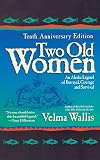
Two Old Women tells the legendary Gwich'in story of Ch'idzigyaak and Sa', two elderly women who are abandoned by their nomadic tribe during a harsh winter famine in Alaska. Rather than give in to despair, the women draw on their inner strength and resourcefulness and do their best to survive. They set off to locate sources of food and build shelter at their selected campsites.
The prose is straightforward, in the manner of oral storytelling, describing the harsh environment and practical show more mindset of the two women. It is told from an omniscient perspective that allows readers access to both women's thoughts. As expected in an indigenous legend, it emphasizes moral lessons, which are embedded in the tale rather than explicitly stated. The author learned of this story through her grandmother, a tribal elder.
Themes include aging, dignity, and the value of elders in society. I particularly enjoyed this book for giving voice to older women, a demographic that is often marginalized. Do not miss the informative end note explaining more about the Gwich'in, one of the northern Athabaskan groups, traditionally inhabiting areas of what is now Fort Yukon and Chalkyitsik. show less
The prose is straightforward, in the manner of oral storytelling, describing the harsh environment and practical show more mindset of the two women. It is told from an omniscient perspective that allows readers access to both women's thoughts. As expected in an indigenous legend, it emphasizes moral lessons, which are embedded in the tale rather than explicitly stated. The author learned of this story through her grandmother, a tribal elder.
Themes include aging, dignity, and the value of elders in society. I particularly enjoyed this book for giving voice to older women, a demographic that is often marginalized. Do not miss the informative end note explaining more about the Gwich'in, one of the northern Athabaskan groups, traditionally inhabiting areas of what is now Fort Yukon and Chalkyitsik. show less
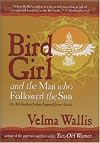
After re-reading Two Old Women earlier this year, I wanted more from Velma Wallis, and this is just about it. Another beautiful re-telling of two tales of her Athabaskan heritage, the book has timeless truths about ways humans classify each other when 'other' and the ways they band together when they are united in commonality. The two legends are each about unusual stand-out, stand-alone individuals in two different Gwich'in tribes who lived along the Yukon - "two rebels who went beyond the show more ordinary." Here the two meet, briefly, but alternating chapters tell their individual stories. Dagoo (who also has a role in Two Old Women) is a boy who loves to explore, and to see what else is beyond the tribal land, forsaking his hunting duties to wander and dream. He is particularly interested in the Land of the Sun, which he has heard tales of from elders or passers-by that is far to the south and never has snow or cold. When the chief orders his father to keep him in line and make sure he contributes to the winter hunt, Dagoo gives in and excels at this job until a tribal tragedy propels him into a leadership position as a teenager. After fulfilling this role and seeing his people to safety he leaves on a wander, encountering new people, the ocean, the sun. Meanwhile, Bird Girl had been spoiled by her father because she did not like women's work and instead learned to scout and hunt with her brothers. As she came of age, the chief decreed that she could no longer behave this way and must get married. Instead, she runs away, only to be captured by a fierce enemy tribe with a vendetta. She endures years of cruelty and assault, but never loses her courage or pride until the chief, whose slave she had become, punishes her family. She takes quiet revenge and painfully makes her way back to her people, only to be misunderstood and ostracized. Bird Girl and Dagoo meet again late in life, recognizing kindred souls who had a brief encounter as children and their wisdom and stories are valued and preserved. show less
Lists
Awards


You May Also Like


Associated Authors
Statistics
- Works
- 6
- Also by
- 2
- Members
- 2,125
- Popularity
- #12,111
- Rating
- 3.9
- Reviews
- 72
- ISBNs
- 68
- Languages
- 11
- Favorited
- 1