
Poul Anderson (1926–2001)
Author of Tau Zero
About the Author
Poul Anderson, November 25, 1926 - July 31, 2001 Poul Anderson was born on November 25, 1926 in Bristol, Pennsylvania to parents Anton and Astrid. After his father's death, Poul's mother took them first to Denmark and then to Maryland and Minnesota. He earned his degree in Physics from the show more University of Minnesota, but chose instead to write stories for science fiction magazines, such as "Astounding." Anderson is considered a "hard science fiction" writer, meaning that his books have a basis in scientific fact. To attain this high level of scientific realism, Anderson spent many hours researching his topics with scientists and professors. He liked to write about individual liberty and free will, which was a well known theme in many of his books. He also liked to incorporate his love of Norse mythology into his stories, sometimes causing his modern day characters to find themselves in fantastical worlds, such as in "Three Hearts and Three Lions," published in 1961. Anderson has written over a hundred books, his last novel, "Genesis" won the John W. Campbell Award, one of the three major science fiction awards. He is a former president of the Science Fiction and Fantasy Writers of America and won three Nebula awards and nine Hugo Awards. In 1997, Anderson was named a Grandmaster by the Science Fiction and Fantasy Writers of America and was also inducted into the Science Fiction Fantasy Hall of Fame. Poul Anderson died on July 31, 2001 at the age of 74. (Bowker Author Biography) show less
Disambiguation Notice:
Winston P. Sanders is a pseudonym for Poul Anderson and all works currently listed under that name belong to Anderson. Do not separate unless a new author by that name shows up.
Series
Works by Poul Anderson
The Queen of Air and Darkness: The Collected Short Works of Poul Anderson (volume 2) (2009) 69 copies
Three in Time: Classic Novels of Time Travel (White Wolf Rediscovery Trio, Vol. 1) (1997) — Contributor; Contributor — 53 copies, 2 reviews
We Claim These Stars! / The Planet Killers (Ace Double D-407) (1959) — Author — 44 copies, 2 reviews
Sucker Bait/Un-Man/to the Storming Gulf (Bart Science Fiction Tirplet, No 1) (1988) — Author — 21 copies
Unterwegs in die Welt von morgen: Feind aus dem Weltraum Mutant 59: Der Plastikfresser (2 Romane) (1989) 15 copies
The Martian Crown Jewels 11 copies
Genesis {novella} 9 copies
Tomorrow's Children 8 copies
Gibraltar Falls [Manse Everard ] 8 copies
The Shrine For Lost Children 8 copies
In Memoriam 8 copies
The Sky People 6 copies
The Big Rain 6 copies
My Object All Sublime [short story] 6 copies
Operation Afreet 6 copies
Sargasso Of Lost Starships 5 copies
Infinity One 5 copies
Il futuro della Terra 5 copies
Sam Hall 5 copies
Crónicas do Fim do Mundo 5 copies
Dead Phone 5 copies
Genius [short fiction] 4 copies
Journeys End 4 copies
The Star Beast 4 copies
Chevalier de l'Empire terrien : Enseigne Flandry ; Chevalier de spectres et d'ombres (2008) 4 copies
The Metal Smile 4 copies
Star of the Sea 4 copies
Earthman Beware! 4 copies
The Virgin Of Valkarion 4 copies
Captive of the Centaurianess 4 copies
Vulcan's Forge [short story] 4 copies
Fairy Gold 4 copies
The Lady of the Winds 4 copies
Eve Times Four 3 copies
Terrestri alla prova 3 copies
Plato's Cave 3 copies
World of the Mad 3 copies
Among Thieves 3 copies
Beware, Earthman! and others 3 copies
Murphy's Hall 3 copies
Peek! I See You! {short story} 3 copies
Les Abîmes angoissants de Poul Anderson - Six récits de fantastique et de science-fiction choisis par Richard D. Nolane (1982) 3 copies
A Feast For The Gods 3 copies
Windmill 3 copies
Fantastic Stories Presents the Poul Anderson Super Pack: With linked Table of Contents (2016) 2 copies
Catalysis 2 copies
The Merman's Children [short story] 2 copies
Dansatoarea din Atlantida 2 copies
Pact 2 copies
King of Ys Volume 2 2 copies
El crepúsculo del mundo 2 copies
Iron [novella] 2 copies
Rokuro {short story} 2 copies
Trespass! 2 copies
Trilogia dei mercanti spaziali 2 copies
Faith 2 copies
Mirkheim by Poul Anderson Vintage 1977 HCDJ 1st BCE with Book Club Notes [Hardcover] Poul Anderson 2 copies
The Life Of Your Time 2 copies
The Pugilist (2020 VISION) 2 copies
The Peat Bog {short story} 2 copies
A Midsummer Tempest [short story] 2 copies
Woodcraft {short story} 2 copies
SF Verhalen 6 2 copies
A Philosophical Dialogue 2 copies
The Immortal Game 2 copies
Scarecrow {short story} 2 copies
Gypsy 2 copies
Two in Time 2 copies
Mustn't Touch 2 copies
Language 2 copies
The Pirate {short story} 2 copies
Ghetto 2 copies
The Serpent In Eden 2 copies
Night Piece {short story} 2 copies
The Voortrekkers 2 copies
The Ways Of Love 2 copies
Quest 2 copies
Death And The Knight 2 copies
Life Cycle 2 copies
Barnacle Bull 2 copies
La galassia di Asimov 2 copies
Laiko patrulis 2 copies
Sister Planet 2 copies
Millemondi primavera 1997 2 copies
To Outlive Eternity [short story] 2 copies
Złamany miecz 1 copy
The Burning Sky 1 copy
manseed 1 copy
Ziua Reîntoarcerii Lor 1 copy
Destino: La Muerte 1 copy
The Wing Alak Stories 1 copy
A Logical Conclusion 1 copy
L'ULTIMA FRONTIERA 1 copy
Flandry’s Legacy 1 copy
Destino la muerte 1 copy
órbita ilimitada 1 copy
Wherever you are / Winston P. Sanders, in: Astounding science fiction : vol. lxiii no. 2, April 1959 (1959) 1 copy
And Eternity 1 copy
Anthology 1 copy
The Old Phoenix Tavern 1 copy
Planet Stories 1 copy
Tau Zero. Korytarze Czasu 1 copy
Winners 1 copy
Pele 1 copy
Elementary Mistake (SS) 1 copy
The Long Return 1 copy
Fire Time 1 copy
Essas Estrelas São Nossas 1 copy
Sam Hall and Other Stories 1 copy
Tyranny 1 copy
Barsoom vol. 28 1 copy
Falsa vitória 1 copy
Nessun mondo per loro 1 copy
lo stormo e la flotta 1 copy
Barsoom vol. 32 1 copy
Robot Warriors 1 copy
Analog Science Fact/Science Fiction 1961 April (British Edition) — Contributor — 1 copy
Homo Aquaticus 1 copy
Horse Trader 1 copy
Deathwomb 1 copy
The Bog Sword 1 copy
Pride 1 copy
Unnatural Enemy 1 copy
Joelle 1 copy
Harvest From the Fire 1 copy
The Kitten 1 copy
Butch {short work} 1 copy
Science Fiction 1965-1970 1 copy
Wolfram {short story} 1 copy
The Visitor [short story] 1 copy
Dünyamızı Kim Yoketti 1 copy
The Last Monster 1 copy
SF Stories 1 copy
Backwardness 1 copy
Enough Rope [short story] 1 copy
The Martyr 1 copy
A Fair Exchange 1 copy
Passing the Love of Women 1 copy
Free Time 1 copy
Origin {short story} 1 copy
A Historical Reflection 1 copy
The Corkscrew of Space 1 copy
Time Heals {short story} 1 copy
Weariness Of War 1 copy
Laiko labirintai 1 copy
Ciencia Ficción 6 1 copy
Introduction Lodestar 1 copy
Introduction Day Of Burning 1 copy
Entity 1 copy
Elliptic Orbit 1 copy
Holmgang 1 copy
The Troublemakers 1 copy
Espião Interestrelar 1 copy
Falsa Vitória I 1 copy
Virgin Planet [short story] 1 copy
Quixote and the Windmill 1 copy
House Rule 1 copy
Os herdeiros da Terra 1 copy
No Truce With Kings 1 copy
Wildcat 1 copy
His Enduring Masterpiece 1 copy
Prophecy 1 copy
Tales of Space and Time 1 copy
The Magic Sword 1 copy
The Ancient Gods (Part One) 1 copy
The Inevitable Weapon (SS) 1 copy
Satan's Word - Part One 1 copy
Interlude III — Author — 1 copy
Interlude IV — Author — 1 copy
Interlude V — Author — 1 copy
Interlude VI — Author — 1 copy
Tiempo por venir 1 copy
Associated Works
The Science Fiction Hall of Fame, Volume Two A: The Greatest Science Fiction Novellas of All Time (1973) — Contributor — 990 copies, 12 reviews
The Best Alternate History Stories of the 20th Century (2001) — Contributor — 617 copies, 10 reviews
The Year's Best Science Fiction: Thirteenth Annual Collection (1996) — Contributor — 453 copies, 4 reviews
The Norton Book of Science Fiction: North American Science Fiction, 1960-1990 (1993) — Contributor — 344 copies, 6 reviews
Devils & Demons: A Treasury of Fiendish Tales Old & New (1991) — Contributor — 288 copies, 2 reviews
Isaac Asimov's Magical Worlds of Fantasy, Volume 12: Faeries (1991) — Contributor — 213 copies, 4 reviews
What Might Have Been, Volumes 1 & 2: Alternate Empires, Alternate Heroes (1990) — Contributor — 184 copies, 2 reviews
Isaac Asimov's Magical Worlds of Fantasy, Volume 2: Witches (1984) — Contributor — 153 copies, 1 review
The Year's Best Science Fiction: First Annual Collection (1984) — Contributor — 147 copies, 1 review
Isaac Asimov's Magical Worlds of Fantasy, Volume 3: Cosmic Knights (1954) — Contributor — 144 copies, 3 reviews
The Science Fiction Hall of Fame, Volume Four: Nebula Winners 1970-1974 (1986) — Contributor — 132 copies, 1 review
Isaac Asimov's Wonderful Worlds of Science Fiction, Volume 3: Supermen (1984) — Contributor — 128 copies, 1 review
Analog Anthology #1: Fifty Years of the Best Science Fiction From Analog (1980) — Contributor — 117 copies, 1 review
Science Fiction Showcase: Eleven Extraordinary Stories by Eleven Masters of Science-Fiction and Fantasy (1959) — Contributor — 110 copies, 3 reviews
Best Science Fiction Stories of the Year Fifth Annual Collection (1976) — Contributor — 107 copies, 1 review
Isaac Asimov Presents : The Golden Years of Science Fiction, 5th Series (1985) — Contributor — 102 copies
Science Fiction Today and Tomorrow: A Discursive Symposium (1974) — Contributor — 99 copies, 2 reviews
The Essential Hal Clement Volume 1: Trio for Slide Rule & Typewriter (1999) — Introduction — 93 copies
Best Science Fiction Stories of the Year First Annual Collection (1972) — Contributor — 88 copies, 2 reviews
The Best from Fantasy and Science Fiction: A Special 25th Anniversary Anthology (1974) — Contributor — 84 copies, 2 reviews
Worlds of Maybe : Seven Stories of Science Fiction (1970) — Contributor, some editions — 82 copies, 1 review
Mammoth Book of Short Fantasy Novels (Mammoth) (1986) — Contributor, some editions — 80 copies, 1 review
Bug-Eyed Monsters: 13 Stories of Dripping, Creeping, Gurgling, Purling, Trilling, Oozing, Seeping, Gushing Deadly Monsters (1980) — Contributor — 78 copies, 2 reviews
The Infinite Arena: Seven Science Fiction Stories About Sports (1977) — Contributor — 75 copies, 1 review
Isaac Asimov's Wonderful Worlds of Science Fiction, Volume 6: Neanderthals (1987) — Contributor — 72 copies, 1 review
A Century of Science Fiction 1950-1959 : The Greatest Stories of the Decade (1996) — Contributor — 64 copies, 2 reviews
Lovers & Other Monsters: A Collection of Amorous Tales of Fantasy, Old and New (1993) — Contributor — 64 copies, 1 review
Thieves' World® Volume One: Thieves' World, Tales from the Vulgar Unicorn, and Shadows of Sanctuary (2020) — Contributor — 53 copies, 4 reviews
One Lamp: Alternate History Stories from The Magazine of Fantasy & Science Fiction (2003) — Contributor — 48 copies
The Best Science Fiction Stories and Novels: Ninth Series (2024) — Contributor — 39 copies, 1 review
All but Impossible! An Anthology of Locked Room and Impossible Crime Stories by Members of the Mystery Writers of America (1981) — Contributor — 30 copies
Analog Science Fiction/Science Fact: Vol. XCV, No. 12 (December 1975) (1975) — Contributor — 24 copies
Analog Science Fiction/Science Fact: Vol. XC, No. 6 (February 1973) (1973) — Contributor — 23 copies
The Best of Astounding: Classic Short Novels from the Golden Age of Science Fiction (1992) — Introduction; Contributor — 22 copies
Analog Science Fiction/Science Fact: Vol. LXXXI, No. 1 (March 1968) (1968) — Contributor — 21 copies
Analog Science Fiction/Science Fact: Vol. LXXXVIII, No. 5 (January 1972) (1971) — Contributor — 21 copies
Le livre d'or de la Science-Fiction : Le manoir des roses (1978) — Contributor — 21 copies, 1 review
Analog Science Fiction/Science Fact: Vol. LXXXIX, No. 2 (April 1972) (1972) — Contributor — 19 copies, 1 review
Analog Science Fiction/Science Fact: Vol. LXXXI, No. 6 (August 1968) (1968) — Contributor — 18 copies
Analog Science Fiction/Science Fact: Vol. LXXXI, No. 3 (May 1968) (1968) — Contributor, some editions — 17 copies
Analog Science Fiction/Science Fact: Vol. LXXXII, No. 3 (November 1968) (1968) — Contributor, some editions — 16 copies
Fremde aus dem All. Lübbes Auswahlband. Science Fiction-Geschichten. (1982) — Contributor, some editions — 15 copies
The Magazine of Fantasy and Science Fiction June 1963, Vol. 24, No. 6 (1963) — Contributor — 15 copies
Science fiction verhalen [1969] — Contributor, some editions; Contributor, some editions — 14 copies, 1 review
Analog Science Fact/Science Fiction: Vol. LXXIII, No. 2 (April 1964) (1964) — Contributor — 13 copies
Special Wonder: The Anthony Boucher Memorial Anthology of Fantasy and Science Fiction (1970) — Contributor — 12 copies
Astounding Stories: The 60th Anniversary Collection, Volume 3 (1990) — Contributor; Introduction — 11 copies
Science Fiction Omnibus: The Best Science Fiction Stories: 1949, 1950 (1952) — Contributor — 11 copies
Analog Science Fact/Science Fiction: Vol. LXXIII, No. 5 (July 1964) (1964) — Contributor — 11 copies
Titan, Teil 21: Klassische Science Fiction- Erzählungen (1976) — Contributor, some editions — 10 copies
The Magazine of Fantasy and Science Fiction January 1957, Vol. 12, No. 1 (1957) — Contributor — 9 copies, 1 review
The Magazine of Fantasy and Science Fiction April 1957, Vol. 12, No. 4 (1957) — Contributor — 9 copies, 1 review
The Magazine of Fantasy and Science Fiction August 1959, Vol. 17, No. 2 (1959) — Contributor; Contributor — 9 copies, 1 review
The Magazine of Fantasy and Science Fiction January 1960, Vol. 18, No. 1 (1960) — Contributor — 9 copies
Analog Science Fact/Science Fiction: Vol. LXVI, No. 4 (December 1960) (1960) — Contributor — 8 copies
Cosmos Science Fiction and Fantasy Magazine Vol. 1 No. 1: September 1953 (1953) — Contributor — 7 copies
Worlds of If Science Fiction 175, November/December 1974 (Vol. 22, No. 8) (1974) — Author — 6 copies
Crimes and Misfortunes: The Anthony Boucher Memorial Anthology of Mysteries — Contributor — 5 copies
The Magazine of Fantasy and Science Fiction June 1956, Vol. 10, No. 6 (1956) — Contributor — 5 copies
I Premi Hugo 1976-1983 — Contributor — 4 copies
Analog Science Fact/Science Fiction 1961 July (British Edition) — Contributor — 3 copies
Future Combined with Science Fiction Stories May 1951 — Contributor — 3 copies
Fantastrenna — Contributor — 3 copies
Cratere e caverna — Contributor — 3 copies
Science Fiction Stories 1953 — Contributor — 2 copies
Fantasy Fiction Magazine, June 1953 (Vol. 1, No. 2) — Contributor — 2 copies
After the Apocalypse: 9 Visions of the Future from Sci-Fi Writers of the 1950s (2013) — Contributor — 2 copies
Kalki : Studies in James Branch Cabell — Contributor, some editions — 1 copy
C'è sempre una guerra — Contributor — 1 copy
The Saint Detective Magazine, July 1957, vol. 3, no. 9 (British Edition) (1957) — Contributor — 1 copy
Tagged
Common Knowledge
- Legal name
- Anderson, Poul William
- Other names
- Sanders, Winston P.
Craig, A. A.
Karageorge, Michael
Sir Bela of Eastmarch (SCA) - Birthdate
- 1926-11-25
- Date of death
- 2001-07-31
- Gender
- male
- Education
- University of Minnesota
- Occupations
- science fiction writer
- Organizations
- Science Fiction and Fantasy Writers of America (SFWA ∙ past President)
Society for Creative Anachronism (co-founder)
Swordsmen and Sorcerers' Guild of America (SAGA) - Awards and honors
- SFWA Grand Master (1997)
Gandalf Award (Grand Master, 1978)
World Science Fiction Convention (Guest of Honor)
SF Hall Of Fame (Living Inductee, 2000)
E.E. Smith Memorial Award for Imaginative Fiction (1982)
Prometheus Award (Lifetime Achievement, 2001) - Agent
- Lotts Agency, The
- Relationships
- Anderson, Karen (spouse)
Bear, Greg (son-in-law) - Short biography
- Poul Anderson est né en 1926. Il a fait des études de physique avant de devenir un des plus prolifiques auteurs américains de S-F.
- Cause of death
- cancer (prostate)
- Nationality
- USA
- Birthplace
- Bristol, Pennsylvania, USA
- Places of residence
- Texas, USA
San Francisco, California, USA
Denmark - Place of death
- Orinda, California, USA
- Disambiguation notice
- Winston P. Sanders is a pseudonym for Poul Anderson and all works currently listed under that name belong to Anderson. Do not separate unless a new author by that name shows up.
- Associated Place (for map)
- USA
Members
Discussions
El Fabulosa the Laser Master in Good Show Sir! — bad science fiction and fantasy covers (March 22)
Found: Poul Anderson SyFy: Human captain and alien bird-like co-pilot in Name that Book (October 2021)
Ensign Flandry series by Poul Anderson in Science Fiction Fans (December 2013)
older SF, earth moves into a cosmic space which reduces human intelligence in Name that Book (September 2013)
Chat about... The High Crusade by Poul Anderson in The SF&F Book Chat (July 2012)
Sci-fi book with forbidden circles in Name that Book (March 2007)
Reviews
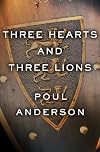
‘In olden time,’ said Hugi, ‘richt after the Fall, nigh everything were Chaos, see ye. But step by step ’tis been driven back. The longest step was when the Saviour lived on earth, for then naught o’ darkness could stand...'
Three Hearts and Three Lions is one of those classic heroic fantasy novels that satisfies on almost every level. Published originally in 1953 and expanded in 1961, it tells the story of Holger Carlsen, an engineer from Denmark who is suddenly transported from a show more World War II battlefield to a world of magic, myths, and monsters. He awakens in a forest without his clothes, where a fully equipped warhorse named Papillion grazes peacefully. Taking the armor, weapons and clothing from the horse's back, Holger notices the shield that hangs from the saddle. Something familiar about the design stirs his memory: three hearts and three lions. But nothing more comes. And yet he can ride the horse and wield the sword skillfully.
As he struggles to make sense of why he is there and how to return, Holger finds himself deeply involved in the battle between Chaos and Law. He gains the friendship of Hugi the dwarf and Alianor the swan maiden, but he find himself at odds with the Elf-lord Duke Alfric and the sorceress Morgan Le Fey.
For fans of heroic fantasy, Three Hearts and Three Lions has nearly everything one could wish: dragons, magic swords, werewolves, the land of Faerie, quests, tragedy, romance, humor, adventure--all held together by an underlying theme and a fairytale atmosphere. While it does not have the sophistication or breadth of The Lord of the Rings, it has an unexpected depth and heart, especially for such a short work.
Three Heart and Three Lions is a true classic from the golden age of fantasy and is listed in Fantasy: The 100 Best Books. show less
Three Hearts and Three Lions is one of those classic heroic fantasy novels that satisfies on almost every level. Published originally in 1953 and expanded in 1961, it tells the story of Holger Carlsen, an engineer from Denmark who is suddenly transported from a show more World War II battlefield to a world of magic, myths, and monsters. He awakens in a forest without his clothes, where a fully equipped warhorse named Papillion grazes peacefully. Taking the armor, weapons and clothing from the horse's back, Holger notices the shield that hangs from the saddle. Something familiar about the design stirs his memory: three hearts and three lions. But nothing more comes. And yet he can ride the horse and wield the sword skillfully.
As he struggles to make sense of why he is there and how to return, Holger finds himself deeply involved in the battle between Chaos and Law. He gains the friendship of Hugi the dwarf and Alianor the swan maiden, but he find himself at odds with the Elf-lord Duke Alfric and the sorceress Morgan Le Fey.
For fans of heroic fantasy, Three Hearts and Three Lions has nearly everything one could wish: dragons, magic swords, werewolves, the land of Faerie, quests, tragedy, romance, humor, adventure--all held together by an underlying theme and a fairytale atmosphere. While it does not have the sophistication or breadth of The Lord of the Rings, it has an unexpected depth and heart, especially for such a short work.
Three Heart and Three Lions is a true classic from the golden age of fantasy and is listed in Fantasy: The 100 Best Books. show less

“The Last Viking” Series
One does not need to familiarize oneself very much with Poul Anderson’s works before learning that he had – and sometimes freely and indulged – a serious “Viking obsession”. For those who like slight old-fashioned fantasy or historical fiction set in the Viking Age, this is a good thing.
“The Last Viking” series was published as a trilogy of three separate paperbacks in 1980. In fact, these were co-written with Poul’s wife, Karen Anderson, though show more her name does not usually appear in the credits on published versions. No individual book exceeds 300 pages, making the series as a whole still shorter than a modern fantasy or historical fiction novel.
Together, “The Last Viking” series recounts in fictionalized form the life and times of Harald “Hardrada” (i.e., the “hard-ruler”) Sigurdarson (Old Norse: Haraldr harðráða Sigurðarson), king of Norway in the early/mid-11th century AD. The Andersons were not the first modern authors to tackle this subject nor were they to be the last.
Harald himself was a colorful, complicated figure whose eventful career took him from Scandinavia to Byzantium before it ended in England. The main source for his life is his saga within the Heimskringla compendium of sagas of Norwegian kings (where it is perhaps the most readable for a modern audience), though the Andersons make a point of having dug into other medieval Danish, Byzantine, German, and English sources to round out their own take on Harald’s tale. This is, overall, not a bad thing, though they sometimes seem a little too beholden to their sources, cramming anecdotes or references to anecdotes – not to mention a fair bit of historical background into expository dialogue or plain info-dumps. One sometimes feels that there is perhaps more than enough detail for books of these lengths; or, alternatively, the books needed to be longer to provide adequate scope to the material. These are, moreover, mid-20th-century (more than even late-20th-century) novels, but with deep roots in the historical novels of previous generations. Though not going “full William Morris”, the Andersons use archaic or archaizing terms freely (many modern readers may need to reach for a well-stocked dictionary) and cleave system for Anglicizing Old Norse names that may occasionally cause even the silent reader to stumble.
On the other hand, at their best, the narrative and descriptions are rich with evocative prose, and there’s little doubt that the authors (presumably Poul, especially) have a deep feeling for their subject and setting. If one has a taste for Viking-Age adventure helmed by a driven, somewhat flawed, but always compelling protagonist in somewhat stentorian but often vibrant language, then the Andersons will deliver for you in “The Last Viking” series.
The Road of the Sea Horse (The Last Viking, #2)
The second book in the series, The Road of the Sea Horse, covers the life of Harald Harðráða from c. 1046 to c. 1061.Having returned to Norway after a formative career as a mercenary commander in the Byzantine Empire, Harald finds his nephew Magnus (illegitimate son of Harald’s half-brother St. Óláf) on the throne. Harald essentially strongarms Magnus into an agreement to share the rulership of Norway, but also throws his weight into the ongoing conflict between Magnus and Svein Estridsson (despite a brief political dalliance with Svein before joining with Magnus) over the rulership of Denmark. Historically, Magnus then died the very next year, and the convenience of this to Harald has long raised questions for scholars about the extent to which Harald had a hand in the matter. In the Andersons’ novel, Harald might be said to have indeed worked to have brought about Magnus’s death, if not perhaps having been directly responsible – and one has the sense that this is exactly what the Anderson’s Harald (and perhaps the historical Harald) wanted people to think: “I have not technically done anything wrong – but you ought to understand that you shouldn’t get in my way”.
That said, much of the narrative in this book deals precisely with things that get in Harald’s way. Harald has been fired by his experiences with the Byzantine Empire to bring what he sees as a stronger, more stable, and more modern style of kingship to Norway, ideally Denmark – and, indeed, beyond. He muses over the hope of restoring (perhaps bettering) the “North Sea Empire” of King Knut, which (during Harald’s childhood and exile) had included Denmark, Norway, and English (as well as, at least briefly, parts of Sweden). To this end, Harald seeks to consolidate power in Norway by crushing local enemies or binding local allies to him. He also, somewhat obsessively, campaigns year after year in Denmark, winning considerable plunder, though without ever decisively defeating Svein – and his Norwegian levies eventually begin to tire of this interminable foreign adventurer.
Harald’s political and military frustrations are mirrored by his personal ones. Having left his “one true love”, the Byzantine noblewoman Maria, behind when he fled Byzantium, Harald has married Elizabeth (daughter of Yaroslav of the Kyivan Rus') largely out of expedience. But his and Elizabeth’s personalities are not terribly well matched, and Harald formally installs the fiery Thora (daughter of one of Harald’s nobles) as an official concubine. Unsurprisingly, there is little love lost between Elizabeth and Thora; both bear Harald children, though Harald mostly struggles to understand or get on with any of them. Yet with time, Thora’s own strong personality contributes to plenty of conflict between her and Harald, and Harald’s semi-(un)officially bigamous domestic situation sputters along with Harald never quite being able to achieve what he wants – largely contingent on his failure to get everyone around him to do what he wants.
If there is a theme to this second book in The Last Viking series, it is that of Harald’s frustration that no one understands or cooperates with his glorious purpose – without understanding (or at least caring) that his purpose is more annoying than glorious those around him. Harald’s single-minded vision and ambition are also his flaw and his tragedy. The Andersons do fine work in allowing the reader to simultaneously sympathize with Harald even as we see his problems more clearly than he ever will.
The novel ends with a brief episode (based on passages from Adam of Bremen’s History of the Archbishops of Hamburg-Bremen) in which Harald leads an exploratory fleet into the Arctic seas, hoping to find a fabled and marvelously clement land of Hyperborea. In the event, they find only mists and ice. At last bowing to the grumblings of his followers, Harald turns back from this venture – though one would be right to expect he’s not yet done trying to make a mark on his world. show less
One does not need to familiarize oneself very much with Poul Anderson’s works before learning that he had – and sometimes freely and indulged – a serious “Viking obsession”. For those who like slight old-fashioned fantasy or historical fiction set in the Viking Age, this is a good thing.
“The Last Viking” series was published as a trilogy of three separate paperbacks in 1980. In fact, these were co-written with Poul’s wife, Karen Anderson, though show more her name does not usually appear in the credits on published versions. No individual book exceeds 300 pages, making the series as a whole still shorter than a modern fantasy or historical fiction novel.
Together, “The Last Viking” series recounts in fictionalized form the life and times of Harald “Hardrada” (i.e., the “hard-ruler”) Sigurdarson (Old Norse: Haraldr harðráða Sigurðarson), king of Norway in the early/mid-11th century AD. The Andersons were not the first modern authors to tackle this subject nor were they to be the last.
Harald himself was a colorful, complicated figure whose eventful career took him from Scandinavia to Byzantium before it ended in England. The main source for his life is his saga within the Heimskringla compendium of sagas of Norwegian kings (where it is perhaps the most readable for a modern audience), though the Andersons make a point of having dug into other medieval Danish, Byzantine, German, and English sources to round out their own take on Harald’s tale. This is, overall, not a bad thing, though they sometimes seem a little too beholden to their sources, cramming anecdotes or references to anecdotes – not to mention a fair bit of historical background into expository dialogue or plain info-dumps. One sometimes feels that there is perhaps more than enough detail for books of these lengths; or, alternatively, the books needed to be longer to provide adequate scope to the material. These are, moreover, mid-20th-century (more than even late-20th-century) novels, but with deep roots in the historical novels of previous generations. Though not going “full William Morris”, the Andersons use archaic or archaizing terms freely (many modern readers may need to reach for a well-stocked dictionary) and cleave system for Anglicizing Old Norse names that may occasionally cause even the silent reader to stumble.
On the other hand, at their best, the narrative and descriptions are rich with evocative prose, and there’s little doubt that the authors (presumably Poul, especially) have a deep feeling for their subject and setting. If one has a taste for Viking-Age adventure helmed by a driven, somewhat flawed, but always compelling protagonist in somewhat stentorian but often vibrant language, then the Andersons will deliver for you in “The Last Viking” series.
The Road of the Sea Horse (The Last Viking, #2)
The second book in the series, The Road of the Sea Horse, covers the life of Harald Harðráða from c. 1046 to c. 1061.
That said, much of the narrative in this book deals precisely with things that get in Harald’s way. Harald has been fired by his experiences with the Byzantine Empire to bring what he sees as a stronger, more stable, and more modern style of kingship to Norway, ideally Denmark – and, indeed, beyond. He muses over the hope of restoring (perhaps bettering) the “North Sea Empire” of King Knut, which (during Harald’s childhood and exile) had included Denmark, Norway, and English (as well as, at least briefly, parts of Sweden). To this end, Harald seeks to consolidate power in Norway by crushing local enemies or binding local allies to him. He also, somewhat obsessively, campaigns year after year in Denmark, winning considerable plunder, though without ever decisively defeating Svein – and his Norwegian levies eventually begin to tire of this interminable foreign adventurer.
Harald’s political and military frustrations are mirrored by his personal ones. Having left his “one true love”, the Byzantine noblewoman Maria, behind when he fled Byzantium, Harald has married Elizabeth (daughter of Yaroslav of the Kyivan Rus') largely out of expedience. But his and Elizabeth’s personalities are not terribly well matched, and Harald formally installs the fiery Thora (daughter of one of Harald’s nobles) as an official concubine. Unsurprisingly, there is little love lost between Elizabeth and Thora; both bear Harald children, though Harald mostly struggles to understand or get on with any of them. Yet with time, Thora’s own strong personality contributes to plenty of conflict between her and Harald, and Harald’s semi-(un)officially bigamous domestic situation sputters along with Harald never quite being able to achieve what he wants – largely contingent on his failure to get everyone around him to do what he wants.
If there is a theme to this second book in The Last Viking series, it is that of Harald’s frustration that no one understands or cooperates with his glorious purpose – without understanding (or at least caring) that his purpose is more annoying than glorious those around him. Harald’s single-minded vision and ambition are also his flaw and his tragedy. The Andersons do fine work in allowing the reader to simultaneously sympathize with Harald even as we see his problems more clearly than he ever will.
The novel ends with a brief episode (based on passages from Adam of Bremen’s History of the Archbishops of Hamburg-Bremen) in which Harald leads an exploratory fleet into the Arctic seas, hoping to find a fabled and marvelously clement land of Hyperborea. In the event, they find only mists and ice. At last bowing to the grumblings of his followers, Harald turns back from this venture – though one would be right to expect he’s not yet done trying to make a mark on his world.
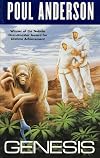
In the far future, humans only inhabit the stars as personality simulations, subroutines in vast, powerful artificial intelligencies that form a "galactic brain". One such uploaded mind is Christian Brannock. As an engineer, he helped build the first great works in space and was one of the first to work in intimate symbiosis with the AIs who, rather than man, colonized the stars. On Earth, the reigning intelligence is Gaia, a computer that rules human affairs and also posseses, in its show more libraries, presevered human minds it uses to ruin elaborate simulations of real and alternate histories.
Millions of years pass in this novel's almost Stapledonian sweep, and the galactic brain becomes concerned about the seeming obsession of Gaia with Earth history, her secretiveness, and her unresponsiveness to their proposal on whether the now geologically ancient Earth should be saved from a bloated sun, a test run for greater galactic engineering to come. A version of the Brannock mind is copied and sent on his way to Earth.
There he, and a slightly different copy, attempt to figure out what Gaia's up to. One version, inhabiting a robot's body, explores the dying Earth. The other engages in talk and travel with Lucinda Ashcroft, a personality inhabiting Gaia.
This novel puts together, in a surprisingly successful way, just about all the strains of Anderson's previous works from the epic sweep of Tau Zero (SF Collector's Edition) (Gollancz SF collector's edition)to his heroic fantasy to the uploaded minds of some of his most recent science fiction to alternate histories and time travel. The novel's sense of true tragedy is not new to Anderson, but, as the title hints, there is an unexpected theological flavor that is rare, but not unknown, in his work.
This novel should not only satisfy any fan of Anderson's but also serve as a good introduction to the rest of his work. show less
Millions of years pass in this novel's almost Stapledonian sweep, and the galactic brain becomes concerned about the seeming obsession of Gaia with Earth history, her secretiveness, and her unresponsiveness to their proposal on whether the now geologically ancient Earth should be saved from a bloated sun, a test run for greater galactic engineering to come. A version of the Brannock mind is copied and sent on his way to Earth.
There he, and a slightly different copy, attempt to figure out what Gaia's up to. One version, inhabiting a robot's body, explores the dying Earth. The other engages in talk and travel with Lucinda Ashcroft, a personality inhabiting Gaia.
This novel puts together, in a surprisingly successful way, just about all the strains of Anderson's previous works from the epic sweep of Tau Zero (SF Collector's Edition) (Gollancz SF collector's edition)to his heroic fantasy to the uploaded minds of some of his most recent science fiction to alternate histories and time travel. The novel's sense of true tragedy is not new to Anderson, but, as the title hints, there is an unexpected theological flavor that is rare, but not unknown, in his work.
This novel should not only satisfy any fan of Anderson's but also serve as a good introduction to the rest of his work. show less

The Terran Empire is "old and fat," and in terminal decline. Nonetheless, despite its many problems, its fall would be worse - heralding a dark age, the "long night." One of the few who would attempt the Sisyphean task of forestalling the Empire's demise is Dominic Flandry - Ensign Flandry serves as a sort of prequel, establishing some of the foundational events and relationships which would forge him into the "Agent of Terra" in future novels.
Without betraying too much of the plot, the bulk show more of the story takes place on a planet on the border between the Terran Empire and the Merseians, a peer-power which is in something of a cold war with Terra. The planet is divided between two sentient species - the land-dwelling-sea-sailing Tigeries, a cat-people which are supported by the Terrans, and Seatrolls, and aquatic species supported by the Merseians. The two Iron-age species are at intermittent war over coastal resources, and are used as proxies as the two space-faring empires vie for control of the planet without resorting to open warfare.
While the story is principally one of adventure, what I appreciate about Anderson is that he does not shy away, or hand-wave the human cost . . . or should I say sentient cost? When powers play the Great Game, people get hurt, and those who get hurt the most are the pawns, the proxies who fight it out while the Great Powers largely avoid bloodshed of their own. By not ignoring this aspect, the actions in the story have serious stakes and consequences, which are not always acknowledged in Adventure Science-Fiction. The way Anderson delves into the cultures of the various species blends a mix of humanity and otherness, giving them depth and a sympathetic perspective - the Merseians even have a few viewpoint chapters which help flesh out their attitudes and reveal how they approach situations in a different manner from that of humanity.
There's a review on this page which states "Space opera that's showing its age." - and I could not feel more differently. Given the attitudes and actions we see on the world stage today, in some ways it feels more relevant than ever. show less
Without betraying too much of the plot, the bulk show more of the story takes place on a planet on the border between the Terran Empire and the Merseians, a peer-power which is in something of a cold war with Terra. The planet is divided between two sentient species - the land-dwelling-sea-sailing Tigeries, a cat-people which are supported by the Terrans, and Seatrolls, and aquatic species supported by the Merseians. The two Iron-age species are at intermittent war over coastal resources, and are used as proxies as the two space-faring empires vie for control of the planet without resorting to open warfare.
While the story is principally one of adventure, what I appreciate about Anderson is that he does not shy away, or hand-wave the human cost . . . or should I say sentient cost? When powers play the Great Game, people get hurt, and those who get hurt the most are the pawns, the proxies who fight it out while the Great Powers largely avoid bloodshed of their own. By not ignoring this aspect, the actions in the story have serious stakes and consequences, which are not always acknowledged in Adventure Science-Fiction. The way Anderson delves into the cultures of the various species blends a mix of humanity and otherness, giving them depth and a sympathetic perspective - the Merseians even have a few viewpoint chapters which help flesh out their attitudes and reveal how they approach situations in a different manner from that of humanity.
There's a review on this page which states "Space opera that's showing its age." - and I could not feel more differently. Given the attitudes and actions we see on the world stage today, in some ways it feels more relevant than ever. show less
Lists
Winter Books (1)
SF Masterworks (1)
Nebula Award (1)
Awards


You May Also Like


Associated Authors
Statistics
- Works
- 690
- Also by
- 439
- Members
- 53,206
- Popularity
- #284
- Rating
- 3.5
- Reviews
- 795
- ISBNs
- 1,302
- Languages
- 20
- Favorited
- 76


