
Raúl Zurita
Author of Purgatory
About the Author
Image credit: Raúl Zurita, photo by Valerie Mejer
Works by Raúl Zurita
Poemas 1 copy
INRI 1 copy
Poemas 1 copy
Purgatorio : 1970-1977 1 copy
Raúl Zurita, César Aira 1 copy
Dreams for Kurosawa 1 copy
Associated Works
The Serpent and the Fire: Poetries of the Americas from Origins to Present (2024) — Contributor — 15 copies
Tagged
Common Knowledge
- Canonical name
- Zurita, Raúl
- Birthdate
- 1950
- Gender
- male
- Education
- Federico Santa María Technical University
- Awards and honors
- Premio Nacional de Literatura (2000)
National Prize for Literature Chile (2000)
Pablo Neruda Prize (1989) - Nationality
- Chile
- Birthplace
- Santiago, Chile
- Map Location
- Chile
- Associated Place (for map)
- Santiago, Chile
Members
Reviews
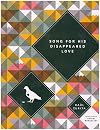
Stunning. Unapologetically brimming with love and pain, with politics and poetics, Zurita and Borzutzky fuse these opposites into a dance of tension and of longing, sorrow and hope. The prose-blocks through the middle of the poem impose order and structure on content that refuses to be cowed.

I would never had picked this book. Had I seen this book on the shelf, I would have put it back after reading the blurb on the back. Shows what I know.
The theme of this book is The Disappeared from the days of the regime of Pinochet in Chile from 1973-1990. He was moved to write this, to try to express that which did not exist until it was announced in 2001 by the President of Chile, Sr. Ricardo Lagos. There was one detail that really stuck out. Before the Disappeared were killed, they had show more their eyes gouged out with hooks. In the text, nobody hears and this is why. The victims were blinded, killed, then thrown out of airplanes in the Pacific Ocean, lakes, the Andes and into volcanoes. They were disappeared.
Zurita described the feeling of hearing what had been suspected all along as a noise, a screech that had no name. That the solemness of the announcement put up against such brutality brought forth a shame, that it had no name. Thus, the screech.....
The book is divided into three sections. The poems are long, broken down into smaller pieces on the page and filled with rich, descriptive language about the broken bodies, the lands and seas that took them when they fell.
The first lines hit me like a right cross;
Strange baits rain from the sky. Surprising bait
falls upon the sea.
Think on those first three words for a moment. "Strange baits rain" These are not supposed to be where they are. Something is horribly wrong. And so he writes. Coming back the this throughout the first poem (The Sea), white daisies, an injured rabbit with blood on its fang, and more in the second (Bruno Bends, Falls), pink snow in the next, (The Snow) and the hull of a ship where no ship should be in the final poem of Section One (The Desert). He weaves images together, slowly building throughout each poem, each section, each line towards the last two sections. He brings it all together but it is still a sorrowful tale.
The writing flows, doubles back on itself through wonderful use of repetition. He literally paints what hasn't been seen for those who can't see. Only through hearing can you see what he is trying to show you. It makes for involved, deep reading. Not something to toss in your bag for a day at the beach.
This is harrowing, wonderful, flowing, lovely, tear inducing, and spiritual all at the same time. I never would have chosen this book. I shall never forget this book and I cannot recommend this book highly enough. This is a work of true art. show less
The theme of this book is The Disappeared from the days of the regime of Pinochet in Chile from 1973-1990. He was moved to write this, to try to express that which did not exist until it was announced in 2001 by the President of Chile, Sr. Ricardo Lagos. There was one detail that really stuck out. Before the Disappeared were killed, they had show more their eyes gouged out with hooks. In the text, nobody hears and this is why. The victims were blinded, killed, then thrown out of airplanes in the Pacific Ocean, lakes, the Andes and into volcanoes. They were disappeared.
Zurita described the feeling of hearing what had been suspected all along as a noise, a screech that had no name. That the solemness of the announcement put up against such brutality brought forth a shame, that it had no name. Thus, the screech.....
The book is divided into three sections. The poems are long, broken down into smaller pieces on the page and filled with rich, descriptive language about the broken bodies, the lands and seas that took them when they fell.
The first lines hit me like a right cross;
Strange baits rain from the sky. Surprising bait
falls upon the sea.
Think on those first three words for a moment. "Strange baits rain" These are not supposed to be where they are. Something is horribly wrong. And so he writes. Coming back the this throughout the first poem (The Sea), white daisies, an injured rabbit with blood on its fang, and more in the second (Bruno Bends, Falls), pink snow in the next, (The Snow) and the hull of a ship where no ship should be in the final poem of Section One (The Desert). He weaves images together, slowly building throughout each poem, each section, each line towards the last two sections. He brings it all together but it is still a sorrowful tale.
The writing flows, doubles back on itself through wonderful use of repetition. He literally paints what hasn't been seen for those who can't see. Only through hearing can you see what he is trying to show you. It makes for involved, deep reading. Not something to toss in your bag for a day at the beach.
This is harrowing, wonderful, flowing, lovely, tear inducing, and spiritual all at the same time. I never would have chosen this book. I shall never forget this book and I cannot recommend this book highly enough. This is a work of true art. show less

Awards


You May Also Like


Associated Authors
Statistics
- Works
- 48
- Also by
- 2
- Members
- 278
- Popularity
- #83,542
- Rating
- 3.8
- Reviews
- 3
- ISBNs
- 77
- Languages
- 1