
James Joll (1918–1994)
Author of The Origins of the First World War
About the Author
Works by James Joll
As idéias de Gramsci 1 copy
As ideias de Gramsci 1 copy
Europe a historian's view 1 copy
Anarquistas e anarquismo 1 copy
Associated Works
Tagged
Common Knowledge
- Legal name
- Joll, James Bysse
- Birthdate
- 1918-06-21
- Date of death
- 1994-07-12
- Gender
- male
- Education
- University of Bordeaux
University of Oxford (New College) - Occupations
- historian
lecturer - Organizations
- British Academy
- Short biography
- James Joll was born on 21 June 1918 in Bristol and was educated at Winchester, the University of Bordeaux and New College, Oxford. He left to join the British Army in 1940, eventually serving in the Special Operations Executive. He returned to Oxford after World War II, completed his studies, and became an instructor there. He was a Fellow and Tutor in Politics from 1947 until 1950. He then transferred to St Antony's College. In 1955 he met the painter and art historian John Golding; the two men formed a long relationship which lasted until Joll's death.
While at Oxford, Joll wrote a book on the Second International (1955) and a book on Léon Blum, Walter Rathenau, and Filippo Tommaso Marinetti, called Intellectuals in Politics (1960). In 1964 he published The Anarchists, which showed his intertwined interests in the culture, events, political philosophy, and individual personalities forming the history of a Leftist movement.
In 1967 Joll left St Antony's, Oxford to teach at the London School of Economics, as the Stevenson Professor of International History. His best known work was Europe Since 1870: an International History, which appeared in 1973. He returned to biography in 1977, with his book on Italian Marxist intellectual Antonio Gramsci; he was made a Fellow of the British Academy in the same year. Later, he gave refuge to Anthony Blunt, Golding's colleague at the Courtauld Institute and former teacher, after Blunt's exposure as a former Soviet spy, for which Joll was attacked in the press.
Following his retirement in 1981, he became Emeritus Professor of the University of London.
James Joll died 12 July 1994 from the cancer of the larynx. In his obituary notice for The Independent newspaper, the historian Sir Michael Howard, noted:
Joll's real focus was the history of ideas broadly conceived - philosophical, ethical and aesthetic, as well as political - and the interface between this and the political history of Europe in the 19th and 20th centuries. He firmly believed that history was made by people rather than by dispassionate forces. But he also believed that one could not understand why people act as they do unless one also understands the influences that moulded their minds. - Nationality
- UK
- Associated Place (for map)
- UK
Members
Reviews
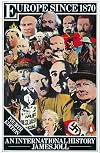
A broad and sophisticated look at the broad sweep of European political, social and cultural history from the late nineteenth century onwards, the standard and clarity of Joll's research are such that even now, four decades after it was first written, it is still recommended reading for undergrads. I first read it not for undergrad, though, but as part of my Leaving Cert prep, when it was an invaluable supplement for classes which were, how shall I put this... a little inadequate.

3964. The Second International 1889-1914, by James Joll (read 13 Dec 2004) This 1966 book gives the history of the Second International of socialists, their meetings and arguments, culminating in the utter failure of the socialists to prevent acceptance of the Great War in 1914, their idealistic position against war crumbling in the insanity of late July and early August 1914. A good little book.

Il movimento anarchico, che aveva espresso il suo ultimo e più vigoroso sforzo rivoluzionario nella guerra civile spagnola — sforzo eroico finito tragicamente—, sembrava fino a qualche anno fa eliminato dalla ribalta politica e finito ormai negli archivi della storia. In questi ultimi tempi invece, in Italia e in altri paesi d’Europa, è ricomparso vivo e vegeto. Questo libro di Joll è.
una breve ma incisiva storia del movimento anarchico, dai teorici Proudhon, Bak e Kropotkin, che show more preconizzavano una società senza potere autoritario, senza gerarchie, senza privilegi, senza’ leggi né punizioni, ai rivoluzionari veri e propri che tentarono di realizzare questa società ideale. show less
una breve ma incisiva storia del movimento anarchico, dai teorici Proudhon, Bak e Kropotkin, che show more preconizzavano una società senza potere autoritario, senza gerarchie, senza privilegi, senza’ leggi né punizioni, ai rivoluzionari veri e propri che tentarono di realizzare questa società ideale. show less

LOS ANARQUISTAS
Historia del movimiento anarquista, cubriendo sus inicios filosóficos en Europa con William Godwin y Pierre-Joseph Proudhon, el posterior desarrollo ideológico de los rusos Mijaíl Bakunin, Piotr Kropotkin, y la influencia que tuvo la ideología en los grupos de la clase trabajadora en los siglos XIX y XX, principalmente en Europa y Rusia, pero también en Estados Unidos.
Historia del movimiento anarquista, cubriendo sus inicios filosóficos en Europa con William Godwin y Pierre-Joseph Proudhon, el posterior desarrollo ideológico de los rusos Mijaíl Bakunin, Piotr Kropotkin, y la influencia que tuvo la ideología en los grupos de la clase trabajadora en los siglos XIX y XX, principalmente en Europa y Rusia, pero también en Estados Unidos.
You May Also Like


Associated Authors
Statistics
- Works
- 17
- Also by
- 2
- Members
- 979
- Popularity
- #26,315
- Rating
- 3.7
- Reviews
- 5
- ISBNs
- 55
- Languages
- 8
- Favorited
- 1