
Norman Stone (1) (1941–2019)
Author of World War One: A Short History
For other authors named Norman Stone, see the disambiguation page.
About the Author
Norman Stone is currently Professor of International Relations at Bilkent University, Ankara, Turkey, where he is Director of the Turkish-Russian Institute.
Works by Norman Stone
Associated Works
Extraordinary Popular Delusions and the Madness of Crowds (1841) — Introduction, some editions — 2,963 copies, 43 reviews
What Might Have Been : Leading Historians on Twelve 'What Ifs' of History (2004) — Contributor — 197 copies, 6 reviews
Tagged
Common Knowledge
- Birthdate
- 1941-03-08
- Date of death
- 2019-06-18
- Gender
- male
- Education
- Glasgow Academy
University of Cambridge (Gonville & Caius College) - Occupations
- historian
professor - Organizations
- Oxford University
- Relationships
- Stone, Nick (son)
- Nationality
- UK
- Birthplace
- Glasgow, Scotland, UK
- Places of residence
- Oxford, Oxfordshire, England, UK
Ankara, Turkey
Istanbul, Turkey - Associated Place (for map)
- UK
Members
Reviews

You could argue that the WWI Russian front set up the remaining history of the 20th century. The early assault on East Prussia, although eventually disastrous for the Russians, may have slowed down the Germans just enough to keep them out of Paris, the eventual failure of the Brusilov Offensive contributed heavily to the Revolution, and the development of the munitions industry during the war dropped a fairly well developed industrial base into Stalin’s lap.
Norman Stone’s The Eastern show more Front 1914-1917 covers this interesting period very well. All the military campaigns – invasion of East Prussia and the German riposte; campaigns in Galacia, Brusilov offensive and Romanian intervention – are all well described, but the real strength of the book is the detailed analysis of politics, infrastructure and economics. Soviet histories tend to exaggerate the deficiencies of Tsarist Russia in order to provide contrast with the glories of Communism; however, Stone makes it clear that there’s not that much exaggeration. Tsarist politics produced a surplus of antiquated generals who hated each other and were seemingly more interested in seeing their counterparts defeated than the enemy; the historical pre-eminence of Russia artillery had distorted into an emphasis on permanent fortresses, which were obsolete by WWI but which still absorbed the lion’s share of Russian artillery and shell production (fortress commanders went to the length of hiding munitions stocks, lest they be transferred to infantry units that would “waste” them); Russian traditional secrecy made it difficult to have weapons manufactured overseas – blueprints were supplied grudgingly, were in Cyrillic, and had Russian measurement units; and communications were primitive even by 1914 standards. The entire Russian army had fewer than 40 radios, insufficient technicians to use them, and no cryptographers; there were some automobiles, motorcycles and airplanes but they were usually broken down and underutilized when they worked; thus, Russian commanders either had to move around on horseback or broadcast in the clear to communicate with their troops. The Russians had shot themselves in the foot in western Poland, where roads, rail and telegraph lines had been deliberately kept undeveloped to act as an obstacle to an invading army; this probably would have worked if the Russians were on the defensive (after all, that’s more or less what happened in 1941) but was of no use at all when they were trying to invade East Prussia or Galacia.
If they had been given the time, the Tsarist Russian might have been able to pull it off. By 1916, factories were producing munitions on the same scale as the Western allies and General Brusilov had put together an offensive strategy that prefigured some of the German 1918 stormtrooper tactics and which almost collapsed the Austro-Hungarian Empire. The Brusilov offensive failed due to internal army politics, German intervention, and the poor decision to transfer troops to Romania. (Stone makes the interesting point that politicians on both sides focused on gaining “allies” which were often worse than useless; Romanian intervention simply handed over the Ploesti oil fields to the Central Powers and absorbed more Russian troops than if Romania had remained neutral).
Fairly dense reading, but well worth it to explicate a usually obscure part of WWI history. show less
Norman Stone’s The Eastern show more Front 1914-1917 covers this interesting period very well. All the military campaigns – invasion of East Prussia and the German riposte; campaigns in Galacia, Brusilov offensive and Romanian intervention – are all well described, but the real strength of the book is the detailed analysis of politics, infrastructure and economics. Soviet histories tend to exaggerate the deficiencies of Tsarist Russia in order to provide contrast with the glories of Communism; however, Stone makes it clear that there’s not that much exaggeration. Tsarist politics produced a surplus of antiquated generals who hated each other and were seemingly more interested in seeing their counterparts defeated than the enemy; the historical pre-eminence of Russia artillery had distorted into an emphasis on permanent fortresses, which were obsolete by WWI but which still absorbed the lion’s share of Russian artillery and shell production (fortress commanders went to the length of hiding munitions stocks, lest they be transferred to infantry units that would “waste” them); Russian traditional secrecy made it difficult to have weapons manufactured overseas – blueprints were supplied grudgingly, were in Cyrillic, and had Russian measurement units; and communications were primitive even by 1914 standards. The entire Russian army had fewer than 40 radios, insufficient technicians to use them, and no cryptographers; there were some automobiles, motorcycles and airplanes but they were usually broken down and underutilized when they worked; thus, Russian commanders either had to move around on horseback or broadcast in the clear to communicate with their troops. The Russians had shot themselves in the foot in western Poland, where roads, rail and telegraph lines had been deliberately kept undeveloped to act as an obstacle to an invading army; this probably would have worked if the Russians were on the defensive (after all, that’s more or less what happened in 1941) but was of no use at all when they were trying to invade East Prussia or Galacia.
If they had been given the time, the Tsarist Russian might have been able to pull it off. By 1916, factories were producing munitions on the same scale as the Western allies and General Brusilov had put together an offensive strategy that prefigured some of the German 1918 stormtrooper tactics and which almost collapsed the Austro-Hungarian Empire. The Brusilov offensive failed due to internal army politics, German intervention, and the poor decision to transfer troops to Romania. (Stone makes the interesting point that politicians on both sides focused on gaining “allies” which were often worse than useless; Romanian intervention simply handed over the Ploesti oil fields to the Central Powers and absorbed more Russian troops than if Romania had remained neutral).
Fairly dense reading, but well worth it to explicate a usually obscure part of WWI history. show less
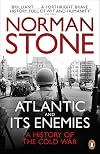
I have a rather embarrassing confession. I saw this in the bookshop and misread the author's name; I thought it was Norman Davies. And given Mr Davies' interest in Poland, and given Poland played a considerable role in the beginning and end of the Cold War, I thought this would be good.
Imagine my dismay when I realised it was written not by the estimable Davies, but by ex Thatcher speechwriter Norman Stone. But still, into it I waded. And a curious experience it is too. Firstly, forget any show more idea of this being an academic work of history; as Mr Stone says in the preface, it is a tract. A rant in fact. Often amusing, always opinionated, rarely encumbered by the need for historical accuracy. Its rather as though an old, rather eccentric uncle, has sat you down in front of the fire, poured you a brandy, himself a rather larger one, and started telling you anecdotes from history. As long as these are amusingly told you are willing to indulge him for a while, safe with your own interpretation of the world, and even safer in the knowledge that he will eventually nod off. Mr Stone however, does not nod off. He keeps at it relentlessly for 600 pages. In the end, it is the reader who needs the reviving stimulants. I am having mine now...
Mr Stone, comes at history from the right, but to his credit he is not a neo Conservative. Rather he is an old C Conservative - opposed to too much education of the masses (an interesting position for a University Professor to adopt), very concerned with how cultivated leaders are, and opposed to ideological pretention (which seems to include any idea formulated post the New Deal). Once you understand this, his heroes and villains are predictably cast. He scorns Kennedy as a TV creation of no substance (and what's more, he sniffs, Harry Truman was a better piano player). Weirdly he ignores Robert Kennedy, but heaps abuse on Edward Kennedy (who surely had almost no influence on the Cold War?). Nixon made mistakes, was ill advised by his "sandwich eating" (a favourite insult) team, but Carter was a born idiot of no redeeming qualities whatsoever. And so it goes. Left wing politicians in any country are either mediocrities, alcoholics or in the pay of Moscow. Only those who are cultured escape rebuke. Denis Healey "knew music properly". Salvador Allende "could discuss painting" .
The bitchy tone is never the less entertaining for a while, until you notice that most of the targets of his acrimony are safely dead and unable to litigate. And it takes a certain gaucheness to write as though intimate with the protagonists (Erick Honecker is "irritating little Honecker" etc) when of course you are not.
I would give this malevolent tripe no stars at all. But it is, at times amusing. And Stone is good where personality is not involved - his summaries of economic, industrial and financial issues are well researched and interesting. But he needs to leave the politics alone. The Cold War was a very dangerous time in human history, mocking the protagonists adds nothing to our understanding of it show less
Imagine my dismay when I realised it was written not by the estimable Davies, but by ex Thatcher speechwriter Norman Stone. But still, into it I waded. And a curious experience it is too. Firstly, forget any show more idea of this being an academic work of history; as Mr Stone says in the preface, it is a tract. A rant in fact. Often amusing, always opinionated, rarely encumbered by the need for historical accuracy. Its rather as though an old, rather eccentric uncle, has sat you down in front of the fire, poured you a brandy, himself a rather larger one, and started telling you anecdotes from history. As long as these are amusingly told you are willing to indulge him for a while, safe with your own interpretation of the world, and even safer in the knowledge that he will eventually nod off. Mr Stone however, does not nod off. He keeps at it relentlessly for 600 pages. In the end, it is the reader who needs the reviving stimulants. I am having mine now...
Mr Stone, comes at history from the right, but to his credit he is not a neo Conservative. Rather he is an old C Conservative - opposed to too much education of the masses (an interesting position for a University Professor to adopt), very concerned with how cultivated leaders are, and opposed to ideological pretention (which seems to include any idea formulated post the New Deal). Once you understand this, his heroes and villains are predictably cast. He scorns Kennedy as a TV creation of no substance (and what's more, he sniffs, Harry Truman was a better piano player). Weirdly he ignores Robert Kennedy, but heaps abuse on Edward Kennedy (who surely had almost no influence on the Cold War?). Nixon made mistakes, was ill advised by his "sandwich eating" (a favourite insult) team, but Carter was a born idiot of no redeeming qualities whatsoever. And so it goes. Left wing politicians in any country are either mediocrities, alcoholics or in the pay of Moscow. Only those who are cultured escape rebuke. Denis Healey "knew music properly". Salvador Allende "could discuss painting" .
The bitchy tone is never the less entertaining for a while, until you notice that most of the targets of his acrimony are safely dead and unable to litigate. And it takes a certain gaucheness to write as though intimate with the protagonists (Erick Honecker is "irritating little Honecker" etc) when of course you are not.
I would give this malevolent tripe no stars at all. But it is, at times amusing. And Stone is good where personality is not involved - his summaries of economic, industrial and financial issues are well researched and interesting. But he needs to leave the politics alone. The Cold War was a very dangerous time in human history, mocking the protagonists adds nothing to our understanding of it show less

A great book about a terrible disaster. It should be read both as an almost perfect summary of its subject, as well as a shining exemplar of its genre.
It was something of a war without heroes, and the performance of the principal actors--the general, the statesman, and even the prancing cavalry-man-- wreaked enormous and even catastrophic destruction, all-too-often due to an unprofessional lack of skill among the leaders. However, at least all this ineptitude is described expertly, and in a show more short space the author has included a suprising amount of carefully-chosen, revealing, and even insightful detail (e.g. "'Third Ypres' was to do more to disaffect the British educated classes than anything that Lenin ever wrote.")
It is a remarkable example of great quality in small quantity, not unlike an athlete who seeks to marry great strength with a frame that remains slim and flexible...or even the proverbial pearl of great price, of great worth, and yet not at all difficult to hold in your hands.
(10/10) show less
It was something of a war without heroes, and the performance of the principal actors--the general, the statesman, and even the prancing cavalry-man-- wreaked enormous and even catastrophic destruction, all-too-often due to an unprofessional lack of skill among the leaders. However, at least all this ineptitude is described expertly, and in a show more short space the author has included a suprising amount of carefully-chosen, revealing, and even insightful detail (e.g. "'Third Ypres' was to do more to disaffect the British educated classes than anything that Lenin ever wrote.")
It is a remarkable example of great quality in small quantity, not unlike an athlete who seeks to marry great strength with a frame that remains slim and flexible...or even the proverbial pearl of great price, of great worth, and yet not at all difficult to hold in your hands.
(10/10) show less
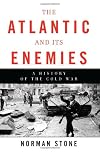
What a strange book! A history of the Cold War that doesn't even mention the Warsaw Pact! This is great when the Author is writing about economics, but terrible when he is writing on military affairs. Once I knew his strengths and weaknesses I enjoyed the book. But it is not a straight forward history in any sense. Each chapter is like an independent essay and it is very much about the Authors personal opinions of the time and events. That is not to say there is only opinion, there is much show more history here as well, but it is not a straight narrative history as most people would understand it. My suggestion is to pick a page at random and read it, if it seems interesting then give the book a go, if not then don't. show less
Lists
Awards


You May Also Like


Associated Authors
Statistics
- Works
- 17
- Also by
- 9
- Members
- 1,355
- Popularity
- #18,977
- Rating
- 3.7
- Reviews
- 24
- ISBNs
- 122
- Languages
- 8