
About the Author
Bella Bathurst is a freelance journalist who lives in London
Works by Bella Bathurst
Associated Works
Tagged
Common Knowledge
- Canonical name
- Bathurst, Bella
- Birthdate
- 1969
- Gender
- female
- Awards and honors
- Crime Writers Association Gold Dagger for Non-Fiction (Nominee, 2005)
- Agent
- Victoria Hobbs (AM Hobbs)
- Nationality
- UK
- Birthplace
- London, England, UK
- Associated Place (for map)
- England, UK
Members
Reviews
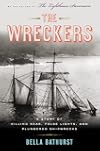
The title of this grand survey of nautical true crime presents an ambiguity right up front. Are wreckers people who cause shipwrecks in order to profit from them, or only people who passively take advantage of such shipwrecks as occur? In a sense, the entire book is devoted to teasing out the implications of that question. Bella Bathurst takes us round (literally) the island of Britain in this "Story of Killing Seas and Plundered Shipwrecks, from the Eighteenth Century to the Present Day," show more and in the process we meet not only wreckers under both definitions, but representatives of many other related "breeds": hovellers, salvors, pilots, lifesavers, lighthouse keepers, smugglers, and beachmen. (The Thames River has its own even more colorfully named types: river pirates, day and night plunderers, mudlarks, rat-catchers, and scuffle-hunters.) Many of these, no matter what skullduggery they engaged in, were (and needed to be) exceptional seamen.
Bathurst investigates, tours, and conducts interviews in seven wrecking zones:
The Goodwin Sands off Kent in the English Channel
The Pentland Firth in the north of Scotland
The Scilly Isles
The Hebrides on the West Coast of Scotland
The Thames
Cornwall
The East Coast of England (specifically the Norfolk / Suffolk / Essex area)
The geographical detail is delightful. The treacherous Goodwin Sands come and go with the tides.
The island of Stroma in the Pentland Firth, once modestly populated and kind of a Wrecker Central, is now abandoned to the elements.
The "garden isles" of Scilly are guarded by the forbidding Western Rocks.
Off the Scottish island of Mull, a boating George Orwell once nearly went down in the infamous Corryvreckan Whirlpool.
Wrecking has its strongest public associations in Cornwall and in the Scillies, where several generations of photographing Gibsons made beautiful images of disaster.
The chapter on always-picturesque Cornwall in The Wreckers is one of Bathurst's most amusing, as the Cornish persistently try to capitalize economically and touristically on their heritage of wrecking, while simultaneously denying that most of it ever happened. Fact and fiction become hard to disentangle here, as much of Cornwall's reputation for deliberate wrecking (putting out "false lights" and such) is derived second-hand from Daphne Du Maurier's popular 1936 novel Jamaica Inn, and the 1939 Alfred Hitchcock film based on it.
The real Jamaica Inn still exists on Bodmin Moor in Cornwall, and is understandably popular with visitors.
Another piece of popular culture that shaped perceptions of wrecking is Compton Mackenzie's 1947 novel Whisky Galore, along with Alexander Mackendrick's 1949 film adaptation. This story is based on a real incident, the grounding of the cargo ship SS Politician in the Hebrides in 1941. From the wreckers' standpoint, general cargo ships are usually the best prizes, carrying as they do all manner of useful, valuable, and just plain interesting goods. Given that there was a whisky shortage in Scotland in 1941 owing to World War II, the fact that the Politician was carrying several hundred thousand bottles of superb whisky bound for export to the United States was one of those once-in-a-lifetime pieces of good fortune that you just don't argue with.
Wrecking may not be what it once was, but Bathurst points out that it will continue to exist as long as there are ships at sea, and Great Britain still boasts a public official with the nifty title of "Receiver of Wreck." All salvage is supposed to be reported, and this has been the case for a very long time, but the problem has always been getting people to report, and most officials have ultimately looked the other way rather than pressing the point. Although, as Bathurst points out, "There is not a single line in the laws of England or Scotland which supports the notion of 'finders keepers'," the idea is deeply ingrained in the populace and will never disappear.
There is a continuum between casual beachcombing and the sort of actively malicious wrecking that involves false signaling, leaving wreck victims to die while retrieving their goods, and cutting fingers or biting ears off corpses in order to retrieve jewelry. At some point on that continuum, understandable high spirits give way to unforgivable criminality, but identifying the exact spot where the crossing-over takes place is not easy by the lights of law, philosophy, or even common sense. That's part of what makes wrecking a great subject. Bella Bathurst has done full justice to it. show less
Bathurst investigates, tours, and conducts interviews in seven wrecking zones:
The Goodwin Sands off Kent in the English Channel
The Pentland Firth in the north of Scotland
The Scilly Isles
The Hebrides on the West Coast of Scotland
The Thames
Cornwall
The East Coast of England (specifically the Norfolk / Suffolk / Essex area)
The geographical detail is delightful. The treacherous Goodwin Sands come and go with the tides.
The island of Stroma in the Pentland Firth, once modestly populated and kind of a Wrecker Central, is now abandoned to the elements.
The "garden isles" of Scilly are guarded by the forbidding Western Rocks.
Off the Scottish island of Mull, a boating George Orwell once nearly went down in the infamous Corryvreckan Whirlpool.
Wrecking has its strongest public associations in Cornwall and in the Scillies, where several generations of photographing Gibsons made beautiful images of disaster.
The chapter on always-picturesque Cornwall in The Wreckers is one of Bathurst's most amusing, as the Cornish persistently try to capitalize economically and touristically on their heritage of wrecking, while simultaneously denying that most of it ever happened. Fact and fiction become hard to disentangle here, as much of Cornwall's reputation for deliberate wrecking (putting out "false lights" and such) is derived second-hand from Daphne Du Maurier's popular 1936 novel Jamaica Inn, and the 1939 Alfred Hitchcock film based on it.
The real Jamaica Inn still exists on Bodmin Moor in Cornwall, and is understandably popular with visitors.
Another piece of popular culture that shaped perceptions of wrecking is Compton Mackenzie's 1947 novel Whisky Galore, along with Alexander Mackendrick's 1949 film adaptation. This story is based on a real incident, the grounding of the cargo ship SS Politician in the Hebrides in 1941. From the wreckers' standpoint, general cargo ships are usually the best prizes, carrying as they do all manner of useful, valuable, and just plain interesting goods. Given that there was a whisky shortage in Scotland in 1941 owing to World War II, the fact that the Politician was carrying several hundred thousand bottles of superb whisky bound for export to the United States was one of those once-in-a-lifetime pieces of good fortune that you just don't argue with.
Wrecking may not be what it once was, but Bathurst points out that it will continue to exist as long as there are ships at sea, and Great Britain still boasts a public official with the nifty title of "Receiver of Wreck." All salvage is supposed to be reported, and this has been the case for a very long time, but the problem has always been getting people to report, and most officials have ultimately looked the other way rather than pressing the point. Although, as Bathurst points out, "There is not a single line in the laws of England or Scotland which supports the notion of 'finders keepers'," the idea is deeply ingrained in the populace and will never disappear.
There is a continuum between casual beachcombing and the sort of actively malicious wrecking that involves false signaling, leaving wreck victims to die while retrieving their goods, and cutting fingers or biting ears off corpses in order to retrieve jewelry. At some point on that continuum, understandable high spirits give way to unforgivable criminality, but identifying the exact spot where the crossing-over takes place is not easy by the lights of law, philosophy, or even common sense. That's part of what makes wrecking a great subject. Bella Bathurst has done full justice to it. show less

Sound begins with Bathurst dealing with her hearing loss in a not very healthy way. Her friend Eric has invited her to go sailing with him, his son Luke, and another friend Tom. She has only 30% hearing, is not an experienced sailor, but wants to face her fears. The weather turns bad, the engine fails, and a wave crashes over the boat causing her right hearing aid to malfunction. She brought one spare but it’s useless because it’s for her left ear. She can’t hear her friends’ shouted show more instructions and due to nearsightedness and the bad weather can’t see their frantic gestures either. Her way of dealing with all this is to shut down and sulk. The next day her friend gives her a chance to redeem herself but while steering the boat through a narrow channel she can’t remember the meaning of the black and red markers. She spots a white marker under a rhododendron bush (what’s it doing in the water?) and steers toward it. She won’t let the nine year old take over because she’s the adult after all. The boy later explains to his furious father that “She didn’t know what a road sign was.” Was she trying to get them all killed?
Bathurst’s first begins to notice her hearing loss after a skiing accident. As her hearing diminishes her reaction always veers to denial which creates difficulty communicating with friends and coworkers as well as potential dangers such as encountered during her sailing fiasco. She insists nothing is wrong with her, has suicidal thoughts, tries to get admitted to a mental health facility and rejects her friends. One friend even described her during this time as scary and hostile. She visits various hearing specialists and gets hearing aids which she resists wearing. (American readers might be surprised to learn that the NHS supplied them at no cost to Bathurst.) Her discussion of hearing loss in the music world goes from Beethoven to modern rock musicians, many of whom have a degree of deafness. She investigates the occupational hazards to hearing at shipyards and in the military. She learns a little sign language and interacts with members of the deaf community but seems standoffish. Then her audiologist informs her that a surgeon in France can probably help her. The surgery isn’t immediately successful but her hearing does improve over the course of months. In the last few pages Bathurst states how happy she is to have recovered her hearing but quickly diverts to talking about Tony Parker and his oral histories of ordinary people rather than sharing personal feelings.
Sound is a short, quick read. The title of each chapter is a single staccato word and the writing is very casual, occasionally rambling, rather than technical. While I wanted to feel sympathy for Bathurst, I found it difficult to do so; she often seems to be holding the reader at arm’s length and she sometimes comes across as a bit prickly. show less
Bathurst’s first begins to notice her hearing loss after a skiing accident. As her hearing diminishes her reaction always veers to denial which creates difficulty communicating with friends and coworkers as well as potential dangers such as encountered during her sailing fiasco. She insists nothing is wrong with her, has suicidal thoughts, tries to get admitted to a mental health facility and rejects her friends. One friend even described her during this time as scary and hostile. She visits various hearing specialists and gets hearing aids which she resists wearing. (American readers might be surprised to learn that the NHS supplied them at no cost to Bathurst.) Her discussion of hearing loss in the music world goes from Beethoven to modern rock musicians, many of whom have a degree of deafness. She investigates the occupational hazards to hearing at shipyards and in the military. She learns a little sign language and interacts with members of the deaf community but seems standoffish. Then her audiologist informs her that a surgeon in France can probably help her. The surgery isn’t immediately successful but her hearing does improve over the course of months. In the last few pages Bathurst states how happy she is to have recovered her hearing but quickly diverts to talking about Tony Parker and his oral histories of ordinary people rather than sharing personal feelings.
Sound is a short, quick read. The title of each chapter is a single staccato word and the writing is very casual, occasionally rambling, rather than technical. While I wanted to feel sympathy for Bathurst, I found it difficult to do so; she often seems to be holding the reader at arm’s length and she sometimes comes across as a bit prickly. show less
 This review was written for LibraryThing Early Reviewers.
The Wreckers: A Story of Killing Seas and Plundered Shipwrecks, from the 18th-Century to the Present Day by Bella Bathurst
From Jamaica Inn to Poldark to Whiskey Galore I, like others, have seen the 'fictional' take on wreckers in the British Isles but never really knew what was fact and what was fiction.
Secretly I was hoping that this book would be crammed with tales of luring unwary ships onto the rocks and stories of Cornishmen fleeing from the redcoats over the cliffs and to a degree it was, but, it was so much more.
Whilst the wrecking tales where what brought me to this book it delivered so much more with show more descriptions of the key wrecking areas and the people who inhabited them. It also branched out to cover lesser know areas classified as wrecking like Whales and other cretaceous relations.
I found that the history of the locations and organisations involved in the prevention of wrecking including the RNLI which significantly had its roots in wrecking before the poachers turned gamekeeper were fascinating.
Some may argue that parts of the book wandered too far from its core directive but it is this departure from the wrecking stories that make this a joy to read.
I'm off to track down Bella's previous book about the Stevenson Lighthouses show less
Secretly I was hoping that this book would be crammed with tales of luring unwary ships onto the rocks and stories of Cornishmen fleeing from the redcoats over the cliffs and to a degree it was, but, it was so much more.
Whilst the wrecking tales where what brought me to this book it delivered so much more with show more descriptions of the key wrecking areas and the people who inhabited them. It also branched out to cover lesser know areas classified as wrecking like Whales and other cretaceous relations.
I found that the history of the locations and organisations involved in the prevention of wrecking including the RNLI which significantly had its roots in wrecking before the poachers turned gamekeeper were fascinating.
Some may argue that parts of the book wandered too far from its core directive but it is this departure from the wrecking stories that make this a joy to read.
I'm off to track down Bella's previous book about the Stevenson Lighthouses show less
The Lighthouse Stevensons: The Extraordinary Story of the Building of the Scottish Lighthouses by the Ancestors of Robert Louis Stevenson by Bella Bathurst
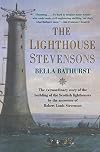
In Alexander McCall Smith's A Promise Of Ankles, Bertie is reading The Lighthouse Stevensons and seems to enjoy it in a primary-school kind of way. So I thought I might enjoy it in a Nonna kind of way, and I did! It's quite fascinating (once you memorize the convenient family tree and read enough to understand some of the more unusual links), involving the history of technology, lighthouses, and the Highlands and Islands of Scotland. There is drama and adventure and human interest. I suspect show more that I got a lot more out of it than Bertie did. show less
Lists
Awards


You May Also Like


Associated Authors
Statistics
- Works
- 7
- Also by
- 2
- Members
- 1,021
- Popularity
- #25,225
- Rating
- 3.7
- Reviews
- 41
- ISBNs
- 48
- Languages
- 3
