
Katherine Ashenburg
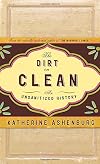
Author of The Dirt on Clean: An Unsanitized History
About the Author
Katherine Ashenburg writes for a wide variety of publications, including The New York Times, Washington Post, and Toronto Life. She is the author of three non-fiction books for adults, including The Dirt on Clean She lives in Toronto, ON.
Works by Katherine Ashenburg
Associated Works
Tagged
Common Knowledge
- Canonical name
- Ashenburg, Katherine
- Birthdate
- 1960
- Gender
- female
- Occupations
- writer
radio producer
author
editor
teacher
lecturer (show all 7)
speaker - Organizations
- Globe and Mail
New York Times
Toronto Life
Canadian Broadcasting Corporation - Awards and honors
- National Magazine Awards (Gold, Society, 2012, "The Long Goodbye")
- Agent
- The Lavin Agency (speaker's bureau)
- Nationality
- Canada
- Birthplace
- Rochester, New York, USA
- Places of residence
- Toronto, Ontario, Canada
- Associated Place (for map)
- Canada
Members
Reviews

The Dirt on Clean - An Unsanitized History by Katherine Ashenburg takes us through our delightfully dirty and grubby past, as we meander through the ages taking stock of attitudes to dirt and cleanliness and examining the drivers for the vast changes along the way.
Ashenburg explores many aspects of dirtiness, cleanliness and bathing and makes this observation early in the book:
"The archetypal link between dirt and guilt, and cleanliness and innocence, is built into our language - perhaps show more into our psyches. We talk about dirty jokes and laundering money." Page 8
In the Roman Empire, cleanliness was an important part of life, work and leisure, with many Romans spending up to two hours at the public baths every day. The use of strigils - a curved blade used to scrape the skin - as part of the ancient greek bathing process wasn't new to me, but get this:
"Greek athletes, who exercised in the nude - gymnasium literally means 'the naked place' - first oiled their bodies and covered them with a thin layer of dust or sand to prevent chills. After [exercise] the men and boys removed their oil and dust, now mingled with sweat with a curved metal scraper called a strigil." Page 24
I knew athletes competed nude and oiled their bodies after bathing, but didn't know they applied dust or sand to prevent them getting cold; or the meaning of gymnasium for that matter! A little later in the book, we learn:
"The accumulated sweat, dirt and oil that a famous athlete or gladiator strigiled off himself was sold to his fans in small vials. Some Roman women reportedly used it as a face cream." Page 38
While this might make us recoil with disgust, it's really no different to social media influencers today selling their bath water or sending their socks to eager fans willing to pay big bucks.
It's fascinating to me that personal hygiene habits and attitudes to bathing have changed so dramatically over time. From the bathhouse traditions that date from the Middle Ages, Ashenburg gives us a broad overview of the relationship between cleanliness and religion. Muslims perform ritual ablutions and their cleanliness has been one of the culturally defining points of difference between Christians and Muslims. If the Muslims were meticulously clean, then the Christians were known for being dirty. When it comes to saints though, the dirtier the better.
"For ordinary Christians, cleanliness was a [sic] good, bringing comfort, a sense of well-being and a measure of healthfulness. Humility and charity demanded that the most scrupulously filthy saints help others to clean." Page 63
It's ironic that human suffering, poverty, abstinence and lack of washing demonstrated religious devotion with many only washing the parts of the body that could be seen, like the hands and face.
During many plagues, it was thought dirt blocked the pores of the skin which prevented the plague entering the human body. Washing or having a bath would strip a person of this protective layer and many were certain they'd die as a result. A shortage of firewood also contributed to the decline in popularity for bathing, as resources to heat water became scarcer.
Many will know the famous quote from Elizabeth I who bathed once a month, "whether I need it or not", but did you know:
"Elizabeth's successor, James I, reportedly washed only his fingers." Page 99
Ashenburg includes many familiar and well worn quotes about cleanliness, bathing and odours from history, and some of them never cease to shock, like this one:
"Shortly before Louis XIV died in 1715, a new ordinance decreed that feces left in the corridors of Versailles would be removed once a week." Page 116
Once a week! In addition to immersing the reader in the moral dangers of bathing and bathing in public, it was also interesting to read about the debate between cool and warm water bathing, with some of the opinion that warm baths made boys and men soft.
"But cool water had never been considered as dangerous as hot water. To immerse yourself in hot water, you had to be foolhardy, German - or ill. ... Because water could infiltrate a healthy body and disturb the balance of its humours, doctors and patients hoped that a carefully designed and monitored bath might also restore the humours' equilibrium in a diseased body." Page 114
It's unthinkable to us to wear the same singlet or underwear for a week without changing or even removing it, but in the 1700s, the Marquis d'Argens wore a flannel under-waistcoat to keep warm and wouldn't take it off for fear of catching cold. It was revealed he'd worn the waistcoat for four years, but when he finally agreed to take it off, it had "so fixed itself upon him that pieces of his skin came away with it." Page 127 Eeek!
Ashenburg examines how our notion of privacy has changed, the relationship between bathing and sex and she even makes the history of soap absorbing for the reader. Although I wouldn't want to try washing clothes with a mix of animal fats and ashes. Later, toilet soap was made with olive oil:
"...(where the soap made in Castile was so prized that eventually all fine white soap made with olive oil was called Castile soap), but it was a luxury and beyond the budgets of most people in the Middle Ages." Page 32
And did you know the brand name Palmolive came about because the soap they made contained a combination of palm oil and olive oil. Who knew!
The introduction of the rain bath, or shower as we know it today was a little dry - sorry, couldn't resist. Rain baths took off in America, however older dwellings in Europe took much longer to embrace the technology, as it had to be adapted to existing conditions. The rich were loath to change their habits, preferring to bathe in their rooms, and with servants to bring the water the impetus for change wasn't pressing. The poorer classes didn't have time to carry the volume of water, the fuel required to heat it in their homes or even a tub to sit in, and so the class divide remained, demarcated by cleanliness.
If you lived in Paris in 1819, you could have ordered a service called a bain a domicile:
"....bain a domicile, delivered to the client's house or apartment, even on the top floor, all the necessities of a bath - a tub, a robe and sheet, and hot, cold or tepid water as ordered. When the bath was over, everything was whisked away, including the water, which was usually removed by a hose..." Page 187
How's that? You could basically 'uber' a bath in 1819! Ashenburg covers a lot of ground, and the number of times I've recalled facts from this book since finishing it, has persuaded me to increase my star rating from 4 stars to a full five stars.
Let me leave you with Seneca describing the cacophony of noise he has to tolerate living above a bathhouse:
"Now imagine to yourself every type of sound which can make you sick of your ears: when hearty types are exercising by swinging dumbbells around - either working hard at it or pretending to - I hear their grunts, and then a sharp hissing whenever they let out the breath they've been holding. Or again, my attention is caught by someone who is content to relax under an ordinary massage and I hear the smack of a hand whacking his shoulders, the sound changing as the hand comes down flat or curved. If on top of all that there is a game-scorer beginning to call out the score, I've had it! Then there's the brawler, the thief caught in the act, the man who likes the sound of his voice in the bath, the folk who leap into the pool with an enormous splash. Besides those whose voices are, if nothing else, natural, think of the depilator constantly uttering his shrill and piercing cry to advertise his services: He is never silent except when plucking someone's armpits' and forcing him to yell instead. Then there are the various cries of the drink-seller; there's the sausage seller and the pastry-cook and all the eating-house pedlars, each marketing his wares with his own distinctive cry." Pages 41-42
Highly recommended! show less
Ashenburg explores many aspects of dirtiness, cleanliness and bathing and makes this observation early in the book:
"The archetypal link between dirt and guilt, and cleanliness and innocence, is built into our language - perhaps show more into our psyches. We talk about dirty jokes and laundering money." Page 8
In the Roman Empire, cleanliness was an important part of life, work and leisure, with many Romans spending up to two hours at the public baths every day. The use of strigils - a curved blade used to scrape the skin - as part of the ancient greek bathing process wasn't new to me, but get this:
"Greek athletes, who exercised in the nude - gymnasium literally means 'the naked place' - first oiled their bodies and covered them with a thin layer of dust or sand to prevent chills. After [exercise] the men and boys removed their oil and dust, now mingled with sweat with a curved metal scraper called a strigil." Page 24
I knew athletes competed nude and oiled their bodies after bathing, but didn't know they applied dust or sand to prevent them getting cold; or the meaning of gymnasium for that matter! A little later in the book, we learn:
"The accumulated sweat, dirt and oil that a famous athlete or gladiator strigiled off himself was sold to his fans in small vials. Some Roman women reportedly used it as a face cream." Page 38
While this might make us recoil with disgust, it's really no different to social media influencers today selling their bath water or sending their socks to eager fans willing to pay big bucks.
It's fascinating to me that personal hygiene habits and attitudes to bathing have changed so dramatically over time. From the bathhouse traditions that date from the Middle Ages, Ashenburg gives us a broad overview of the relationship between cleanliness and religion. Muslims perform ritual ablutions and their cleanliness has been one of the culturally defining points of difference between Christians and Muslims. If the Muslims were meticulously clean, then the Christians were known for being dirty. When it comes to saints though, the dirtier the better.
"For ordinary Christians, cleanliness was a [sic] good, bringing comfort, a sense of well-being and a measure of healthfulness. Humility and charity demanded that the most scrupulously filthy saints help others to clean." Page 63
It's ironic that human suffering, poverty, abstinence and lack of washing demonstrated religious devotion with many only washing the parts of the body that could be seen, like the hands and face.
During many plagues, it was thought dirt blocked the pores of the skin which prevented the plague entering the human body. Washing or having a bath would strip a person of this protective layer and many were certain they'd die as a result. A shortage of firewood also contributed to the decline in popularity for bathing, as resources to heat water became scarcer.
Many will know the famous quote from Elizabeth I who bathed once a month, "whether I need it or not", but did you know:
"Elizabeth's successor, James I, reportedly washed only his fingers." Page 99
Ashenburg includes many familiar and well worn quotes about cleanliness, bathing and odours from history, and some of them never cease to shock, like this one:
"Shortly before Louis XIV died in 1715, a new ordinance decreed that feces left in the corridors of Versailles would be removed once a week." Page 116
Once a week! In addition to immersing the reader in the moral dangers of bathing and bathing in public, it was also interesting to read about the debate between cool and warm water bathing, with some of the opinion that warm baths made boys and men soft.
"But cool water had never been considered as dangerous as hot water. To immerse yourself in hot water, you had to be foolhardy, German - or ill. ... Because water could infiltrate a healthy body and disturb the balance of its humours, doctors and patients hoped that a carefully designed and monitored bath might also restore the humours' equilibrium in a diseased body." Page 114
It's unthinkable to us to wear the same singlet or underwear for a week without changing or even removing it, but in the 1700s, the Marquis d'Argens wore a flannel under-waistcoat to keep warm and wouldn't take it off for fear of catching cold. It was revealed he'd worn the waistcoat for four years, but when he finally agreed to take it off, it had "so fixed itself upon him that pieces of his skin came away with it." Page 127 Eeek!
Ashenburg examines how our notion of privacy has changed, the relationship between bathing and sex and she even makes the history of soap absorbing for the reader. Although I wouldn't want to try washing clothes with a mix of animal fats and ashes. Later, toilet soap was made with olive oil:
"...(where the soap made in Castile was so prized that eventually all fine white soap made with olive oil was called Castile soap), but it was a luxury and beyond the budgets of most people in the Middle Ages." Page 32
And did you know the brand name Palmolive came about because the soap they made contained a combination of palm oil and olive oil. Who knew!
The introduction of the rain bath, or shower as we know it today was a little dry - sorry, couldn't resist. Rain baths took off in America, however older dwellings in Europe took much longer to embrace the technology, as it had to be adapted to existing conditions. The rich were loath to change their habits, preferring to bathe in their rooms, and with servants to bring the water the impetus for change wasn't pressing. The poorer classes didn't have time to carry the volume of water, the fuel required to heat it in their homes or even a tub to sit in, and so the class divide remained, demarcated by cleanliness.
If you lived in Paris in 1819, you could have ordered a service called a bain a domicile:
"....bain a domicile, delivered to the client's house or apartment, even on the top floor, all the necessities of a bath - a tub, a robe and sheet, and hot, cold or tepid water as ordered. When the bath was over, everything was whisked away, including the water, which was usually removed by a hose..." Page 187
How's that? You could basically 'uber' a bath in 1819! Ashenburg covers a lot of ground, and the number of times I've recalled facts from this book since finishing it, has persuaded me to increase my star rating from 4 stars to a full five stars.
Let me leave you with Seneca describing the cacophony of noise he has to tolerate living above a bathhouse:
"Now imagine to yourself every type of sound which can make you sick of your ears: when hearty types are exercising by swinging dumbbells around - either working hard at it or pretending to - I hear their grunts, and then a sharp hissing whenever they let out the breath they've been holding. Or again, my attention is caught by someone who is content to relax under an ordinary massage and I hear the smack of a hand whacking his shoulders, the sound changing as the hand comes down flat or curved. If on top of all that there is a game-scorer beginning to call out the score, I've had it! Then there's the brawler, the thief caught in the act, the man who likes the sound of his voice in the bath, the folk who leap into the pool with an enormous splash. Besides those whose voices are, if nothing else, natural, think of the depilator constantly uttering his shrill and piercing cry to advertise his services: He is never silent except when plucking someone's armpits' and forcing him to yell instead. Then there are the various cries of the drink-seller; there's the sausage seller and the pastry-cook and all the eating-house pedlars, each marketing his wares with his own distinctive cry." Pages 41-42
Highly recommended! show less

I love a clean space. I actually like cleaning, particularly when it involves dusting my bookshelves. There's something about a room where I've just removed the dust, hair and debris that says, 'order,' followed by 'exhale.' In the old days, I used to need/have to clean my room before I could work on any term papers. So when I saw this title, I was intrigued. I'm well aware 'clean' is psychologically, personally and culturally defined. I have, after all, lived with other people, one of whom show more would have dust bunnies the size of hamsters under the bed, and another whose tolerance for dirty bathrooms inevitably resulted in me cleaning it. Every. Week. But I digress. Unfortunately, The Dirt on Clean is largely about Western bathing rituals, from early Greek and Roman period to the English in the Middle Ages and 19th centuries, and then finally modern American. It was vaguely interesting, in a sleepy-time bath kind of way.
On the entertaining side, if you've ever wondered how Western bathing rituals evolved through the years, you'll find a reasonable detailing here. The ancient Greeks (no mention of the modern ones) were well known for public baths, plumbing, and a culture that encouraged bathing for both social and health reasons. Hippocrates apparently believed hot and cold baths could bring the body's humours into balance. Of course, bathhouses also served as an important social setting.
Ashenburg then devotes a chapter to Christianity and bathing, particularly the unusual non-emphasis on physical cleanliness/ritual as compared to other religions. In fact, excessive washing "signified vanity and worldliness," (p.59) as well as potentially immodest exposure. Hot baths might also be stimulating, a concept that would be echoed in the Victorian era.
Several more chapters discuss varying aspects of bathing through Europe during the next millennia. Some areas retained bathing and bathhouses (the Swiss, the French) through the 1300s, but the plague ended up being a fatal blow to the conception of water as healthy because of the growing belief that baths and water opened the pores and let "pestiferous vapour in" (p.94). Mr. Francis Bacon, as a matter of fact, had a regimen where a person had a pre-bath oil and salve routine to close pores, sat in the bath for 2 hours, then wrapped in a waxed cloth that had herbs and resin for 24 hours, intending to re-close pores and 'harden' the body.
Further chapters explore the return of cold water bathing in the 1700s which coincided with the view that the pores should be open so that germs could be flushed away from the body. Technology facilitated the rise of bidets and ocean 'baths' in the 1750s. As the trend gained traction in the upper classes, the issue became how to convince the lower classes to clean up, covered in the return of baths/bathouses and development of showers in the 1800s that was connected to cholera. A subsequent chapter looks at plumbing in America during the same time frame, followed by soap and marketing in the early 1900s, and the crazy war on germs from the 1950s onward.
My problem with this book is that it was neither fish nor fowl. On one side, it talks about cleanliness from a ritual and conceptual standpoint, occasionally tying it into medical theory or physical resources. The problem with this approach is that she also uses stories as examples of rituals, when--as readers know--sometimes stories are as much about what we wish or fantasize about rather than what is. Or, you know, metaphor. Like using Fifty Shades of Grey to talk about sexual rituals in 21st century America; although they are connected, there's a difference between cultural practices and cultural entertainment. So my academic criticism would be that she muddles her anthropological analysis. For instance, getting the lower classes to bathe was illustrated by Eliza Dolittle in My Fair Lady. I'll also note that although she rarely brings in examples of various bathing rituals in other countries, it usually lacks context.
On the other side, she also enjoys sharing the Trivia(l) Pursuit or Entertainment Tonight type of stories where we get the scandalous and shocking details of what they did Way Back When, such as when Jean-Jacques Rousseau griped that a house was so full of "maids and teasing lackeys [that] I do not find a single wall or wretched little corner" to pee in. She also tries periodically to bring in the issue of 'smells.' Although in the opening chapter she recognizes smell as cultural concept, she still brings it into many of the chapters where people had habits that would be considered culturally unsavory now, but then slams modern (American) culture for being so smell-conscious now.
In an effort to be appropriate, I usually read it in the bath, which accounts for the many days it took to complete my reading. it might have also contributed to its soporific effects, in contrast to those crazy Victorians thinking it heats the blood. It's not a bad book, but when it comes to non-fiction, I prefer less attempts to be titillating and more focus on substance. show less
On the entertaining side, if you've ever wondered how Western bathing rituals evolved through the years, you'll find a reasonable detailing here. The ancient Greeks (no mention of the modern ones) were well known for public baths, plumbing, and a culture that encouraged bathing for both social and health reasons. Hippocrates apparently believed hot and cold baths could bring the body's humours into balance. Of course, bathhouses also served as an important social setting.
Ashenburg then devotes a chapter to Christianity and bathing, particularly the unusual non-emphasis on physical cleanliness/ritual as compared to other religions. In fact, excessive washing "signified vanity and worldliness," (p.59) as well as potentially immodest exposure. Hot baths might also be stimulating, a concept that would be echoed in the Victorian era.
Several more chapters discuss varying aspects of bathing through Europe during the next millennia. Some areas retained bathing and bathhouses (the Swiss, the French) through the 1300s, but the plague ended up being a fatal blow to the conception of water as healthy because of the growing belief that baths and water opened the pores and let "pestiferous vapour in" (p.94). Mr. Francis Bacon, as a matter of fact, had a regimen where a person had a pre-bath oil and salve routine to close pores, sat in the bath for 2 hours, then wrapped in a waxed cloth that had herbs and resin for 24 hours, intending to re-close pores and 'harden' the body.
Further chapters explore the return of cold water bathing in the 1700s which coincided with the view that the pores should be open so that germs could be flushed away from the body. Technology facilitated the rise of bidets and ocean 'baths' in the 1750s. As the trend gained traction in the upper classes, the issue became how to convince the lower classes to clean up, covered in the return of baths/bathouses and development of showers in the 1800s that was connected to cholera. A subsequent chapter looks at plumbing in America during the same time frame, followed by soap and marketing in the early 1900s, and the crazy war on germs from the 1950s onward.
My problem with this book is that it was neither fish nor fowl. On one side, it talks about cleanliness from a ritual and conceptual standpoint, occasionally tying it into medical theory or physical resources. The problem with this approach is that she also uses stories as examples of rituals, when--as readers know--sometimes stories are as much about what we wish or fantasize about rather than what is. Or, you know, metaphor. Like using Fifty Shades of Grey to talk about sexual rituals in 21st century America; although they are connected, there's a difference between cultural practices and cultural entertainment. So my academic criticism would be that she muddles her anthropological analysis. For instance, getting the lower classes to bathe was illustrated by Eliza Dolittle in My Fair Lady. I'll also note that although she rarely brings in examples of various bathing rituals in other countries, it usually lacks context.
On the other side, she also enjoys sharing the Trivia(l) Pursuit or Entertainment Tonight type of stories where we get the scandalous and shocking details of what they did Way Back When, such as when Jean-Jacques Rousseau griped that a house was so full of "maids and teasing lackeys [that] I do not find a single wall or wretched little corner" to pee in. She also tries periodically to bring in the issue of 'smells.' Although in the opening chapter she recognizes smell as cultural concept, she still brings it into many of the chapters where people had habits that would be considered culturally unsavory now, but then slams modern (American) culture for being so smell-conscious now.
In an effort to be appropriate, I usually read it in the bath, which accounts for the many days it took to complete my reading. it might have also contributed to its soporific effects, in contrast to those crazy Victorians thinking it heats the blood. It's not a bad book, but when it comes to non-fiction, I prefer less attempts to be titillating and more focus on substance. show less
I loved this book. It temporarily fed the insatiable curiosity that I never quite grew out of. I'm the sort to stop suddenly while in the shower to wonder how the notions of indoor plumbing or soap came about. I'm always intrigued about how cultural systems and perspectives develop and how each is influenced by others.
The focus of this book is primarily Europe, and given the diverse practices even on that one continent, I think it would be hard to broaden the scope much further in one show more volume. Influences from other countries and consequent influences on North America are noted, but it's busy enough covering such a broad range of history, cultures, and geography. It describes the virtues or horrors (depending upon the place and time) of bathing in hot water, bathing in cold water, bathing in lukewarm water, or bathing at all, especially if it involved body parts that aren't generally seen. It brings up an interesting chicken-egg what-came-first musing for me: do clothing patterns determine bathing patterns or did bathing constraints determine clothing styles?
The book is full of interesting quotes, paintings, and ads. I tried to keep the various beliefs over time about the sanctity or fears of a full immersion bath in my head while browsing through an art museum yesterday. For some, to go without bathing was to show piety and humility. For others, bathing frequently was to show a desire for holiness and purity. Where heating water was an extravagant use of fuel and privacy was limited, bathing in cold water was not a comfortable thing. Perhaps it’s not surprising that bathing in comfortable temperatures was often believed to sap people of strength or make them slothful. In the days before central heating, the tendency to linger in a warm bath probably happened whenever the opportunity allowed, and I haven’t the slightest doubt that those immersed instead in frigid water jumped out quite energetically as soon as possible. Even so, stories of those who spent four to six hours at a time in warm baths were pretty mind-boggling. I can't help but think they had nothing better to do once out.
For many of us, cultural notions of hygiene were determined quite a lot by various marketing campaigns of the last century or two, punctuated here and there by war and disease outbreak. It’s a little jarring, but perhaps not surprising, that what’s now held to be good health and the minimum of manners was born out of ad campaigns between competing 19th and 20th century soap or deodorant manufacturers. Ultimately, there are still the questions: what’s really necessary for good health, respect for those around us, and our own enjoyment? The book doesn’t pretend to give the final word, but rather gives us how various societies chose to answer. show less
The focus of this book is primarily Europe, and given the diverse practices even on that one continent, I think it would be hard to broaden the scope much further in one show more volume. Influences from other countries and consequent influences on North America are noted, but it's busy enough covering such a broad range of history, cultures, and geography. It describes the virtues or horrors (depending upon the place and time) of bathing in hot water, bathing in cold water, bathing in lukewarm water, or bathing at all, especially if it involved body parts that aren't generally seen. It brings up an interesting chicken-egg what-came-first musing for me: do clothing patterns determine bathing patterns or did bathing constraints determine clothing styles?
The book is full of interesting quotes, paintings, and ads. I tried to keep the various beliefs over time about the sanctity or fears of a full immersion bath in my head while browsing through an art museum yesterday. For some, to go without bathing was to show piety and humility. For others, bathing frequently was to show a desire for holiness and purity. Where heating water was an extravagant use of fuel and privacy was limited, bathing in cold water was not a comfortable thing. Perhaps it’s not surprising that bathing in comfortable temperatures was often believed to sap people of strength or make them slothful. In the days before central heating, the tendency to linger in a warm bath probably happened whenever the opportunity allowed, and I haven’t the slightest doubt that those immersed instead in frigid water jumped out quite energetically as soon as possible. Even so, stories of those who spent four to six hours at a time in warm baths were pretty mind-boggling. I can't help but think they had nothing better to do once out.
For many of us, cultural notions of hygiene were determined quite a lot by various marketing campaigns of the last century or two, punctuated here and there by war and disease outbreak. It’s a little jarring, but perhaps not surprising, that what’s now held to be good health and the minimum of manners was born out of ad campaigns between competing 19th and 20th century soap or deodorant manufacturers. Ultimately, there are still the questions: what’s really necessary for good health, respect for those around us, and our own enjoyment? The book doesn’t pretend to give the final word, but rather gives us how various societies chose to answer. show less
The Dirt on Clean: An Unsanitized History by Katherine Ashenburg is a fun and often cringe-inducing history of different ideas & practices of cleanliness from the Greeks to modern day America, mostly focusing on practices in France, England, Germany and the United States, with a few detours into southern Europe and the Ottoman Empire. Fun sidebars on various practices, illustrations of bathing contraptions, good use of advertisements in the later portions. Also funny quotes and anecdotes show more about hygiene interspersed throughout.
It was really interesting to see how the pendulum has swung back and forth throughout history - different practices and different interpretations of those practices. I especially thought it was interesting that bathing and cleanliness was at one point associated with an unsavory character, which is completely the opposite of how we view it today. The book ends with a good discussion of advertising & ideas about cleanliness in contemporary America and Europe - including some thoughts touching on the idea that as a woman, you are never clean enough, especially in certain regions.... Very enjoyable, although I confess that, as an obsessively clean modern American person, I cringed a lot during the descriptions of 16th, 17th, and early 18th century European grooming habits. The past was a dirty, smelly place.
Generally well-written, but more pop-history than serious, I think. Still a really fun book to read, especially if you'd like to know bizarre trivia about just how filthy European royalty used to be. show less
It was really interesting to see how the pendulum has swung back and forth throughout history - different practices and different interpretations of those practices. I especially thought it was interesting that bathing and cleanliness was at one point associated with an unsavory character, which is completely the opposite of how we view it today. The book ends with a good discussion of advertising & ideas about cleanliness in contemporary America and Europe - including some thoughts touching on the idea that as a woman, you are never clean enough, especially in certain regions.... Very enjoyable, although I confess that, as an obsessively clean modern American person, I cringed a lot during the descriptions of 16th, 17th, and early 18th century European grooming habits. The past was a dirty, smelly place.
Generally well-written, but more pop-history than serious, I think. Still a really fun book to read, especially if you'd like to know bizarre trivia about just how filthy European royalty used to be. show less
Lists
Awards


You May Also Like


Associated Authors
Statistics
- Works
- 10
- Also by
- 3
- Members
- 896
- Popularity
- #28,592
- Rating
- 3.7
- Reviews
- 32
- ISBNs
- 40
- Languages
- 2