
D. C. Fontana (1939–2019)
Author of Vulcan's Glory
About the Author
Series
Works by D. C. Fontana
Babylon 5: Other Voices Volume 2 : 6 Scripts by Larry DiTillio, Kathryn m. Drennan, D.C. Fontana (2008) — Author — 14 copies
Star Trek: Year Four - The Enterprise Experiment #5 (Star Trek: Year Four: The Enterprise Experiment) (2008) 2 copies
Star Trek: Year Four - The Enterprise Experiment #4 (Star Trek: Year Four: The Enterprise Experiment) (2008) 2 copies
Star Trek: Year Four - The Enterprise Experiment #2 (Star Trek: Year Four: The Enterprise Experiment) (2008) 2 copies
Star Trek: Year Four - The Enterprise Experiment #3 (Star Trek: Year Four: The Enterprise Experiment) (2008) 2 copies
Tomorrow is yesterday (Star trek) 2 copies
Associated Works
The City on the Edge of Forever: The Original Teleplay that Became the Classic Star Trek Episode (1977) — Afterword, some editions — 590 copies, 17 reviews
Boarding the Enterprise: Transporters, Tribbles, and the Vulcan Death Grip in Gene Roddenberry's Star Trek (2006) — Contributor — 91 copies, 5 reviews
Tagged
Common Knowledge
- Canonical name
- Fontana, D. C.
- Legal name
- Fontana, Dorothy Catherine
- Other names
- Bingham, J. Michael
Richards, Michael - Birthdate
- 1939-03-25
- Date of death
- 2019-12-02
- Gender
- female
- Education
- Fairleigh Dickinson University
- Occupations
- screenwriter
secretary - Organizations
- Star Trek
- Awards and honors
- SF Hall Of Fame (2020)
- Relationships
- Roddenberry, Gene (colleague)
- Nationality
- USA
- Birthplace
- Sussex, New Jersey, USA
- Places of residence
- Los Angeles, California, USA
Totowa, New Jersey, USA - Place of death
- Burbank, California, USA
- Associated Place (for map)
- USA
Members
Reviews
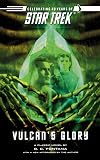
DC FONTANA!! Now we're talking!! This was a very fun (though very Jossed now) story that addressed Spock's relationships to T'Pring, Amanda, and Sarek in a way that I found extremely satisfying. It also felt very TOS-y - as one might expect from Fontana. I highly recommend it to anyone who's trying to see how at least one TOS writer thought of Spock!
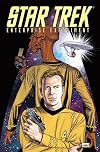
I liked the substantial roles for Kor and the Romulan Commander, but I'm confused about what actually happened in the political machinations... and it seems incredibly racist for them to just dress Sulu up like a Klingon as if he can pass for one with no effort?

I always enjoy reading the rare Star Trek novels written by writers from the original series, as well as ones set during Pike's tenure as captain of the Enterprise. In this respect D.C. Fontana's book is a double treat, as she lends her considerable experience as a writer and script editor for the show to tell the story of Spock's first mission aboard the starship. Her characterization is assured, as she adds to the existing base of characters from the original pilot several new creations show more that provide greater depth to her tale. This crew soon finds itself involved in a series of events — some related, others not — that range from the important to the amusingly mundane, all of which combine to provide the rare sense of the complex interactions taking place in a vessel as large as the Enterprise. It's a testament to Fontana's skills as an author that she makes it all work as well as it does, and when I finished the book I did so with considerable regret that she never returned to the precursor she created for further adventures, for she demonstrated the fresh storytelling possibilities that exist with an Enterprise that contains within it a unique mix of the familiar and the new. show less

Most people know Gene Roddenberry for "Star Trek;" however, his writing for television extends far beyond Captain Kirk and crew. In the Roddenberry universe, "The Questor Tapes" fills a unique niche. Conceived in the early 1970s (after The Original Series ended its three-season run), "The Questor Tapes" was Roddenberry's ambitious attempt, through science fiction, to explore artificial intelligence and the essence of humanity. D.C. Fontana, a key figure in the "Star Trek" universe, adapted show more his teleplay into a novel, enriching the narrative with her nuanced understanding of Roddenberry's vision. Gene L. Coon, another "Star Trek" alum, also contributed to the work, making the 1974 television pilot and its subsequent book a collaborative effort among some of the most influential minds in 1960s science fiction.
The novelization presents an early exploration of themes that would later become central in "Star Trek: The Next Generation". The story follows Questor, an android with superhuman intelligence, on his journey to understand his purpose. Along the way, he learns the intricacies of human nature, similar to the "if only I could be human" theme used with Mr. Data a decade later.
The creation of the android by "mechanic" Jerry, based on plans from the vanished creator Vaslovik, feels forced at times, as do the "pretty girl with a secret" and "evil government man who eventually turns good" tropes, but it still makes for good storytelling. The premature revelation of Vaslovik as an alien robot sent to watch over the world is surprising and arguably unnecessary. It's as if Roddenberry knew the pilot would not get picked up as a series and wanted to provide some kind of closure. It leaves you wondering how the story would have unfolded without that detail throughout a prospective first season.
Looking back on the book and teleplay today, they are prescient. Roddenberry anticipated discussions around AI superintelligence, the ethical boundaries of robotics, and the quest for meaning in an era of technological omnipresence. Questor's journey mirrors our contemporary dilemmas and serves as a poignant reflection on the evolving relationship between humans and technology. The exploration of companionship and understanding between Questor and his human counterpart offers valuable insights into the potential dynamics of human-robot interactions.
All in all, "The Questor Tapes" was a good, fast read. If so inclined, you can find the full television pilot on YouTube and in the Internet Archive. For Roddenberry aficionados or those interested in the ethical dilemmas surfaced by AI, both are worth your time. show less
The novelization presents an early exploration of themes that would later become central in "Star Trek: The Next Generation". The story follows Questor, an android with superhuman intelligence, on his journey to understand his purpose. Along the way, he learns the intricacies of human nature, similar to the "if only I could be human" theme used with Mr. Data a decade later.
The creation of the android by "mechanic" Jerry, based on plans from the vanished creator Vaslovik, feels forced at times, as do the "pretty girl with a secret" and "evil government man who eventually turns good" tropes, but it still makes for good storytelling. The premature revelation of Vaslovik as an alien robot sent to watch over the world is surprising and arguably unnecessary. It's as if Roddenberry knew the pilot would not get picked up as a series and wanted to provide some kind of closure. It leaves you wondering how the story would have unfolded without that detail throughout a prospective first season.
Looking back on the book and teleplay today, they are prescient. Roddenberry anticipated discussions around AI superintelligence, the ethical boundaries of robotics, and the quest for meaning in an era of technological omnipresence. Questor's journey mirrors our contemporary dilemmas and serves as a poignant reflection on the evolving relationship between humans and technology. The exploration of companionship and understanding between Questor and his human counterpart offers valuable insights into the potential dynamics of human-robot interactions.
All in all, "The Questor Tapes" was a good, fast read. If so inclined, you can find the full television pilot on YouTube and in the Internet Archive. For Roddenberry aficionados or those interested in the ethical dilemmas surfaced by AI, both are worth your time. show less
Lists
You May Also Like


Associated Authors
Statistics
- Works
- 21
- Also by
- 5
- Members
- 1,842
- Popularity
- #13,975
- Rating
- 3.6
- Reviews
- 20
- ISBNs
- 31
- Languages
- 7
- Favorited
- 2