
Fiona MacCarthy (1940–2020)
Author of Byron: Life and Legend
About the Author
Fiona MacCarthy, a distinguished biographer and cultural historian, is the author of five other books, including William Morris, which was awarded the Wolfson History Prize, and Eric Gill. She writes for The Observer, The New York Review of Books, and The Times Literary Supplement. She lives in show more Derbyshire, England. show less
Works by Fiona MacCarthy
The Last Pre-Raphaelite: Edward Burne-Jones and the Victorian Imagination (2011) 173 copies, 2 reviews
The Omega workshops 1913-1919 : decorative arts of Bloomsbury : Crafts Council Gallery : 18 January-18 March 1984 : a Crafts Council exhibition (1983) 11 copies
London Precincts: A Curated Guide to the City's Best Shops, Eateries, Bars and Other Hangouts (2016) 8 copies
Associated Works
Tagged
Common Knowledge
- Canonical name
- MacCarthy, Fiona
- Birthdate
- 1940-01-23
- Date of death
- 2020-02-29
- Gender
- female
- Education
- Wycombe Abbey School
Lady Margaret Hall, University of Oxford (BA|1961) - Occupations
- biographer
cultural historian
journalist
critic
debutante (1958) - Organizations
- The Guardian (1963-1969)
London Evening Standard (women's editor)
Twentieth Century Society (president) - Awards and honors
- Royal Society of Literature (Fellow, 1997)
Order of the British Empire (Officer, 2009)
Wolfson History Prize (1995)
Writers' Guild of Great Britain Award for Non-Fiction (1994)
Bicentenary Medal of the Royal Society of Arts (1987)
Lady Margaret Hall, Oxford (honorary fellow) (show all 7)
Royal College of Art (senior fellow) - Relationships
- Mellor, David (husband)
- Nationality
- UK
- Birthplace
- Sutton, Surrey, England, UK
- Places of residence
- London, England, UK
Sheffield, South Yorkshire, England, UK - Place of death
- London, England, UK
- Associated Place (for map)
- England, UK
Members
Reviews
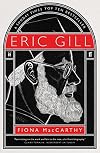
I read this not long after it first came out, when the National Museum of New Zealand had adopted Gill Sans and Perpetua as their official typeface. I doubt they'd do so today. Gill's life-long incest with his sister Gladys, his sexual experiments with his daughters, his attempts at shagging the maids, secretaries, his friend's wives, and every other woman he met were quietly papered over in previous biographies, despite Gill keeping a neatly-written diary of his sexual exploits, with show more symbols and a helpful key. From this we learn about his forays into bestiality, which led type designer Barry Deck to create Canicopulus Script (1989), a face where the o's have little tails above them.
Gill is (or at least was) a revered British sculptor and typographer, fervent Catholic convert (at the time he was taking Catholic instruction he was also working on a life-size marble sculpture of his own penis), pillar of the progressive Left, and creator of public monuments like the Stations of the Cross at Westminster Cathedral and Prospero and Ariel outside Broadcasting House. How do we reconcile these with his sexual voraciousness? (Last year one guy decided taking a hammer to Prospero and Ariel was the solution.) Fiona McCarthy has to deal with this contradictory life in this superb biography. She's explicit but not prurient, and explicates Gill’s complicated personal philosophy and religious belief which, at least for him, squared the circle, without letting him off the hook. It's a model for a biographer tackling such explosive revelations.
A typographic note: the cover is in Gill Sans, the text is not one of Gill's (the typeface choice sadly isn't mentioned in the colophon); the design is lovely but with frequent mentions of the Gills' home Capel-y-ffin I wish designer Ron Costley had used an ffi ligature… show less
Gill is (or at least was) a revered British sculptor and typographer, fervent Catholic convert (at the time he was taking Catholic instruction he was also working on a life-size marble sculpture of his own penis), pillar of the progressive Left, and creator of public monuments like the Stations of the Cross at Westminster Cathedral and Prospero and Ariel outside Broadcasting House. How do we reconcile these with his sexual voraciousness? (Last year one guy decided taking a hammer to Prospero and Ariel was the solution.) Fiona McCarthy has to deal with this contradictory life in this superb biography. She's explicit but not prurient, and explicates Gill’s complicated personal philosophy and religious belief which, at least for him, squared the circle, without letting him off the hook. It's a model for a biographer tackling such explosive revelations.
A typographic note: the cover is in Gill Sans, the text is not one of Gill's (the typeface choice sadly isn't mentioned in the colophon); the design is lovely but with frequent mentions of the Gills' home Capel-y-ffin I wish designer Ron Costley had used an ffi ligature… show less
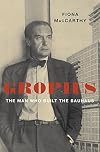
A sweeping life of a man who was something of a legend in his time to, just about, outliving his time. Gropius was a product of that slice of the pre-1914 "Middle" European demographic that valued culture so much as to be their actual religion and MacCarthy's main achievement is to put the man back into his context. If nothing else one has to conclude it would have been better for Gropius not to have not crossed paths with that force of chaos known as Alma Mahler. Still, while one might show more wonder if Gropius was disappointed that he had not built more buildings, or fathered more children, that his practical dying words were "why should I ask for more of life" (when offered extreme medical measures towards the end) is an effective epithet for a man who dodged more than his share of bullets (many of them being the real kind), and knew it. That's another thing; it's perfectly viable to think of Gropius as a man of action from his service in the Great War. show less

I really enjjoyed this tome of a biography about an extraordinary polymath, as relevant today as he ever was I would suggest. I really felt I was standing behind him as I followed him through his life. A solid, not especially confident man in many respects, not unaware of his talents, but neither egotistical about them.
He was an artisan-worker. A Socialist who knew the limitations of his dreams in many ways. We still can't achieve the level of equity in our society now, let alone back then. show more The gaps between the haves and have-nots is getting bigger, even if there are more have-somethings than there was.
Reading this has certainly made me want to read more of his work, and I purchased a 5 volume set of 'The Earthly Paradise' and a volume of his other poetry and prose, and borrowed a novel from the library, so I will be wandering in Morris way some more this year. show less
He was an artisan-worker. A Socialist who knew the limitations of his dreams in many ways. We still can't achieve the level of equity in our society now, let alone back then. show more The gaps between the haves and have-nots is getting bigger, even if there are more have-somethings than there was.
Reading this has certainly made me want to read more of his work, and I purchased a 5 volume set of 'The Earthly Paradise' and a volume of his other poetry and prose, and borrowed a novel from the library, so I will be wandering in Morris way some more this year. show less
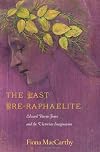
Excellent biography that comfortably situates Burne-Jones in the center of a complex social network of aspirational taste-makers - the equivalent of our meme-era "influencers." I hadn't been fully aware of how close Burne-Jones was to William Morris, but MacCarthy clarifies and elucidates their enduring, symbiotic relationship.
What also becomes clear is how Burne-Jones was close to the center of the political world as well. Arthur Balfour was a key client and patron; Mary Gladstone Drew, the show more G.O.M.'s daughter and biographer, was a model and friend of Burne-Jones; and of course Rudyard Kipling and Stanley Baldwin were not only his wife's nephews, they were also frequent visitor's to Burne-Jones' home at Rottingdean, on the Sussex Coast. show less
What also becomes clear is how Burne-Jones was close to the center of the political world as well. Arthur Balfour was a key client and patron; Mary Gladstone Drew, the show more G.O.M.'s daughter and biographer, was a model and friend of Burne-Jones; and of course Rudyard Kipling and Stanley Baldwin were not only his wife's nephews, they were also frequent visitor's to Burne-Jones' home at Rottingdean, on the Sussex Coast. show less
Lists
Awards


You May Also Like


Associated Authors
Statistics
- Works
- 22
- Also by
- 2
- Members
- 1,452
- Popularity
- #17,698
- Rating
- 4.0
- Reviews
- 21
- ISBNs
- 62
- Languages
- 3
- Favorited
- 2