
Naoya Shiga (1883–1971)
Author of A Dark Night's Passing
About the Author
Shiga is best known for his short stories and for his confessional mode, writing works about himself and his family and friends, with whom he was often in conflict. Although he lived to be almost 90, he wrote very little from the late thirties on. (Bowker Author Biography)
Image credit: Naoya Shiga at his Tokyo home, September 1938.
Works by Naoya Shiga
Popelavý měsíc 4 copies
小僧の神様・万暦赤絵 2 copies
城の崎にて 2 copies
Han's Crime 2 copies
В полдень третьего ноября 1 copy
小僧の神様 ; 和解 (新学社文庫, 5) 1 copy
小僧の神様 1 copy
The Diary of Claudius 1 copy
和解・城の崎にて (1966年) (旺文社文庫) 1 copy
Un aprenent i el seu déu 1 copy
Ki no saki nite (城の崎にて) 1 copy
Associated Works
The World of Law, Volumes I-II: The Law in Literature, The Law as Literature (1960) — Contributor — 54 copies
Tagged
Common Knowledge
- Canonical name
- Shiga, Naoya
- Legal name
- 志賀 直哉
- Other names
- 志賀直哉
- Birthdate
- 1883-02-20
- Date of death
- 1971-10-21
- Gender
- male
- Education
- Gakushuin
University of Tokyo (left without degree) - Occupations
- novelist
short story writer - Organizations
- Shirakabaha
- Awards and honors
- Japanese Order of Culture (1949)
- Nationality
- Japan
- Birthplace
- Ishinomaki, Miyagi, Japan
- Place of death
- Tokyo, Japan
- Associated Place (for map)
- Japan
Members
Reviews
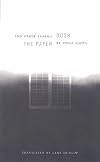
Naoya Shiga's short story collection, translated by Lan Dunlop is a condensation of a career, a well-translated, well-written, well-selected enticing collection. In Japan, Shiga is hailed as "god of the novel." His only novel-length work was the morose A Dark Night's Passing, but in Japanese, apparently, the term 'novel' refers to short stories as well. I would not rate his stories higher than Akutagawa's, but they are so varied and careful, I am tempted to compare them to the work of show more Soseki. You get a lot of variety in this small collection, and I only wish the rest of Shiga's oeuvre would get translated.
I would suggest reading this before attempting his 400-page novel, because you can absorb them more easily and get a feel for his unadorned style. There are traces of brilliance and after reading all the stories I can see why the author inspired a fanatical following. They are distinctly Japanese, and if you are a fan of Chekhov, Maupassant and Akutagawa you will probably enjoy this book. I know I will be adding it to my Japanese Literature shelf. Especially good examples are "Han's Crime," and "The Shop Boy's God." In these two stories you can see the range he covers in his style. The first is representative of his storytelling art. Simple, straightforward, riveting, old fashioned tale in the fashion of Pu Sungling. The latter is a subtle, indulgent character study, a relatable anecdote with memorable charm.
In short, this is an important piece of J-Lit in translation, which will hopefully, at some point, be made obsolete by a complete collection of the author's short pieces. show less
I would suggest reading this before attempting his 400-page novel, because you can absorb them more easily and get a feel for his unadorned style. There are traces of brilliance and after reading all the stories I can see why the author inspired a fanatical following. They are distinctly Japanese, and if you are a fan of Chekhov, Maupassant and Akutagawa you will probably enjoy this book. I know I will be adding it to my Japanese Literature shelf. Especially good examples are "Han's Crime," and "The Shop Boy's God." In these two stories you can see the range he covers in his style. The first is representative of his storytelling art. Simple, straightforward, riveting, old fashioned tale in the fashion of Pu Sungling. The latter is a subtle, indulgent character study, a relatable anecdote with memorable charm.
In short, this is an important piece of J-Lit in translation, which will hopefully, at some point, be made obsolete by a complete collection of the author's short pieces. show less

Shiga (1883-1971) was an important, if not particularly prolific, writer. His best-known work, A Dark Night’s Passing, is his only novel. Although he had critics (including, among others, Dazai Osamu), both Akutagawa and Tanizaki were fans. This collection of seventeen short stories has a couple stories that I liked less than others but what surprised me was how strong the collection was. I thought the translation excellent and found Shiga’s writing elegant in a very understated way. His show more writing is straightforward, spare, and quite evocative. I enjoyed the stories, which varied substantially in plot and topic, enormously and felt that they had what I would consider a very Japanese sensibility—an awareness of and sensitivity to nature, to things, to people that is delicate and nuanced. Very highly recommended. show less
Shiga Naoya is one of the most celebrated writers of Modern era Japan, being particularly praised for his mastery of short form fiction. This collection, compiled and translated by Lane Dunlop, attempts to illustrate that fact and, for the most part, succeeds. Shiga's stories are reflective ventures into the workings of the Japanese mind, with thematic emphasis on youth, mortality, love, loneliness, and the nature of art. Shiga's narrative style contains all at once the sharp precision of a show more sword and the calm beauty of a flower.
These merits of his work are demonstrated in this collection, but perhaps not to the full extent as could have been possible. The opening story is a piece of rather underwhelming juvenalia that is heavy with adverbs and themes that are underdeveloped, leaving us with a fragmentary story that seems all too abrupt. The collection would be better to start with "As Far As Abashiri". A similar detraction from the overall consistency of the collection are the two stories preceding "Kuniko". Both meditates, as does that story, on themes of infidelity, but they seem like skeletal exercises leading into the penultimate story, which handles the same topic with a far higher level of fluidity and artistry.
We can hope to be presented with another collection of short fiction in translation from Shiga, with a more diverse and extensive array of stories, but until then this collection serves as an adequate representation of Shiga's valuable output. Reading these stories will show that his veneration among his peers and his people is well deserved. show less
These merits of his work are demonstrated in this collection, but perhaps not to the full extent as could have been possible. The opening story is a piece of rather underwhelming juvenalia that is heavy with adverbs and themes that are underdeveloped, leaving us with a fragmentary story that seems all too abrupt. The collection would be better to start with "As Far As Abashiri". A similar detraction from the overall consistency of the collection are the two stories preceding "Kuniko". Both meditates, as does that story, on themes of infidelity, but they seem like skeletal exercises leading into the penultimate story, which handles the same topic with a far higher level of fluidity and artistry.
We can hope to be presented with another collection of short fiction in translation from Shiga, with a more diverse and extensive array of stories, but until then this collection serves as an adequate representation of Shiga's valuable output. Reading these stories will show that his veneration among his peers and his people is well deserved. show less

Naoya Shiga's only novel is a well-regarded classic of Japanese literature. The book is broken into four parts of around 20 chapters each. It is an episodic account of a young man's relatively uneven life in early Twentieth Century Japan.
If you have read books with a similar set-up to this one, you will likely find less to surprise you here and more to remind you of the familiar struggles and concerns of young Japanese. The latter half of the book was very effective, I thought, at show more encapsulating the bitter resentment the main character had built up through his own interactions through the preceding years.
The medical passages are very engaging to read, in a way reminiscent of Natsume Soseki, when he is describing the agonies of illness, both physical and mental. The main character's relationships with women characters reminded me of Kazuo Ozaki's stories. Yet, I would not call this book light-hearted. There are two notable, and surreal dream sequences, and various meditations on every page. It is, overall, a very somber book, but good food for thought, and something to read slowly, allowing you to savor the bittersweet longing awaiting us all in life. show less
If you have read books with a similar set-up to this one, you will likely find less to surprise you here and more to remind you of the familiar struggles and concerns of young Japanese. The latter half of the book was very effective, I thought, at show more encapsulating the bitter resentment the main character had built up through his own interactions through the preceding years.
The medical passages are very engaging to read, in a way reminiscent of Natsume Soseki, when he is describing the agonies of illness, both physical and mental. The main character's relationships with women characters reminded me of Kazuo Ozaki's stories. Yet, I would not call this book light-hearted. There are two notable, and surreal dream sequences, and various meditations on every page. It is, overall, a very somber book, but good food for thought, and something to read slowly, allowing you to savor the bittersweet longing awaiting us all in life. show less
Awards

You May Also Like


Associated Authors
Statistics
- Works
- 38
- Also by
- 8
- Members
- 398
- Popularity
- #60,945
- Rating
- 3.9
- Reviews
- 5
- ISBNs
- 32
- Languages
- 4
- Favorited
- 7