
Percy Bysshe Shelley (1792–1822)
Author of The Complete Poems of Percy Bysshe Shelley
About the Author
Born in Field Place, near Horsham in Sussex, Shelley was educated at Syon House Academy and Eton, where he acquired the sobriquet "Mad Shelley" for his independent spirit. While at Eton he published Zastrozzi (1810), a Gothic novel. Expelled from Oxford because he refused to retract his atheistic show more beliefs, Shelley quarreled with his wealthy father and was banished from home. Shelley married impulsively and then abandoned his young wife to run off to Italy with the 16-year-old Mary Wollstonecraft Godwin (the daughter of the radical feminist and the anarchist philosopher, who was eventually to write Frankenstein). While in Italy, Shelley became close friends with Byron, and the two became objects of endless, notorious rumor. Shelley's personal character was revered by almost everyone who knew him. Extremely generous toward others, frugal with himself, he strove tirelessly for the betterment of humanity. Prometheus Unbound (1820), a lyrical drama in four acts, calls for the regeneration of society through love and for the destruction of all repressive institutions. The Cenci (1819), a verse drama based on real events, is one of the few plays from the romantic period still produced. Shelley's lyrics are marvelously varied and rich in sound and rhythm. Wordsworth regarded him as the best artist among living poets.Adonais (1821), written to honor the memory of John Keats, is one of the supreme elegies in English.The Triumph of Life, which was left incomplete at his death, has been hailed by T. S. Eliot as the nearest approach in English to Dante (see Vol. 2). The "Ode to the West Wind" and "To a Skylark" are anthologized everywhere. Shelley's early death by drowning ended his career just as it was coming into full flower. A revolutionary in his art and life, Shelley is considered by many to be an inspired polemicist and poetic genius. As one of his contemporaries wrote in Etonian (1821), "He is one of the many whom we cannot read without wonder, or without pain. . . ." (Bowker Author Biography) show less
Image credit: Wikimedia Commons
Series
Works by Percy Bysshe Shelley
Prometheus Bound(Aeschylus) and Prometheus Unbound(Shelley) (in Slipcase) (2011) 94 copies, 3 reviews
Delphi Complete Works of Percy Bysshe Shelley (Illustrated) (Delphi Poets Series Book 17) (2012) 32 copies
Shelley: Poems 17 copies
The poetical works of Coleridge, Shelley, and Keats : complete in one volume (1838) — Author — 11 copies
Frankenstein and the Critics (Illustrated. Includes full text of 'Frankenstein 1818.') (2014) — Contributor — 9 copies
The Complete Works of Percy Bysshe Shelley: Prometheus Unbound, Ozymandias, The Masque of Anarchy, Queen Mab, Triumph of Life and More (2012) 9 copies
A vindication of natural diet: Being one in a series of notes to Queen Mab : (a philosophical poem) (1975) 7 copies
Mont Blanc: Lines written in the Vale of Chamouni = Monte Bianco : versi scritti nella valle di Chamonix : testo a fronte (Di monte in monte) (1996) 6 copies
Prometheus unbound: With Adonais, the Cloud, Hymn to intellectual beauty, and an Exhortation (2010) 5 copies
Poemetti e liriche 4 copies
Shelley: Poetry & prose : with essays by Browning, Bagehot, Swinburne, and reminiscences by others 4 copies
Poems Narrative, Elegiac & Visionary 3 copies
Selected Poetry and Prose of Shelley 3 copies
The Complete Poetical Works Of Percy Bysshe Shelley, With Introduction And Notes By Edward Dowden (1839) 3 copies
Come un fruscio d'ali 3 copies
The Poetical Works of Percy Bysshe Shelley, With a Memoir. Four volumes in Two (British Poets series) Vol. II (1902) 2 copies
The poetical works 2 copies
Gems from Shelley 2 copies
Shelley Poetical Works 2 copies
Liriche e frammenti 2 copies
Shelley: Poetical Works 2 copies
Poems 2 copies
Poems 2 copies
PERCY BYSSHE SHELLEY COMPLETE WORKS ULTIMATE COLLECTION 150 Works ALL poems, poetry, prose, plays, fiction, non-fiction, letters and BIOGRAPHY (2013) 2 copies
Den sarte mimosa 2 copies
Shelley and His Circle, 1773-1822, Volumes 5 and 6 (Shelley & His Circle) (Volume 6) (1973) 2 copies
Lyrika 2 copies
The Poetical Works of Percy Bysshe Shelley, in Four Volumes, Volume I [1 of 4 Vols.] (1876) 2 copies
Poetry and Prose 2 copies
The Poetical Works of Percy Bysshe Shelley: Including Various Additional Pieces from Ms. and Other Sources, Volume 2 (2012) 2 copies
Poems ... Selected and introduced by Richard Church. Wood engravings by John Buckland-Wright (1949) 2 copies
Poems by Percy Bysshe Shelley 2 copies
The Poetical Works Of Percy Bysshe Shelley - Vol. II - Plays, Translations & Longer Poems (2008) 2 copies
Shelley's Works 2 copies
Poems from Shelley 2 copies
Luuletusi 2 copies
Poems of Shelly 2 copies
Review of Hogg's "Memoirs of Prince Alexy Haimatoff" by Percy Bysshe Shelley; together with an extract from "Some early writings of Shelley" (2017) 2 copies
Select Poems of Shelley: Edited, With Introd. And Notes, by W.J. Alexander [ 1898 ] (2009) 2 copies, 1 review
Relics of Shelley 2 copies
Selected Lyrics 2 copies
Everyman's Library No. 258: the Poetical Works of Percy Bysshe Shelley Vol. II Plays Translations & Longer Poems (2008) 2 copies
Poesia 2 copies
The Letters of Percy Bysshe Shelley, Vol. 1: Containing Material Never Before Collected (Classic Reprint) (2016) 2 copies
On the Devil, and Devils 1 copy
Zastrozzi: Bir Romans 1 copy
A defense of poetry. Edited with introd. and notes by Albert S. Cook - Primary Source Edition 1 copy
Zastrozzo and St. Irvine 1 copy
Kraliçe Mab 1 copy
Lirika 1 copy
Xuelai shu qing shi xuan 1 copy
On Love 1 copy
Lyrics & shorter poems 1 copy
On Christianity 1 copy
The Coliseum 1 copy
Keats and Shelley 1 copy
Shelley and Keats 1 copy
On Life 1 copy
Zastrozzi 1 copy
The Banquet of Plato 1 copy
Den følende Blomst 1 copy
The Works of Shelley 1 copy
Shelley and His Circle, 1773-1822, Volumes 1 and 2 (Pforzheimer Library S) (Volume 2) by Percy B. Shelley (1961-01-01) (1810) 1 copy
Bodleian Manuscript Shelley, d.3: (Laon & Cythna), Fair Copy (Bodleian Shelley Manuscripts, Vol 8) (1988) 1 copy
Shelley's Poems 1 copy
Shelley's Poetical Works 1 copy
Poems of PERCY BYSSHE SHELLEY.in 2 Volumes (Two Volumes of The Library of Poetical Literature 32 Volume Set) (1930) 1 copy
Poems and Longer Poems 1 copy
Poems 1 copy
Beatrice Cenci 1 copy
Shelley. Liriche. 1 copy
The Poetical Works of Shelly 1 copy
Upper school poems 1 copy
Shelley's Letters 1 copy
Shelley, Collected poetry 1 copy
The Poetical Works of Percy Bysshe Shelley: Volume I — Author — 1 copy
Shelley: Selected Poetry 1 copy
Poetical works 1 copy
Poems of 1 copy
Shelly 1 copy
Shelley's Adonais 1 copy
Poems of Shelley 1 copy
The Works of Shelley 1 copy
Shelley, Poems of 1 copy
Œuvres choisies 1 copy
Şiirin Bir Savunması 1 copy
Six hymns of Homer 1 copy
Prologue to Hellas 1 copy
A Selection from the Poems of Percy Bysshe Shelley. Edited with a memoir by Mathilde Blind (1872) 1 copy
Percy Bysshe Shelley in 2 Volumes (Part of a Library of Poetical Literature in 32 Vols) (1930) 1 copy
Shelley's Poems The Lyrics and Minor Poems of Percy Bysshe Shelley. Selected with a Preparatory Notice by Joseph Skipsey. (1908) 1 copy
Poems. 1 copy
Lyrical poems 1 copy
The best of Shelley 1 copy
Poetical works [2 vols] 1 copy
The Complete Works (Ebook) 1 copy
Shelley - Dichtungen 1 copy
Výbor lyriky 1 copy
Shelleyn runoja 1 copy
The Select Works 1 copy
Shelley: A Pocket Poet 1 copy
The "Arundel Poets," The Poetical Works of Percy Bysshe Shelley Including The Dramas — Author — 1 copy
Selected Poems (Poets) 1 copy
Shelley Selected Poetry 1 copy
Everyman's library 1 copy
Shelley: poetry & prose with essays by Browning, Bagehot, Swinburne, and reminiscences by others; 1 copy
Shelley's Works: Early Poems 1 copy
Poezje wybrane 1 copy
雲 The Cloud 1 copy
Il trionfo della vita 1 copy
Prometeo libertado 1 copy
Alastor; or, the new ptolemy 1 copy
The Letters of Percy Bysshe Shelley, Vol. 2: Containing Material Never Before Collected (Classic Reprint) (2016) 1 copy
Oeuvres choisies, tome II 1 copy
Poems by Percy Bysshe Shelley, Illustrations by Robert Anning Bell, Introduction by Walter Raleigh 1 copy
Poemi e canti 1 copy
The Complete Poetical Works of Percy Bysshe Shelley Volume I (Mint Editions (Poetry and Verse)) (2021) 1 copy
Note Books of Percy Bysshe Sheely, Vol. 2 of 3: From the Originals in the Library of W. K. Bixby (Classic Reprint) (1968) 1 copy
ΕΛΛΑΣ - ΛΥΡΙΚΟ ΔΡΑΜΑ 1 copy
Associated Works
The Making of a Poem: A Norton Anthology of Poetic Forms (2000) — Contributor — 1,474 copies, 9 reviews
The Best Poems of the English Language: From Chaucer Through Robert Frost (2004) — Contributor — 1,249 copies, 3 reviews
Literature: An Introduction to Fiction, Poetry, and Drama (1995) — Contributor, some editions — 1,017 copies, 7 reviews
The Illustrated Treasury of Children's Literature, Volumes 1-2 (1955) — Contributor — 524 copies, 4 reviews
World Poetry: An Anthology of Verse from Antiquity to Our Time (1998) — Contributor — 499 copies, 2 reviews
The Norton Anthology of English Literature, 4th Edition, Volume 2 (1979) — Contributor — 271 copies, 1 review
Modern English Drama: Dryden; Sheridan; Goldsmith; Shelley; Browning; Byron (2004) — Contributor — 257 copies, 1 review
Poems Bewitched and Haunted (Everyman's Library Pocket Poets Series) (2005) — Contributor — 231 copies
The Graphic Canon, Vol. 2: From "Kubla Khan" to the Brontë Sisters to The Picture of Dorian Gray (2012) — Contributor — 213 copies, 2 reviews
The Great Romantics: Selected Poems: Lord Byron, Percy Bysshe Shelley, John Keats (1993) — Author — 155 copies
Poems to See By: A Comic Artist Interprets Great Poetry (2020) — Contributor — 130 copies, 33 reviews
The Sophisticated Cat: A Gathering of Stories, Poems, and Miscellaneous Writings About Cats (1992) — Contributor — 112 copies, 1 review
Great British Tales of Terror: Gothic Stories of Horror and Romance 1765-1840 (1972) — Contributor — 86 copies
The Dedalus Book of English Decadence: Vile Emperors and Elegant Degenerates (2004) — Contributor — 60 copies
Out of the Best Books: An Anthology of Literature, Vol. 1: The Individual and Human Values (1964) — Contributor — 40 copies
Out of the Best Books: An Anthology of Literature, Vol. 3: Intelligent Family Living (1967) — Contributor — 34 copies
Tales of the Wandering Jew: A Collection of Contemporary and Classic Stories (1991) — Contributor — 29 copies
Out of the Best Books: An Anthology of Literature, Vol. 4: The World Around Us (1968) — Contributor — 28 copies
Oogst Der Tijden. keur uit de werken van schrijvers en dichters aller volken en eeuwen (1940) — Contributor — 12 copies
Sunlight on the River: Poems About Paintings, Paintings About Poems (2015) — Contributor — 11 copies, 2 reviews
Quest for Permanence: Symbolism of Wordsworth, Shelley and Keats (1959) — Featured Artist — 9 copies
Edexcel Poetry Anthology for Advanced subsidiary and advanced GCE examinations in English Literature (2000) — Contributor, some editions — 6 copies
Peacock's Memoirs of Shelley: With Shelley's Letters to Peacock — Contributor — 3 copies
Tagged
Common Knowledge
- Canonical name
- Shelley, Percy Bysshe
- Legal name
- Shelley, Percy Bysshe
- Birthdate
- 1792-08-04
- Date of death
- 1822-07-08
- Gender
- male
- Education
- Sion House School, Brentford, Middlesex, England, UK
Eton College
University of Oxford (University College) - Occupations
- poet
essayist - Relationships
- Shelley, Mary (wife)
Wurdemann, Audrey (great-great-granddaughter)
Hunt, Leigh (friend)
Wollstonecraft, Mary (mother-in-law)
Godwin, William (father-in-law)
Byron, Lord (friend) (show all 7)
Clairmont, Claire (sister-in-law) - Short biography
- Percy Bysshe Shelley was born near Horsham, Sussex, England to an aristocratic family. The eldest of six siblings, he was the heir to his grandfather’s considerable estates and his father's seat in Parliament. He attended Syon House Academy and Eton College (where he was miserable) before a brief spell at Oxford University. His first publication was Zastrozzi (1810), a Gothic novel. With his sister Elizabeth, he published Original Poetry by Victor and Cazire. A pamphlet that he wrote and circulated on "The Necessity of Atheism" resulted in his expulsion from Oxford. At age 19, he eloped to Scotland with 16-year-old Harriet Westbrook. Estranged from his father, he went to live in the Lake District of England and in Ireland. Two years later he published his first long serious work, Queen Mab: A Philosophical Poem. His friendship with the philosopher William Godwin in London led to meeting and falling in love with Mary Wollstonecraft Godwin, his daughter. In 1814, Shelley and Mary eloped to Europe, but they returned after six weeks for lack of funds. They married in 1816 after Harriet Shelley was found drowned, an apparent suicide. Early in 1818, he and Mary left England forever. During the remaining four years of his life, he produced all his major works, including Prometheus Unbound (1820). Today he is considered one of the finest lyric poets in the English language. The Shelleys traveled and lived in various Italian cities and were part of a circle of Romantic poets and writers including Lord Byron and Leigh Hunt. In 1822, less than a month before his 30th birthday, Shelley was drowned in a storm while trying to sail his schooner from Livorno (Leghorn) to La Spezia, Italy. He was cremated and his ashes buried in the Protestant Cemetery in Rome.
- Cause of death
- drowning
- Nationality
- UK
- Birthplace
- Horsham, Sussex, England, UK
- Places of residence
- Field Place, Sussex, England, UK
Oxford, Oxfordshire, England, UK
Casa Magni, Bay of Spezia, Italy
Villa Diodati, Lake Geneva, Switzerland - Place of death
- Lerici, Sardinia, Italy
- Burial location
- Protestant Cemetery, Rome, Italy
- Map Location
- England, UK
Members
Discussions
Prometheus Bound/Unbound-LEC or Heritage in George Macy devotees (November 2023)
Reviews
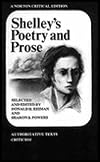
This Norton Critical Edition combines several of Shelley’s poems, both long and short, three of Shelley’s essential essays (“On Love,” “On Life,” and “A Defence of Poetry”), and fifteen critical essays that aid in understanding. It was the perfect book to help me understand this Romantic poet.
I found I had to revise my picture of the romantic poet as one merely gushing emotion, despite Shelley’s habit of idealizing a series of sixteen-year-old girls like any lovelorn show more adolescent, with the difference that his language and technical poetic skill are far superior. Beyond that, I learned that he was well-informed on philosophy, science, and other topics. He was politically engaged.
As for the language, I was grateful for the notes, which elucidate his idiosyncratic vocabulary (“pinion” for “wing”), as well as his frequent references to mythology.
While some of his shorter lyrics (“such Ode to Freedom,” “To a Skylark,” and “Ode to the West Wind”) are excellent, I learned that Shelley’s strength was mastery of the long form, which makes him difficult to anthologize. The best of them, such as “Adonais” and the poem left unfinished at his death with the ironic title “Triumph of Life,” are impressive achievements. “Hellas,” on the other hand, was difficult for me. “Queen Mab,” perhaps not on the same level, contains a wonderful description of the universe, anticipating the photos sent back from the James Webb telescope and a memorable passage of how greed drives out truth.
Although a full appreciation of Shelley requires careful reading of entire poems, I was often struck by perfectly crafted couplets, such as the one that opens “Ode to Heaven”: “Palace-roof of cloudless nights/Paradise of golden lights.”
One of the challenges for me in coming to terms with Shelley, aside from his shabby treatment of the women he loved, is his congenital hatred of authority, culminating in his rejection of God. In “Prometheus Unbound,” he imagines that Jupiter (transparent for Yahweh) could be toppled from his throne, after which the Promethean spirit would spread to all mankind. No more sovereign, no more slave. Of course, we live in a world that has long since toppled God, but the human condition is no better for it.
To understand Shelley, I try to imagine where his picture of God comes from. It starts with his defiance of his father, compounded by his experiences in authoritarian, often cruel schools of the time, all justified by an appeal to a sovereign God at the top of the pyramid.
I also found it interesting that many of his visions of the world as it could be reminded me of Isaiah and other Hebrew prophets. For all his rejection of God, he had read his Bible well, and scriptural allusions abound.
Of the essays, I enjoyed Abrams on “Prometheus Unbound,” Chayes on “Ode to the West Wind,” and Matthews on Shelley’s Lyrics. Carlos Baker showed me that Shelley’s play, “The Cenci,” might be better than I thought it was when I read it. Finally, there is an annotated bibliography, which I always think is helpful.
If you don’t already own this, you should be aware that a second edition was published in 2002, incorporating the results of ongoing efforts to establish authoritative texts and a new selection of criticism. For that reason, I’ve withheld a fifth star from this edition. show less
I found I had to revise my picture of the romantic poet as one merely gushing emotion, despite Shelley’s habit of idealizing a series of sixteen-year-old girls like any lovelorn show more adolescent, with the difference that his language and technical poetic skill are far superior. Beyond that, I learned that he was well-informed on philosophy, science, and other topics. He was politically engaged.
As for the language, I was grateful for the notes, which elucidate his idiosyncratic vocabulary (“pinion” for “wing”), as well as his frequent references to mythology.
While some of his shorter lyrics (“such Ode to Freedom,” “To a Skylark,” and “Ode to the West Wind”) are excellent, I learned that Shelley’s strength was mastery of the long form, which makes him difficult to anthologize. The best of them, such as “Adonais” and the poem left unfinished at his death with the ironic title “Triumph of Life,” are impressive achievements. “Hellas,” on the other hand, was difficult for me. “Queen Mab,” perhaps not on the same level, contains a wonderful description of the universe, anticipating the photos sent back from the James Webb telescope and a memorable passage of how greed drives out truth.
Although a full appreciation of Shelley requires careful reading of entire poems, I was often struck by perfectly crafted couplets, such as the one that opens “Ode to Heaven”: “Palace-roof of cloudless nights/Paradise of golden lights.”
One of the challenges for me in coming to terms with Shelley, aside from his shabby treatment of the women he loved, is his congenital hatred of authority, culminating in his rejection of God. In “Prometheus Unbound,” he imagines that Jupiter (transparent for Yahweh) could be toppled from his throne, after which the Promethean spirit would spread to all mankind. No more sovereign, no more slave. Of course, we live in a world that has long since toppled God, but the human condition is no better for it.
To understand Shelley, I try to imagine where his picture of God comes from. It starts with his defiance of his father, compounded by his experiences in authoritarian, often cruel schools of the time, all justified by an appeal to a sovereign God at the top of the pyramid.
I also found it interesting that many of his visions of the world as it could be reminded me of Isaiah and other Hebrew prophets. For all his rejection of God, he had read his Bible well, and scriptural allusions abound.
Of the essays, I enjoyed Abrams on “Prometheus Unbound,” Chayes on “Ode to the West Wind,” and Matthews on Shelley’s Lyrics. Carlos Baker showed me that Shelley’s play, “The Cenci,” might be better than I thought it was when I read it. Finally, there is an annotated bibliography, which I always think is helpful.
If you don’t already own this, you should be aware that a second edition was published in 2002, incorporating the results of ongoing efforts to establish authoritative texts and a new selection of criticism. For that reason, I’ve withheld a fifth star from this edition. show less
Queen Mab, a Philosophical Poem, With Notes. [reputed to Have Been Given by the Author to W. Francis. Wanting the Title-Leaf, Dedication and by Percy Bysshe Shelley
Shelley seems to forget sometimes when he's supposed to be pretending that a character is speaking and not himself, but it's still pretty stirring stuff and plenty accurate for the same targets today.
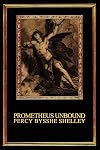
So there are a lot of ways to look at Shelley's Prometheus Unbound: as a continuation of Aeschylus's Prometheus Bound, as its own closet drama, or as a framework for Shelley to write poetry on nature and classical mythology. Unfortunately, in my opinion Prometheus Unbound fails no matter which of the three ways you look at it, and I'm actually left scratching my head at how badly Shelley messed up considering that he was handed such an interesting subject on a silver platter.
Aeschylus's show more Prometheus Bound is a work with amazing potential, the only surviving play in a trilogy that functions as a fascinating introduction to the Prometheus myth. Both Prometheus and Zeus are established as characters with depth, and their conflict is both nuanced and dramatic. It's impossible to say whether the potential of Prometheus Bound was fulfilled by Aeschylus's later plays, but I know for certain that said potential wasn't realized by Shelley. Instead of the fully developed characters of Prometheus Bound Shelley takes Prometheus and makes him a one-dimensional martyr, reassigning the pride that was evident in the Aeschylus version of Prometheus to Zeus. Shelley's Prometheus has no flaws of any consequence, instead he's just a name that undergoes unjust suffering and whose eventual release heralds a new age of peace and prosperity. He's the prophesied chosen one, a role which apparently Shelley doesn't think requires any further characterization. Zeus is also far less interesting here than in Prometheus Bound, as Shelley has made Zeus into a pure tyrant, with no reference to his recent rise to power and subsequent shift in behavior that made him an interesting character when crafted by Aeschylus, despite the fact that Zeus never appeared onstage in Prometheus Bound. Even minor characters like Mercury are made less compelling by Shelley than the ancient source material he had to draw inspiration from. While Prometheus Bound was the beginning of what promised to be a play of both emotional and potentially moral complexity, Shelley's play is one of black-and-white morality and one-dimensional characters. Compared to Prometheus Bound, Prometheus Unbound is banal and unimpressive.
Looking at Prometheus Unbound independent of Prometheus Unbound it still fails to excite. Shelley wrote this as a closet drama, meaning it was not intended to actually be performed, and I have to say that's an excellent decision because I can't imagine any way to stage and perform this play that wouldn't be mind-numbingly boring. All the flat characters only communicate through page long speeches, the actual action of the play occurs solely in the first act and the first few pages of the third, and the fourth act is so superfluous that Shelley didn't even originally include it as part of the play but instead tacked it on later. The ancient tragedians knew how to get to the point, and even more contemporary playwrights to Shelley like Shakespeare knew the art of merging their exquisite language with dramatic and compelling plots. There is no evidence in Prometheus Unbound that Shelley possessed that ability, and the story of Prometheus isn't one that precludes dramatic tension by any means. Shelley's four act play rambles on, brushing the key events out of the way as quickly as possible so as to fit in more passages of Earth and Asia and the Moon and other "characters" either despairing over the fate of Prometheus and the current state of the world, or in the second half of the play praising the changes that have occurred and the new state of things. Jupiter (Zeus) literally appears for all of three pages. The Moon gets more lines than Jupiter does. In sum Prometheus Unbound, even if you aren't comparing it to other plays, is a poorly structured work that fails to be at all compelling, instead continually going off on tangents and focusing on minor occurrences while giving very little attention to major ones.
These failings are why I believe Prometheus Unbound should really be considered a framework for Shelley's poetry instead of as a drama of any sort, closet or otherwise. Seriously, even if Shelley was a complete fool he probably could have written a play with better structure than this if crafting an interesting play was his goal. Instead, if his intention was to use the classical framework established by Aeschylus as a jumping off point for his poetry, then the structure of the play and the characters he chose to focus on makes far more sense. Unfortunately, while more understandable, Prometheus Unbound isn't very good when considered as a poetry framework either. Shelley can write great poetry, no question, the go-to example that almost everyone is familiar with being Ozymandias, and other efforts by Shelley (some included with Prometheus Unbound when it was first published) are also impressive. In Prometheus Unbound there is little of Shelley's best on display when it comes to poetry. For every character's speech that works well as a poem there are a dozen that seem mediocre poetry at best- and I'm probably being generous, as most lines don't even seem to meet the threshold of poetry but merely read as prolix prose. Additionally, reading over a hundred pages of Shelley's second tier poems stapled together isn't the format to appreciate his poetic talents. Especially when the fourth act rolls around and the story has already been completely resolved, the poetic dialogue of the various characters is distinctly underwhelming, more tedious than anything else. There is good Shelley poetry out there, but Prometheus Unbound does not showcase his best work, largely giving us overwritten and unimpressive speeches instead .
Shelley set out to not only complete Aeschylus's play, but to surpass it. Instead, he stripped Prometheus Bound of all its most interesting elements and wrote a bland play that serves more as a funnel for some of Shelley's more mediocre poetry than it does a compelling drama. Where Aeschylus wrote complex characters Shelley gives us mere archetypes of the martyr and the tyrant, not that they even receive much attention. Instead Shelley has the play focus on different nature entities talking amongst themselves, or praising the new dawn brought about by the overthrow of Jupiter, all in the form of some of Shelley's most lackluster poetry (for the most part indistinguishable from too-flowery prose). Based on statements he made to his wife before his death Shelley was actually happy with how Prometheus Unbound turned out. For my part, I can't imagine how Shelley could believe for one second that this mess of a closet drama belonged alongside the works of the great tragedians of antiquity. show less
Aeschylus's show more Prometheus Bound is a work with amazing potential, the only surviving play in a trilogy that functions as a fascinating introduction to the Prometheus myth. Both Prometheus and Zeus are established as characters with depth, and their conflict is both nuanced and dramatic. It's impossible to say whether the potential of Prometheus Bound was fulfilled by Aeschylus's later plays, but I know for certain that said potential wasn't realized by Shelley. Instead of the fully developed characters of Prometheus Bound Shelley takes Prometheus and makes him a one-dimensional martyr, reassigning the pride that was evident in the Aeschylus version of Prometheus to Zeus. Shelley's Prometheus has no flaws of any consequence, instead he's just a name that undergoes unjust suffering and whose eventual release heralds a new age of peace and prosperity. He's the prophesied chosen one, a role which apparently Shelley doesn't think requires any further characterization. Zeus is also far less interesting here than in Prometheus Bound, as Shelley has made Zeus into a pure tyrant, with no reference to his recent rise to power and subsequent shift in behavior that made him an interesting character when crafted by Aeschylus, despite the fact that Zeus never appeared onstage in Prometheus Bound. Even minor characters like Mercury are made less compelling by Shelley than the ancient source material he had to draw inspiration from. While Prometheus Bound was the beginning of what promised to be a play of both emotional and potentially moral complexity, Shelley's play is one of black-and-white morality and one-dimensional characters. Compared to Prometheus Bound, Prometheus Unbound is banal and unimpressive.
Looking at Prometheus Unbound independent of Prometheus Unbound it still fails to excite. Shelley wrote this as a closet drama, meaning it was not intended to actually be performed, and I have to say that's an excellent decision because I can't imagine any way to stage and perform this play that wouldn't be mind-numbingly boring. All the flat characters only communicate through page long speeches, the actual action of the play occurs solely in the first act and the first few pages of the third, and the fourth act is so superfluous that Shelley didn't even originally include it as part of the play but instead tacked it on later. The ancient tragedians knew how to get to the point, and even more contemporary playwrights to Shelley like Shakespeare knew the art of merging their exquisite language with dramatic and compelling plots. There is no evidence in Prometheus Unbound that Shelley possessed that ability, and the story of Prometheus isn't one that precludes dramatic tension by any means. Shelley's four act play rambles on, brushing the key events out of the way as quickly as possible so as to fit in more passages of Earth and Asia and the Moon and other "characters" either despairing over the fate of Prometheus and the current state of the world, or in the second half of the play praising the changes that have occurred and the new state of things. Jupiter (Zeus) literally appears for all of three pages. The Moon gets more lines than Jupiter does. In sum Prometheus Unbound, even if you aren't comparing it to other plays, is a poorly structured work that fails to be at all compelling, instead continually going off on tangents and focusing on minor occurrences while giving very little attention to major ones.
These failings are why I believe Prometheus Unbound should really be considered a framework for Shelley's poetry instead of as a drama of any sort, closet or otherwise. Seriously, even if Shelley was a complete fool he probably could have written a play with better structure than this if crafting an interesting play was his goal. Instead, if his intention was to use the classical framework established by Aeschylus as a jumping off point for his poetry, then the structure of the play and the characters he chose to focus on makes far more sense. Unfortunately, while more understandable, Prometheus Unbound isn't very good when considered as a poetry framework either. Shelley can write great poetry, no question, the go-to example that almost everyone is familiar with being Ozymandias, and other efforts by Shelley (some included with Prometheus Unbound when it was first published) are also impressive. In Prometheus Unbound there is little of Shelley's best on display when it comes to poetry. For every character's speech that works well as a poem there are a dozen that seem mediocre poetry at best- and I'm probably being generous, as most lines don't even seem to meet the threshold of poetry but merely read as prolix prose. Additionally, reading over a hundred pages of Shelley's second tier poems stapled together isn't the format to appreciate his poetic talents. Especially when the fourth act rolls around and the story has already been completely resolved, the poetic dialogue of the various characters is distinctly underwhelming, more tedious than anything else. There is good Shelley poetry out there, but Prometheus Unbound does not showcase his best work, largely giving us overwritten and unimpressive speeches instead .
Shelley set out to not only complete Aeschylus's play, but to surpass it. Instead, he stripped Prometheus Bound of all its most interesting elements and wrote a bland play that serves more as a funnel for some of Shelley's more mediocre poetry than it does a compelling drama. Where Aeschylus wrote complex characters Shelley gives us mere archetypes of the martyr and the tyrant, not that they even receive much attention. Instead Shelley has the play focus on different nature entities talking amongst themselves, or praising the new dawn brought about by the overthrow of Jupiter, all in the form of some of Shelley's most lackluster poetry (for the most part indistinguishable from too-flowery prose). Based on statements he made to his wife before his death Shelley was actually happy with how Prometheus Unbound turned out. For my part, I can't imagine how Shelley could believe for one second that this mess of a closet drama belonged alongside the works of the great tragedians of antiquity. show less

Shelley's prancy-but-glad “The skylark ascending” (1820) reduces the bird to Romantic adjunct in such oddly fastidious ways:
Hail to thee, blithe Spirit!
Bird thou never wert—
That from Heaven, or near it
Pourest thy full heart
In profuse strains of unpremeditated art (1-5)
(…)
Like a glow-worm golden
In a dell of dew,
Scattering unbeholden
Its aerial hue
Among the flowers and grass which screen it from the view (46-50)
Leaving aside the fact that Shelley also compares the skylark with show more explicit simile to a poet, a maiden and a rose, what exactly is it that makes a “glow-worm” a sufficiently exalted vessel for the “blithe Spirit” but renders its own birdly self unsuitable? It may be simple as a Thomas Friedman-esque knack for muddled metaphor , but it has made Shelley, or more precisely “To a skylark”, a prize target for scholars associated with that collocation of critical interests and sympathies that has come to be called ecocriticism. Critics including Buell (1995) and Pinkney (1998) have excoriated “To a skylark” as “arrogant” and “exploitative” for using the bird as a “representative of the poet’s own inner aspirations” instead of “respecting it in its objectivity” (Pinkney 414).
And with a certain 19th-century vogue for the skylark as “representative of the poet’s own inner aspirations”, some of Shelley’s contemporaries offend similarly—for instance Wordsworth, whose own “To a skylark” (1805) addresses the “Drunken lark” (20) and comically manages to come off, in its raucous sentimentality, like one of those slurred bar exchanges, all “I’m not drunk! YOU’RE drunk! I can drive!” “Up with me! Up with me into the clouds” (1), Wordsworth begins, and continues in appealingly affectionate doggerel, like the last party guest to leave, with too many hugs and “I love you, man!”-style protestations:
Happy, happy Liver,
With a soul as strong as a mountain river
Pouring out praise to the Almighty Giver,
Joy and jollity be with us both! (22-25)
So, ya know. Romantics gonna romant. show less
Hail to thee, blithe Spirit!
Bird thou never wert—
That from Heaven, or near it
Pourest thy full heart
In profuse strains of unpremeditated art (1-5)
(…)
Like a glow-worm golden
In a dell of dew,
Scattering unbeholden
Its aerial hue
Among the flowers and grass which screen it from the view (46-50)
Leaving aside the fact that Shelley also compares the skylark with show more explicit simile to a poet, a maiden and a rose, what exactly is it that makes a “glow-worm” a sufficiently exalted vessel for the “blithe Spirit” but renders its own birdly self unsuitable? It may be simple as a Thomas Friedman-esque knack for muddled metaphor , but it has made Shelley, or more precisely “To a skylark”, a prize target for scholars associated with that collocation of critical interests and sympathies that has come to be called ecocriticism. Critics including Buell (1995) and Pinkney (1998) have excoriated “To a skylark” as “arrogant” and “exploitative” for using the bird as a “representative of the poet’s own inner aspirations” instead of “respecting it in its objectivity” (Pinkney 414).
And with a certain 19th-century vogue for the skylark as “representative of the poet’s own inner aspirations”, some of Shelley’s contemporaries offend similarly—for instance Wordsworth, whose own “To a skylark” (1805) addresses the “Drunken lark” (20) and comically manages to come off, in its raucous sentimentality, like one of those slurred bar exchanges, all “I’m not drunk! YOU’RE drunk! I can drive!” “Up with me! Up with me into the clouds” (1), Wordsworth begins, and continues in appealingly affectionate doggerel, like the last party guest to leave, with too many hugs and “I love you, man!”-style protestations:
Happy, happy Liver,
With a soul as strong as a mountain river
Pouring out praise to the Almighty Giver,
Joy and jollity be with us both! (22-25)
So, ya know. Romantics gonna romant. show less
Lists
Awards


You May Also Like


Associated Authors
Statistics
- Works
- 532
- Also by
- 80
- Members
- 8,030
- Popularity
- #3,018
- Rating
- 3.9
- Reviews
- 73
- ISBNs
- 548
- Languages
- 15
- Favorited
- 53

