

Eugène Sue (1804–1857)
Author of The Mysteries of Paris
About the Author
Eugene Sue was a contemporary of Dickens and Thackeray. Immensely succesful, he was known as "the king of the popular novel." One of the most elegant members of Parisian society, he was a passionate horse-lover and eager to do all he could to help improve the quality of French bloodstock Alex de show more Jonge was an Oxford don for most of his professional life. He is the author of numerous books and articles on a wide variety of subjects and has appeared on A&E's Biography and The History Channel. He and his wife live on a horse farm in Virginia show less
Image credit: Eugène Sue (13 janvier 1844) de Richard James Lane, imprimé par C. Graf, publié par Goupil & Vibert, d'après Alfred, lithographie du comte d'Orsay
Series
Works by Eugène Sue
The Gold Sickle: or Hena, The Virgin of the Isle of Sen: A Tale of Druid Gaul (1904) 9 copies, 1 review
Les mystères du peuple ou l'histoire d'une famille de prolétaires à travers les âges (French Edition) (2003) 8 copies
The Carlovingian Coins; or, The Daughters of Charlemagne: A Tale of the Ninth Century (1908) 7 copies
The Sword of Honor, volumes 1 & 2 or The Foundation of the French Republic, A Tale of The French Revolution (2011) 5 copies
De verborgenheden des volks 4 copies
Collected Works of Eugene Sue 3 copies
Les Sept Péchés Capitaux: La Paresse; L'Avarice; La Gourmandise (Classic Reprint) (French Edition) (2017) 2 copies
The Branding Needle; or, The Monastery of Charolles, A Tale of the First Communal Charter (2011) 2 copies
Mysteries of the People 08. Abbatial Crosier or Bonaik & Septimine; A Tale of a Medieval Abbess (2007) 2 copies
Le prince Rodolphe 2 copies
La luxure , roman 2 copies
The wandering Jew 1 copy
Socialismo y consolación 1 copy
Venganza africana 1 copy
Paris' mysterier D. 1 1 copy
Paris' mysterier D. 2 1 copy
Paris' mysterier D. 3 1 copy
Paris' mysterier D. 4 1 copy
Le juif errant rodin 1 copy
Агасфер: Т. 3, Т. 4 1 copy
Paiata 1 copy
The Wandering Jew: A Novel 1 copy
Tajemnice Paryża. T. 1-2 1 copy
Tajnosti pařížské 1 copy
Les Mystères de Paris - Edition Intégrale - Volumes 1 à 10 - Annoté (enrichi d'une biographie complète) (2016) 1 copy
Żyd wieczny tułacz. T. 1-2 1 copy
Nowele 1 copy
Wandering Jew, Volume II 1 copy
Wandering Jew, Volume I 1 copy
WANDERING JEW 1845? 1 copy
a buena-dicha 1 copy
Les Enfants de l'Amour 1 copy
The Wandering Jew's Sentence 1 copy
Knights of Malta; Envy 1 copy
Misterele Parisului vol. 1 1 copy
Jidovul rătăcitor 1 copy
Pariser Mysterien 1 copy
Les Mystères de Paris III 1 copy
Miss Mary o La institutriz 1 copy
De Verborgenheden des Volks of de geschiedenis van een arbeidersfamilie door de eeuwen heen (Eerste en Tweede boek) 1 copy, 1 review
Paiata Vol.2 1 copy
Œuvres illustrées 1 copy
Le Morne-au-Diable 1 copy
LOS MISTERIOS DE PARIS V V 1 copy
LOS MISTERIOS DE PARIS V III 1 copy
Les Vampires 1 copy
Associated Works
Great Tales of Terror from Europe and America: Gothic Stories of Horror and Romance 1765-1840 (1972) — Contributor — 76 copies
Penny Bloods: Gothic Tales of Dangerous Women (British Library Hardback Classics) (2023) — Contributor — 39 copies
Tagged
Common Knowledge
- Canonical name
- Sue, Eugène
- Legal name
- Sue, Marie-Joseph
- Other names
- Sue, Eugene
- Birthdate
- 1804-01-26
- Date of death
- 1857-08-03
- Gender
- male
- Education
- Lycée Condorcet, Paris, France
- Occupations
- journalist
short story writer
novelist
naval surgeon - Organizations
- Département de la Seine, Député, 18 50 l 188 51)
Marine française (Chirurgien, 19 26 l 19 29)
Jockey Club, Paris (Adhérent, 1834) - Awards and honors
- Chevalier de la Légion d'honneur (1839)
- Relationships
- Gudin, Théodore (Ami)
Beauharnais, Eugène de (Parrain - Short biography
- Eugéne Sue, French novelist, was born in Paris on the 26th of January 1804. He was the son of a distinguished surgeon in Napoleon's army, and is said to have had the empress Josephine for godmother. Sue himself acted as surgeon both in the Spanish campaign undertaken by France in 1823 and at the battle of Navarino (1828). In 1829 his father's death put him in possession of a considerable fortune, and he settled in Paris. His naval experiences supplied much of the materials of his first novels, which were composed at the height of the romantic movement of 1830. He was strongly affected by the Socialist ideas of the day, and these prompted his most famous works: "Les Mystères de Paris" and "Le Juif errant", which were among the most popular specimens of the _roman-feuilleton_. He followed these up with some singular and not very edifying books: "Les Sept péchés capitaux," which contained stories to illustrate each sin, "Les Mystères du peuple," which was suppressed by the censor in 1857, and several others, all on a very large scale, though the number of volumes gives an exaggerated idea of their length. Some of his books, among them "Le Juif errant" and "Le Mystéres de Paris," were dramatized by himself, usually in collaboration with others. His period of greatest success and popularity coincided with that of Alexandre Dumas, with whom some writers have put him on an equality. Sue has neither Dumas's wide range of subject, nor, above all, his faculty of conducting the story by means of lively dialogue; he has, however, a command of terror which Dumas seldom or never attained. From the literary point of view his style is bad, and his construction prolix. After the revolution of 1848 he sat for Paris (the Seine) in the Assembly from April 1850, and was exiled in consequence of his protest against the _coup d'état_ of the 2nd of December 1851. This exile stimulated his literary production, but the works of his last days are on the whole much inferior to those of his middle period. Sue died at Annecy (Savoy) on the 3rd of August 1857.
- Nationality
- France
- Birthplace
- Paris, France
- Place of death
- Annecy, France
- Burial location
- Cimetière de Loverchy, Annecy, France
- Associated Place (for map)
- France
Members
Reviews
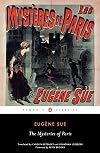
… I won’t let the last leg of this affect my mark (it was awful soap, and I’m disappointed in him that he cannot let his ex-prostitute marry happily. He has been so radical, and so feminist among other things). Obviously this ‘book’ was a live thing in its maker’s hands, that changed shape as he wrote the serial instalments, and listened to his public, and changed himself. Along the way he began to call himself a socialist, as he got a speedy education through a project he had show more started as just another potboiler. This is a fascinating novel, not least for how it was composed. I’d like to get hold of the study that examines it as the first crowd-written fiction, ‘by the people for the people’: For the People by the People? Eugene Sue's Les Mysteres de Paris--A Hypothesis in the Sociology of Literature. People communicated with him who weren’t literate, and had their experiences incorporated.
It caught on because it’s a thriller, sensational, but at the same time a scandalously realist social document. With a plot faster than Monte Cristo, and an exploration of society’s underworlds more intrepid than Les Miserables, it influenced both. These more famous authors took from Sue and made him more polite. Yes, that’s a reason to read this extraordinary book.
Feminist? There’s an abortionist in these pages (I couldn’t remember abortionists in other 19thC lit – remind me), and crucially, the women who visit him are not wicked, they are unfortunate. There’s an argument against husbands’ sudden rights to sex upon marriage, when girls have been brought up to be queasy. It’s a fine piece of understanding a woman’s psychology, may I say.
Radical? He proposes a Bank for the Poor, with interest-free loans to unemployed workers. And so on. Sue either suggests or illustrates new endeavours and ideas to tackle inequality on the streets of Paris.
His position? This is of the tribe of ‘Utopian Socialist’ literature, pre-Marxism, and which, as the Penguin introduction tells us, Marx scorned as unscientific. It was the tribe Dostoyevsky belonged to when he was a young revolutionary, for these French Utopian Socialist writers were a big fashion in Russia. The school is sentimentalist and not afraid to lean on Christ’s Sermon on the Mount. Let me avow myself: give me pre-scientific socialism any day.
But before I go on too much about its social interest, I’d better repeat, it’s a thriller. He takes us to the seamy side for shock and horror, as well as a big dose of social concern. I won’t accept that he can only write stereotypes. His declared belief that people are good at bottom is evident in the salvation of several villains. His Bruce Wayne-Batman German prince in disguise helps the virtuous and punishes the vicious – but he is a Dark Knight Batman, with his hatred of evil presented as obsessive and ugly. Let me mention the She-Wolf and Rigolette. Splendid young women each in her own way, and not usual types at all in 19thC fiction. show less
It caught on because it’s a thriller, sensational, but at the same time a scandalously realist social document. With a plot faster than Monte Cristo, and an exploration of society’s underworlds more intrepid than Les Miserables, it influenced both. These more famous authors took from Sue and made him more polite. Yes, that’s a reason to read this extraordinary book.
Feminist? There’s an abortionist in these pages (I couldn’t remember abortionists in other 19thC lit – remind me), and crucially, the women who visit him are not wicked, they are unfortunate. There’s an argument against husbands’ sudden rights to sex upon marriage, when girls have been brought up to be queasy. It’s a fine piece of understanding a woman’s psychology, may I say.
Radical? He proposes a Bank for the Poor, with interest-free loans to unemployed workers. And so on. Sue either suggests or illustrates new endeavours and ideas to tackle inequality on the streets of Paris.
His position? This is of the tribe of ‘Utopian Socialist’ literature, pre-Marxism, and which, as the Penguin introduction tells us, Marx scorned as unscientific. It was the tribe Dostoyevsky belonged to when he was a young revolutionary, for these French Utopian Socialist writers were a big fashion in Russia. The school is sentimentalist and not afraid to lean on Christ’s Sermon on the Mount. Let me avow myself: give me pre-scientific socialism any day.
But before I go on too much about its social interest, I’d better repeat, it’s a thriller. He takes us to the seamy side for shock and horror, as well as a big dose of social concern. I won’t accept that he can only write stereotypes. His declared belief that people are good at bottom is evident in the salvation of several villains. His Bruce Wayne-Batman German prince in disguise helps the virtuous and punishes the vicious – but he is a Dark Knight Batman, with his hatred of evil presented as obsessive and ugly. Let me mention the She-Wolf and Rigolette. Splendid young women each in her own way, and not usual types at all in 19thC fiction. show less

Our story so far….
Amongst the sinks and dens of the Paris backstreets a mysterious figure lurks. The criminals whisper in hushed tones. There is a dark avenger on the streets. Even the great amongst the fallen are subject to his heavy hand and rough justice. Those who see the errors of their ways, those who are victims dragged down to the gutter and yet still retain their hope, those who have not given up on their fellow man, these may see the fair face of mercy and be given a new chance show more at life, but those who remain immured in their sin, wallowing in their own filth and degrading those around them, these will feel the iron hand and swift justice of the avenger.
In public he is Rodolph, Grand Duke of Gerolstein in Paris for the purposes of amusement and the fulfillment of his diplomatic obligations. In reality he is a man haunted by his own past and convinced of his mission of atonement: to punish the wicked as the very hand of God and equally to reward the just who are oppressed. His enemies are legion, yet his allies are also numerous: the noble Sir William Murphy, mentor, right-hand man and courageous bodyguard, David the former slave from the Americas and now medical doctor and aide to the Grand Duke’s plans, Madame Georges the keeper of sanctuary and victim of a tragic past. Thrill as Rodolph faces le Chourineur and must either awaken his better nature or fell this giant with his fists! Cheer as Rodolph rescues the beautiful la Goualeuse, a prostitute with a heart of gold! Gasp as Rodolph metes out rough justice to the frightful and deformed master villain the Schoolmaster! Be confounded as we hear the debased story of the Schoolmaster’s twisted one-eyed lover la Chouette! But wait! Our hero’s adventures have only begun. How will he weather the storm when his haunted past meets his dangerous present? Shrink as we hear of the depravity of the duplicitous Doctor César Polidori! Gasp at the audacity of the venal Sarah Seyton of Halsbury and her brother Thomas! Wonder at the mysterious sorrow of the beautiful Marquise d'Harville! What lies in store for Rodolph’s uncertain future?
Yup, that’s really not much of an overstatement of this book so far. Eugene Sue, a former physician and sailor, took up the pen at the same time as Dumas, Stendhal, Balzac and Hugo. Unlike these eminent confrères he is largely forgotten today, though in his own day he was enormously popular and _The Mysteries of Paris_ has apparently even been given some credit in laying the groundwork for the 1848 revolution (this fact comes from wikipedia, so I cannot speak to its veracity). It’s a great potboiler of a tale, reminiscent in some ways of elements of Dumas (esp. some aspects of [b:The Count of Monte Cristo|7126|The Count of Monte Cristo|Alexandre Dumas|http://photo.goodreads.com/books/1309203605s/7126.jpg|391568]) and I imagine it may have been an influence on later writers who created such figures as Batman, the Shadow, and Doc Savage…though there are obvious differences. The justice Rodolph dispenses is definitely a very harsh one when viewed with modern eyes, and while it is likely to come across as little more than revenge it appears that Sue actually considered it a valid way in which to encourage repentance and rehabilitation (no spoilers!)The novel even spawned its own genre: the “City Mystery”, a species of crime fiction which depicted the seedy underbellies of great cities and was continued by such writers as George W. M. Reynolds, Émile Zola, Paul Féval, and others.
It’s very pulpy and very fun and it’s interesting to see the roots of some of the elements of later genres at their birth. If you like 19th century serial fiction this is a good bet. There are a few unfortunate examples of info-dump chapters that come across (or did to me) as a bit heavy-handed in technique, and one bizarre example of Sue spoilering a mystery with an authorial aside that seemed completely unnecessary to me. I’m reading the series in a six volume set and while I am not planning to continue immediately I do look forward to following the further adventures of Rodolph in the streets of Paris.
Stay tuned! Same bat-time! Same bat-channel! show less
Amongst the sinks and dens of the Paris backstreets a mysterious figure lurks. The criminals whisper in hushed tones. There is a dark avenger on the streets. Even the great amongst the fallen are subject to his heavy hand and rough justice. Those who see the errors of their ways, those who are victims dragged down to the gutter and yet still retain their hope, those who have not given up on their fellow man, these may see the fair face of mercy and be given a new chance show more at life, but those who remain immured in their sin, wallowing in their own filth and degrading those around them, these will feel the iron hand and swift justice of the avenger.
In public he is Rodolph, Grand Duke of Gerolstein in Paris for the purposes of amusement and the fulfillment of his diplomatic obligations. In reality he is a man haunted by his own past and convinced of his mission of atonement: to punish the wicked as the very hand of God and equally to reward the just who are oppressed. His enemies are legion, yet his allies are also numerous: the noble Sir William Murphy, mentor, right-hand man and courageous bodyguard, David the former slave from the Americas and now medical doctor and aide to the Grand Duke’s plans, Madame Georges the keeper of sanctuary and victim of a tragic past. Thrill as Rodolph faces le Chourineur and must either awaken his better nature or fell this giant with his fists! Cheer as Rodolph rescues the beautiful la Goualeuse, a prostitute with a heart of gold! Gasp as Rodolph metes out rough justice to the frightful and deformed master villain the Schoolmaster! Be confounded as we hear the debased story of the Schoolmaster’s twisted one-eyed lover la Chouette! But wait! Our hero’s adventures have only begun. How will he weather the storm when his haunted past meets his dangerous present? Shrink as we hear of the depravity of the duplicitous Doctor César Polidori! Gasp at the audacity of the venal Sarah Seyton of Halsbury and her brother Thomas! Wonder at the mysterious sorrow of the beautiful Marquise d'Harville! What lies in store for Rodolph’s uncertain future?
Yup, that’s really not much of an overstatement of this book so far. Eugene Sue, a former physician and sailor, took up the pen at the same time as Dumas, Stendhal, Balzac and Hugo. Unlike these eminent confrères he is largely forgotten today, though in his own day he was enormously popular and _The Mysteries of Paris_ has apparently even been given some credit in laying the groundwork for the 1848 revolution (this fact comes from wikipedia, so I cannot speak to its veracity). It’s a great potboiler of a tale, reminiscent in some ways of elements of Dumas (esp. some aspects of [b:The Count of Monte Cristo|7126|The Count of Monte Cristo|Alexandre Dumas|http://photo.goodreads.com/books/1309203605s/7126.jpg|391568]) and I imagine it may have been an influence on later writers who created such figures as Batman, the Shadow, and Doc Savage…though there are obvious differences. The justice Rodolph dispenses is definitely a very harsh one when viewed with modern eyes, and while it is likely to come across as little more than revenge it appears that Sue actually considered it a valid way in which to encourage repentance and rehabilitation (no spoilers!)The novel even spawned its own genre: the “City Mystery”, a species of crime fiction which depicted the seedy underbellies of great cities and was continued by such writers as George W. M. Reynolds, Émile Zola, Paul Féval, and others.
It’s very pulpy and very fun and it’s interesting to see the roots of some of the elements of later genres at their birth. If you like 19th century serial fiction this is a good bet. There are a few unfortunate examples of info-dump chapters that come across (or did to me) as a bit heavy-handed in technique, and one bizarre example of Sue spoilering a mystery with an authorial aside that seemed completely unnecessary to me. I’m reading the series in a six volume set and while I am not planning to continue immediately I do look forward to following the further adventures of Rodolph in the streets of Paris.
Stay tuned! Same bat-time! Same bat-channel! show less

This immensely long early 19th century French novel is by an author little known today but who was described by Victor Hugo as the French Dickens. In describing the lives and activities of a wide variety of strata of Parisian society of the time, this is an accurate description. There are moving descriptions of wretched poverty and the gap between rich and poor, redolent of Dickens. Perhaps more pertinently, this novel is also seen as a precursor of Hugo's Les Miserables, and so it is in show more structure and multiplicity of characters of various backgrounds. There are some colourful characters, especially the villains, though they lack the grandeur of the leading personalities of Hugo's masterpiece. I haven't quite managed to finish this novel and have stopped reading it some 80% of the way through - though I may be tempted to finish it some day. This definitely should be better known. show less
ok- i only read Book 1 (of how many books- maybe 12)? but that was hundreds of pages (?). I say "read" i mean "listened to" - via LibriVox with so many different readers - a new one for most chapters. What a great story! Maybe not up to Dumas, but that is as high as it goes, no? Our protag - a mysterious man in the shadows, saves a poor woman from being man handled by a roustabout in the initial scene. Turns out our protag is an extraordinary fighter (!) as the roustabout acknowledges (as he show more is not too shabby himself). These 3 characters will be launched in this way to a varied adventure - they're all great and a bit of 3 musketeers about them. The protag is a secret nobleman from some place in Germany but out to do good with his influence, money and fisticuffs- so a bit of a super hero story. But so well told. I will read more, but chose to move on for now. show less
Lists
Awards


You May Also Like


Associated Authors
Statistics
- Works
- 207
- Also by
- 8
- Members
- 1,327
- Popularity
- #19,380
- Rating
- 3.7
- Reviews
- 23
- ISBNs
- 243
- Languages
- 12
- Favorited
- 4


