
Geoffrey Hindley (1935–2014)
Author of A Brief History of the Crusades: Islam and Christianity in the Struggle for World Supremacy
About the Author
Geoffrey Hindley is a distinguished medieval historian who has written widely on many aspects of the period. He has made a special study of medieval warfare and of sieges in particular.
Works by Geoffrey Hindley
A Brief History of the Crusades: Islam and Christianity in the Struggle for World Supremacy (2003) 379 copies, 6 reviews
Roof of the World, by Geoffrey Hindley. Volume 16, The — Author — 2 copies
Tagged
Common Knowledge
- Canonical name
- Hindley, Geoffrey
- Birthdate
- 1935
- Date of death
- 2014
- Gender
- male
- Occupations
- co-founder, Society for the History of Medieval Technology and Science
- Nationality
- UK
- Associated Place (for map)
- UK
Members
Reviews
In this book, Geoffrey Hindley provides an overview of four crusades, covering the period from 635 to 1588. I thought the writing of the actual crusades themselves was a bit dry -- lots of names and less of a narrative arc than I would like. However, the book is more than redeemed by the other aspects presented by the author. He talks about multiculturalism during the crusade period, the role of women, religious reformers/heretics, children, and the lingering effects of the crusades and that show more mentality. Those parts were very interesting and put this period of history in a broader context that helps the reader to understand its implications for us today. show less
I knew nothing about this period before reading this book. It s an excellent introductory text (and interesting I suspect for those with some starting knowledge as well).
It gives a view of the historical course of the crusades, and of the crusading kingdoms, and tells the story from both sides.
It also gives a good description of life and social mores over the period, and is in no way just an account of kings and battles.
An informative and enjoyable read - but don't imagine this period is a show more precursor to current (nonsense) talk of a clash of civilisations. Medieval Christian Europe is an extremely alien culture, possibly more so than the medieval Arab world. show less
It gives a view of the historical course of the crusades, and of the crusading kingdoms, and tells the story from both sides.
It also gives a good description of life and social mores over the period, and is in no way just an account of kings and battles.
An informative and enjoyable read - but don't imagine this period is a show more precursor to current (nonsense) talk of a clash of civilisations. Medieval Christian Europe is an extremely alien culture, possibly more so than the medieval Arab world. show less
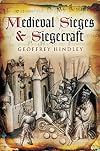
Clashes of armored knights and chivalrous duels are the face of medieval warfare, but the heart was control of fortified places, castles, and walled cities which were the economic and military heart of the period. There's a lot that can be said about sieges, but this book isn't it. Rather than any kind of organized approach to the subject, it's a series of disconnected anecdotes across regions and centuries, with only the vaguest thematic link between retellings from medieval chronicles, and show more the most cursory analysis and synthesis. This book is just barely good enough for me to keep reading, which is not praise. At least it's short. show less
Pros: excellent overview, covers all the crusades, good supplementary material
Cons: superficial coverage can leave gaps in knowledge
This is a short but comprehensive record of the crusades, from what led up to the calling of the first crusade, to how modern nations have looked back on them. In addition to dealing with each crusade and what happened between them, the book also has an excellent chronology, a few maps, and appendices of the various popes and secular rulers of some of the show more principle nations involved. There are 14 chapters, with an additional introduction explaining what the crusades were and an epilogue. While there are scant details of each crusade, the author is careful to note the various horrors each side perpetuated and how each side was impacted by the crusades (so you get some idea of how Jews, heretics, Muslims, Orthodox Christians, Catholic Christians, etc. reacted. The one group that got very little input were the Eastern European pagans, who are mentioned in later chapters but there isn’t much information about how they reacted to the crusades beyond what battles they were involved in).
There isn’t much detail for each crusade, the length of the book necessarily forcing the author to cover each one briefly, but the author does an excellent job of covering the basics and more. In some cases it’s easy to skip over some of the more horrible aspects, as they could get a single line - like the fact that some crusaders resorted to cannibalism to survive the first crusade. Having said that, I was impressed by how much information was crammed in. The book provides an excellent overview of the crusades as a whole after which you can easily pick up a book on a specific crusade/period to get more in depth information, knowing the broad strokes of the movement.
If you’re interested in the crusades and want a book that covers it all, this is a good one. show less
Cons: superficial coverage can leave gaps in knowledge
This is a short but comprehensive record of the crusades, from what led up to the calling of the first crusade, to how modern nations have looked back on them. In addition to dealing with each crusade and what happened between them, the book also has an excellent chronology, a few maps, and appendices of the various popes and secular rulers of some of the show more principle nations involved. There are 14 chapters, with an additional introduction explaining what the crusades were and an epilogue. While there are scant details of each crusade, the author is careful to note the various horrors each side perpetuated and how each side was impacted by the crusades (so you get some idea of how Jews, heretics, Muslims, Orthodox Christians, Catholic Christians, etc. reacted. The one group that got very little input were the Eastern European pagans, who are mentioned in later chapters but there isn’t much information about how they reacted to the crusades beyond what battles they were involved in).
There isn’t much detail for each crusade, the length of the book necessarily forcing the author to cover each one briefly, but the author does an excellent job of covering the basics and more. In some cases it’s easy to skip over some of the more horrible aspects, as they could get a single line - like the fact that some crusaders resorted to cannibalism to survive the first crusade. Having said that, I was impressed by how much information was crammed in. The book provides an excellent overview of the crusades as a whole after which you can easily pick up a book on a specific crusade/period to get more in depth information, knowing the broad strokes of the movement.
If you’re interested in the crusades and want a book that covers it all, this is a good one. show less
Awards

You May Also Like


Associated Authors
Statistics
- Works
- 38
- Members
- 1,812
- Popularity
- #14,190
- Rating
- 3.5
- Reviews
- 14
- ISBNs
- 99
- Languages
- 6