
Joanna Smith Rakoff
Author of My Salinger Year
About the Author
Image credit: Author photo by Mark Ostow
Works by Joanna Smith Rakoff
Associated Works
On Being Jewish Now: Reflections from Authors and Advocates (2024) — Contributor — 41 copies, 2 reviews
Life's Short, Talk Fast: Fifteen Writers on Why We Can't Stop Watching Gilmore Girls (2024) — Contributor — 36 copies
Tagged
Common Knowledge
- Birthdate
- 1972-05-08
- Gender
- female
- Education
- Oberlin College
- Nationality
- USA
- Birthplace
- Nyack, New York, USA
- Places of residence
- Cambridge, Massachusetts, USA
- Associated Place (for map)
- USA
Members
Reviews
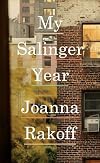
“Carolyn began talking about friends of hers named Joan and John, and their daughter, who had an odd name, an odd name that sounded oddly familiar to me. I’d heard her discuss Joan and John before, but now I realised, with a jolt, that she was talking about Joan Didion and John Gregory Dunne. These were Carolyn’s intimates, the people whose pedestrian travails – bathroom renovations and missed flights – she chattered about.”
Joanna is a newly minted Master of a literature degree, show more badly in need of a job. She wheedles her way into a job assisting a literary agent – and discovers, several weeks into the job, that the agent represents J. D. Salinger. With no background in Salinger at all, she muddles along in the job and in the big city, while trying not to let leech-like boyfriend Don scupper her prospects.
Not masses happens in the course of this year – although obviously enough to fill a short book, it’s not action-packed. Which is fine; it gives Rakoff plenty of time to muse on being young and broke and working in the literary world in New York. I would happily read more of Rakoff’s writing; maybe it is easier to be funny and light-hearted and insightful when writing about one’s own life rather than making up a world, but I liked what I read. It was intelligent without being overwrought, evocative without being cluttered.
At this point in a review template, I have the prompt “characters”. Which is tricky when reviewing non-fiction. The protagonist is impossible to review, given that it’s the author! But Rakoff does a good job of moulding the people around her into characters on the page, particularly helpful office furniture Hugh, deadbeat boyfriend Don, Next Big Thing in Literary Agency Max. I liked these people (apart from Don, who sounds like a waste of space), and they were fine to spend some time in the company of.
This was yet another instalment in my recent New York themed reading and watching – as I mentioned in my post on the subject, I loved the frequent references to a little bit of New York I spent some time in recently (and I was most amused to find the quoted reference to Joan Didion, author of The Year of Magical Thinking which I read immediately before this!). I know it was set 20 years ago, but apart from the technophobic set-up in the office, I hardly noticed this at all. I suppose not knowing what Brooklyn rents are these days probably helped, that the figures given didn’t age the book!
Well worth the quick read, whether you’ve read Salinger or not, just as a fun “a year in the life” story. If you’ve read Salinger, possibly more interesting? show less
Joanna is a newly minted Master of a literature degree, show more badly in need of a job. She wheedles her way into a job assisting a literary agent – and discovers, several weeks into the job, that the agent represents J. D. Salinger. With no background in Salinger at all, she muddles along in the job and in the big city, while trying not to let leech-like boyfriend Don scupper her prospects.
Not masses happens in the course of this year – although obviously enough to fill a short book, it’s not action-packed. Which is fine; it gives Rakoff plenty of time to muse on being young and broke and working in the literary world in New York. I would happily read more of Rakoff’s writing; maybe it is easier to be funny and light-hearted and insightful when writing about one’s own life rather than making up a world, but I liked what I read. It was intelligent without being overwrought, evocative without being cluttered.
At this point in a review template, I have the prompt “characters”. Which is tricky when reviewing non-fiction. The protagonist is impossible to review, given that it’s the author! But Rakoff does a good job of moulding the people around her into characters on the page, particularly helpful office furniture Hugh, deadbeat boyfriend Don, Next Big Thing in Literary Agency Max. I liked these people (apart from Don, who sounds like a waste of space), and they were fine to spend some time in the company of.
This was yet another instalment in my recent New York themed reading and watching – as I mentioned in my post on the subject, I loved the frequent references to a little bit of New York I spent some time in recently (and I was most amused to find the quoted reference to Joan Didion, author of The Year of Magical Thinking which I read immediately before this!). I know it was set 20 years ago, but apart from the technophobic set-up in the office, I hardly noticed this at all. I suppose not knowing what Brooklyn rents are these days probably helped, that the figures given didn’t age the book!
Well worth the quick read, whether you’ve read Salinger or not, just as a fun “a year in the life” story. If you’ve read Salinger, possibly more interesting? show less
Joanna Rakoff's MY SALINGER YEAR (2014) is a memoir, something I had to keep reminding myself, because it reads like a novel, and a pretty good one at that. In it, Rakoff looks back at 1995-96, the year she spent working as a Iow-paid "assistant" to a demanding "boss" at an unnamed prestigious NYC literary agency after dropping out of grad school. An aspiring poet, she also leaves her long-time boyfriend and moves into a rundown, unheated apartment with an older, world-wise, self-styled show more "socialist," also an aspiring writer. Her boss's main client is, of course, the reclusive J.D. Salinger, or "Jerry," as she comes to know him via her boss (who is herself a strange character). Rakoff had never read any of Salinger's work, but finally reads all of it, over one long marathon weekend of reading. Holden and the Glass family and Salinger's New York City all come alive for her then, especially so as she reads the author's voluminous fan mail, still arriving daily. One of her jobs at the agency is reading that mail, and to respond with a form letter, which she finds hard to do. There is much here about the publishing game, "slush piles," books, agents and poor wages, as well as some glimpses of Rakoff's family background and her troubled dating life in the 1990s. As I said, it reads like fiction, or, at the very least, "creative non-fiction."
The book was actually something of an international bestseller, translated into several languages, but I only heard about it because I read Rakoff's blurb on the back of another book, Daisy Alpert Florin's debut novel, MY LAST INNOCENT YEAR, just released this week (a book I actually enjoyed even more than this one).
J.D. Salinger, even though he is gone now, and published nothing after 1965, continues to have millions of fans worldwide. I suspect that fact helped make Rakoff's book a success, though Salinger himself is mostly a peripheral character here. That said, I thoroughly enjoyed it. Very highly recommended.
- Tim Bazzett, author of the memoir, BOOKLOVER show less
The book was actually something of an international bestseller, translated into several languages, but I only heard about it because I read Rakoff's blurb on the back of another book, Daisy Alpert Florin's debut novel, MY LAST INNOCENT YEAR, just released this week (a book I actually enjoyed even more than this one).
J.D. Salinger, even though he is gone now, and published nothing after 1965, continues to have millions of fans worldwide. I suspect that fact helped make Rakoff's book a success, though Salinger himself is mostly a peripheral character here. That said, I thoroughly enjoyed it. Very highly recommended.
- Tim Bazzett, author of the memoir, BOOKLOVER show less
J.D. Salinger would not have liked Joanna Rakoff's 2014 memoir “My Salinger Year,” but I did.
Salinger, like Harper Lee a remarkable writer driven into seclusion by the pressure of early success, was known for his strict control over his life, his privacy, his books and everything else he could control. And because his books have sold so many copies, he had lots of control. Much of that control was exercised through his New York literary agent, who so catered to him that she resisted show more installing computers and other modern technology in her office. Salinger preferred typewriters.
Rakoff, an aspiring poet eager for a start in New York literary circles, took a job as assistant to that agent. Soon she found herself opening Salinger's mail and sending back form letters explaining that the author did not want to read his mail, talking with him frequently on the telephone and, on one occasion, actually meeting him and shaking his hand when he showed up at the office.
In the fall of 2002, Rakoff wrote an article for Book magazine also called "My Salinger Year," which essentially boiled the book's contents down to four pages. Did it really take her more than a decade to write the complete memoir? Or is it indicative of Salinger's influence that it was necessary to wait until after his death in 2010 to get it published? And although she named the literary agency (Harold Ober Agency) in her article, she just calls it the Agency in her book. Did his influence extend even beyond his death?
Rakoff says she got tired of copying form letters (the office had no copy machine) and so began replying to the letters from Salinger's fans herself, something that would have angered Salinger if he had found out about it. But, of course, he never read his mail.
When not focusing on Salinger, Rakoff writes about her private life, about surviving in New York City on a pitiful salary, living with a leftist boyfriend who imagines himself a great writer (she knows better) and trying to make decisions about her future.
Her memoir turns from interesting to fascinating when she finally gets around to actually reading Salinger's books, something she had avoided in the past, in part because her parents liked them. She loves them, especially “Franny and Zooey” (my own favorite). Now she rereads his books every year. Her comments about Salinger's work are glowing. ("Salinger was brutal," she writes. "Brutal and funny and precise. I loved him. I loved it all.") Even so, he wouldn't have liked it. show less
Salinger, like Harper Lee a remarkable writer driven into seclusion by the pressure of early success, was known for his strict control over his life, his privacy, his books and everything else he could control. And because his books have sold so many copies, he had lots of control. Much of that control was exercised through his New York literary agent, who so catered to him that she resisted show more installing computers and other modern technology in her office. Salinger preferred typewriters.
Rakoff, an aspiring poet eager for a start in New York literary circles, took a job as assistant to that agent. Soon she found herself opening Salinger's mail and sending back form letters explaining that the author did not want to read his mail, talking with him frequently on the telephone and, on one occasion, actually meeting him and shaking his hand when he showed up at the office.
In the fall of 2002, Rakoff wrote an article for Book magazine also called "My Salinger Year," which essentially boiled the book's contents down to four pages. Did it really take her more than a decade to write the complete memoir? Or is it indicative of Salinger's influence that it was necessary to wait until after his death in 2010 to get it published? And although she named the literary agency (Harold Ober Agency) in her article, she just calls it the Agency in her book. Did his influence extend even beyond his death?
Rakoff says she got tired of copying form letters (the office had no copy machine) and so began replying to the letters from Salinger's fans herself, something that would have angered Salinger if he had found out about it. But, of course, he never read his mail.
When not focusing on Salinger, Rakoff writes about her private life, about surviving in New York City on a pitiful salary, living with a leftist boyfriend who imagines himself a great writer (she knows better) and trying to make decisions about her future.
Her memoir turns from interesting to fascinating when she finally gets around to actually reading Salinger's books, something she had avoided in the past, in part because her parents liked them. She loves them, especially “Franny and Zooey” (my own favorite). Now she rereads his books every year. Her comments about Salinger's work are glowing. ("Salinger was brutal," she writes. "Brutal and funny and precise. I loved him. I loved it all.") Even so, he wouldn't have liked it. show less

I got this book through the Barnes and Noble Book Club and really thought I was going to enjoy it. I'm the right age and education level to blend right in with these characters, and yet I felt not one ounce of connection to any of them. The book was long and frequently tedious, and characters veered off on major life diversions with never a hint of the underlying motivations.
I was extremely disappointed with this novel and didn't feel the narrative spoke to me at all. These characters show more seemed to revel in immaturity, and the endless posing was exhausting to read. I felt like every character was a negative stereotype of one age or another, and they therefore never rang true to me. I had a really hard time with this book; the more I read, the less I liked it and the less connection I felt to the characters. I believe that Lil's wedding should have marked the transition to maturity, but none of these characters ever seem to actually mature. This is my generation, and I would hate to think that any of my friends resembled these folks...
I definitely found the characters mired in perpetual adolescence, and apparently unable to recognize that fact. Getting married and having babies doesn't make you an adult, and I feel these characters were all hiding their immaturity behind the trappings of adulthood. The ending was rushed despite my belief that the book is way too long. My constant feeling while reading was that we were missing too much- too many decisions and actions without any explanations. I think that helped contribute to my feelings of separation from the characters. I couldn't even summon up any sympathy for Lil when she died, and can't see how these people can be considered a group of "friends" given how they act toward one another. show less
I was extremely disappointed with this novel and didn't feel the narrative spoke to me at all. These characters show more seemed to revel in immaturity, and the endless posing was exhausting to read. I felt like every character was a negative stereotype of one age or another, and they therefore never rang true to me. I had a really hard time with this book; the more I read, the less I liked it and the less connection I felt to the characters. I believe that Lil's wedding should have marked the transition to maturity, but none of these characters ever seem to actually mature. This is my generation, and I would hate to think that any of my friends resembled these folks...
I definitely found the characters mired in perpetual adolescence, and apparently unable to recognize that fact. Getting married and having babies doesn't make you an adult, and I feel these characters were all hiding their immaturity behind the trappings of adulthood. The ending was rushed despite my belief that the book is way too long. My constant feeling while reading was that we were missing too much- too many decisions and actions without any explanations. I think that helped contribute to my feelings of separation from the characters. I couldn't even summon up any sympathy for Lil when she died, and can't see how these people can be considered a group of "friends" given how they act toward one another. show less
Lists
Awards


You May Also Like


Associated Authors
Statistics
- Works
- 3
- Also by
- 3
- Members
- 842
- Popularity
- #30,363
- Rating
- 3.7
- Reviews
- 60
- ISBNs
- 35
- Languages
- 5
- Favorited
- 1