
Brooks Hansen
Author of The Chess Garden
About the Author
Works by Brooks Hansen
Associated Works
The Good Book: Writers Reflect on Favorite Bible Passages (2015) — Contributor — 44 copies, 3 reviews
Tagged
Common Knowledge
- Birthdate
- 1965
- Gender
- male
- Education
- Harvard University
- Awards and honors
- Guggenheim Fellowship
- Nationality
- USA
- Associated Place (for map)
- USA
Members
Reviews

This book contains one of the best religio-philosophical ("spiritual," if you must) fantasy allegories I've read -- I'd class it with the Well-built City Trilogy of Jeffrey Ford, George MacDonald's Lilith, and the Renaissance Hypnerotomachia Poliphili. It takes place in the "Antipodes," an island country populated by animate game pieces (and thus evocative of Through the Looking Glass).
But the allegorical fantasy is framed by a modern novel that recounts a philosophical/theological quest on show more the part of a Dutch pathologist-cum-mystic, and the community that he inspires after settling in Dayton, Ohio. It provides a compelling human story set firmly in the real world of "American metaphysical religion" detailed in Catherine Albanese's excellent history A Republic of Mind and Spirit, and motivated by some of the fundamental dilemmas involved with scientific and humanitarian impulses.
The most powerful allegories are bearers of real human pain and struggle. I didn't cry over the Hypnerotomachia until I had completed months of study following my first full reading of the book. For The Chess Garden it took only until I started to consider this review and to reflect back on the identities of some of the figures in the allegory.
The settings and characters of the fantasy's frame--or foundation, rather--are so well-researched and so credible that I ended up exploring reference materials out of curiosity to know which of the supporting characters were from the actual history of medicine, belles lettres, and alternative religion. Many of them were. There was a little comparative weakness in the treatment of gaming details. The text's only anachronism that was obvious to me was the mention of the game Pente (first published in 1971) in a letter supposedly written in 1901.
Ultimately, an important reflection of this book concerns the power of fantasy narrative to effect spiritual growth and healing, and to that extent, it might be classed with such works as The Neverending Story and The Princess Bride. In both of those books, there is a recognition of how such stories can be a bridge between children and the wisdom of their elders, but the emphasis there is decidedly on the subjectivity of the children. In these "Twilight Letters," it is the subjectivity of the elderly Dr. Uyterhoeven that takes the foremost place, with significant implications also for his wife-then-widow.
I can see how this book escaped my notice for twenty years. Despite the comparisons I've made here, it is unique in the way that it combines the quotidian and the fantastic, and it could be challenging or even off-putting for readers who depend on the immersive conventions of either fantasy or realistic narrative. The rewards of reading it, however, far exceed the challenges. show less
But the allegorical fantasy is framed by a modern novel that recounts a philosophical/theological quest on show more the part of a Dutch pathologist-cum-mystic, and the community that he inspires after settling in Dayton, Ohio. It provides a compelling human story set firmly in the real world of "American metaphysical religion" detailed in Catherine Albanese's excellent history A Republic of Mind and Spirit, and motivated by some of the fundamental dilemmas involved with scientific and humanitarian impulses.
The most powerful allegories are bearers of real human pain and struggle. I didn't cry over the Hypnerotomachia until I had completed months of study following my first full reading of the book. For The Chess Garden it took only until I started to consider this review and to reflect back on the identities of some of the figures in the allegory.
The settings and characters of the fantasy's frame--or foundation, rather--are so well-researched and so credible that I ended up exploring reference materials out of curiosity to know which of the supporting characters were from the actual history of medicine, belles lettres, and alternative religion. Many of them were. There was a little comparative weakness in the treatment of gaming details. The text's only anachronism that was obvious to me was the mention of the game Pente (first published in 1971) in a letter supposedly written in 1901.
Ultimately, an important reflection of this book concerns the power of fantasy narrative to effect spiritual growth and healing, and to that extent, it might be classed with such works as The Neverending Story and The Princess Bride. In both of those books, there is a recognition of how such stories can be a bridge between children and the wisdom of their elders, but the emphasis there is decidedly on the subjectivity of the children. In these "Twilight Letters," it is the subjectivity of the elderly Dr. Uyterhoeven that takes the foremost place, with significant implications also for his wife-then-widow.
I can see how this book escaped my notice for twenty years. Despite the comparisons I've made here, it is unique in the way that it combines the quotidian and the fantastic, and it could be challenging or even off-putting for readers who depend on the immersive conventions of either fantasy or realistic narrative. The rewards of reading it, however, far exceed the challenges. show less

Brooks Hansen has drawn from religious texts, literature, music, and works of art for this intriguing portrait of John the Baptist and the Herodian dynasty that eventually ended his life.
This is not a theological work, nor an attempt at a definitive history, but rather a thorough imaginative endeavor to inhabit John’s story and, as Hansen notes, “how it has grown and evolved and survived in the disparate prayers and imaginations of so many distant, different, and far-flung show more seekers.”
John is an individual in Hansen’s creation, yet he also remains steadfastly a myth. This work casts a convincing light on how radical first John and then Jesus must have seemed to their contemporaries, and one of the book’s strengths lies in leaving uncertain the nature of John’s association with Jesus.
I found “John the Baptizer” most engaging when it dealt with the intrigues of the royals; however, it is the figure of John that has remained with me, that resonates.
“John the Baptizer” was my first encounter with Brooks Hansen, and I hope to check out “The Chess Garden” soon. (I was pleased to pass on the book to my mother to recommend to her book group. This hardcover edition was made beautifully, by the way, from the cover design to the paper selection to the typography.) show less
This is not a theological work, nor an attempt at a definitive history, but rather a thorough imaginative endeavor to inhabit John’s story and, as Hansen notes, “how it has grown and evolved and survived in the disparate prayers and imaginations of so many distant, different, and far-flung show more seekers.”
John is an individual in Hansen’s creation, yet he also remains steadfastly a myth. This work casts a convincing light on how radical first John and then Jesus must have seemed to their contemporaries, and one of the book’s strengths lies in leaving uncertain the nature of John’s association with Jesus.
I found “John the Baptizer” most engaging when it dealt with the intrigues of the royals; however, it is the figure of John that has remained with me, that resonates.
“John the Baptizer” was my first encounter with Brooks Hansen, and I hope to check out “The Chess Garden” soon. (I was pleased to pass on the book to my mother to recommend to her book group. This hardcover edition was made beautifully, by the way, from the cover design to the paper selection to the typography.) show less
 This review was written for LibraryThing Early Reviewers.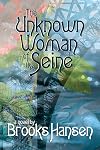
This much is true. Sometime during the late nineteenth century, a young woman drowned in the Seine, and the gypsum death mask created to memorialize her face became famous. What a face it was — serene, people said. Others spoke of her innocence, her beauty. The poet Rilke wrote of her deceptive smile and what knowledge might lie behind it. Artists studied the re-created face as a model; copies of her likeness could be found in Parisian studios and academies. Nabokov had a character write a show more poem about her. Camus, it was said, showed her off at parties. Man Ray photographed her.
To all, the dead woman’s mask represented a quality that touched them, so they invented her story, a biography, a mystery, and how she might have met her end. That background brings us to the current novel, beguiling, occasionally baffling, which offers a coherent explanation, as tense as any whodunit and as meticulously observed as any narrative of any kind.
Hansen’s story begins with a scene in a morgue, November 1889, after the unknown woman’s body has been on display for a month — yes, they did that, apparently — after which the mask maker plies his craft. It’s a prologue, therefore unfortunate by nature, and a bit confusing, at that. But Hansen skillfully rewinds the intrigue from there, chiefly through the eyes of Émile Brassard, a gendarme who’s had a checkered career, partly because his brilliance upsets people, a circumstance the author understates with deft hand.
In fact, if any single word describes The Unknown Woman of the Seine, it’s “understated.” I admire novels in which nothing is predictable, yet whose randomness derives entirely from characters with opposing goals (not authorial convenience). I also admire those novels that ask me to draw inferences rather than explain themselves, which involves me in the narrative and lets me meet the story halfway, rather than have it spooned into my mouth.
That said, Hansen demands a lot of his readers, and I’m not always up to it. A dose of bewilderment works wonders, though, for you share Brassard’s curiosity and puzzlement. He first sees the woman in the woods far from Paris, while she’s burying a corpse — and none too deep, because subsequently, the wolves get to it easily. Brassard might arrest her, but he can’t, because he’s applying to be reinstated in the gendarmerie after military service in Indochina, so he’s not officially on duty. Moreover, he’s traveling to his reinstatement hearing, so his time isn’t his own.
Consequently, he must walk a tightrope, following the woman while covering his tracks from both the participants and his superiors. Hansen does a marvelous job integrating his hero’s employment troubles with the mores and politics of the time, folding that into the detective’s quest to figure out who the woman is and why she was burying the dead man. If she killed him, as is likely, Brassard assumes there are extenuating circumstances, and he wants to know the story. So do you.
However, he, and the reader, must have infinite patience before things start to make sense. Also requiring patience are references to images of Buddhist philosophy, which go above my head, and which seem — to me, at least — to have little relation to the story. No doubt I missed something.
But the reader who can stick it out will be well rewarded, especially those who like dogs — Brassard’s is quite the canine investigator, perhaps a little too good to be true, yet their relationship is marvelous. The journey the narrative follows could not be more beautifully rendered, whether Brassard’s thoughts, the landscape, or the city of Paris, particularly the presence of that newly built tower, Eiffel’s monstrosity, as some think of it.
Hansen’s magnificent writing rolls easily into your mind, creating inner life, physical setting, and tension, all at once. The narrative’s final pages lack the clarity I would have liked, but the essentials are there. The manner in which Brassard — and Hansen — pull together the evidence makes for a thoroughly satisfying and remarkable tale of mystery. show less
To all, the dead woman’s mask represented a quality that touched them, so they invented her story, a biography, a mystery, and how she might have met her end. That background brings us to the current novel, beguiling, occasionally baffling, which offers a coherent explanation, as tense as any whodunit and as meticulously observed as any narrative of any kind.
Hansen’s story begins with a scene in a morgue, November 1889, after the unknown woman’s body has been on display for a month — yes, they did that, apparently — after which the mask maker plies his craft. It’s a prologue, therefore unfortunate by nature, and a bit confusing, at that. But Hansen skillfully rewinds the intrigue from there, chiefly through the eyes of Émile Brassard, a gendarme who’s had a checkered career, partly because his brilliance upsets people, a circumstance the author understates with deft hand.
In fact, if any single word describes The Unknown Woman of the Seine, it’s “understated.” I admire novels in which nothing is predictable, yet whose randomness derives entirely from characters with opposing goals (not authorial convenience). I also admire those novels that ask me to draw inferences rather than explain themselves, which involves me in the narrative and lets me meet the story halfway, rather than have it spooned into my mouth.
That said, Hansen demands a lot of his readers, and I’m not always up to it. A dose of bewilderment works wonders, though, for you share Brassard’s curiosity and puzzlement. He first sees the woman in the woods far from Paris, while she’s burying a corpse — and none too deep, because subsequently, the wolves get to it easily. Brassard might arrest her, but he can’t, because he’s applying to be reinstated in the gendarmerie after military service in Indochina, so he’s not officially on duty. Moreover, he’s traveling to his reinstatement hearing, so his time isn’t his own.
Consequently, he must walk a tightrope, following the woman while covering his tracks from both the participants and his superiors. Hansen does a marvelous job integrating his hero’s employment troubles with the mores and politics of the time, folding that into the detective’s quest to figure out who the woman is and why she was burying the dead man. If she killed him, as is likely, Brassard assumes there are extenuating circumstances, and he wants to know the story. So do you.
However, he, and the reader, must have infinite patience before things start to make sense. Also requiring patience are references to images of Buddhist philosophy, which go above my head, and which seem — to me, at least — to have little relation to the story. No doubt I missed something.
But the reader who can stick it out will be well rewarded, especially those who like dogs — Brassard’s is quite the canine investigator, perhaps a little too good to be true, yet their relationship is marvelous. The journey the narrative follows could not be more beautifully rendered, whether Brassard’s thoughts, the landscape, or the city of Paris, particularly the presence of that newly built tower, Eiffel’s monstrosity, as some think of it.
Hansen’s magnificent writing rolls easily into your mind, creating inner life, physical setting, and tension, all at once. The narrative’s final pages lack the clarity I would have liked, but the essentials are there. The manner in which Brassard — and Hansen — pull together the evidence makes for a thoroughly satisfying and remarkable tale of mystery. show less
The book is highly readable, but of the four novels by Hansen that I've read it's my least favorite. Hansen's full range of literary skill is not on display here. He's a wonderful writer with an ability to touch profound intellectual depths with language that is simple and admirably lacking in abstraction. His CHESS GARDEN was a revelation and probably remains my favorite of his books. MONSTERS OF ST. HELENA and PERLMAN'S ORDEAL were also entrancing, their language resonant, beautiful. JOHN show more THE BAPTIZER, by contrast, is very flatly written. It is without the richness of previous novels. Whereas, for example, The Chess Garden moved in and out of fantasy, realism, philosophical treatise and so forth, JOHN THE BAPTIZER for the most part sticks to a single narrative voice throughout. There are scenes of God's plan unfolding by way of supernatural events, still, JOHN THE BAPTIZER is Hansen's least ambitious, most conventional effort. (Though it is not without its pleasures. My favorite scene being the bacchanal thrown by Antipas, the king of Jerusalem, that appears toward the end of the book.) I hope there will be a time when Hansen can return to a prose that exhibits all the intellectual rigor and fluency of which he is capable. show less
Lists
Awards


You May Also Like


Associated Authors
Statistics
- Works
- 10
- Also by
- 1
- Members
- 688
- Popularity
- #36,763
- Rating
- 3.8
- Reviews
- 26
- ISBNs
- 30
- Languages
- 3
- Favorited
- 1
