
Bruce Jay Friedman (1930–2020)
Author of Stern
About the Author
Image credit: from web site: culturecatch.com
Series
Works by Bruce Jay Friedman
Associated Works
Fierce Pajamas: An Anthology of Humor Writing from The New Yorker (2001) — Contributor — 788 copies, 5 reviews
For the Love of Books: 115 Celebrated Writers on the Books They Love Most (1999) — Contributor — 479 copies, 4 reviews
The 50 Funniest American Writers: An Anthology of Humor from Mark Twain to The Onion (2011) — Contributor — 286 copies, 3 reviews
No, But I Saw the Movie: The Best Short Stories Ever Made Into Film (1960) — Contributor — 79 copies, 3 reviews
The Best Fantasy Stories from the Magazine of Fantasy & Science Fiction (1985) — Contributor — 78 copies, 2 reviews
It's Only Rock and Roll: An Anthology of Rock and Roll Short Stories (1998) — Contributor — 24 copies
Tagged
Common Knowledge
- Legal name
- Friedman, Bruce Jay
- Birthdate
- 1930-04-26
- Date of death
- 2020-06-03
- Gender
- male
- Education
- University of Missouri (journalism)
- Occupations
- novelist
short story writer
playwright
screenwriter - Organizations
- US Air Force
- Relationships
- Friedman, Drew (child)
- Nationality
- USA
- Birthplace
- Bronx, New York, USA
- Places of residence
- New York, New York, USA (birth)
- Place of death
- Brooklyn, New York, USA
- Associated Place (for map)
- New York, USA
Members
Reviews
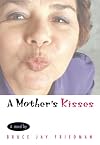
Loved this book... so why "only" a 4 star review ... perhaps a bit too much with the one angle (mother, obviously and the clever protag). I came across this title reading about Confederacy of Dunces (as in another crazy, funny, regional 60s writer - with mother issues, presumably). Story of Brooklyn Jewish lad realizing he better apply to college (because he is just out of high school) in ... 1950s i guess. Gets turned down by his 2 choices, so things look bad, but he spends the summer as a show more camp assistant in upstate new york, thanks to his mothers prodding. She is ... a force of nature ... full of chat, girdles, abrasiveness, cajoling, flirting, taunting everyone in her way- from son, to husband to every kind of adult that crosses her path. A cliche perhaps, but such an entertaining cliche! like a sitcom, maybe? still- she ribaldly carries on, eventually landing her son at the Kansas Land Grant University where they study cows and corn all day. Of course she comes with him (to help him acclimate) for the first 2 or 3 months and significant hijinks occur. Kind of a riot, but amusing, if a little repetitive. Finally he gets her to go back to New York and that's the end.... show less

First, I have to say that I don't find most of this to be black humor. Picaresque humor in may cases, perhaps, but not black humor as we normally think of it - such as the Monty Python sketch where victims of an airplane explosion are falling in someone's yard and there are so many they have to start arranging them according to the British class system...or most of The Meaning of Life.
You will need to put yourself into a 1965 frame of mind - probably an impossible task for most of us - to show more fully appreciate Bruce Jay Friedman's foreword, with it's many contemporary allusions. It is sometimes difficult to discern where his humor and facts diverge, but I guess that is one of the traits of black humor--although, as I said, most of this is not black humor at all.
In any case, what there is here is some very funny, very good writing. It introduced me to works I have heard about, such as The Ginger Man by J.P. Donleavy, but have never read. The excerpt from John Rechy's City of Night, for instance, is an immersive, funny/sad look at a bunch of drag queens and young male hustlers in LA's Pershing Square. The excerpt from Louis-Ferdinand Celine's Journey to the End of the Night is a very funny, paranoiac look at life onboard a ship bound for the French colonies in Africa. Joseph Heller's Milo, which doesn't say it is from Catch 22, but involves the same characters, is perhaps the closest thing to black humor here as Milo Minderbender turns World War II into his own profitable business, with everyone, including the Germans, as partners. The excerpt from John Barth's The Sot-Weed Factor, is also funny and engrossing.
Thomas Pynchon's "In Which Esther Gets a Nose Job" puts us through an excruciating, though rather educational surgery, and includes a song by the plastic surgeon. Definitely weird, but very easy to read, unlike his novels. Not completely sure how humorous it is....
Friedman's own contribution, Black Angels, is a funny look at a man, left by his wife, who obtains some very cheap help, with interesting consequences. Very entertaining, but more satire than black humor. Terry Southern contributes a piece called "Twirling at Ole Miss" which is definitely satire, and which for the most part could be the absolute truth. And there is simply no way that baton twirling, even with the backdrop of racism and violence, can be called black humor.
So don't read this for the title. If you come across it, buy it and read it for the sheer variety of stories and pleasures it contains. show less
You will need to put yourself into a 1965 frame of mind - probably an impossible task for most of us - to show more fully appreciate Bruce Jay Friedman's foreword, with it's many contemporary allusions. It is sometimes difficult to discern where his humor and facts diverge, but I guess that is one of the traits of black humor--although, as I said, most of this is not black humor at all.
In any case, what there is here is some very funny, very good writing. It introduced me to works I have heard about, such as The Ginger Man by J.P. Donleavy, but have never read. The excerpt from John Rechy's City of Night, for instance, is an immersive, funny/sad look at a bunch of drag queens and young male hustlers in LA's Pershing Square. The excerpt from Louis-Ferdinand Celine's Journey to the End of the Night is a very funny, paranoiac look at life onboard a ship bound for the French colonies in Africa. Joseph Heller's Milo, which doesn't say it is from Catch 22, but involves the same characters, is perhaps the closest thing to black humor here as Milo Minderbender turns World War II into his own profitable business, with everyone, including the Germans, as partners. The excerpt from John Barth's The Sot-Weed Factor, is also funny and engrossing.
Thomas Pynchon's "In Which Esther Gets a Nose Job" puts us through an excruciating, though rather educational surgery, and includes a song by the plastic surgeon. Definitely weird, but very easy to read, unlike his novels. Not completely sure how humorous it is....
Friedman's own contribution, Black Angels, is a funny look at a man, left by his wife, who obtains some very cheap help, with interesting consequences. Very entertaining, but more satire than black humor. Terry Southern contributes a piece called "Twirling at Ole Miss" which is definitely satire, and which for the most part could be the absolute truth. And there is simply no way that baton twirling, even with the backdrop of racism and violence, can be called black humor.
So don't read this for the title. If you come across it, buy it and read it for the sheer variety of stories and pleasures it contains. show less
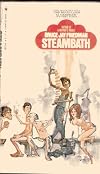
Madcap play from 1971. People find themselves in a steambath. Are they dead? is it a waiting room for Hell? Is the Puerto Rican Attendant really God? There are gay men and a lot of randy talk about sex. Apparently when it aired on TV it changed (or challenged?) the standards for what one could say on TV at the time. I laughed out loud when one character claimed for his generation that they had produced Norman Podhoretz.
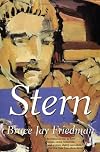
The writing itself is superb. However, the story leaves a lot to be desired. While I understand the racial language was fairly normal for the time when this was written, it still left me uneasy.
Lists
Awards

You May Also Like


Associated Authors
Statistics
- Works
- 29
- Also by
- 19
- Members
- 881
- Popularity
- #29,073
- Rating
- 3.4
- Reviews
- 15
- ISBNs
- 80
- Languages
- 3