
Alexandra Lapierre
Author of Artemisia
About the Author
Image credit: Alexandra Lapierre on May 11, 2010
Works by Alexandra Lapierre
Vita straordinaria di William Petty: avventuriero, erudito e conquistatore (2004) 34 copies, 3 reviews
Tagged
Common Knowledge
- Birthdate
- 1955-11-14
- Gender
- female
- Education
- Sorbonne, Paris, France (études de lettres)
American Film Institute
University of Southern California, Los Angeles
University of Southern California, Los Angeles (MFA) (1981) - Occupations
- novelist
biographer
short story writer - Organizations
- American Association of University Women
- Awards and honors
- Ordre des Arts et des Lettres (Chevalier, 2005)
- Relationships
- Lapierre, Dominique (father)
- Short biography
- Alexandra Lapierre was born in Paris, France, the daughter of writer Dominique Lapierre and his first wife, Aliette Spitzer. After studying literature at the Sorbonne, she went on a scholarship to study at the American Film Institute and the University of Southern California. She wrote screenplays, won several prizes at short film festivals, and received a second scholarship from the American Association of University Women, which enabled her to complete her master of fine arts degree at USC in 1981. She returned to live in Paris and published her first novel, La Lionne du boulevard (1984), which won the Prix du Premier Roman of the Fondation Paribas. Her subsequent works include more novels, as well as biographies, including those of Fanny Stevenson, wife of Robert Louis Stevenson (1993); painter Artemisia Gentileschi (1998); Elizabeth Chudleigh, Duchess of Kingston (L'Excessive, 2010); and Maud and Nancy Cunard (Avec toute ma colère, 2018). Lapierre has won many additional literary awards and was appointed Chevalier of the Ordre des Arts et des Lettres in 2005.
- Nationality
- France (birth)
- Birthplace
- Paris, France
- Places of residence
- Paris, France
California, USA
Rome, Italy - Associated Place (for map)
- Paris, France
Members
Reviews

This was a fascinating novel about a woman I wish I had encountered sooner. Moura Benckendorff was born into the Russian aristocracy on the eve of the Russian Revolution and she utilized her position near the pinnacle of society to navigate the treacherous shifts of Russian politics. Rumored to be a spy for the Communists and the British and the Germans and likely a few others, this novel presents her not as a spy, but as a woman struggling to keep her life and family safe. Overall, a show more fascinating read. show less

After seeing an exhibition of Baroque artists that included works by Artemisa, I was prompted to read Alexandra Lapierre's fictionalised biography of Artemisia Gentileschi (1593-1656) which has been on the TBR forever...
Artemesia is a comprehensive work of research about this remarkable artist. Book One 'The Great Adventure' covers the traumatic period of Artemisia's childhood and adolescence. It begins with her father's loving relationship and enthusiasm for teaching her everything he knew show more about painting; covers the death of her mother and Artemesia's subsequent role as assistant to her father now bad-tempered, abusive and ungrateful; and goes on to the complete breakdown of that relationship when the family honour (yeah, *sigh* I know) was besmirched by her rape by Agostino Tassi, a family friend who was also an artist.
The book devotes many pages to the ins and outs of the trial that eventuated when her father Orazio took Tassis to court because he had lied about the death of his wife and could not marry Artemisia. This humiliating exposure of what had happened, made messier by the fact that Artemisia had subsequently consented to a relationship with Tassi in the hope that he would marry her, included her torture to 'prove that she was telling the truth' (only to show some pages later, that torture failed to get the truth out of a 'witness' who was an abject liar). TBH I tired of it all. It seemed a rather heartless retelling in which the political and legal machinations swamped the real story of a young girl's trauma, her attempts to come to terms with it and the lack of support from anyone, and that includes the live-in female friend of Orazio, Tuzia.
Because that real story explains why, when she made her subsequent career as a successful artist, so many of her works feature violence.
Book Two opens with the marriage that was engineered so that her father Ortazo could offload the 'spoiled goods' and she's in Florence, seemingly happily married with one son and another baby on the way.
Far be it from me to argue with a scholar who spent years researching this book, but I fail to see understand how Artemisa could have had no notion of luxury when part of her father's scheming to restore their position after the embarrassment of a notorious trial was to parade her prowess as an emerging artist in front of Scipione Borghese (yes he of the Villa Borghese and its sumptuous gardens). I bet he was dressed in rare cloths! Look at those skirts in Ottavio Leoni's portrait!!
Portrait of Cardinal Scipione Borghese (by Ottavio Leoni)
Yet this 'calm and softened' wife and mother, naive about luxury and power, produced the artworks you can see in the slideshow on my blog. Her works feature Biblical stories and mythological themes, and a shocking number of them feature women as victim and women wielding knives in revenge. Influenced at first by Caravaggio, she eventually developed her own naturalistic style of dramatic realism.
To read the rest of my review please visit https://anzlitlovers.com/2024/02/04/artemisia-1998-by-alexandra-lapierre-transla... show less
Artemesia is a comprehensive work of research about this remarkable artist. Book One 'The Great Adventure' covers the traumatic period of Artemisia's childhood and adolescence. It begins with her father's loving relationship and enthusiasm for teaching her everything he knew show more about painting; covers the death of her mother and Artemesia's subsequent role as assistant to her father now bad-tempered, abusive and ungrateful; and goes on to the complete breakdown of that relationship when the family honour (yeah, *sigh* I know) was besmirched by her rape by Agostino Tassi, a family friend who was also an artist.
The book devotes many pages to the ins and outs of the trial that eventuated when her father Orazio took Tassis to court because he had lied about the death of his wife and could not marry Artemisia. This humiliating exposure of what had happened, made messier by the fact that Artemisia had subsequently consented to a relationship with Tassi in the hope that he would marry her, included her torture to 'prove that she was telling the truth' (only to show some pages later, that torture failed to get the truth out of a 'witness' who was an abject liar). TBH I tired of it all. It seemed a rather heartless retelling in which the political and legal machinations swamped the real story of a young girl's trauma, her attempts to come to terms with it and the lack of support from anyone, and that includes the live-in female friend of Orazio, Tuzia.
Because that real story explains why, when she made her subsequent career as a successful artist, so many of her works feature violence.
Book Two opens with the marriage that was engineered so that her father Ortazo could offload the 'spoiled goods' and she's in Florence, seemingly happily married with one son and another baby on the way.
Motherhood had calmed and softened her. She had melted into the solid old family of Stattesi craftsmen as smoothly as butter into a mould. Who would have believed it? This dishonoured daughter whom her father had described — out of 'honesty to his future son-in-law — as a shrew, bowed in everything to the wishes of her husband. Admittedly, Pierantonio was not known to be greatly demanding. He had only two weak points: a liking for comfort and a passion for luxury. Luxury was something Artemisia had no notion of at the time of their marriage. Pierantonio was the one who had taught her to recognise and cultivate a preference for rare cloths. (p.204)
Far be it from me to argue with a scholar who spent years researching this book, but I fail to see understand how Artemisa could have had no notion of luxury when part of her father's scheming to restore their position after the embarrassment of a notorious trial was to parade her prowess as an emerging artist in front of Scipione Borghese (yes he of the Villa Borghese and its sumptuous gardens). I bet he was dressed in rare cloths! Look at those skirts in Ottavio Leoni's portrait!!
Portrait of Cardinal Scipione Borghese (by Ottavio Leoni)
Yet this 'calm and softened' wife and mother, naive about luxury and power, produced the artworks you can see in the slideshow on my blog. Her works feature Biblical stories and mythological themes, and a shocking number of them feature women as victim and women wielding knives in revenge. Influenced at first by Caravaggio, she eventually developed her own naturalistic style of dramatic realism.
To read the rest of my review please visit https://anzlitlovers.com/2024/02/04/artemisia-1998-by-alexandra-lapierre-transla... show less
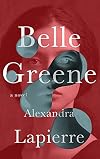
The story of Belle Greene is absolutely amazing - a black woman who passed herself and her family off as white serves as the librarian for JP Morgan and his son Jack Morgan building the amazing collection of rare materials for the Morgan Library in NYC. I gave this only 3 plus stars because it is probably too long, too much in detail regarding the rare books and manuscripts that I sometimes skimmed over.
Belle Greene's father was Richard Greener, the first black man to graduate from Harvard. show more He left his wife and children (girls and one son) very suddenly. This provided them the opportunity to move from Washington DC, drop the final "r" from their name and assume new identities as white. They claimed to be Portuguese aristocracy with the name of da Costa Greene. Belle takes a job at the Princeton library where she meets Junius Morgan, a nephew of JP Morgan. She and Junius become fast friends and he acts as a mentor to her. From there on she climbs the social and academic latter.
For years, Belle Greene and her family are able to maintain this family secret even promising never to marry and have children, least the child carry Black characteristics. Her sister does however marry and have a child who Belle assumes responsibility. Robert Leverage grows up believing he is fully white and has a career as a pilot in the service. When he becomes engaged to a young woman, her family hires a private detective to uncover the past leading to the disastrous suicide of Robert.
Belle's life was exciting and filled with many lovers and travels to Europe. Her influence on the Morgan Library is beyond compare; always believing that rare documents and manuscripts should be available to researchers and not locked up where no one can study them. She lead an amazing life. And what a completely sad and appalling story of the hate and prejudice of the family that caused Robert's death.
Good information to know, the book is just a bit too long and too involved but certainly well researched - great respect for the author. show less
Belle Greene's father was Richard Greener, the first black man to graduate from Harvard. show more He left his wife and children (girls and one son) very suddenly. This provided them the opportunity to move from Washington DC, drop the final "r" from their name and assume new identities as white. They claimed to be Portuguese aristocracy with the name of da Costa Greene. Belle takes a job at the Princeton library where she meets Junius Morgan, a nephew of JP Morgan. She and Junius become fast friends and he acts as a mentor to her. From there on she climbs the social and academic latter.
For years, Belle Greene and her family are able to maintain this family secret even promising never to marry and have children, least the child carry Black characteristics. Her sister does however marry and have a child who Belle assumes responsibility. Robert Leverage grows up believing he is fully white and has a career as a pilot in the service. When he becomes engaged to a young woman, her family hires a private detective to uncover the past leading to the disastrous suicide of Robert.
Belle's life was exciting and filled with many lovers and travels to Europe. Her influence on the Morgan Library is beyond compare; always believing that rare documents and manuscripts should be available to researchers and not locked up where no one can study them. She lead an amazing life. And what a completely sad and appalling story of the hate and prejudice of the family that caused Robert's death.
Good information to know, the book is just a bit too long and too involved but certainly well researched - great respect for the author. show less
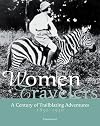
This is a beautifully designed book about female explorers of the 17-early 20th centuries with an essay devoted to each. What surprised me the most in this book is that they spent many years in most inhospitable climates in jungles or deserts, and yet many of them lived extremely long lives, into late 80s or 90s, and two even lived past 100. And many of them started exploring in their late 30s, 40s or even 50s, when they became widowed and the kids grew up and left the nest, or their parents show more died and they were left on their own. Many of them weren’t women of independent means either, but they all found ways not only to survive but to organize one expedition after another. Some persuaded a museum to sponsor them, some wrote books about their explorations and adventures to provide for the next one, some went on lecture tours. Whatever their means of support, almost all made significant contributions to archeology or natural science, without any college education, or even secondary education in some cases. I found this an inspirational book, because there wasn’t anything in most of these women’s circumstances that was exceptional, and yet they all managed to carve out exceptional lives for themselves. show less
Lists
Awards


You May Also Like


Associated Authors
Statistics
- Works
- 21
- Members
- 1,103
- Popularity
- #23,300
- Rating
- 3.7
- Reviews
- 20
- ISBNs
- 107
- Languages
- 7
