
Jodi Picoult
Author of My Sister's Keeper
About the Author
Jodi Picoult was born in Nesconset, New York on May 19, 1966. She received a degree in creative writing from Princeton University in 1987 and a master's degree in education from Harvard University. She published two short stories in Seventeen magazine while still in college. Immediately after show more graduation, she landed a variety of jobs, ranging from editing textbooks to teaching eighth-grade English. Her first book, Songs of the Humpback Whale, was published in 1992. Her other works include Picture Perfect, Mercy, The Pact, Salem Falls, The Tenth Circle, Nineteen Minutes, Change of Heart, Handle with Care, House Rules, Sing You Home, Lone Wolf, Leaving Time, and Small Great Things. My Sister's Keeper was made into a movie starring Cameron Diaz. She received the New England Bookseller Award for fiction in 2003. She also wrote five issues of the Wonder Woman comic book series for DC Comics. She writes young adult novels with her daughter Samantha van Leer including Between the Lines and Off the Page. (Bowker Author Biography) show less
Series
Works by Jodi Picoult
Salem Falls [2018 TV movie] — Original novel — 5 copies
Przemiana. Cz. 1 2 copies
The Pact [and] Keeping Faith 2 copies
Małe wielkie rzeczy 1 copy
Jodi Picoult bundle 1 copy
many books 1 copy
Hullutav mesi : romaan 1 copy
Eve Donus Sarkisi 1 copy
Bir daha bak 1 copy
Nejsem jako vy 1 copy
The 10th Circle 1 copy
Love at First Bite 1 copy
Sandry's Book 1 copy
Breathe: A Musical 1 copy
Perfect match/ Jodi Picoult. 1 copy
3 Jodi Picoult Books! 1) A Spark of Light 2) Keeping Faith 3) Songs of the Humpback Whale (2019) 1 copy
Der Funke des Lebens 1 copy
Associated Works
Why We Write: 20 Acclaimed Authors on How and Why They Do What They Do (2013) — Contributor — 208 copies, 10 reviews
Tagged
Common Knowledge
- Canonical name
- Picoult, Jodi
- Legal name
- Picoult, Jodi Lynn
- Birthdate
- 1966-05-19
- Gender
- female
- Education
- Princeton University (AB | Creative writing ∙ 1987)
Harvard University (M.Ed) - Occupations
- author
screenwriter
novelist - Awards and honors
- New England Bookseller Award (2003)
Book Browse Diamond Award (2005)
Fearless Fiction Award (2007)
Waterstone UK (Author of the Year)
Vermont Green Mountain Book Award (2007)
Romantic Times Career Achievement Award (2005) (show all 7)
Sarah Josepha Hale Award (2019) - Relationships
- van Leer, Timothy Warren (husband)
van Leer, Samantha (daughter) - Short biography
- Jodi Picoult lives in New Hampshire with her husband and three children.
- Nationality
- USA
- Birthplace
- Nesconset, Long Island, New York, USA
- Places of residence
- Hanover, New Hampshire, USA
Nesconset, Long Island, USA - Associated Place (for map)
- USA
Members
Discussions
2008-06 Discussion of My Sister's Keeper in Read YA Lit (April 2012)
Reviews
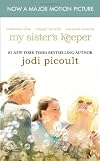
This is probably the most devastating book I've ever read. Jodi Picoult has never been one to hold things back in her books, but this one rises above all of her other books. Her novel about two sisters who are emotionally and physically tied to each other. Kate is 16 when the book opens, and she has been suffering from a rare form of leukaemia since she was two. Anna is three years younger, and to quote her, she says that she's never had to wonder about who or what she is, or why she was show more born. She knows she was genetically programmed to be a donor for her older sister. As a result, Anna states that she's been in the hospital more than most people who are really sick. There was always another donation to be made to help her sister fight her leukaemia. When this book opens, most options are no longer open to Kate, and it looks like the only thing that may serve her is a kidney donation from her sister. Anna is not prepared to go through with this invasive surgery, so, after some research, she approaches a lawyer named Campbell Alexander and asks him to help her to become medically emancipated from her family. Campbell finds he can't say no to this girl, and agrees, even though he has enough of his own medical problems to deal with. The friendship and trust that develops between this girl and the lawyer is the glue that binds this book together, and the ups and downs of their relationship push the book forward to its unexpected and devastating close. I found that I couldn't put the book down, and just to had to see what was on the next page or the next chapter. The book is told from varying viewpoints, but Anna's character and her viewpoints is what binds them all together. The book will make you reexamine all your preconceived notions about family dynamics and responsibilities. After the emotional rollercoaster it puts you through, the end will break your heart but it will also inspire you. show less

Sometimes, when I'm reading a book, I start writing the reivew before I finish reading. I only had a few sentences put down for this book by the time I got close to the end, which is good, because I had to scrap them. In other words, this book is not what it seems. It's even better.
After surviving a plane crash, the airline offers to fly Dawn wherever she wants to go. Does she choose to return to her daughter and husband of fifteen years, or does she choose to find her lost love, the man she show more thought of as the plane was going down?
Thus we are introduced to the theory of parallel universes, and so, the chapters alternate, beginning with Dawn choosing to return to Egypt to explore the what-if she left behind. In the other chapters, Dawn returns to her home in Boston, and the familiar struggles of marriage and motherhood. Or is that what's going on? There's a twist (don't expect me to give it away!) and in typical Picoult fashion, there are no clear right answers.
Picoult is not coy about what she's setting up. Dawn's husband is a physicist who explores just that topic. As a graduate student in Egyptology, Dawn's thesis was on The Book of Two Ways, an ancient Egyptian text that essentially posited that, after death, one's soul can take one of two routes, but will end up in the same place, feasting with Osiris. But sometimes, Picoult gets a little heavy-handed, such as having one of Dawn's clients face a very similar dilemma, and having Dawn learn a lot about her own life as she works things through with her client.
In Picoult's hands, even this last doesn't seem like much of a flaw, and if it is one, it's easily forgiven for the pleasure of the rest of the book. This is the kind of book that you want to read again as soon as you've finished it, that will make you want to go out and learn all about hieroglyphics, and that you'll recommend to everyone you know. show less
After surviving a plane crash, the airline offers to fly Dawn wherever she wants to go. Does she choose to return to her daughter and husband of fifteen years, or does she choose to find her lost love, the man she show more thought of as the plane was going down?
Thus we are introduced to the theory of parallel universes, and so, the chapters alternate, beginning with Dawn choosing to return to Egypt to explore the what-if she left behind. In the other chapters, Dawn returns to her home in Boston, and the familiar struggles of marriage and motherhood. Or is that what's going on? There's a twist (don't expect me to give it away!) and in typical Picoult fashion, there are no clear right answers.
Picoult is not coy about what she's setting up. Dawn's husband is a physicist who explores just that topic. As a graduate student in Egyptology, Dawn's thesis was on The Book of Two Ways, an ancient Egyptian text that essentially posited that, after death, one's soul can take one of two routes, but will end up in the same place, feasting with Osiris. But sometimes, Picoult gets a little heavy-handed, such as having one of Dawn's clients face a very similar dilemma, and having Dawn learn a lot about her own life as she works things through with her client.
In Picoult's hands, even this last doesn't seem like much of a flaw, and if it is one, it's easily forgiven for the pleasure of the rest of the book. This is the kind of book that you want to read again as soon as you've finished it, that will make you want to go out and learn all about hieroglyphics, and that you'll recommend to everyone you know. show less

Is it possible to put a Holocaust story, a vampire story, a love story and a tragic accident in the same novel without it sounding cliched or offensive? Jodi Picoult proves that the answer to this is yes and builds a story about the choices that people make collecting the seemingly mismatching threads into a rich tapestry.
The middle part of the novel is almost heartbreaking to read - the story of the Holocaust as seen by the eyes of a young girl that survives it. Even though you know it is show more a novel and that the narrator survives (because she is telling the story), it still is a very powerful piece of prose. And the fact that it is not a real survivor story does not make it less powerful.
And around this middle part is the framing story - the old Nazi officer Josef that decides to ask forgiveness from a Jewish woman. In her introduction to the novel, Picoult points out that this idea is not her, she found it in Simon Wiesenthal's "The Sunflower" and that she built her novel around the idea. Except that the case in "The Storyteller" is a little different - Josef does not seek one of his victims but Sage - a 20-something baker which is Jewish by birth but claims not to be and that lives in the 21st century. Sage has her own story and secrets - while Josef had lived his life hidden because of what he had done and had built himself a new identity and won the respect of the whole town, Sage had her face marked from an accidents and hides behind her profession and the weird hours that bakers keep.
Add to this Sage's grandmother Minka (who is the survivor that the middle part of the book belong to), a married man that Sage believes to be the best she deserves and a Nazi hunter who is ready to discount the whole story when he first hears it but then realizes that there is something in it, a retired Nun, interesting face showing in a bread (and I still do not see how that connected to the whole story...) and a few other secondary characters that allow the story to flow nicely.
And the main thread in the whole novel is choices - the choices that Josef made as a boy and then as a young man, the choices Minka hd to make in order to survive, the choices that Sage made in her own life and for the story of Josef, the choice that Josef had made when deciding to confess to Sage; choices of death and life (in more than one way); choices of belonging and staying away; of betrayal and honesty. Even the last act of the novel was a choice.
The turning point of the novel is hinted at very early in it and is fully shown long before Sage catches up on it - and that's one of the weak points of the novel. She should have seen it earlier - should have managed to process that information. But then should would not have made the same choice most likely - although I am not so sure that this would have been a bad thing.
And where are the vampires? In a story, where they belong. Between the chapters of the novel in the same way in which they had been written between the hard days of Minka. A story that saves her life and that plays a significant role in her narrative... and as unfinished as the life of a person can be. And a lot of the choices in that fictional story mirror the choices in the lives of the characters - and repeating some of the parts during the novel narration itself serves to show how close is life to an unreal imaginary story... and how powerful a story can be.
At one point, at the final part of the book Picoult defines history: "History isn't about dates and places and wars. It's about the people who fill the spaces between them." And that's one of the best definition I had heard. Because at the end of the day, history is the story of the choices made by people for people about people. And novels can relate these possible stories - because even if that one did not happen, millions of stories did happen in the ghettos and camps of WWII - and most of them cannot be told because noone survived to tell them. But "The Storyteller" is not just a Holocaust story even if it contains one; nor is it a vampire story - it just contains one. It is about memories, forgiveness, choices and hope. show less
The middle part of the novel is almost heartbreaking to read - the story of the Holocaust as seen by the eyes of a young girl that survives it. Even though you know it is show more a novel and that the narrator survives (because she is telling the story), it still is a very powerful piece of prose. And the fact that it is not a real survivor story does not make it less powerful.
And around this middle part is the framing story - the old Nazi officer Josef that decides to ask forgiveness from a Jewish woman. In her introduction to the novel, Picoult points out that this idea is not her, she found it in Simon Wiesenthal's "The Sunflower" and that she built her novel around the idea. Except that the case in "The Storyteller" is a little different - Josef does not seek one of his victims but Sage - a 20-something baker which is Jewish by birth but claims not to be and that lives in the 21st century. Sage has her own story and secrets - while Josef had lived his life hidden because of what he had done and had built himself a new identity and won the respect of the whole town, Sage had her face marked from an accidents and hides behind her profession and the weird hours that bakers keep.
Add to this Sage's grandmother Minka (who is the survivor that the middle part of the book belong to), a married man that Sage believes to be the best she deserves and a Nazi hunter who is ready to discount the whole story when he first hears it but then realizes that there is something in it, a retired Nun, interesting face showing in a bread (and I still do not see how that connected to the whole story...) and a few other secondary characters that allow the story to flow nicely.
And the main thread in the whole novel is choices - the choices that Josef made as a boy and then as a young man, the choices Minka hd to make in order to survive, the choices that Sage made in her own life and for the story of Josef, the choice that Josef had made when deciding to confess to Sage; choices of death and life (in more than one way); choices of belonging and staying away; of betrayal and honesty. Even the last act of the novel was a choice.
The turning point of the novel is hinted at very early in it and is fully shown long before Sage catches up on it - and that's one of the weak points of the novel. She should have seen it earlier - should have managed to process that information. But then should would not have made the same choice most likely - although I am not so sure that this would have been a bad thing.
And where are the vampires? In a story, where they belong. Between the chapters of the novel in the same way in which they had been written between the hard days of Minka. A story that saves her life and that plays a significant role in her narrative... and as unfinished as the life of a person can be. And a lot of the choices in that fictional story mirror the choices in the lives of the characters - and repeating some of the parts during the novel narration itself serves to show how close is life to an unreal imaginary story... and how powerful a story can be.
At one point, at the final part of the book Picoult defines history: "History isn't about dates and places and wars. It's about the people who fill the spaces between them." And that's one of the best definition I had heard. Because at the end of the day, history is the story of the choices made by people for people about people. And novels can relate these possible stories - because even if that one did not happen, millions of stories did happen in the ghettos and camps of WWII - and most of them cannot be told because noone survived to tell them. But "The Storyteller" is not just a Holocaust story even if it contains one; nor is it a vampire story - it just contains one. It is about memories, forgiveness, choices and hope. show less
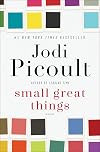
What if the puzzle of the world was a shape you didn’t fit into? And the only way to survive was to mutilate yourself, carve away your corners, sand yourself down, modify yourself to fit?A truly brave, challenging, and prescient book in today’s America, and one that Jodi Picoult should be—and has been—rightly lauded for having had the tenacity to write. As she notes in her seminal afterward, this book was twenty show more years in the writing, as she—a white woman of a privileged social class—began to wonder how she could write about racism in America.
How come we haven’t been able to change the puzzle instead?
The result is a staggering exploration of grand-scale racism and smaller-scale acts of almost-imperciptible privilege of which those in power (read: white) are often ignorant and unaware, but of which African Americans are all too aware, having to navigate and maneuver these power structures on a constant, daily basis. Told from three points of view—Turk, a white supremacist whose baby dies in the labor and delivery ward at a Connecticut hospital in the early chapters; Ruth, an African American L&D nurse who is asked by Turk and his wife, Brit, not to touch their child; and Kennedy, a white, privileged public defender (Picoult’s stand-in, as she indicates in the afterward) who takes on Ruth’s case when the child dies and Turk blames her for it.
Entangled in all of this are Ruth’s feelings of alienation from her own sister, Adisa, a welfare mother, due to her own struggle to be educated and become a nurse, and wanting the same for her son, Edison; a preacher-like media figure, not unlike Al Sharpton; members of the neo-Nazi and White Power groups that proliferate in America to this day (think that happened in 2017 in Charlottesville, VA with the Unite the Right rally); and countless minor characters who cause the reader to see race and its various aspects from multiple angles.
Everyone living in America right now should read this book, as should the rest of the world, to understand how race and American identity are so intrinsically intertwined and why our nation is so divided on many issues regarding race. This is the world in which we live, and it’s examined in such painstaking depth and with such immense humanity by Picoult, who never seems to be scared to tackle the big subjects—cf. her most recent book, and the first book of hers I read, on abortion, A Spark of Light.
If you think that you are not racist, you might see that position a bit differently by the end of Small Great Things, named after Martin Luther King, Jr.’s famous statement: “If I cannot do great things, I can do small things in a great way.”
And that’s exactly what Picoult does here: tackling great things in a small way, and small things in a great way—all at once, with exceptional power and bravado.
4.5/5 stars show less
Lists
READ 2025 (1)
READ in 2024 (1)
Bullies (1)
Page Turners (1)
Secrets Books (1)
Same Title (1)
Legal Stories (1)
Indie Next Picks (1)
Simon & Schuster (1)
Female Author (2)
READ in 2023 (2)
Five star books (4)
Teen Pregnancy (1)
Carole's List (1)
el (1)
Everand 2023 (1)
To Read (1)
deBib 2023 (1)
Family Dynamics (1)
FAB 2023 (1)
Awards


You May Also Like


Associated Authors
Statistics
- Works
- 115
- Also by
- 8
- Members
- 146,501
- Popularity
- #43
- Rating
- 3.8
- Reviews
- 4,300
- ISBNs
- 1,742
- Languages
- 28
- Favorited
- 502


