
Yasutaka Tsutsui
Author of Paprika
About the Author
Disambiguation Notice:
(yid) VIAF:19718607
Series
Works by Yasutaka Tsutsui
Rumors About Me, The 2 copies
ロートレック荘事件 2 copies
富豪刑事 2 copies
富豪刑事 (短編集) 2 copies
Standing Woman 2 copies
ダンヌンツィオに夢中 1 copy
狂気の沙汰も金次第 1 copy
Don't Laugh [short story] 1 copy
Commuter Army [novelette] 1 copy
暗黒世界のオデッセイ(新潮文庫) 1 copy
七瀬ふたたび 1 copy
Baburingu sóseiki (バブリング創世記) 1 copy
Kutabare Pta 1 copy
Soldat à la journée 1 copy
Lo que vio la criada 1 copy
エディプスの恋人 (Japanese Edition) 1 copy
薬菜飯店 [yakusai hanten] 1 copy
Polar King, The 1 copy
Associated Works
The Big Book of Science Fiction: The Ultimate Collection (2016) — Contributor — 522 copies, 8 reviews
Ellery Queen's Japanese Mystery Stories: From Japan's Greatest Detective and Crime Writers (1978) — Contributor — 94 copies, 1 review
Speculative Japan: Outstanding Tales of Japanese Science Fiction and Fantasy (2007) — Contributor — 54 copies
Von Katzentötern, schwebenden Rauchern und der Suche nach Nilpferden Kurzgeschichten aus Japan (2018) — Contributor — 2 copies
Misunderstanding Cad First Contact SF Masterpiece Selection — Contributor — 1 copy
プロジェクト:シャーロック 年刊日本SF傑作選 — Contributor — 1 copy
Tagged
Common Knowledge
- Canonical name
- Tsutsui, Yasutaka
- Legal name
- 筒井康隆
- Birthdate
- 1934-09-24
- Gender
- male
- Occupations
- novelist
science fiction writer
actor - Awards and honors
- Ordre des Arts et des Lettres (1997)
Izumi Kyoka Award (1981)
Kawabata Yasunari Award (1989)
Japan SF Award (1992) - Nationality
- Japan
- Birthplace
- Osaka, Japan
- Places of residence
- Osaka, Japan
- Disambiguation notice
- VIAF:19718607
- Associated Place (for map)
- Osaka, Japan
Members
Reviews
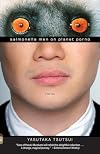
The title of Tsutsui's collection is apt, as it features stories which are always bizarre and frequently feature sexual deviance.
Of course, normality and sexual propriety are cultural constructs, and Tsutsui delights in tearing these apart to examine them. Amongst this apparently wanton destruction, the reader is forced to recognise that many existing attitudes and habits of modern society are equally ludicrous.
-- What’s it about? --
Sexual desire. Consumerism. Superficial obsession with show more minor celebrities. The insanity of war and politics. Middle class pursuit of leisure. The power of the media and the propensity of the masses to act like sheep. Defiance.
Tsutsui is renowned in modern Japan for his quirky take on satire, creating literature that defies easy categorisation and is never restricted by nebulous concepts like convention or reality.
For instance, in the appropriately titled story, The World is Tilting, an island gradually begins to tilt over until it's occupants are risking serious injury attempting to dismount their own doorstep, yet many inhabitants refuse to leave and the tilt continues until their lives are ridiculous. Similarly, in The Last Smoker, Tsutsui's determined protagonist ignores public health advice until all other smokers have been hounded out of their hobby or literally lynched, then engages in a desperate stand-off with the authorities and the enraged masses.
-- What’s it like? --
Frequently surreal. Often insightful. Blackly humorous.
Stories begin with an odd situation and take further, unpredictable turns before concluding with a dark joke or a criticism of society. From the Dabba Dabba tree that engenders erotic dreams of a sufficiently disturbing nature to demand police involvement, to the commuter army that engages in a decades long war at the behest of negligent, distant and disinterested officials, to the sexually rampant planet that encourages visiting scientists to reverse the theory of evolution, Tsutsui introduces stories that intrigue and amuse in equal measure.
Not all stories are equally appealing. I still can’t fathom the point of a short tale about time travel and I disliked an even shorter biography of Mozart. I believe the tale is a satirical ridiculing of the typically effusive biographies extolling Mozart as a child genius, and I actually did giggle at a few of the ridiculous claims, but somehow the whole piece left me cold.
Just like in Tsutsui's more recent collection, 'Bullseye', many stories have a surprisingly chilling ending, most notably Commuter Army, The Very Edge of Happiness and Hello, Hello, Hello. These were unquestionably my favourite stories from this collection: there's a wonderful, airy, jokey ludicrousness about each of these developing tales, right up until Tsutsui delivers the chilling coup de grace and leaves you breathless.
-- What about the salmonella ladies? --
The constant in all thirteen short stories is Tsutsui’s dark humour and an equally dark misogyny. The men are frequently idiots, led by their genitalia, but they also express opinions and act upon the world; the women are homogenous shrews, who complain that their husbands earn too little and fail to pleasure them frequently enough.
The one woman who takes a leading role in The World is Tilting, would be grotesquely flawed as a human being, had Tsutsui developed her character that far, but is viciously derided as a Feminist in a story that pits Women against Men and Men against the hysterical she-Devil’s that pass for Women. It is true that Tsutsui is interested in ideas and themes, rather than developing characterisation, but the theme of that story seems to be that feminism will destroy the world if left unchecked and kill the feminists who don’t repent and recant, so it really does feel quite odd to read in 2020!
Where women are not actively malevolent or viciously unsupportive of their husbands, they are simply absent. In the title story, a female scientist who has become pregnant as a result of being molested by a plant, is denied a voice as she is “too embarrassed” to attend the meeting of (completely male) experts who are to decide her fate. I found the story itself very entertaining
-- Final thoughts --
Overall, then, I enjoyed most of these short stories for their absurdity and their deliciously morbid humour. I enjoyed recognising and appreciating the cultural commentary, especially in The Very Edge Of Happiness, Commuter Army and Hello, Hello, Hello, but the misogynistic tones may be too much for some modern readers.
Many thanks to Motoko Driver for introducing me to Tsutsui's work and sending me a copy of this book. show less
Of course, normality and sexual propriety are cultural constructs, and Tsutsui delights in tearing these apart to examine them. Amongst this apparently wanton destruction, the reader is forced to recognise that many existing attitudes and habits of modern society are equally ludicrous.
-- What’s it about? --
Sexual desire. Consumerism. Superficial obsession with show more minor celebrities. The insanity of war and politics. Middle class pursuit of leisure. The power of the media and the propensity of the masses to act like sheep. Defiance.
Tsutsui is renowned in modern Japan for his quirky take on satire, creating literature that defies easy categorisation and is never restricted by nebulous concepts like convention or reality.
For instance, in the appropriately titled story, The World is Tilting, an island gradually begins to tilt over until it's occupants are risking serious injury attempting to dismount their own doorstep, yet many inhabitants refuse to leave and the tilt continues until their lives are ridiculous. Similarly, in The Last Smoker, Tsutsui's determined protagonist ignores public health advice until all other smokers have been hounded out of their hobby or literally lynched, then engages in a desperate stand-off with the authorities and the enraged masses.
-- What’s it like? --
Frequently surreal. Often insightful. Blackly humorous.
Stories begin with an odd situation and take further, unpredictable turns before concluding with a dark joke or a criticism of society. From the Dabba Dabba tree that engenders erotic dreams of a sufficiently disturbing nature to demand police involvement, to the commuter army that engages in a decades long war at the behest of negligent, distant and disinterested officials, to the sexually rampant planet that encourages visiting scientists to reverse the theory of evolution, Tsutsui introduces stories that intrigue and amuse in equal measure.
Not all stories are equally appealing. I still can’t fathom the point of a short tale about time travel and I disliked an even shorter biography of Mozart. I believe the tale is a satirical ridiculing of the typically effusive biographies extolling Mozart as a child genius, and I actually did giggle at a few of the ridiculous claims, but somehow the whole piece left me cold.
Just like in Tsutsui's more recent collection, 'Bullseye', many stories have a surprisingly chilling ending, most notably Commuter Army, The Very Edge of Happiness and Hello, Hello, Hello. These were unquestionably my favourite stories from this collection: there's a wonderful, airy, jokey ludicrousness about each of these developing tales, right up until Tsutsui delivers the chilling coup de grace and leaves you breathless.
-- What about the salmonella ladies? --
The constant in all thirteen short stories is Tsutsui’s dark humour and an equally dark misogyny. The men are frequently idiots, led by their genitalia, but they also express opinions and act upon the world; the women are homogenous shrews, who complain that their husbands earn too little and fail to pleasure them frequently enough.
The one woman who takes a leading role in The World is Tilting, would be grotesquely flawed as a human being, had Tsutsui developed her character that far, but is viciously derided as a Feminist in a story that pits Women against Men and Men against the hysterical she-Devil’s that pass for Women. It is true that Tsutsui is interested in ideas and themes, rather than developing characterisation, but the theme of that story seems to be that feminism will destroy the world if left unchecked and kill the feminists who don’t repent and recant, so it really does feel quite odd to read in 2020!
Where women are not actively malevolent or viciously unsupportive of their husbands, they are simply absent. In the title story, a female scientist who has become pregnant as a result of being molested by a plant, is denied a voice as she is “too embarrassed” to attend the meeting of (completely male) experts who are to decide her fate. I found the story itself very entertaining
-- Final thoughts --
Overall, then, I enjoyed most of these short stories for their absurdity and their deliciously morbid humour. I enjoyed recognising and appreciating the cultural commentary, especially in The Very Edge Of Happiness, Commuter Army and Hello, Hello, Hello, but the misogynistic tones may be too much for some modern readers.
Many thanks to Motoko Driver for introducing me to Tsutsui's work and sending me a copy of this book. show less
This is a tough book for me to review, in that I liked most of the stories in the first half of the collection (most of which are from the early 70s) but I really disliked most of the stories in the second half of the collection (most of which are more recent). My favorite story was the rather frightening “The Very Edge of Happiness.”
At their best, these stories offer entertaining and humorous insights into the absurdity and alienation of the modern world. At their worst, I found them show more boring with a heavy dose of angry misogyny. show less
At their best, these stories offer entertaining and humorous insights into the absurdity and alienation of the modern world. At their worst, I found them show more boring with a heavy dose of angry misogyny. show less
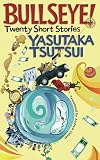
"This isn't a movie. It's a short story."
In fact, it's twenty of them, all written by popular Japanese author, Yasutaka Tsutsui and selected from a career spanning over fifty years, which he admits is now coming to a close. "The ideas aren't coming anymore," he told Andrew Driver, translator of this rather miscellaneous, but ultimately intriguing, collection.
—- What's it about? —-
Technology, sex robots, celebrity, old age, memory, story telling, human nature, life, death. Everything and show more anything, but particularly death. The title story, Bullseye! establishes Tsutsui's unswerving preoccupation with death early on: 'Sitting at the desk was a brazenfaced young officer, blissfully unaware that he would one day be killed.'
Bullseye! follows the misadventures of an elderly man who steals money, a gun and a police officer's sanity, with various hi-jinks inbetween. It's a rambling, mad adventure, full of gaps and mathematics that result in diarrhea 'when executed properly', but there's something joyous in the old man's quick and easy decision making, ('Now, it goes without saying that a pistol lying on a desk is just asking to be stolen,') his contempt for his fellow men and women, and his final decision about how to use the gun.
This surreal escapade is followed by the more conventionally odd, Call for the Devil! a much shorter tale which focuses on three executives who try to summon up the devil to save their business. As you do. Published 35 years before Bullseye! this is at once wildly different in content and strikingly similar in terms of its surreal events and casual treatment of the darkness in human nature. I really enjoyed the humour in this story; when the men accidentally summon up Jesus Christ they reject him immediately because, 'He's the friend of the poor, isn't he? He'd only end up siding with the union!'
—- What's it like? —-
A varied collection of tales which range from the delightfully mad to the forcefully satirical to the strikingly chilling.
What they have in common, besides showcasing Tsutsui's increasing awareness of impending death, is an underlying darkness of vision. Don't expect happy endings, but especially not from the incredibly sinister tale, A Vanishing Dimension, in which a man's wife and child seem to enter another dimension after he purchases a creepy toy monkey for the child, or from the quiet, dreamy tale, Sleepy Summer Afternoon, which still casts a chill over me several weeks after reading it.
My favourites were perhaps the most conventionally constructed narratives. I adored the wickedly simple story, Cross Section, in which a professor of historical geology fails to notice his beautiful wife indulging in a string of lovers until a wonderful reveal forces him to attend. I also loved the twisting of a conventional fairy-tale narrative in The Good Old Days, a story that sees a three generation family forced to converse with each other when their TV is removed. What did people do in the good old days? Why, they told each other stories, of course. But the story the family take it in turns to tell begins to sound disturbingly familiar to the increasingly angry listeners!
—- Final thoughts —-
Expect satire, black humour, the abrupt pulling back of the fourth wall ('Time jumped again...I assumed it was some kind of literary omission or a spot of judicious editing,') and quirky stories that may surprise you with a judicious twist and psychological insight.
I always think a short story collection is akin to a mixed bag of sweets. You're unlikely to love them all, and there were a couple here that left me cold: The Wind was a bit too Samuel Beckett for my liking, and I couldn't see the point of Oh! King Lear at all. This wasn't an issue: overall there were plenty of stories I really enjoyed or found interesting, and it's impressive how prescient Tsutsui was in his tales about technology and celebrity worship.
However, I think it worth noting that two of the stories are disturbing. Narcissism and Sadism both focus on a man abusing women and sex robots in violent, sexual ways. Though each tells an effective short story with a sting in the tale, I found them quite uncomfortable reading, peopled with aggressive men who, when told they are hurting the robot and asked tearfully to be gentler, shout, 'I've paid good money precisely to avoid all that bother!'
In conclusion, I found this an enjoyable and interesting collection, and am now planning to read Tsutsui's one other collection published in English to date - 'Salmonella Men on Planet Porno'.
Many thanks to Motoko Driver for providing me with a copy of the book in exchange for an honest review. show less
In fact, it's twenty of them, all written by popular Japanese author, Yasutaka Tsutsui and selected from a career spanning over fifty years, which he admits is now coming to a close. "The ideas aren't coming anymore," he told Andrew Driver, translator of this rather miscellaneous, but ultimately intriguing, collection.
—- What's it about? —-
Technology, sex robots, celebrity, old age, memory, story telling, human nature, life, death. Everything and show more anything, but particularly death. The title story, Bullseye! establishes Tsutsui's unswerving preoccupation with death early on: 'Sitting at the desk was a brazenfaced young officer, blissfully unaware that he would one day be killed.'
Bullseye! follows the misadventures of an elderly man who steals money, a gun and a police officer's sanity, with various hi-jinks inbetween. It's a rambling, mad adventure, full of gaps and mathematics that result in diarrhea 'when executed properly', but there's something joyous in the old man's quick and easy decision making, ('Now, it goes without saying that a pistol lying on a desk is just asking to be stolen,') his contempt for his fellow men and women, and his final decision about how to use the gun.
This surreal escapade is followed by the more conventionally odd, Call for the Devil! a much shorter tale which focuses on three executives who try to summon up the devil to save their business. As you do. Published 35 years before Bullseye! this is at once wildly different in content and strikingly similar in terms of its surreal events and casual treatment of the darkness in human nature. I really enjoyed the humour in this story; when the men accidentally summon up Jesus Christ they reject him immediately because, 'He's the friend of the poor, isn't he? He'd only end up siding with the union!'
—- What's it like? —-
A varied collection of tales which range from the delightfully mad to the forcefully satirical to the strikingly chilling.
What they have in common, besides showcasing Tsutsui's increasing awareness of impending death, is an underlying darkness of vision. Don't expect happy endings, but especially not from the incredibly sinister tale, A Vanishing Dimension, in which a man's wife and child seem to enter another dimension after he purchases a creepy toy monkey for the child, or from the quiet, dreamy tale, Sleepy Summer Afternoon, which still casts a chill over me several weeks after reading it.
My favourites were perhaps the most conventionally constructed narratives. I adored the wickedly simple story, Cross Section, in which a professor of historical geology fails to notice his beautiful wife indulging in a string of lovers until a wonderful reveal forces him to attend. I also loved the twisting of a conventional fairy-tale narrative in The Good Old Days, a story that sees a three generation family forced to converse with each other when their TV is removed. What did people do in the good old days? Why, they told each other stories, of course. But the story the family take it in turns to tell begins to sound disturbingly familiar to the increasingly angry listeners!
—- Final thoughts —-
Expect satire, black humour, the abrupt pulling back of the fourth wall ('Time jumped again...I assumed it was some kind of literary omission or a spot of judicious editing,') and quirky stories that may surprise you with a judicious twist and psychological insight.
I always think a short story collection is akin to a mixed bag of sweets. You're unlikely to love them all, and there were a couple here that left me cold: The Wind was a bit too Samuel Beckett for my liking, and I couldn't see the point of Oh! King Lear at all. This wasn't an issue: overall there were plenty of stories I really enjoyed or found interesting, and it's impressive how prescient Tsutsui was in his tales about technology and celebrity worship.
However, I think it worth noting that two of the stories are disturbing. Narcissism and Sadism both focus on a man abusing women and sex robots in violent, sexual ways. Though each tells an effective short story with a sting in the tale, I found them quite uncomfortable reading, peopled with aggressive men who, when told they are hurting the robot and asked tearfully to be gentler, shout, 'I've paid good money precisely to avoid all that bother!'
In conclusion, I found this an enjoyable and interesting collection, and am now planning to read Tsutsui's one other collection published in English to date - 'Salmonella Men on Planet Porno'.
Many thanks to Motoko Driver for providing me with a copy of the book in exchange for an honest review. show less
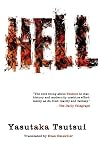
Yasutaka's Hell isn't engrossed in flames nor is it a scene of unbearable tortures. In fact, those who enter it simply feel nothing. They might meet their murderer, or the man who had an affair with their wife, and still, feel nothing. Simply, they are able to peer into the other's mind and see what it is that so haunted their thoughts while they were living. It's an interesting book that starts off simply then builds and builds like an avalanche, picking up more characters as it goes, show more building this incredible network of interpersonal connections that you didn't think were going to come up. At the end everyone is linked together somehow and its really fun to see how. This is less of a character study and more a book for those interested in the surreal and seeking a little bemusement. I had fun reading this one and then ending was actually quite pleasant. show less
Lists
Awards


You May Also Like


Associated Authors
Statistics
- Works
- 145
- Also by
- 14
- Members
- 1,484
- Popularity
- #17,304
- Rating
- 3.5
- Reviews
- 45
- ISBNs
- 160
- Languages
- 8