
Zane Grey (1872–1939)
Author of Riders of the Purple Sage
About the Author
Zane Grey was born Pearl Zane Gray in 1872, in Zanesville, Ohio. He studied dentistry at the University of Pennsylvania, married Lina Elise Roth in 1905, then moved his family west where he began to write novels. The author of 86 books, he is today considered the father of the Western genre, with show more its heady romances and mysterious outlaws. Riders of the Purple Sage (1912) brought Grey his greatest popular acclaim. Other notable titles include The Light of Western Stars (1914) and The Vanishing American (1925). An extremely prolific writer, he often completed three novels a year, while his publisher would issue only one at a time. Twenty-five of his novels were published posthumously. His last, The Reef Girl, was published in 1977. Zane Grey died of heart failure on October 23 in Altadena, California, in 1939. (Bowker Author Biography) show less
Disambiguation Notice:
born Pearl Zane Gray. Family changed spelling to Grey and he dropped his first name.
Image credit: By Original uploader was Chalupa at cs.wikipedia - Transferred from cs.wikipedia; transferred to Commons by User:Faigl.ladislav using CommonsHelper., Public Domain, https://commons.wikimedia.org/w/index.php?curid=5656661
Series
Works by Zane Grey
Buffalo Bill: Last of the Great Scouts: The Life Story of Colonel William F. Cody (1899) 200 copies, 3 reviews
Frontier Trilogy: Betty Zane, The Last Trail, and The Spirit of the Border (2007) 60 copies, 1 review
Five Complete Novels: Riders of the Purple Sage, To the Last Man, The Thundering Herd, The Hash Knife Outfit, and West of the Pecos (1980) 43 copies
The Best of Zane Grey: Riders of the Purple Sage / The Trail Driver / Rangers of the Lone Star (2009) 15 copies
Four Complete Novels: The Lone Star Ranger, The Rainbow Trail, Under the Tonto Rim, and Wyoming (1982) 14 copies
The Last of the Plainsmen and Last of the Great Scouts: Two Complete Novels (2015) — Contributor — 10 copies
Obras completas. Tomo I 8 copies
The Spirit of the Border and The Last Trail: Two Complete Zane Grey Novels (Stories of the Ohio Frontier) (2014) 8 copies
CLASSIC TALES FROM THE GOLDEN AGE OF ADVENTURE. Riders of the Purple Sage; King Solomon's Mines; Greenmantle; The Feathered Serpent; Bulldog Drummond 5 INDIVIDUAL BOOKS IN… (2008) — Contributor — 8 copies
Obras completas Novelas 7 copies
Western Heroes: "Riders of the Purple Sage", "Last of the Plainsmen", "Lone Star Ranger" (1992) 5 copies
Fugitive Trail C441 3 copies
The Fort Henry Saga : Complete in One Volume : Betty Zane/The Spirit of the Border/The Last Trail (2000) 3 copies
Tex Thorne Comes Out of the West. Based on the Famous Adventure Strip. The Big Little Book (1937) 3 copies
Country Gentleman April 1930 3 copies
Western Classics Collection Volume I: Riders of the Purple Sage, The Light of Western Stars, The Rainbow Trail (2020) 3 copies
Sence na poti 2 copies
The Best Western Classics of Zane Grey: The Ohio River Trilogy, The Purple Sage Saga, The Lone Star Ranger & The Border Legion (2017) 2 copies
Geen Broedermoord in Lost Lake 2 copies
To The Last Man 2 copies
The Ohio River Trilogy The Purple Sage Saga The Lone Star Ranger The Border Legion (7 Western Classics in One Volume): Adventure Novels (2015) 2 copies
la caravana perdida 1 copy
Ørkenguld 1 copy
Río perdido 1 copy
El cazador de ciervos 1 copy
Lovec divokých včel (1926) 1 copy
Zane Grey Library: Volume 5 1 copy
Der Texas Reiter 1 copy
Pljačkaško gnijezdo 1 copy
Do posljednjeg čovjeka 1 copy
Zane Grey A Biography 1 copy
Karavane se bojujejo 1 copy
Vogntoget som forsvant 1 copy
Robbers' roost 1 copy
La lunga pista 1 copy
The U.P. trail 1 copy
The heritage of the desert 1 copy
Spirit of the border 1 copy
A biography 1 copy
Der Mann Aus Dem Osten 1 copy
L'ORO DEL DESERTO 1 copy
Kraljica pašnikov 1 copy
Pobegla reka 1 copy
Jezdeci škrlatne kadulje 1 copy
Auringonlaskun sola 1 copy
Człowiek lasu 1 copy
Rouge River Feud 1 copy
This mysterious rider 1 copy
Great Dog Stories 1 copy
Wes Van Die Pecos 1 copy
Rogue River Feud 1 copy
Western Classics Collection Volume III: The Lone Star Ranger, The Last Trail, The Call of the Canyon (2020) 1 copy
El piloto misterioso 1 copy
Rogue River feud 1 copy
A Missouri Schoolmarm 1 copy
Country Gentleman March 1930 1 copy
Obras Completas III. Novelas 1 copy
La regina dei Mavericks 1 copy
Desperados. 1 copy
THE SPIRIT of the BORDER by ZANE GREY Whitman 1954 Glossy Cover Abridged [Hardcover] Zane Grey (1954) 1 copy
7 Western Classics: The Ohio River Trilogy, The Purple Sage Saga, The Lone Star Ranger & The Border Legion Adventure Novels (2017) 1 copy
Wyoming, land van veedieven 1 copy
Obras Completas: Novelas, I 1 copy
El rancho Majestad 1 copy
Riders of the Spanish Peaks 1 copy
Prospector's Gold 1 copy
Texasin tyttö 1 copy
Sporet som forsvant 1 copy
Ocelový oř. Seš. 1 1 copy
The Last Man Standing 1 copy
Classic Western Sampler #3: 12 books by 12 different authors, in a single file, improved 8/14/2010 (2009) 1 copy
Tvirtovės apsuptis: romanas 1 copy
Fogo Selvagem Livro 1 1 copy
Ranger 1 copy
Tales of Swordfish & Tuna 1 copy
Obras Completas: Novelas, VI 1 copy
Obras Completas: Novelas, V 1 copy
O Vale Dos Cavalos Selvagens 1 copy
Obras completas II - 1 copy
The Last of the Plainsmen 1 copy
Zane Grey, the Man and His Work: An Autobiographical Sketch, Critical Appreciations and Bibliography (2011) 1 copy
Grenselandets svøpe 1 copy
3 Books: The Heritage of the Desert, The Young Forester, Blue Feather and Other Stories (1910) 1 copy
Kämpfende Karawanen 1 copy
Wild Horse Mesa / The Hash Knife Outfit / The Thundering Herd / Riders of the Purple Sage (1960) 1 copy
Tales of the Gladiator 1 copy
Associated Works
A Century of Great Western Stories-An Anthology of Western Fiction (2000) — Contributor — 125 copies
60 Westerns: Cowboy Adventures, Yukon & Oregon Trail Tales, Famous Outlaws, Gold Rush Adventures & Much More (2017) 33 copies
The Western Hall of Fame: An Anthology of Classic Western Stories Selected by the Western Writers of America (1984) — Contributor — 10 copies
Best of the West: Classic Stories from the American Frontier, Volume 2 [Audiobook] (2003) — Contributor — 1 copy
The Ethnic Image in Modern American Literature, 1900-1950, Volumes 1-2 (1984) — Contributor — 1 copy
Tagged
Common Knowledge
- Legal name
- Gray, Pearl Zane
- Other names
- GREY, Pearl Zane
GREY, Zane - Birthdate
- 1872-01-31
- Date of death
- 1939-10-23
- Gender
- male
- Education
- University of Pennsylvania (DDS|1896)
- Occupations
- usher
dentist
baseball player
author - Organizations
- Sigma Nu
Orange Athletic Club
Outdoor Life Magazine
Tuna Club of Avalon - Awards and honors
- Hall of Great Westerners (1977)
- Relationships
- Grey, Romer C. (brother)
Grey, Romer Zane (son)
Grey, Loren (son) - Cause of death
- heart failure
- Nationality
- USA
- Birthplace
- Zanesville, Ohio, USA
- Places of residence
- Avalon, Catalina Island, California, USA
Altadena, California, USA
Lackawaxen, Pennsylvania, USA - Place of death
- Altadena, California, USA
- Burial location
- Union Cemetery, Lackawaxen, Pennsylvania, USA
- Disambiguation notice
- born Pearl Zane Gray. Family changed spelling to Grey and he dropped his first name.
- Associated Place (for map)
- USA
Members
Discussions
Zane Grey November - Group Reads in 2013 Category Challenge (December 2013)
western about a woman who runs a ranch in Name that Book (March 2013)
Reviews
“Horse Heaven Hill was a mountain with two rounded peaks, the vast southern gray-green slopes of which converged in an amphitheater rolling away into the level sage. The whole south front of the mountain appeared to be a bowl of horseshoe shape, tilted toward the open. The two points, leagues apart, descended in low timbered ridges to vanish on the floor of the valley.”
It was also the home of thousands of wild horses.
This Western/Romance goes onto my list of top three Zane Grey novels show more with Riders of the Purple Sage and The Lone Star Ranger. What this story lacks in typical western action surely makes up for with romance and character development.
Meet Lark Burrell, the most enchanting female character ever to grace a Grey novel.
“Lark was a second cousin of Marigold Wade, who had prevailed upon her father to offer a home to their orphan relative. Lark was eighteen. Most of her life she had lived in Idaho, far south of the great ranges of a still unfenced desert country. Burrell, her father, had owned a big stretch of land there, wild land which no one but Lark considered worth anything. He left it to her along with a ramshackle cabin, a fine stream of water, a few head of stock, and a drove of wild mustangs. Lark had come honestly by her love of wild horses. She had been brought up among them. She herself was like an untamed colt. But much as she desired it, she could no longer live on the profitless ranch, with only an old herder. So when the Wades sent for her, she was grateful and accepted the home offered, feeling in her heart that someday she would return to Idaho.”
Lark’s Cousin, Marigold is a beautiful woman who knows it, and doesn’t mind using her beauty and wiles to attract the affections of the local cowboy population in southern Washington state. Although she’s engaged to her lifelong friend, Stan Weston, she’s almost as wild as the mustangs that run through the valleys and mountain passes. Despite Stan’s wish to settle down and get on with their lives together, Marigold keeps postponing the nuptials because she “hasn’t lived enough yet”.
After Stan takes Lark Burrell on a tour of Horse Heaven Hill and its environs, the fun begins.
“But what had his senses grasped during this interval? Only the sailing white clouds across the blue sky, the quivering and soughing of the pine-needle foliage, the protection of the black-trunked, black-branched trees, the warmth of the sun on his face and the thick mat under his shoulders, the mingled spicy odor of pine and sage--these, and physical things that he could go on naming indefinitely, had been all that had occupied his mind. But to feel them again, as of old, their sweetness and beauty, their relation to the remote past, this was what charmed him so. Right there a connection between Lark Burrell and the cherished dreams of his boyhood had been established. Marigold Wade had never roused any associations that included his mother, or his barefoot days, his watching his image in still, deep pools, his hours on the windy sage hillsides.”
Hurd Blanding has his sights set on Marigold and the trapping of 3,000 wild horses he plans to sell to a manufacturer of chicken feed. He’ll have his hands full as he goes up against Lark Burrell and her love of horses.
There are not many scenes of guns being drawn in this moving tale, but when they are, they’re exquisite. There’s plenty of action besides, described in Grey’s vivid prose. A gem of a story all the way around. show less
It was also the home of thousands of wild horses.
This Western/Romance goes onto my list of top three Zane Grey novels show more with Riders of the Purple Sage and The Lone Star Ranger. What this story lacks in typical western action surely makes up for with romance and character development.
Meet Lark Burrell, the most enchanting female character ever to grace a Grey novel.
“Lark was a second cousin of Marigold Wade, who had prevailed upon her father to offer a home to their orphan relative. Lark was eighteen. Most of her life she had lived in Idaho, far south of the great ranges of a still unfenced desert country. Burrell, her father, had owned a big stretch of land there, wild land which no one but Lark considered worth anything. He left it to her along with a ramshackle cabin, a fine stream of water, a few head of stock, and a drove of wild mustangs. Lark had come honestly by her love of wild horses. She had been brought up among them. She herself was like an untamed colt. But much as she desired it, she could no longer live on the profitless ranch, with only an old herder. So when the Wades sent for her, she was grateful and accepted the home offered, feeling in her heart that someday she would return to Idaho.”
Lark’s Cousin, Marigold is a beautiful woman who knows it, and doesn’t mind using her beauty and wiles to attract the affections of the local cowboy population in southern Washington state. Although she’s engaged to her lifelong friend, Stan Weston, she’s almost as wild as the mustangs that run through the valleys and mountain passes. Despite Stan’s wish to settle down and get on with their lives together, Marigold keeps postponing the nuptials because she “hasn’t lived enough yet”.
After Stan takes Lark Burrell on a tour of Horse Heaven Hill and its environs, the fun begins.
“But what had his senses grasped during this interval? Only the sailing white clouds across the blue sky, the quivering and soughing of the pine-needle foliage, the protection of the black-trunked, black-branched trees, the warmth of the sun on his face and the thick mat under his shoulders, the mingled spicy odor of pine and sage--these, and physical things that he could go on naming indefinitely, had been all that had occupied his mind. But to feel them again, as of old, their sweetness and beauty, their relation to the remote past, this was what charmed him so. Right there a connection between Lark Burrell and the cherished dreams of his boyhood had been established. Marigold Wade had never roused any associations that included his mother, or his barefoot days, his watching his image in still, deep pools, his hours on the windy sage hillsides.”
Hurd Blanding has his sights set on Marigold and the trapping of 3,000 wild horses he plans to sell to a manufacturer of chicken feed. He’ll have his hands full as he goes up against Lark Burrell and her love of horses.
There are not many scenes of guns being drawn in this moving tale, but when they are, they’re exquisite. There’s plenty of action besides, described in Grey’s vivid prose. A gem of a story all the way around. show less
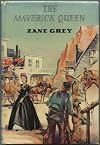
In the shadowy realm of an 1870s cattle town, this Zane Grey novel unfolds like a weathered map leading to uncharted territory. Unlike the more familiar landscapes of his earlier works, this tale bears a dark undertone that settles like a storm cloud over South Pass, Wyoming, only to culminate in a last chapter that leaves you breathless, grappling with the complexities of human frailty.
The protagonist, Linc Bradway, a cowboy molded by the dust of Nebraska and the fire of resolve, embarks on show more a harrowing quest to uncover the truth behind the death of his best friend. His arrival in South Pass is a descent into a world fraught with deception and moral ambiguity. Linc believes with every fiber of his being that Jimmy Weston was murdered, and he aims to find out who and why.
As Linc sits in on a game of poker, he encounters Kit Bandon, the intoxicating Maverick Queen, whose beauty is rivaled only by the dangerous secrets she harbors. Her sultry dark eyes hold a tempest of temptation, and Linc can’t help but feel the pull of her enigmatic nature. Yet, the tension is palpable, thick as the dust in the air, as he senses the shadows that cloak her past and the murmurings of her cowboy companions.
Then, in a twist of fate, he meets Lucy, Kit’s niece, and is swept away by a love that ignites the flames of passion and purpose. He suddenly finds himself torn between desire and the urgent need for justice. The stakes rise higher when Kit pursues his affections like a hungry cougar unaccustomed to being denied.
“‘Lordy! I never felt this way before,’ mused the Nebraskan, falling into his old habit of talking to himself. ‘Trying to dodge Kit’s advances and to court Lucy’s love would just about make a man balmy if it wasn’t that I’ve got the fight of my life on my hands.’
Fight indeed, for his own life, for his friend’s good name, for love that called with all the tenderness and insistence and fire-filmed enchantment of this valley. The surroundings seemed as boundless as his emotions. In the clear air of early morning, the mountains, range upon range, to the farthest snowy peak stood out sharp in the distance. The rose-tinted peaks two hundred miles away seemed to loom just beyond the valley rampart; the carpet of sage seemed to stretch on endlessly. The wavering line of the river bed and the dots that were ranch houses accentuated the valley’s vastness. No veil of purple haze obscured the cowboy’s sight at this early hour. He wished that the future might be spread as clearly before his gaze as that valley in the clear morning light.”
The violence that surfaces in the narrative is not for the faint of heart, but it is portrayed with a tasteful realism that serves the story well, yet echoing the harsh truths of life on the frontier. Grey's prose, sharp and vivid, mirrors the stark beauty of the landscape, and though he chooses to lean into dialogue more than in previous works, the tension crackles like static in the dry air.
This novel, unlike most of the romances of Grey's canon, is a compelling exploration of darkness woven with threads of hope. It captures the essence of the West in all its rugged glory, offering a hauntingly beautiful journey that will resonate with anyone who dares to brave the wilds of both love and loss. While Linc’s path is strewn with shadows, there is a flicker of light that urges the reader onward, making this a tale worth every turn of the page. show less
The protagonist, Linc Bradway, a cowboy molded by the dust of Nebraska and the fire of resolve, embarks on show more a harrowing quest to uncover the truth behind the death of his best friend. His arrival in South Pass is a descent into a world fraught with deception and moral ambiguity. Linc believes with every fiber of his being that Jimmy Weston was murdered, and he aims to find out who and why.
As Linc sits in on a game of poker, he encounters Kit Bandon, the intoxicating Maverick Queen, whose beauty is rivaled only by the dangerous secrets she harbors. Her sultry dark eyes hold a tempest of temptation, and Linc can’t help but feel the pull of her enigmatic nature. Yet, the tension is palpable, thick as the dust in the air, as he senses the shadows that cloak her past and the murmurings of her cowboy companions.
Then, in a twist of fate, he meets Lucy, Kit’s niece, and is swept away by a love that ignites the flames of passion and purpose. He suddenly finds himself torn between desire and the urgent need for justice. The stakes rise higher when Kit pursues his affections like a hungry cougar unaccustomed to being denied.
“‘Lordy! I never felt this way before,’ mused the Nebraskan, falling into his old habit of talking to himself. ‘Trying to dodge Kit’s advances and to court Lucy’s love would just about make a man balmy if it wasn’t that I’ve got the fight of my life on my hands.’
Fight indeed, for his own life, for his friend’s good name, for love that called with all the tenderness and insistence and fire-filmed enchantment of this valley. The surroundings seemed as boundless as his emotions. In the clear air of early morning, the mountains, range upon range, to the farthest snowy peak stood out sharp in the distance. The rose-tinted peaks two hundred miles away seemed to loom just beyond the valley rampart; the carpet of sage seemed to stretch on endlessly. The wavering line of the river bed and the dots that were ranch houses accentuated the valley’s vastness. No veil of purple haze obscured the cowboy’s sight at this early hour. He wished that the future might be spread as clearly before his gaze as that valley in the clear morning light.”
The violence that surfaces in the narrative is not for the faint of heart, but it is portrayed with a tasteful realism that serves the story well, yet echoing the harsh truths of life on the frontier. Grey's prose, sharp and vivid, mirrors the stark beauty of the landscape, and though he chooses to lean into dialogue more than in previous works, the tension crackles like static in the dry air.
This novel, unlike most of the romances of Grey's canon, is a compelling exploration of darkness woven with threads of hope. It captures the essence of the West in all its rugged glory, offering a hauntingly beautiful journey that will resonate with anyone who dares to brave the wilds of both love and loss. While Linc’s path is strewn with shadows, there is a flicker of light that urges the reader onward, making this a tale worth every turn of the page. show less
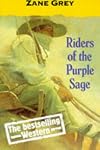
Every year I challenge myself to read something outside of my preferred genres. This year’s pick was Zane Grey’s Riders of the Purple Sage – harking back to my teen years, when the local bookstore where I clerked stocked Zane Greys and Louis L’Amours the way ballfields stock Cracker Jack – though their popularity was already waning, plenty of customers still preserved a nostalgic fondness for the genre.
Some have called this “Riders of the Purple Prose,” and I get where they're show more coming from! If you’re looking for a breathless adventure full of saloon brawls, train robberies, and gunfights, this definitely ain’t it. This was originally published as a serial – 19 parts - – so Grey had all the time in the world to tell his story, and he was clearly in no particular rush. Scenes of conflict and drama are separated by long passages that are perhaps best described as paeans to the beauty of the American West – the brilliantly colored arches soaring into the air, the play of sunlight through rugged canyons, the vast expenses of purple sage – described through the eyes of a painter or naturalist. These are easily skipped if they aren’t your cup of tea, but I felt like they provided important context for the story, helping to explain how people could come to fall in love a place, and a lifestyle, that could otherwise be quite brutal.
The story takes place in the fictional town of Cottonwoods, Utah, around 1870. Jane Withersteen, the wealthy daughter of Mormon aristocracy, is strong in faith but not unaware of the unsavory underbelly of her faith, especially the license taken by some men of her faith to abuse & exploit women. This internal conflict comes to a head when she develops a fondness for a “gentile,” Bern Venters, thus earning the animosity of Elder Tull (who has plans to add Jane to his harem) and Bishop Dyer, her spiritual leader. They initiate a plan to break her will by gradually destroying her wealth and way of life – scaring off her riders, rustling her cattle, stealing her gold, turning her Mormon staff into spies working against her … until a savior arrives in the form of Lassiter, the weathered, revenge-driven gunman with (of course) a heart of gold who’s come to Cottonwood looking for the Mormon men who kidnapped and subjugated his sister to their faith.
Cue all the western tropes that readers expect – because what’s Cracker Jack without peanuts and a prize? – including loyal riders, stout horses, thieving rustlers, damsels in distress, drives, shootouts, pursuits, gold, budding romance, a cute kid, and an ominous “masked rider” who ends up being something entirely unexpected. Grey’s strength is the verve and authenticity that he brings to these otherwise overused tropes. Unfortunately, however, the author struggles with what one might call the “softer” elements of writing, especially characterization. His efforts to describe the internal motivations and roiling conflicts of his characters too often come off as more purple (overwrought and hyperbolic) than the sage he so lovingly depicts … and don’t even get me started on his clumsy attempts to depict “strong” female characters. Wince-inducing!
Would argue, however, this this is still a worthwhile read – if not for the prose or the characterization, then for the snapshot the novel provides into the very different lives, perspectives, and priorities of a lost age. There’s always a sense that one is living in “the worst of times” – if nothing else, this is a chance to reflect upon a time when life was brutal and cheap, injustice rampant, hardship unavoidable … and yet people demonstrated depths of resiliency and determination that continue to inspire even after so much elapsed time and history. show less
Some have called this “Riders of the Purple Prose,” and I get where they're show more coming from! If you’re looking for a breathless adventure full of saloon brawls, train robberies, and gunfights, this definitely ain’t it. This was originally published as a serial – 19 parts - – so Grey had all the time in the world to tell his story, and he was clearly in no particular rush. Scenes of conflict and drama are separated by long passages that are perhaps best described as paeans to the beauty of the American West – the brilliantly colored arches soaring into the air, the play of sunlight through rugged canyons, the vast expenses of purple sage – described through the eyes of a painter or naturalist. These are easily skipped if they aren’t your cup of tea, but I felt like they provided important context for the story, helping to explain how people could come to fall in love a place, and a lifestyle, that could otherwise be quite brutal.
The story takes place in the fictional town of Cottonwoods, Utah, around 1870. Jane Withersteen, the wealthy daughter of Mormon aristocracy, is strong in faith but not unaware of the unsavory underbelly of her faith, especially the license taken by some men of her faith to abuse & exploit women. This internal conflict comes to a head when she develops a fondness for a “gentile,” Bern Venters, thus earning the animosity of Elder Tull (who has plans to add Jane to his harem) and Bishop Dyer, her spiritual leader. They initiate a plan to break her will by gradually destroying her wealth and way of life – scaring off her riders, rustling her cattle, stealing her gold, turning her Mormon staff into spies working against her … until a savior arrives in the form of Lassiter, the weathered, revenge-driven gunman with (of course) a heart of gold who’s come to Cottonwood looking for the Mormon men who kidnapped and subjugated his sister to their faith.
Cue all the western tropes that readers expect – because what’s Cracker Jack without peanuts and a prize? – including loyal riders, stout horses, thieving rustlers, damsels in distress, drives, shootouts, pursuits, gold, budding romance, a cute kid, and an ominous “masked rider” who ends up being something entirely unexpected. Grey’s strength is the verve and authenticity that he brings to these otherwise overused tropes. Unfortunately, however, the author struggles with what one might call the “softer” elements of writing, especially characterization. His efforts to describe the internal motivations and roiling conflicts of his characters too often come off as more purple (overwrought and hyperbolic) than the sage he so lovingly depicts … and don’t even get me started on his clumsy attempts to depict “strong” female characters. Wince-inducing!
Would argue, however, this this is still a worthwhile read – if not for the prose or the characterization, then for the snapshot the novel provides into the very different lives, perspectives, and priorities of a lost age. There’s always a sense that one is living in “the worst of times” – if nothing else, this is a chance to reflect upon a time when life was brutal and cheap, injustice rampant, hardship unavoidable … and yet people demonstrated depths of resiliency and determination that continue to inspire even after so much elapsed time and history. show less
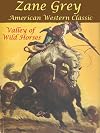
Valley of Wild Horses is one of Zane Grey’s most satisfying westerns. Everything that was wonderful about Zane Grey — his magnificent storytelling, his vivid descriptions of the landscape and horses, the sheer excitement of a roundup, and the thrill of gunplay — are on display so vibrantly in Valley of Wild Horses that the reader is rarely annoyed by some stilted dialog which creeps in, and some slight awkwardness in the romance department — which are also Grey trademarks.
There is show more great beauty here in Valley of Wild Horses, a purity of the human spirit. On its pages exists a love for decency and what is right, even if it must be administered with a gun. Even then, there is always regret, a wish that it hadn't come to that. Grey never painted a better portrait of those with checkered pasts trying to find a place they belong, than he did in Valley of Wild Horses. The simplicity of Grey’s narrative is deceptive, because it is a rich and beautiful portrait of a young man named Panhandle Smith, who represents a time and place in history as well as any Grey ever painted.
For a western, it begins somewhat languidly, because it is the story of Panhandle as he grows up. We get to see the cowboys and cattle, the excitement and the harshness of these times, all circumstances which shape Pan’s life as a young man. At the age of twelve, Pan is already riding in the roundup, and loses one of the cowboys around him when he is taken away for stealing horses. Schoolteacher Amanda Hill is his first crush, Dick Hardman his first enemy, a situation which will play out over the years in their love for Lucy. Lucy is the young girl he helps deliver in a barn one snowy day, when he himself is but a boy. As she grows up, Pan’s feelings for her become romantic, as Lucy’s do for Pan, but Dick Hardman proves to always be in the way.
Once his beloved horse Curly is gone, and a terrible scrape with Dick mars the future, Panhandle drifts to Montana and Arkansas at the age of twenty, and that’s where this tale switches gears, and become one of Grey’s greatest achievements. As Panhandle becomes a name known by many, sometimes for the wrong reasons, he never forgets Lucy, or his beloved family. It is when he meets up with old pals Blinky Moran and Gus, and returns to discover his father has been swindled, and Lucy is being blackmailed into marrying Dick Hardman in order to save her father, that the pieces which make this a great western saga all fall into place. There is a softhearted saloon girl named Louise whom Blinky loves that has ties to Dick, a corrupt sheriff named Matthews, and Dick’s powerful father and his dangerous men for Panhandle to deal with. But not before one of the most thrilling roundups you’ll ever read, as Pan and his pals seek to find the wild horses and make a new start in Arizona.
There will be some treachery, some gunplay, and some twists and turns where Lucy and Louise are concerned. Louise in fact, is one of Grey’s best-drawn characters, and what happens is not only exciting, but quite moving. Throughout the book, there is a sense of family, and decency, and the hope of pioneers as they sought to carve out a new life. The storytelling is old-fashioned, to be sure, the dialog sometimes awkward, as Grey writes it phonetically as they speak it. But this is a lush, beautiful work, surprisingly layered and more complex than the premise suggests. The ending of Valley of Wild Horses is as lovely as any western you’ll ever read. It is simple, and pure, and hopeful. The reader will be imagining their lives going forward, and smiling.
The first portion of the novel, as Grey focuses on Panhandle’s childhood, is too lengthy and makes the narrative move more slowly than it should. That said, there is a rich reward waiting for those who forge on, and a pot of western gold when they reach the final page. This is Zane Grey at his finest, which is to say warts and all. It may be too old-fashioned for a great many modern readers, its narrative style too different for them to accept and enjoy, but it’s as romantic and lovely as any western you’ll ever read, the ending pure. A great achievement by Grey that fans of traditional westerns of old will appreciate more than most modern readers. Highly recommended! show less
There is show more great beauty here in Valley of Wild Horses, a purity of the human spirit. On its pages exists a love for decency and what is right, even if it must be administered with a gun. Even then, there is always regret, a wish that it hadn't come to that. Grey never painted a better portrait of those with checkered pasts trying to find a place they belong, than he did in Valley of Wild Horses. The simplicity of Grey’s narrative is deceptive, because it is a rich and beautiful portrait of a young man named Panhandle Smith, who represents a time and place in history as well as any Grey ever painted.
For a western, it begins somewhat languidly, because it is the story of Panhandle as he grows up. We get to see the cowboys and cattle, the excitement and the harshness of these times, all circumstances which shape Pan’s life as a young man. At the age of twelve, Pan is already riding in the roundup, and loses one of the cowboys around him when he is taken away for stealing horses. Schoolteacher Amanda Hill is his first crush, Dick Hardman his first enemy, a situation which will play out over the years in their love for Lucy. Lucy is the young girl he helps deliver in a barn one snowy day, when he himself is but a boy. As she grows up, Pan’s feelings for her become romantic, as Lucy’s do for Pan, but Dick Hardman proves to always be in the way.
Once his beloved horse Curly is gone, and a terrible scrape with Dick mars the future, Panhandle drifts to Montana and Arkansas at the age of twenty, and that’s where this tale switches gears, and become one of Grey’s greatest achievements. As Panhandle becomes a name known by many, sometimes for the wrong reasons, he never forgets Lucy, or his beloved family. It is when he meets up with old pals Blinky Moran and Gus, and returns to discover his father has been swindled, and Lucy is being blackmailed into marrying Dick Hardman in order to save her father, that the pieces which make this a great western saga all fall into place. There is a softhearted saloon girl named Louise whom Blinky loves that has ties to Dick, a corrupt sheriff named Matthews, and Dick’s powerful father and his dangerous men for Panhandle to deal with. But not before one of the most thrilling roundups you’ll ever read, as Pan and his pals seek to find the wild horses and make a new start in Arizona.
There will be some treachery, some gunplay, and some twists and turns where Lucy and Louise are concerned. Louise in fact, is one of Grey’s best-drawn characters, and what happens is not only exciting, but quite moving. Throughout the book, there is a sense of family, and decency, and the hope of pioneers as they sought to carve out a new life. The storytelling is old-fashioned, to be sure, the dialog sometimes awkward, as Grey writes it phonetically as they speak it. But this is a lush, beautiful work, surprisingly layered and more complex than the premise suggests. The ending of Valley of Wild Horses is as lovely as any western you’ll ever read. It is simple, and pure, and hopeful. The reader will be imagining their lives going forward, and smiling.
The first portion of the novel, as Grey focuses on Panhandle’s childhood, is too lengthy and makes the narrative move more slowly than it should. That said, there is a rich reward waiting for those who forge on, and a pot of western gold when they reach the final page. This is Zane Grey at his finest, which is to say warts and all. It may be too old-fashioned for a great many modern readers, its narrative style too different for them to accept and enjoy, but it’s as romantic and lovely as any western you’ll ever read, the ending pure. A great achievement by Grey that fans of traditional westerns of old will appreciate more than most modern readers. Highly recommended! show less
Lists
Awards


You May Also Like


Associated Authors
Statistics
- Works
- 438
- Also by
- 24
- Members
- 20,825
- Popularity
- #1,039
- Rating
- 3.5
- Reviews
- 284
- ISBNs
- 4,202
- Languages
- 23
- Favorited
- 21

