
David A. Kyle (1919–2016)
Author of The Dragon Lensman
About the Author
Image credit: Photo by Lars-Olov Strandberg, Eastercon22 British National Science Fiction Convention, Worchester, England, 1971. Copyright © Lars-Olov Strandberg
Series
Works by David A. Kyle
Associated Works
Ackermanthology: 65 Astonishing, Rediscovered Sci-Fi Shorts (1997) — Contributor — 97 copies, 1 review
Tagged
Common Knowledge
- Other names
- Kyle, David Ackerman (birth name)
- Birthdate
- 1919-02-14
- Date of death
- 2016-09-18
- Gender
- male
- Occupations
- writer
illustrator
artist
publisher
radio station owner - Organizations
- Gnome Press (co-founder)
Futurians
Hydra Club
First Fandom
Order of St Fantony - Awards and honors
- First Fandom Hall of Fame Award (1988)
Raymond Z. Gallun Award (1991) - Nationality
- USA
- Birthplace
- Monticello, New York, USA
- Places of residence
- New York, New York, USA
UK - Associated Place (for map)
- New York, USA
Members
Reviews
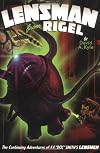
I enjoyed all three of David A. Kyle's Lensman novels the first time I read them, and I'm enjoying the re-reads. The idea of exploring the characters and cultures of the other three Second Stage Lensmen is a terrific concept. The exploration of ancillary notions foreign to the original material including sentient machines, cyborgs, and the supernatural, works surprisingly well.
I want to make clear that I recommend all three books: they are fun rides and satisfy the hunger for more Lensman show more stories. They do not quite slake the thirst and even though Children of the Lens concluded the arc, there is room for more stories set within the Second Stage Lensman period - and perhaps something could be done with other parts of the timeline.
There are however weakness in the series in general and in this middle novel in particular. Kyle's writing is paratactic, jumping abruptly among ideas and from close-focus to wide-angle, from first- and third-person omniscient instrospection to sudden action sequences. It feels trippy, unsteady; it reminds me of the breathless dream-like quality of van Vogt. There are plenty of exclamation marks and all-caps DECLARATIONS!! Perhaps Kyle was trying to recreate some of
the hyped-up pulp action of the original, but "Doc" achieved that with natural pacing.
Some near-spoilers follow.
Lensman from Rigel is the least successful of the three. The novel does not give us much insight into Rigellian culture or psychology. It introduces the triads, which are a pretty neat idea, and suggests that Rigellian sexuality is alterable at will, or at least can be chosen at certain points in the life-cycle, in encyclopaedia-article expository asides. While it brings the members of two triads on-stage, it does not treat them as characters or explore their feelings much. Rigellian mourning attire is described twice: it seems to me not to fit anything else in Rigellian aesthetics. Twice or thrice Kyle tells us - rather than showing us - that Rigellians are stolid and solid but that Tregonsee has picked up a very un-Rigellian human sense of humour.
So much for elaborating on the culture and personality of the titular hero. Half the story is spent on a complicated but uninteresting subterfuge of hiding then revealing that the opening assassination
attempt on Tregonsee has failed. That opening action sequence is the best sequence in the book.
Even Kyle's pet character, Lalla Kallatra, who was quite delightful in the first novel, hardly appears. Another new character, Benson Cloudd, gets the most extensive treatment, but he is not at all interesting.
The final set piece is a decent bit of space opera almost (but not quite) anti-climactic (though a tactic of four-dimensional geometry is delightfully surprising.)
The confrontation between the evil Kalonians and the utterly horrifying Onlonian monstrosity which initially controls them is a brilliant scene: in Doc Smith's original, the echelons of evil were
strictly graded; here, we see a higher echelon being broken by frustration and frenzied madness driven into negotiating with his underlings who seem in the process of surpassing their master. It is
disturbing and thrilling and darker than anything in Smith, while wholly in keeping with the fabric of the Lensman universe. And it is complete - there was no need for more, though I wish there were more writing at that high level. The Qu'orr are a fantastic idea and their history is at almost the same level. (They remind me of the Cotati of the Marvel Comics universe.) I wish more had been done with them.
I can't give as high a rating as I'd like to this middle effort, but I recommend it strongly in the context of the series. show less
I want to make clear that I recommend all three books: they are fun rides and satisfy the hunger for more Lensman show more stories. They do not quite slake the thirst and even though Children of the Lens concluded the arc, there is room for more stories set within the Second Stage Lensman period - and perhaps something could be done with other parts of the timeline.
There are however weakness in the series in general and in this middle novel in particular. Kyle's writing is paratactic, jumping abruptly among ideas and from close-focus to wide-angle, from first- and third-person omniscient instrospection to sudden action sequences. It feels trippy, unsteady; it reminds me of the breathless dream-like quality of van Vogt. There are plenty of exclamation marks and all-caps DECLARATIONS!! Perhaps Kyle was trying to recreate some of
the hyped-up pulp action of the original, but "Doc" achieved that with natural pacing.
Some near-spoilers follow.
Lensman from Rigel is the least successful of the three. The novel does not give us much insight into Rigellian culture or psychology. It introduces the triads, which are a pretty neat idea, and suggests that Rigellian sexuality is alterable at will, or at least can be chosen at certain points in the life-cycle, in encyclopaedia-article expository asides. While it brings the members of two triads on-stage, it does not treat them as characters or explore their feelings much. Rigellian mourning attire is described twice: it seems to me not to fit anything else in Rigellian aesthetics. Twice or thrice Kyle tells us - rather than showing us - that Rigellians are stolid and solid but that Tregonsee has picked up a very un-Rigellian human sense of humour.
So much for elaborating on the culture and personality of the titular hero. Half the story is spent on a complicated but uninteresting subterfuge of hiding then revealing that the opening assassination
attempt on Tregonsee has failed. That opening action sequence is the best sequence in the book.
Even Kyle's pet character, Lalla Kallatra, who was quite delightful in the first novel, hardly appears. Another new character, Benson Cloudd, gets the most extensive treatment, but he is not at all interesting.
The final set piece is a decent bit of space opera almost (but not quite) anti-climactic (though a tactic of four-dimensional geometry is delightfully surprising.)
The confrontation between the evil Kalonians and the utterly horrifying Onlonian monstrosity which initially controls them is a brilliant scene: in Doc Smith's original, the echelons of evil were
strictly graded; here, we see a higher echelon being broken by frustration and frenzied madness driven into negotiating with his underlings who seem in the process of surpassing their master. It is
disturbing and thrilling and darker than anything in Smith, while wholly in keeping with the fabric of the Lensman universe. And it is complete - there was no need for more, though I wish there were more writing at that high level. The Qu'orr are a fantastic idea and their history is at almost the same level. (They remind me of the Cotati of the Marvel Comics universe.) I wish more had been done with them.
I can't give as high a rating as I'd like to this middle effort, but I recommend it strongly in the context of the series. show less
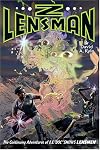
I enjoyed all three of David A. Kyle's Lensman novels the first time I
read them, and I'm enjoying the re-reads. Z-Lensman carries the series
to a satisfying conclusion.
The exploration of Palainian culture and physiology is well-done, the
latter especially. The physical and biological nature of Palanians and
other "frigid, poison-breathing types" is made much clearer than in
the original Lensman series (and is done so in Kyle's usual
descriptive asides; here tell rather than show is effective.) show more Nadreck
doesn't quite come off as an individual, though. We rarely encounter
Palanians other than Nadreck in the original series - I only remember
the one Virgil Samms meets on Pluto. In Z-Lensman a minor character, a
normal Palanian naval crewman, given a casual un-grammatical speech
style, suddenly makes us realize there is an entire planet of
non-Lensman, non-extraordinary operatives, living out normal mundane
lives. Makes me want to know more.
Consider the nature of telephathic communication. Do Palanians
phonate? They have lungs. They breathe gasses. They are said to speak
in the narratives, but is that literal? In Z-Lensman, Cloud says he
never learned to speak Palanian. Again, is that literal, or does it
mean he never learned to interpret Palanian thought projections? Does
Nadreck telepath in English (or Spaceal or whatever is the common Patrol
language)?
We know Rigellians do not phonate, neither do they hear. Did they
ever, or were they telephathic from the beginnings of sentience? (Are
sub-sentient Rigellian animals telepathic?) If Rigellians have always
been telephathic, did they develop mental speech? Do they communicate
in "words", whatever that might mean? I've assumed Smithian telepathy
involves at least in part the stimulation of speech centres (he
describes characters hearing voices in their heads.) If the Rigellians
had speech, perhaps they use their speech centres for telepathy. If
they never had speech, how do they exchange meaning? How do species
who never had speech communicate telepathically, amongst themselves,
and with species who do use "mental speech"?
Palanian ethics are also explored, in the usual brief Kyle manner, and
particularly in a coda, but not unsatisfyingly. There is a very
interesting and sympathetic treatment of religion and how it could fit
into the Smith universe (Smith never dealt directly with religion.)
Benson Cloud appears again, and is much more interesting and
sympathetic than he was in the previous book. There is a good
exploration of the "burden of the Lens" through his feelings. The
connection with Neal Cloud the Vortex Blaster is finally made use of,
albeit too briefly, but also in service to the theme of the various
sorts of extra-ordinariness.
The thematic fibers of the two previous novels are spun together into
very satisfying thread and woven into a very satisfying tale. show less
read them, and I'm enjoying the re-reads. Z-Lensman carries the series
to a satisfying conclusion.
The exploration of Palainian culture and physiology is well-done, the
latter especially. The physical and biological nature of Palanians and
other "frigid, poison-breathing types" is made much clearer than in
the original Lensman series (and is done so in Kyle's usual
descriptive asides; here tell rather than show is effective.) show more Nadreck
doesn't quite come off as an individual, though. We rarely encounter
Palanians other than Nadreck in the original series - I only remember
the one Virgil Samms meets on Pluto. In Z-Lensman a minor character, a
normal Palanian naval crewman, given a casual un-grammatical speech
style, suddenly makes us realize there is an entire planet of
non-Lensman, non-extraordinary operatives, living out normal mundane
lives. Makes me want to know more.
Consider the nature of telephathic communication. Do Palanians
phonate? They have lungs. They breathe gasses. They are said to speak
in the narratives, but is that literal? In Z-Lensman, Cloud says he
never learned to speak Palanian. Again, is that literal, or does it
mean he never learned to interpret Palanian thought projections? Does
Nadreck telepath in English (or Spaceal or whatever is the common Patrol
language)?
We know Rigellians do not phonate, neither do they hear. Did they
ever, or were they telephathic from the beginnings of sentience? (Are
sub-sentient Rigellian animals telepathic?) If Rigellians have always
been telephathic, did they develop mental speech? Do they communicate
in "words", whatever that might mean? I've assumed Smithian telepathy
involves at least in part the stimulation of speech centres (he
describes characters hearing voices in their heads.) If the Rigellians
had speech, perhaps they use their speech centres for telepathy. If
they never had speech, how do they exchange meaning? How do species
who never had speech communicate telepathically, amongst themselves,
and with species who do use "mental speech"?
Palanian ethics are also explored, in the usual brief Kyle manner, and
particularly in a coda, but not unsatisfyingly. There is a very
interesting and sympathetic treatment of religion and how it could fit
into the Smith universe (Smith never dealt directly with religion.)
Benson Cloud appears again, and is much more interesting and
sympathetic than he was in the previous book. There is a good
exploration of the "burden of the Lens" through his feelings. The
connection with Neal Cloud the Vortex Blaster is finally made use of,
albeit too briefly, but also in service to the theme of the various
sorts of extra-ordinariness.
The thematic fibers of the two previous novels are spun together into
very satisfying thread and woven into a very satisfying tale. show less
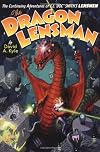
Rather than write about the main character of Doc's Lensman books, Kimball Kinnison, David A. Kyle opted to write about the three other (alien) second stage Lensman, starting with Worsel the Velantian. It's a fun book, aping Doc's style satisfactorily, and just as able to deliver on the non-stop action. Kyle takes the time to update the universe with some post-1930s concepts, such as computers (which works) and women being allowed to do things (which doesn't). The real failing of the book is show more that it's not about Worsel at all, but rather a new, Kyle-created character. Lalla Kallatra is interesting-- but not as interesting as a gigantic evil-fighting dragon. (originally written November 2007) show less

I don't think this book was about Nadreck of Palain at all, even by the standards of the first two Second Stage books. It's a competent enough conclusion to the story, but by this point, I was getting pretty tired of the whole thing. Kyle does mindless action-adventure all right, but Doc does it much better. Again, it focuses quite a lot on Cloudd, but I liked him, so that's all right. (originally written November 2007)
Awards

You May Also Like


Associated Authors
Statistics
- Works
- 7
- Also by
- 11
- Members
- 861
- Popularity
- #29,720
- Rating
- 3.3
- Reviews
- 10
- ISBNs
- 16
- Languages
- 1