
Deepa Anappara
Author of Djinn Patrol on the Purple Line
About the Author
Image credit: from author's website
Works by Deepa Anappara
Associated Works
Once Upon a Time There Was a Traveller: Asham award-winning stories (2013) — Contributor — 4 copies, 1 review
Tagged
Common Knowledge
- Birthdate
- unknown
- Gender
- female
- Education
- University of East Anglia (MA|Creative Writing - Prose Fiction)
University of East Anglia (PhD|Creative-Critical Writing) - Occupations
- journalist
fiction writer - Organizations
- City St George's, University of London (lecturer in creative writing)
- Nationality
- India
- Birthplace
- Kerala, India
- Places of residence
- Palakkad, Kerala, India
Mumbai, Maharashtra, India
Delhi, India
England, UK - Associated Place (for map)
- India
Members
Reviews

A nine year old boy fancies himself and his friends as detectives when a boy from their slum disappears. But tensions mount as the police ignore the disappearances and the adults try to protect the children by restricting them. Anappara skillfully portrays the precarious existence of the poor, their hopes and their fears for their children and the religious and class divisions in the society. Since the narrative is set among the children, primarily the boy Jai, the reader is torn between show more their desire for freedom of movement and their parent's concern for their safety. Girls in particular are constrained by conflict between the traditional roles of helping mothers with housework and childcare and desire to participate in sports, hang out with their friends and study for careers. show less
I RECEIVED AN ARC FROM THE PUBLISHER. THANK YOU.
My Review: One of my take-aways from living through the twenty-first century as an immigrant to its reality is that there are a *shocking* number of souls that just...vanish...with no explanation, no investigation, and no closure for their families or friends. Author Anappara knows this...she is a journalist, she hears the howls. The question I have is the same one I had when the Ciudad Juárez femicides first came to light: What the actual show more fuck are the police doing?
That being an unanswerable question without delving into immense mountains of sociopolitical research and studies, I'll go to the next part of the issue raised in the story: Caste and sectarian animosities and prejudices come in for scary, extra-believable spotlighting in here. It's like the awfulness I really wasn't privy to before Katherine Boo's book came out (whatever the criticisms Boo gets, I for one hadn't heard anything about these issues before I read it) sprang to life in the eyes of a nine-year-old boy. He's the only one who cares that Bahadur has gone missing...as much, that is, as the child's mother cares.
Very much raised by TV while being resentfully and carelessly monitored by his gifted older sister (a quietly important strand is the terrible, sexist manner that the capitalist system exacerbates her mistreatment, the not terribly bright but terribly endearingly bumptious and energetic Jai gets a scooby-group of kids together to seek out Bahadur. What unfolds is proof that kids are great narrators, if lousy cops. The scooby-group is convinced (well, two-thirds convinced) that there's a Djinn on the eponymous Purple Line of the city's subway. No, there isn't; if you came hoping for a fantasy read, go in peace. What they do discover is, however, very relevant.
There are things in the telling of the story that didn't work well to make it into a satisfying read: The neglected sister who watches Jai does something that removes her from sympathy to distaste. It's not pretty, it was perfectly understandable, but it actually made the central search more complicated and showed that adolescents are not the best choices of parent subsitiutes. The final solution of the mystery at the heart of the book is desperately sad; it's also not what was signaled as one of the book's themes, the complicity of the capitalist world in the destruction of families and ways of life, as well as exacerbating the existing sectarian horrors plaguing India. In my view, this was a narrative error, since it took the wind out of the sails of at least half the book's points. And, perhaps most tellingly, the multiplicity of narrative voices was less an enrichment of the story than a lessening of tension. This is very often the case in crime fiction.
This explains a lot of why this carefully crafted and involvingly told story didn't get all five stars from me.
What was so enriching in this read was the manner of making evident the luxury of a safe, secure childhood anywhere not already rich. What made me think the hardest was the additional, personal light shone on the family of a disappeared child, the struggles of parenting while extremely poor, the harshness of communities that, under threat, are coldly calculatedly indifferent in their actions if not always their hearts...they simply can't afford to be fully realized communities such as existed before capitalism fastened its teeth in India's neck. show less
My Review: One of my take-aways from living through the twenty-first century as an immigrant to its reality is that there are a *shocking* number of souls that just...vanish...with no explanation, no investigation, and no closure for their families or friends. Author Anappara knows this...she is a journalist, she hears the howls. The question I have is the same one I had when the Ciudad Juárez femicides first came to light: What the actual show more fuck are the police doing?
That being an unanswerable question without delving into immense mountains of sociopolitical research and studies, I'll go to the next part of the issue raised in the story: Caste and sectarian animosities and prejudices come in for scary, extra-believable spotlighting in here. It's like the awfulness I really wasn't privy to before Katherine Boo's book came out (whatever the criticisms Boo gets, I for one hadn't heard anything about these issues before I read it) sprang to life in the eyes of a nine-year-old boy. He's the only one who cares that Bahadur has gone missing...as much, that is, as the child's mother cares.
Very much raised by TV while being resentfully and carelessly monitored by his gifted older sister (a quietly important strand is the terrible, sexist manner that the capitalist system exacerbates her mistreatment, the not terribly bright but terribly endearingly bumptious and energetic Jai gets a scooby-group of kids together to seek out Bahadur. What unfolds is proof that kids are great narrators, if lousy cops. The scooby-group is convinced (well, two-thirds convinced) that there's a Djinn on the eponymous Purple Line of the city's subway. No, there isn't; if you came hoping for a fantasy read, go in peace. What they do discover is, however, very relevant.
There are things in the telling of the story that didn't work well to make it into a satisfying read: The neglected sister who watches Jai does something that removes her from sympathy to distaste. It's not pretty, it was perfectly understandable, but it actually made the central search more complicated and showed that adolescents are not the best choices of parent subsitiutes. The final solution of the mystery at the heart of the book is desperately sad; it's also not what was signaled as one of the book's themes, the complicity of the capitalist world in the destruction of families and ways of life, as well as exacerbating the existing sectarian horrors plaguing India. In my view, this was a narrative error, since it took the wind out of the sails of at least half the book's points. And, perhaps most tellingly, the multiplicity of narrative voices was less an enrichment of the story than a lessening of tension. This is very often the case in crime fiction.
This explains a lot of why this carefully crafted and involvingly told story didn't get all five stars from me.
What was so enriching in this read was the manner of making evident the luxury of a safe, secure childhood anywhere not already rich. What made me think the hardest was the additional, personal light shone on the family of a disappeared child, the struggles of parenting while extremely poor, the harshness of communities that, under threat, are coldly calculatedly indifferent in their actions if not always their hearts...they simply can't afford to be fully realized communities such as existed before capitalism fastened its teeth in India's neck. show less

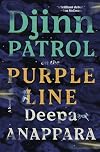
Djinn Patrol on the Purple Line by Deepa Anappara is set in the slums that have risen along the Purple Line of an unnamed Indian city’s metro. When one of his classmates goes missing, nine year old Jai and his two friends Pari and Faiz decide investigate the disappearance. Jai is inspired by his favorite reality cop television program. As more children start to disappear, it seems as if this hapless trio are the only ones who are looking into the disappearance of these children.
The story show more is an excellent mixture of a coming-of-age with a mystery and an intense social commentary on life lived in these crowded slums. We learn of their day-to-day life, their food, clothing, education, religions and culture. The children know of no different life so they are for the most part cheerful and happy. Of course the fact that someone or something is taking children is constantly in the background and causing the rules to tighten, parents to become more demanding and freedoms to be curtailed. The tension builds as more children disappear and finally, someone very close to Jai is taken.
Djinn Patrol on the Purple Line is a compelling read that lays bare the complex social and political realities of modern day India and immerses us in Jai’s world both through his imagination and his very sharp observations. This difficult story filtered through a child’s eyes brings a sense of reality to the fact that in India up to 180 children go missing every day. These unfound and unlooked for children are from slums very much like the one that Jai lives in. show less
The story show more is an excellent mixture of a coming-of-age with a mystery and an intense social commentary on life lived in these crowded slums. We learn of their day-to-day life, their food, clothing, education, religions and culture. The children know of no different life so they are for the most part cheerful and happy. Of course the fact that someone or something is taking children is constantly in the background and causing the rules to tighten, parents to become more demanding and freedoms to be curtailed. The tension builds as more children disappear and finally, someone very close to Jai is taken.
Djinn Patrol on the Purple Line is a compelling read that lays bare the complex social and political realities of modern day India and immerses us in Jai’s world both through his imagination and his very sharp observations. This difficult story filtered through a child’s eyes brings a sense of reality to the fact that in India up to 180 children go missing every day. These unfound and unlooked for children are from slums very much like the one that Jai lives in. show less
They knew the native’s role well; had played it all their lives. from The Last of Earth by Deepa Anappara
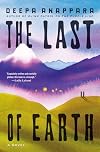
Gorgeous writing, intriguing characters, an exploration of Victorian prejudice, an adventure story, an inspirational heroine, a story of love–The Last of Earth is an ambitious novel inspired by history.
Two expositions seek to illegally enter Tibet. One for science, the other seeks expiation. They suffer hardship and danger from snow leopards and men and the cold and floods.They depend show more on native men to guide them and to haul their necessities, while denigrating them as inferior.
…she who wanted to leave a legacy and refused to vanish without a trace. Most unbecoming, for a woman to harbor such ambitions… from the Last of Earth
There is Katherine, whose mother was Indian, restless and driven, determined to accomplish what no woman has yet achieved: entering the holy city of Lhasa. She poses as a pilgrim, her companion Mani poses as her son. She can’t forgive herself for surviving while her all white sister died while Katherine was wandering the world.
And there is the Captain, badly disguised with dyed skin, intent on fame for surveying the unknown, and his guide Balram who has a secret purpose: he intends to find and free his dearest friend, captured on a previous expedition and imprisoned as a spy.
How many native men had died triangulating Hindustan for the Great trigonometrical Survey? from the Last of Earth
“Was the ambition, or life, of one man more valuable than the lives of a dozen others?” The captain believed the men on the expedition suffered and died for a greater cause. Scientific knowledge. A map to guide white men into a country where they were not wanted, where they were considered spies.
It is folly to risk everything on the hope of fame. What is the value of a man’s life? We are driven and become lost, unable to let go of our desire to leave our mark upon the world.
Thanks to the publisher for a free book through NetGalley. show less
Gorgeous writing, intriguing characters, an exploration of Victorian prejudice, an adventure story, an inspirational heroine, a story of love–The Last of Earth is an ambitious novel inspired by history.
Two expositions seek to illegally enter Tibet. One for science, the other seeks expiation. They suffer hardship and danger from snow leopards and men and the cold and floods.They depend show more on native men to guide them and to haul their necessities, while denigrating them as inferior.
…she who wanted to leave a legacy and refused to vanish without a trace. Most unbecoming, for a woman to harbor such ambitions… from the Last of Earth
There is Katherine, whose mother was Indian, restless and driven, determined to accomplish what no woman has yet achieved: entering the holy city of Lhasa. She poses as a pilgrim, her companion Mani poses as her son. She can’t forgive herself for surviving while her all white sister died while Katherine was wandering the world.
And there is the Captain, badly disguised with dyed skin, intent on fame for surveying the unknown, and his guide Balram who has a secret purpose: he intends to find and free his dearest friend, captured on a previous expedition and imprisoned as a spy.
How many native men had died triangulating Hindustan for the Great trigonometrical Survey? from the Last of Earth
“Was the ambition, or life, of one man more valuable than the lives of a dozen others?” The captain believed the men on the expedition suffered and died for a greater cause. Scientific knowledge. A map to guide white men into a country where they were not wanted, where they were considered spies.
It is folly to risk everything on the hope of fame. What is the value of a man’s life? We are driven and become lost, unable to let go of our desire to leave our mark upon the world.
Thanks to the publisher for a free book through NetGalley. show less
Lists
Awards


You May Also Like


Associated Authors
Statistics
- Works
- 4
- Also by
- 1
- Members
- 856
- Popularity
- #29,895
- Rating
- 3.8
- Reviews
- 48
- ISBNs
- 46
- Languages
- 10
- Favorited
- 1