
Sander L. Gilman
Author of Oscar Wilde's London
About the Author
Sander L. Gilman is a prolific author of books on subjects ranging from Sigmund Freud to obesity. He is Distinguished Professor of the Liberal Arts and Sciences and professor of psychiatry at Emory University.
Works by Sander L. Gilman
Face of Madness: Hugh W. Diamond and the Origin of Psychiatric Photography (1976) 43 copies, 2 reviews
Smart Jews: The Construction of the Image of Jewish Superior Intelligence (Abraham Lincoln Lecture) (1996) 28 copies
Are Racists Crazy?: How Prejudice, Racism, and Antisemitism Became Markers of Insanity (Biopolitics) (2016) 25 copies
Creating Beauty To Cure the Soul: Race and Psychology in the Shaping of Aesthetic Surgery (1998) 19 copies
Love + Marriage = Death: And Other Essays on Representing Difference (Stanford Studies in Jewish History & Cult (1998) 6 copies
Judaism, Christianity, and Islam : collaboration and conflict in the Age of Diaspora (2014) 5 copies
Seeing the AIDS Patient 1 copy
Associated Works
The Jewish World of Sigmund Freud: Essays on Cultural Roots and the Problem of Religious Identity (2010) — Contributor — 8 copies
Studies in Nietzsche and the Classical Tradition (University of North Carolina Studies in Germanic Languages and Literature (85)) (1977) — Contributor — 8 copies
Tagged
Common Knowledge
- Canonical name
- Gilman, Sander L.
- Other names
- Gilman, Sander
- Birthdate
- 1944-02-21
- Gender
- male
- Education
- Tulane University (BA|1963|MA|Ph.D|1968)
- Occupations
- professor
cultural historian
historian of medicine - Organizations
- Emory University
University of Illinois at Chicago
University of Chicago
Cornell University
Modern Language Association - Awards and honors
- American Academy of Arts and Sciences (2016)
- Short biography
- A literary and cultural historian, Sander Gilman is Distinguished Professor of the Liberal Arts and Sciences at Emory University and the author or editor of over eighty books. His Fat: A Cultural History of Obesity appeared in 2008; his most recent edited volume, Race and Contemporary Medicine: Biological Facts and Fictions, was published in the same year. He is the author of the basic study of the visual stereotyping of the mentally ill, Seeing the Insane.
- Nationality
- USA
- Birthplace
- Buffalo, New York, USA
- Places of residence
- Atlanta, Georgia, USA
Chicago, Illinois, USA
New Orleans, Louisiana, USA - Map Location
- USA
Members
Reviews

In this contribution to the Critical Lives series, Sander Gilman explores the life and writings of Franz Kafka. Chapter 1 ("My Family and My Body as a Curse) explores Kafka's life, including his family and on his identity as a (German- speaking) Jew in central Europe during the late 1800s through 1920. Kafka's written record is explored in Ch.2 ("Writing"), in which the author considers his fiction and correspondence through a psychoanalytic lens, and (again) in terms of Kafka's Jewish show more identity. Chapter 3, "A Life Ill" focuses on his later life, including the role played by his long-term illness with tuberculosis. Ch. 4, "A Life After Life" considers his literary legacy, including the massive Kafkaology industry that sprang up around his work. (He quotes Hanna Arendt: "Though during his lifetime he could not make a decent living, he will now keep generations of intellectuals both gainfully employed and well- fed."
Despite having read much about Kafka, I found several little nuggets of intriguing information in this work (notes below). However, the continued focus of Jewishness and "the body" seems somewhat labored/ artificial. In fact, a quote from the author (in specific reference to "The Judgment") applies to his own work: "it has always been possible to read the tale in many ways, filling in the cultural references based on those approved by the interpretive community in which one found oneself." Likewise, the author makes assertions about what Kafka and members of his family were feeling and thinking, without corroborative evidence. Further, he presents as factual the story that he (unknowingly) fathered a child with Grete Bloch =-- a story rebutted in Reiner Stach's major biography.
Overall, this short (160 page) book offers a semi-useful introduction to the life and work of Franz Kafka. However, I would recommend other works above this one, including Ritchie Robertson's "Kafka: A Very Short Introduction" (of the Very Short Introduction series).
______
Among the nuggets of miscellaneous information that appealed to me were the following:
Gilman reproduces an extended quote from Vladimir Nabokov (who was an entomologist well as a novelist), who argued that from Kafka's description, Gregor Samsa was no cockroach, but rather, a winged beetle, who had not discovered that he had wings -- wings to escape with!.
Orson Welles (who produced a film version of "The Trial") opines that Kafka "is a good writer... but not the extraordinary genius that people see in him" (a view with which I am inclined to agree).
Jews of South Africa (I was interested to learn) were not classified as "white" until the 20th century when they became an economically successful minority. Europeans were defined by the alphabet of their language; therefore, Hebrews (who spoke in Yiddish and used a different alphabet) were classified as "coloured". show less
Despite having read much about Kafka, I found several little nuggets of intriguing information in this work (notes below). However, the continued focus of Jewishness and "the body" seems somewhat labored/ artificial. In fact, a quote from the author (in specific reference to "The Judgment") applies to his own work: "it has always been possible to read the tale in many ways, filling in the cultural references based on those approved by the interpretive community in which one found oneself." Likewise, the author makes assertions about what Kafka and members of his family were feeling and thinking, without corroborative evidence. Further, he presents as factual the story that he (unknowingly) fathered a child with Grete Bloch =-- a story rebutted in Reiner Stach's major biography.
Overall, this short (160 page) book offers a semi-useful introduction to the life and work of Franz Kafka. However, I would recommend other works above this one, including Ritchie Robertson's "Kafka: A Very Short Introduction" (of the Very Short Introduction series).
______
Among the nuggets of miscellaneous information that appealed to me were the following:
Gilman reproduces an extended quote from Vladimir Nabokov (who was an entomologist well as a novelist), who argued that from Kafka's description, Gregor Samsa was no cockroach, but rather, a winged beetle, who had not discovered that he had wings -- wings to escape with!.
Orson Welles (who produced a film version of "The Trial") opines that Kafka "is a good writer... but not the extraordinary genius that people see in him" (a view with which I am inclined to agree).
Jews of South Africa (I was interested to learn) were not classified as "white" until the 20th century when they became an economically successful minority. Europeans were defined by the alphabet of their language; therefore, Hebrews (who spoke in Yiddish and used a different alphabet) were classified as "coloured". show less

Dr. Hugh Diamond's innovative work with photography early in its history pointed to both artistic and practical uses. And, because accuracy of visual recording is one of the medium's prime characteristics, it also explores the question of what can we know from what we seen in detailed photography of a person. For his work with inmates in a lunatic asylum, Diamond explored the use of photography in three ways: as a way to study the mentally ill, as a way to communicate to the mentally ill show more about their condition, and to identify particular individuals who might go in and out of treatment. This is the 1850's, leading to continuing use of photography as a psychiatric tool.
The extent to which we can ascertain internal and emotional states from external likeness, from portraiture, has been a central question through the history of photographic discussion. There is more to be gained for an answer in considering such work as Diamond's and its extension to many other scientific studies, outside the normal attention of photography and is typical critics. show less
The extent to which we can ascertain internal and emotional states from external likeness, from portraiture, has been a central question through the history of photographic discussion. There is more to be gained for an answer in considering such work as Diamond's and its extension to many other scientific studies, outside the normal attention of photography and is typical critics. show less
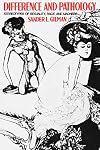
Gilman's collection of essays provides some crucial context and history for the way that stereotypes have been transmitted particularly in medical discourse.

Superb work which gives the middle European context from which psychoanalysis was formed.
Lists
Fantome-ology (1)
Awards


You May Also Like


Associated Authors
Statistics
- Works
- 56
- Also by
- 9
- Members
- 1,155
- Popularity
- #22,249
- Rating
- 3.7
- Reviews
- 7
- ISBNs
- 160
- Languages
- 6
- Favorited
- 1