
Calvin Coolidge (1) (1872–1933)
Author of The Autobiography of Calvin Coolidge
For other authors named Calvin Coolidge, see the disambiguation page.
About the Author
Image credit: from Wikipedia
Works by Calvin Coolidge
Press On 1 copy
Associated Works
Tagged
Common Knowledge
- Other names
- Coolidge, John Calvin, Jr. (birth name)
- Birthdate
- 1872-07-04
- Date of death
- 1933-01-05
- Gender
- male
- Education
- Amherst College (AB, cum laude|1895)
- Occupations
- attorney
politician
Member of the Massachusetts House of Representatives (1907-1908)
Mayor of Northampton, Massachusetts, USA (1910-1911)
Member of the Massachusetts Senate (1912-1915)
Lieutenant Governor of Massachusetts (1916-1919) (show all 9)
Governor of Massachusetts (1919-1921)
Vice President of the United States (1921-1923)
President of the United States (1923-1929) - Organizations
- American Antiquarian Society
Railroad Commission
Foundation of the Blind
Amherst College Board of Trustees
New York Life Insurance Company
Republican Party - Nationality
- USA
- Birthplace
- Plymouth, Vermont, USA
- Places of residence
- Plymouth, Vermont, USA
Northampton, Massachusetts, USA
Boston, Massachusetts, USA
Washington, D.C., USA
Amherst, Massachusetts, USA - Place of death
- Northampton, Massachusetts, USA
- Burial location
- Notch Cemetery, Plymouth Notch, Vermont, USA
- Associated Place (for map)
- Massachusetts, USA
Members
Discussions
30 - Calvin Coolidge in US Presidents Challenge (USPC) (October 2016)
Reviews
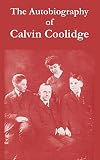
I have been an admirer of Calvin Coolidge (as was President Reagan) for several years, and have not found anything negative to say about him. (No, poor schoolchildren, not that he took so many naps during his presidency. The excessive sleep wasn't due to laziness or any other failing, you know--there was a valid and understandable reason.)
So it pains me to say that I was disappointed by his autobiography. I think it just wasn't in his nature to speak candidly about any of his personal or show more interpersonal matters. And he discusses various events or times in his life but doesn't really have anything special to say about them (such as the duties and daily life of the POTUS, which he describes at length, and how he was nominated to be Warren Harding's vice-president), and probably mentions them only because he feels obligated to.
Worse, Coolidge has relatively little to say even about certain issues and events in his life and career that biographers later deemed very significant. His accounts of his youth, college education, work as a country lawyer, and career as a civic service-minded local politician in Massachusetts generally follow a pattern of "this happened, then that happened, then I did this, then I did that; this happened, and I did this in response," and sometimes the descriptions of events are so abstracted and so perfunctory that discussing them was almost pointless.
The account of Coolidge's career as a Massachusetts state legislator and then governor is interesting enough, but I picked up only a few new and/or unexpected details.
One concerns how Coolidge handled the Boston Police Strike of 1919. His famous statement "There is no right to strike against the public safety, by any body, any time, any where" apparently was not said in any public address, but written in a letter replying to AFL leader Samuel Gompers, who had telegraphed Coolidge to request that Coolidge fire the Boston police commissioner and reinstate the police officers who had been fired for illegally attempting to form an AFL-affiliated union. (According to Massachusetts law, the governor--not the mayor of Boston--appointed the Boston police commissioner; and Coolidge states that the Boston police had all agreed not to form a collective bargaining union. That's why the strike was illegal.) The other is that as a state legislator, Coolidge was apparently considered something of a liberal by others in his own party.
The chapters on Coolidge's presidency are the real disappointment. This period of Coolidge's life and career is, of course, what anyone would be most interested in; but Coolidge is still so reserved that you don't learn anything you could learn from a later third-party biography.
Regarding what was probably the defining event of his presidency--the death of his younger son Calvin Jr.--he has at most a page of words. He manages to illuminate his reaction well enough, strongly hinting that Calvin Jr.'s death took away any pleasure he derived from being POTUS; but he says absolutely nothing to indicate any emotional suffering he went through afterward (even though Calvin Jr died in summer 1924, when Calvin Sr. was running for his own term as president, which means the death overshadowed his entire elected term in office).
The other thing I hoped to learn about which Coolidge does not mention at all is why he and his vice president, Charles Dawes, didn't get along. Other biographies explain the events well enough to make it clear that Dawes was the one at fault--he insulted Coolidge personally, refused to attend cabinet meetings, and insulted the entire United States Senate collectively. (Besides that, Coolidge stresses in this autobiography that he took pains to avoid making enemies, by refusing to insult people or hold grudges; so it's unlikely that he bears much fault for the feud with Dawes.) But they never explain what Dawes's problem was, and even if they did, I would still want to know Coolidge's viewpoint. So I am disappointed that he completely passed the issue over, not even mentioning his vice-president by name. I suppose Coolidge avoided discussing Dawes simply because he had nothing good to say about him and believed in the rule 'if you can't say anything nice, say nothing.' show less
So it pains me to say that I was disappointed by his autobiography. I think it just wasn't in his nature to speak candidly about any of his personal or show more interpersonal matters. And he discusses various events or times in his life but doesn't really have anything special to say about them (such as the duties and daily life of the POTUS, which he describes at length, and how he was nominated to be Warren Harding's vice-president), and probably mentions them only because he feels obligated to.
Worse, Coolidge has relatively little to say even about certain issues and events in his life and career that biographers later deemed very significant. His accounts of his youth, college education, work as a country lawyer, and career as a civic service-minded local politician in Massachusetts generally follow a pattern of "this happened, then that happened, then I did this, then I did that; this happened, and I did this in response," and sometimes the descriptions of events are so abstracted and so perfunctory that discussing them was almost pointless.
The account of Coolidge's career as a Massachusetts state legislator and then governor is interesting enough, but I picked up only a few new and/or unexpected details.
One concerns how Coolidge handled the Boston Police Strike of 1919. His famous statement "There is no right to strike against the public safety, by any body, any time, any where" apparently was not said in any public address, but written in a letter replying to AFL leader Samuel Gompers, who had telegraphed Coolidge to request that Coolidge fire the Boston police commissioner and reinstate the police officers who had been fired for illegally attempting to form an AFL-affiliated union. (According to Massachusetts law, the governor--not the mayor of Boston--appointed the Boston police commissioner; and Coolidge states that the Boston police had all agreed not to form a collective bargaining union. That's why the strike was illegal.) The other is that as a state legislator, Coolidge was apparently considered something of a liberal by others in his own party.
The chapters on Coolidge's presidency are the real disappointment. This period of Coolidge's life and career is, of course, what anyone would be most interested in; but Coolidge is still so reserved that you don't learn anything you could learn from a later third-party biography.
Regarding what was probably the defining event of his presidency--the death of his younger son Calvin Jr.--he has at most a page of words. He manages to illuminate his reaction well enough, strongly hinting that Calvin Jr.'s death took away any pleasure he derived from being POTUS; but he says absolutely nothing to indicate any emotional suffering he went through afterward (even though Calvin Jr died in summer 1924, when Calvin Sr. was running for his own term as president, which means the death overshadowed his entire elected term in office).
The other thing I hoped to learn about which Coolidge does not mention at all is why he and his vice president, Charles Dawes, didn't get along. Other biographies explain the events well enough to make it clear that Dawes was the one at fault--he insulted Coolidge personally, refused to attend cabinet meetings, and insulted the entire United States Senate collectively. (Besides that, Coolidge stresses in this autobiography that he took pains to avoid making enemies, by refusing to insult people or hold grudges; so it's unlikely that he bears much fault for the feud with Dawes.) But they never explain what Dawes's problem was, and even if they did, I would still want to know Coolidge's viewpoint. So I am disappointed that he completely passed the issue over, not even mentioning his vice-president by name. I suppose Coolidge avoided discussing Dawes simply because he had nothing good to say about him and believed in the rule 'if you can't say anything nice, say nothing.' show less

If you want to get to know Calvin Coolidge, thirtieth president of the United States, you cannot start in a better place than with this autobiography. The reader gets a strong sense of who Coolidge was. There is some very personal and touching passages on the death of his son Calvin (as well as his father) while he was president. However, not a lot on specific policies or issues.
The Dedicatory Address of Calvin Coolidge, Thirtieth President of the United States, at the Unveiling of the Equestrian Statue of Bishop Francis Asbury, Washington, D.C., October 15, 1924 by Calvin Coolidge

A short little address by Calvin Coolidge on Bp. Francis Asbury of the Methodist denomination. It sparkles with Coolidgean wit and bons mots.
In the classic "Silent Cal" vein, his autobiography is concise, easily read yet speaks volumes.
Never one to pass up a chance to teach, his childhood is explained with the vividness of a travel brochure and fondness of a family man. His political career, local, state and national portray a man who respects offices by not diminishing those who occupied them.
President Calvin Coolidge explains the duties of a president well while stressing how difficult it is to convey the burden and solemnity show more of the highest office in the land. show less
Never one to pass up a chance to teach, his childhood is explained with the vividness of a travel brochure and fondness of a family man. His political career, local, state and national portray a man who respects offices by not diminishing those who occupied them.
President Calvin Coolidge explains the duties of a president well while stressing how difficult it is to convey the burden and solemnity show more of the highest office in the land. show less
Lists
You May Also Like


Associated Authors
Statistics
- Works
- 14
- Also by
- 2
- Members
- 329
- Popularity
- #72,115
- Rating
- 3.9
- Reviews
- 9
- ISBNs
- 27

