
Darryl Pinckney
Author of The Collected Essays of Elizabeth Hardwick (New York Review Books Classics)
About the Author
Image credit: New York State Writers Institute
Works by Darryl Pinckney
The Collected Essays of Elizabeth Hardwick (New York Review Books Classics) (2017) — Selected by; Introduction — 253 copies, 2 reviews
Come Back in September: A Literary Education on West Sixty-seventh Street, Manhattan (2022) 88 copies, 3 reviews
Associated Works
Literature: An Introduction to Fiction, Poetry, and Drama (1995) — Contributor, some editions — 1,012 copies, 7 reviews
Breaking Ice: An Anthology of Contemporary African-American Fiction (1990) — Contributor — 306 copies, 1 review
Know the Past, Find the Future: The New York Public Library at 100 (2011) — Contributor — 132 copies, 4 reviews
Growing Up Ethnic in America: Contemporary Fiction About Learning to Be American (1999) — Contributor — 120 copies
Who's Writing This? Notations on the Authorial I, with Self-Portraits {not Antæus} (1995) — Contributor — 76 copies
The Company They Kept, Volume Two: Writers on Unforgettable Friendships (2011) — Contributor — 25 copies
Tagged
Common Knowledge
- Canonical name
- Pinckney, Darryl
- Birthdate
- 1953
- Gender
- male
- Education
- Columbia University
- Occupations
- novelist
playwright
essayist - Awards and honors
- Whiting Writers' Award (1986)
Christopher Lightfoot Walker Award (2024) - Relationships
- Fenton, James (partner)
- Nationality
- USA
- Birthplace
- Indianapolis, Indiana, USA
- Places of residence
- New York, New York, USA
Oxfordshire, England, UK
Indianapolis, Indiana, USA - Associated Place (for map)
- USA
Members
Reviews
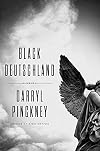
Lyrical (gorgeous) and unapologetically intellectual, both at once, in a way that is almost nonexistent in modern american literature. I'm still steeped in the feeling the novel left me on the last pages. I feel as if I have spent a few hours with a person (narrator) (author) who thinks deeply about the world; someone who looks so closely at the human experience, and sees it clearly, and finds it beautiful. The rendering of Berlin in the late eighties is magnificent--the city Pinckney show more renders is a place where everything is both entirely artificial, and yet fundamentally true.
As I read I felt as if Darryl Pinckney went on a journey himself when he wrote his story--that he entered into a conversation with a character, one he didn't know well himself in the beginning. It feels as if Pinckney wrote this novel to learn more about his narrator, a person who is living at a very unique time and place, and who sees things; a person who shares his life with just enough detail, just enough openness, to invite us readers to enter into the conversation, as well.
One of the "Berlins" that Pinckney writes so well about is the experience of being an intellectually-inclined American expatriate with limited German skills, but with a yearning to express yourself in the native language fluently, and to discuss intellectual things with people you find interesting, or whom you want as friends. You grasp for ways to express deep thoughts, using the words you know, but all the time you're painfully aware that what you're saying is sounding unusual, vague, or at times even deep, in a metaphorical way at least, but also in a way that has nothing to do with what you meant to say. I've never read a book before now that captures this particular isolation so well.
Pinckney also nails the expatriate experience in many other ways. He is writing about the specific experience of being a gay black American man in Berlin, but what he writes is representative more generally of what it's like to have the expectations and prejudices peculiar to German culture imposed on you--the way these expectations can limit you, but also, the temptation to exploit these same expectations for your own purposes and desires. The thrill of being different, and the loneliness of being different.
A final thing I loved about the novel was the recurring, quiet theme of the narrator's books--a quiet, chance meeting with Susan Sontag who happens to mention her idea of "home" being where your books are...and then to notice when books are mentioned in the story. It's a small, lovely, thoughtful grace note throughout the novel to trace the journey of the narrator's books. show less
As I read I felt as if Darryl Pinckney went on a journey himself when he wrote his story--that he entered into a conversation with a character, one he didn't know well himself in the beginning. It feels as if Pinckney wrote this novel to learn more about his narrator, a person who is living at a very unique time and place, and who sees things; a person who shares his life with just enough detail, just enough openness, to invite us readers to enter into the conversation, as well.
One of the "Berlins" that Pinckney writes so well about is the experience of being an intellectually-inclined American expatriate with limited German skills, but with a yearning to express yourself in the native language fluently, and to discuss intellectual things with people you find interesting, or whom you want as friends. You grasp for ways to express deep thoughts, using the words you know, but all the time you're painfully aware that what you're saying is sounding unusual, vague, or at times even deep, in a metaphorical way at least, but also in a way that has nothing to do with what you meant to say. I've never read a book before now that captures this particular isolation so well.
Pinckney also nails the expatriate experience in many other ways. He is writing about the specific experience of being a gay black American man in Berlin, but what he writes is representative more generally of what it's like to have the expectations and prejudices peculiar to German culture imposed on you--the way these expectations can limit you, but also, the temptation to exploit these same expectations for your own purposes and desires. The thrill of being different, and the loneliness of being different.
A final thing I loved about the novel was the recurring, quiet theme of the narrator's books--a quiet, chance meeting with Susan Sontag who happens to mention her idea of "home" being where your books are...and then to notice when books are mentioned in the story. It's a small, lovely, thoughtful grace note throughout the novel to trace the journey of the narrator's books. show less
Good concept, poor execution.
The premise of the book is promising (if perhaps a little "soapy") - brilliant educated, sensitive gay African American in Berlin in 1980s living with eccentric brilliant female cousin who is a classical pianist, and he has affairs with tw0 fascinating men - one a brilliant bisexual handsome German architect, the other an athletic handsome brilliant French African engineer. Lots of brilliance! Pinckney is not afraid himself to show off his considerable erudition. show more Nothing wrong with that - and actually parts of "Black Deutschland" seem like an homage to another intellectual novelist who frequently set his novels in Chicago - Saul Bellow.
Unfortunately, Pinckney manages to make Berlin in the 1980s seem dull, dull, dull. And the style - or lack of style - of Pinckney's prose has a deadening effect. Too often it reads like a rough - a very rough - draft. Or a precis for a series of poems. There are indeed some remarkably well-shaped, precise, and austerely beautiful sentences. But they don't really link together enough to make reading "Black Deutschland" a satisfying experience. show less
The premise of the book is promising (if perhaps a little "soapy") - brilliant educated, sensitive gay African American in Berlin in 1980s living with eccentric brilliant female cousin who is a classical pianist, and he has affairs with tw0 fascinating men - one a brilliant bisexual handsome German architect, the other an athletic handsome brilliant French African engineer. Lots of brilliance! Pinckney is not afraid himself to show off his considerable erudition. show more Nothing wrong with that - and actually parts of "Black Deutschland" seem like an homage to another intellectual novelist who frequently set his novels in Chicago - Saul Bellow.
Unfortunately, Pinckney manages to make Berlin in the 1980s seem dull, dull, dull. And the style - or lack of style - of Pinckney's prose has a deadening effect. Too often it reads like a rough - a very rough - draft. Or a precis for a series of poems. There are indeed some remarkably well-shaped, precise, and austerely beautiful sentences. But they don't really link together enough to make reading "Black Deutschland" a satisfying experience. show less
(Reprinted from the Chicago Center for Literature and Photography [cclapcenter.com]. I am the original author of this essay, as well as the owner of CCLaP; it is not being reprinted illegally.)
As regular readers know, I have mixed feelings about slow-moving, heavily character-based stories; but when they're done well, in a way that I can easily engage in, like is the case with Darryl Pinckney's Black Deutschland, such novels tend to be some of my favorite reading experiences of the entire show more year. A deliberately rambling tale that's presented much like how a person might tell a story over beers at a bar -- that is, in no particular order, with certain mentions triggering digressions from completely different periods of their lives -- this is the story of a young gay black intellectual in the 1980s, raised on Chicago's southside but who has a Romantic-with-a-capital-R fascination with pre-unified Berlin, basically because of falling in love with Christopher Isherwood's old '50s tales about debauchery there and mistakenly thinking that he's going to be able to find the same thing.
Although never laid out explicitly, we get the sense over the course of this book that our hero Jed spent a whole series of summers in his youth traveling back and forth between the two cities, first as a genteel alcoholic (his drug of choice is white wine) who engages in a whole series of sloppily homosexual affairs; but then at a certain point he decides to dry up, at which point he accidentally falls in with a controversial architect from IIT who then pays him to travel to Berlin regularly, now sober and with his job being essentially to write articles that rationalize and justify this architect's sometimes hated plan to build a new "anti-Bauhaus" housing project in that city, where Jed is now forming a new relationship with a once estranged cousin who is a classical pianist in Germany and has her own complicated history with being a "black nerd role model."
The point of this book, though, is not to follow along with this timeline, but rather to sink luxuriously into the complex characterization and inner thoughts of all these people, and to lounge like a fellow intellectual in their high-minded conversations about art, love, post-war Europe and American urban blight. Granted, that's a slow and long process that will drive some people crazy -- for example, I usually burn through two to three books every week as a CCLaP reviewer, yet this 300-page book took me nearly a month of daily reading to get through, just because the story is so dense and rich and needs to be sipped rather than gulped. If you have the patience and inclination, though, you'll find an immensely rewarding tale that utterly transports you to a time and place most of us would never find ourselves in our own lives, giving us a look at brainy people of color as they flit and flirt their way as expats among a world of European artistes who treat them like sexy space aliens. For those like me who think they can get into a story like this, it comes strongly recommended, and will likely be making our best-of-the-year lists at the end of 2016.
Out of 10: 9.7 show less
As regular readers know, I have mixed feelings about slow-moving, heavily character-based stories; but when they're done well, in a way that I can easily engage in, like is the case with Darryl Pinckney's Black Deutschland, such novels tend to be some of my favorite reading experiences of the entire show more year. A deliberately rambling tale that's presented much like how a person might tell a story over beers at a bar -- that is, in no particular order, with certain mentions triggering digressions from completely different periods of their lives -- this is the story of a young gay black intellectual in the 1980s, raised on Chicago's southside but who has a Romantic-with-a-capital-R fascination with pre-unified Berlin, basically because of falling in love with Christopher Isherwood's old '50s tales about debauchery there and mistakenly thinking that he's going to be able to find the same thing.
Although never laid out explicitly, we get the sense over the course of this book that our hero Jed spent a whole series of summers in his youth traveling back and forth between the two cities, first as a genteel alcoholic (his drug of choice is white wine) who engages in a whole series of sloppily homosexual affairs; but then at a certain point he decides to dry up, at which point he accidentally falls in with a controversial architect from IIT who then pays him to travel to Berlin regularly, now sober and with his job being essentially to write articles that rationalize and justify this architect's sometimes hated plan to build a new "anti-Bauhaus" housing project in that city, where Jed is now forming a new relationship with a once estranged cousin who is a classical pianist in Germany and has her own complicated history with being a "black nerd role model."
The point of this book, though, is not to follow along with this timeline, but rather to sink luxuriously into the complex characterization and inner thoughts of all these people, and to lounge like a fellow intellectual in their high-minded conversations about art, love, post-war Europe and American urban blight. Granted, that's a slow and long process that will drive some people crazy -- for example, I usually burn through two to three books every week as a CCLaP reviewer, yet this 300-page book took me nearly a month of daily reading to get through, just because the story is so dense and rich and needs to be sipped rather than gulped. If you have the patience and inclination, though, you'll find an immensely rewarding tale that utterly transports you to a time and place most of us would never find ourselves in our own lives, giving us a look at brainy people of color as they flit and flirt their way as expats among a world of European artistes who treat them like sexy space aliens. For those like me who think they can get into a story like this, it comes strongly recommended, and will likely be making our best-of-the-year lists at the end of 2016.
Out of 10: 9.7 show less
I felt a bit like I got tricked into reading a memoir. But Berlin is entrancing, and the riskier / less linear parts of the narration are satisfying enough to make up for the rest of the style. To be clear: it's very well written and an engaging character and story, I just balk at memoir styling.
Lists
Awards


You May Also Like


Associated Authors
Statistics
- Works
- 10
- Also by
- 14
- Members
- 815
- Popularity
- #31,298
- Rating
- 4.1
- Reviews
- 17
- ISBNs
- 29
- Languages
- 1