
Aliette de Bodard
Author of The House of Shattered Wings
About the Author
Aliette de Bodard was born in the United States, and grew up in France. She studied computer science and applied mathematics at Ecole Polytchnique, one of France's top engineering schools. She began writing fiction to distract herself from her classwork, and completed two novels before finishing show more her studies. She is a system engineer and writer of speculative fiction. Her works include the Obsidian and Blood trilogy and The House of Shattered Wings. Her short fiction has received two Nebula Awards, a Locus Award, and a British Science Fiction Award. (Bowker Author Biography) show less
Series
Works by Aliette de Bodard
Tea and Murder: The Citadel of Weeping Pearls & The Tea Master and the Detective: Xuya Universe Romances (2021) 8 copies, 2 reviews
In Everlasting Wisdom 3 copies
The Bleeding Man (Short story) 2 copies
Dancing for the Monsoon 2 copies
The Strength of the House 2 copies
d'obsidienne et de sang 1 copy
Fratello della nave 1 copy
The House, in Winter 1 copy
Ships in Exile 1 copy
Calling the Unicorn 1 copy
Réalité X.O 1 copy
By Bargain and Blood 1 copy
Deer Flight 1 copy
Weepers and Ragers 1 copy
Sea Child 1 copy
The Naming at the Pool 1 copy
For a Daughter 1 copy
Citadel of Cobras 1 copy
The Triad's Gift 1 copy
Memories of My Sister 1 copy
After the Fire 1 copy
Horus Ascending 1 copy
What Hungers in the Dark 1 copy
Murder In Laochan 1 copy
Heaven under earth 1 copy
The Long Tail 1 copy
Associated Works
The Year's Best Science Fiction: Twenty-Sixth Annual Collection (2009) — Contributor — 424 copies, 2 reviews
The Year's Best Science Fiction: Twenty-Eighth Annual Collection (2011) — Contributor — 329 copies, 3 reviews
The Year's Best Science Fiction: Thirtieth Annual Collection (2013) — Contributor — 255 copies, 3 reviews
The Year's Best Science Fiction: Thirty-Second Annual Collection (2015) — Contributor — 205 copies, 8 reviews
The Year's Best Science Fiction: Thirty-First Annual Collection (2014) — Contributor — 203 copies, 3 reviews
The Year's Best Science Fiction: Thirty-Third Annual Collection (2016) — Contributor — 191 copies, 2 reviews
The Very Best of the Best: 35 Years of The Year's Best Science Fiction (2019) — Contributor — 184 copies, 1 review
The Year's Best Science Fiction: Thirty-Fifth Annual Collection (2018) — Contributor — 154 copies, 3 reviews
The Best Science Fiction and Fantasy of the Year, Volume 7 (2013) — Contributor — 154 copies, 3 reviews
The Year's Best Science Fiction: Thirty-Fourth Annual Collection (2017) — Contributor — 148 copies, 4 reviews
Shine: An Anthology of Near-future, Optimistic Science Fiction (2010) — Contributor — 147 copies, 7 reviews
The Long List Anthology: More Stories From the Hugo Award Nomination List (2015) — Contributor — 126 copies, 6 reviews
Carbide Tipped Pens: Seventeen Tales of Hard Science Fiction (2016) — Contributor — 108 copies, 6 reviews
Chicks Unravel Time: Women Journey Through Every Season of Doctor Who (2012) — Contributor — 103 copies, 3 reviews
L. Ron Hubbard Presents Writers of the Future, Volume 23 (2007) — Contributor — 94 copies, 2 reviews
The Best Science Fiction of the Year: Volume 3 (2018) — Contributor; Contributor — 83 copies, 1 review
The Long List Anthology Volume 2: More Stories from the Hugo Award Nomination List (2016) — Contributor — 76 copies, 1 review
We See a Different Frontier: A Postcolonial Speculative Fiction Anthology (2013) — Preface — 76 copies, 3 reviews
The Best Science Fiction of the Year: Volume 4 (2019) — Contributor; Contributor — 71 copies, 2 reviews
The Best Science Fiction of the Year: Volume 5 (2020) — Contributor; Contributor — 71 copies, 2 reviews
The Long List Anthology Volume 3: More Stories from the Hugo Award Nomination List (2017) — Contributor — 59 copies
Solaris Rising 3: The New Solaris Book of Science Fiction (2014) — Contributor — 47 copies, 6 reviews
Consolation Songs: Optimistic Speculative Fiction for a Time of Pandemic (2020) — Contributor — 35 copies, 3 reviews
Philosophy through Science Fiction Stories: Exploring the Boundaries of the Possible (2021) — Contributor — 19 copies, 1 review
Solaris Rising 1.5: An Exclusive ebook of New Science Fiction (2012) — Contributor — 16 copies, 1 review
The Long List Anthology Volume 8: More Stories from the Hugo Award Nomination List (2022) — Contributor — 15 copies, 1 review
The Best of Beneath Ceaseless Skies Online Magazine, Year One (2020) — Contributor — 15 copies, 2 reviews
Asimov's Science Fiction: Vol. 39, No. 10 & 11 [October/November 2015] (2015) — Contributor — 10 copies
Terra Nova vol. 2. Antología de ciencia ficción contemporánea (Terra Nova, #2) (2013) — Contributor — 7 copies, 2 reviews
Beneath Ceaseless Skies Issue #261 (Tenth Anniversary Month Double-Issue I) (2018) — Contributor — 7 copies
Anthology of European SF — Contributor — 6 copies
The Best of Beneath Ceaseless Skies Online Magazine, Year Two (2011) — Contributor; Contributor — 5 copies, 1 review
Starshipsofa Stories Vol 3 — Contributor — 4 copies
Beneath Ceaseless Skies Issue #142, Science-Fantasy Month 2 (2014) — Contributor — 3 copies, 1 review
Galaxies nouvelle série n° 45/87 — Contributor — 2 copies
Tagged
Common Knowledge
- Legal name
- de Bodard, Aliette
- Birthdate
- 1982-11-10
- Gender
- female
- Education
- Ecole Polytechnique
Saint-Louis de Gonzague
Lycée Louis-le-Grand, Paris, France - Occupations
- software engineer
writer - Organizations
- Science Fiction Writers of America (since 2008)
- Awards and honors
- Writers of the Future
John W. Campbell Award for Best New Writer Finalist (2009) - Agent
- John Berlyne (Zeno Agency)
- Nationality
- USA (birth)
France - Birthplace
- New York, New York, USA
- Places of residence
- London, England, UK
Paris, France - Map Location
- France
Members
Reviews
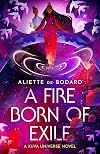
Or, de Bodard does Dantès. Not that A Fire Born of Exile is the first science fiction novel to be inspired by The Count of Monte Cristo. Gwyneth Jones’s excellent space opera, Spirit, also borrowed the plot from Dumas’s novel.
In A Fire Born of Exile, a naive scholar was tricked into expressing sympathy with the rebels during the Ten Thousand Flags Uprising and promptly executed by being thrown out of an airlock. But against all odds she survived. Ten years later, using the name Quỳnh, show more the Alchemist of Streams and Hills, she arrives at the Scattered Pearls Belt to exact her revenge. The official who sentenced her to death is now prefect of the Belt, and Quỳnh’s lover of the time, who did nothing to save her, is now a general.
Minh is the daughter of the prefect and completely under the thumb of her overbearing mother. She is being groomed to become a scholar and follow in her mother’s footsteps, but she doesn’t really want to do that. In the panic following an incident at the Tiger Games, bandits try to kidnap Minh but she is saved by Quỳnh. The two become tentative friends.
Hoà is a technologist, low caste, who bumps into Quỳnh at her dead sister’s shrine, and it turns out Quỳnh knew her. The two are immediately attracted to each other. Hoà has been contracted by Minh and her friends to fix the mindship Flowers at the Gates of the Lords (or rather, Hoà’s sister has, but she’s ill so Hoà, who has no skill in Mindship repair, has to do it instead - with help from Quỳnh). Flowers at the Gates is actually Minh’s Great Aunt and the head of the family lineage, meaning she has control of all the family funds. But she was badly damaged during the Ten Thousand Flags Uprising.
Quỳnh easily unseats the general by revealing an ex-lover who was a serial killer known to, and ignored by, the authorities. The prefect is a much harder target. Quỳnh has evidence of punishments that were over and above what the law decreed, such as execution instead of exile, including her own execution, but that’s not enough. She tries to manipulate Minh into declaring unfilial piety, but Minh is too browbeaten. There’s Flowers at the Gates too, of course, who is head of the family, but will she be fixed in time?
Quỳnh underestimates the prefect’s power, but the prefect in turn underestimates Flowers’, er, power. It comes to a head when an Imperial Censor visits to make the prefect the head of the lineage.
Dantès had it much easier than Quỳnh, and not just because the prefect comes across more like Malificent than Danglars. There’s plenty more going on in A Fire Born of Exile, and it’s all built up from the relationships between the various characters. I liked the novel preceding this one, The Red Scholar’s Wake, a great deal, but I liked this one more. I’m frankly surprised A Fire Born of Exile didn’t make any award shortlists. Recommended. show less
In A Fire Born of Exile, a naive scholar was tricked into expressing sympathy with the rebels during the Ten Thousand Flags Uprising and promptly executed by being thrown out of an airlock. But against all odds she survived. Ten years later, using the name Quỳnh, show more the Alchemist of Streams and Hills, she arrives at the Scattered Pearls Belt to exact her revenge. The official who sentenced her to death is now prefect of the Belt, and Quỳnh’s lover of the time, who did nothing to save her, is now a general.
Minh is the daughter of the prefect and completely under the thumb of her overbearing mother. She is being groomed to become a scholar and follow in her mother’s footsteps, but she doesn’t really want to do that. In the panic following an incident at the Tiger Games, bandits try to kidnap Minh but she is saved by Quỳnh. The two become tentative friends.
Hoà is a technologist, low caste, who bumps into Quỳnh at her dead sister’s shrine, and it turns out Quỳnh knew her. The two are immediately attracted to each other. Hoà has been contracted by Minh and her friends to fix the mindship Flowers at the Gates of the Lords (or rather, Hoà’s sister has, but she’s ill so Hoà, who has no skill in Mindship repair, has to do it instead - with help from Quỳnh). Flowers at the Gates is actually Minh’s Great Aunt and the head of the family lineage, meaning she has control of all the family funds. But she was badly damaged during the Ten Thousand Flags Uprising.
Quỳnh easily unseats the general by revealing an ex-lover who was a serial killer known to, and ignored by, the authorities. The prefect is a much harder target. Quỳnh has evidence of punishments that were over and above what the law decreed, such as execution instead of exile, including her own execution, but that’s not enough. She tries to manipulate Minh into declaring unfilial piety, but Minh is too browbeaten. There’s Flowers at the Gates too, of course, who is head of the family, but will she be fixed in time?
Quỳnh underestimates the prefect’s power, but the prefect in turn underestimates Flowers’, er, power. It comes to a head when an Imperial Censor visits to make the prefect the head of the lineage.
Dantès had it much easier than Quỳnh, and not just because the prefect comes across more like Malificent than Danglars. There’s plenty more going on in A Fire Born of Exile, and it’s all built up from the relationships between the various characters. I liked the novel preceding this one, The Red Scholar’s Wake, a great deal, but I liked this one more. I’m frankly surprised A Fire Born of Exile didn’t make any award shortlists. Recommended. show less

Thanh had been a hostage most of her life - despite being born a princess (well, actually because of it), she does not get to grow up with her family but ends up in the capital of Ephteria, the most powerful country in the region. When we meet her in this story she is already back home, trying to find a place in the court of her mother (and mostly failing). Until a delegation show up from Ephteria - led by their own princess - which also happens to be Thanh's ex-lover.
In a lot of ways, this show more is a romance novella - you have the two young lovers, you have the people blocking their way and there is a big secret in the past that is about to change everyone's life. But there is also a fire elemental and there is a world which we barely get a glimpse of - enough to make it fascinating but not enough to drown the story into irrelevant details. But under the romance story, there is the story of a young woman finding her voice and making choices - despite the advice of everyone around her. The fact that somewhere in there she also finds what her heart really wants is a bonus.
The world is based on old Vietnam (maybe with some additions from other countries from the region) and is refreshingly different from the almost usual medieval settings of similar worlds. But that is expected when you see the name of Aliette de Bodard - almost everything I had read by her had been set in a world based on an Asian country. And the style is her own - lyrical and enticing. show less
In a lot of ways, this show more is a romance novella - you have the two young lovers, you have the people blocking their way and there is a big secret in the past that is about to change everyone's life. But there is also a fire elemental and there is a world which we barely get a glimpse of - enough to make it fascinating but not enough to drown the story into irrelevant details. But under the romance story, there is the story of a young woman finding her voice and making choices - despite the advice of everyone around her. The fact that somewhere in there she also finds what her heart really wants is a bonus.
The world is based on old Vietnam (maybe with some additions from other countries from the region) and is refreshingly different from the almost usual medieval settings of similar worlds. But that is expected when you see the name of Aliette de Bodard - almost everything I had read by her had been set in a world based on an Asian country. And the style is her own - lyrical and enticing. show less
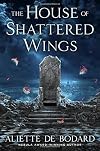
I wasn't sure what I was expecting when I started this book but what I found definitely wasn't it. That said, I'm totally glad I picked this book up. It is completely different than anything else I've read or seen on the bookstore shelves recently. This is dark fantasy with a side of post-apocalyptic, with a side of murder mystery and political shenanigans.
This is the second de Bodard I've read (the first being her Hugo and Nebula award-winning On a Red Station Drifting), and I will show more definitely be looking out for her other works.
The world-building is phenomenal. This is a world in which World War Two gets interrupted by fallen angels, who appear on Earth with no memory of their previous lives, have amazing magical powers, and continued their war in our world. In Paris, a kind of detente is reached with different angelic factions forming a kind of feudal system of Houses that each hold power in the city. House Silverspires was once the greatest of these houses and was founded by Morningstar, who has long disappeared and presumed dead.
The story is told in shifting POVs among Selene, the current head of Silverspires; Madeleine, Silverspires's alchemist with a secret addiction; and Phillipe, a Vietnamese outcast immortal who was kidnapped to take part in the Fallen war decades ago.
There is a released curse, a murder mystery, political machinations, and a blending of Christian mythology with Vietnamese mythology. It is utterly fascinating. And the plot is really good too. Those who like their books fast-paced may not like this one. The plot is definitely on the slower side, with incremental reveals and regimentation of information based on who is the current narrator. But the end result is completely worth it.
This is a gorgeous book. It's a very dark book without a happy ending, but in a world that has been torn apart, the ending is fitting. I'm very looking forward to book two show less
This is the second de Bodard I've read (the first being her Hugo and Nebula award-winning On a Red Station Drifting), and I will show more definitely be looking out for her other works.
The world-building is phenomenal. This is a world in which World War Two gets interrupted by fallen angels, who appear on Earth with no memory of their previous lives, have amazing magical powers, and continued their war in our world. In Paris, a kind of detente is reached with different angelic factions forming a kind of feudal system of Houses that each hold power in the city. House Silverspires was once the greatest of these houses and was founded by Morningstar, who has long disappeared and presumed dead.
The story is told in shifting POVs among Selene, the current head of Silverspires; Madeleine, Silverspires's alchemist with a secret addiction; and Phillipe, a Vietnamese outcast immortal who was kidnapped to take part in the Fallen war decades ago.
There is a released curse, a murder mystery, political machinations, and a blending of Christian mythology with Vietnamese mythology. It is utterly fascinating. And the plot is really good too. Those who like their books fast-paced may not like this one. The plot is definitely on the slower side, with incremental reveals and regimentation of information based on who is the current narrator. But the end result is completely worth it.
This is a gorgeous book. It's a very dark book without a happy ending, but in a world that has been torn apart, the ending is fitting. I'm very looking forward to book two show less
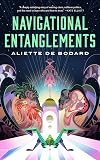
An assembled team, one each from the navigational clans of Rooster, Snake, Rat, and Ox, is put under the direction of an Imperial Dog to deal with a tangler escaped from the extra-spacial Hollows through which the clans travel the stars. As individuals, three of the four are problematic within their own clans, and the fourth is mired in self-doubt. The central relationship is between easily overstimulated Việt Nhi of the Rooster Clan and the Snake assassin Hạc Cúc, who finds herself show more incapable of the compassion of her idealized mentor.
The plot follows the hero's journey beat for beat, with the cast of capabilities varietal, and works well enough, but did it have to be concluded with the sappiest, most clichéd language? The prettied-up bow on the end clashes with the much richer texture of the wrapping material. show less
The plot follows the hero's journey beat for beat, with the cast of capabilities varietal, and works well enough, but did it have to be concluded with the sappiest, most clichéd language? The prettied-up bow on the end clashes with the much richer texture of the wrapping material. show less
Lists
Short and Sweet (1)
Female Author (1)
io9 Book Club (1)
Awards


You May Also Like


Associated Authors
Statistics
- Works
- 131
- Also by
- 153
- Members
- 5,966
- Popularity
- #4,133
- Rating
- 3.7
- Reviews
- 402
- ISBNs
- 142
- Languages
- 8
- Favorited
- 11