
Katherine Johnson (1) (1918–2020)
Author of Reaching for the Moon
For other authors named Katherine Johnson, see the disambiguation page.
About the Author
Image credit: NASA/Sean Smith
Works by Katherine Johnson
Tagged
Common Knowledge
- Legal name
- Johnson, Katherine Coleman Goble
- Other names
- Coleman, Creola Katherine (birth name)
- Birthdate
- 1918-08-26
- Date of death
- 2020-02-24
- Gender
- female
- Education
- West Virginia State College (Mathematics and French|1933-1937)
West Virginia University, Morgantown (1940) - Occupations
- physicist
mathematician - Organizations
- NASA (1953-1986)
- Awards and honors
- Congressional Gold Medal
Presidential medal of freedom (2015) - Nationality
- USA
- Birthplace
- White Sulphur Springs, West Virginia, USA
- Places of residence
- Hampton, Virginia, USA
- Place of death
- Newport News, Virginia, USA
- Map Location
- USA
Members
Reviews
Reaching for the Moon: The Autobiography of NASA Mathematician Katherine Johnson by Katherine Johnson
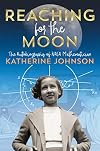
Recent decades have shed light on how the history of science has forgotten key figures, often women and often people of color. In the quest to put a man on the moon, scientific efforts often relied on black women as the book and movie Hidden Figures chronicled. This autobiography captures one of those personalities Katherine Johnson in her own words. She writes towards a middle school audience who might like science, technology, engineering, and math (STEM) subjects but find the white-male show more dominated workforce uninspiring. She instead inspires with her life story overcoming racism, sexism, the death of a spouse, and, oh, the minor challenge of delivering astronauts from earth to the moon.
Johnson seeks to make her readers, whoever they are, feel like they belong. She's no better than anyone, she contends, but that also means that no one is better than her. In this tale, she doesn't deliver technical details and instead lets classroom teachers communicate that material. Here, she relates her own values and how she didn't let life's hardships hold her from her dreams. She did so during a time of tremendous social change during the Civil Rights movement of the 1960s. As both a woman and an African American, she faced unique challenges from this unique pairing.
I appreciate Johnson's voice even as I am a middle-aged white male in science and technology. I appreciate her deep humanity. I'm saddened that it took us so long to recognize her contributions. Too many arrogant people cast away minority voices, whether women or from other racial or ethnic voices, by mocking their accomplishments. It's time for voices like Johnson's be recognized. STEM is a human endeavor that can be - and should be - pursued by all. We're all better when everyone contributes! show less
Johnson seeks to make her readers, whoever they are, feel like they belong. She's no better than anyone, she contends, but that also means that no one is better than her. In this tale, she doesn't deliver technical details and instead lets classroom teachers communicate that material. Here, she relates her own values and how she didn't let life's hardships hold her from her dreams. She did so during a time of tremendous social change during the Civil Rights movement of the 1960s. As both a woman and an African American, she faced unique challenges from this unique pairing.
I appreciate Johnson's voice even as I am a middle-aged white male in science and technology. I appreciate her deep humanity. I'm saddened that it took us so long to recognize her contributions. Too many arrogant people cast away minority voices, whether women or from other racial or ethnic voices, by mocking their accomplishments. It's time for voices like Johnson's be recognized. STEM is a human endeavor that can be - and should be - pursued by all. We're all better when everyone contributes! show less
Reaching for the Moon: The Autobiography of NASA Mathematician Katherine Johnson by Katherine Johnson
You’re no better than anybody else, but nobody’s better than you. Katherine Johnson repeats her father Joshua Coleman’s words as a mantra throughout this excellent book. She sets her personal story in context with details about the cultural and political history of Jim Crow and the civil rights era, discussing how encounters with people who had control over her future often hinged on race. Her story is one of talent, hard work, patience, and determination. Her successes often came by show more being stubbornly competent and refusing to be discouraged until the people around her grudgingly recognized that they needed her skill. For example, she was brought into the Flight Research Division of NACA to analyze data from one flight test, and was expected to be returned to the computing pool afterwards, but, she writes: “Somehow the engineers ‘forgot’ to return me. Instead they just handed me the next set of calculations—and then the next. Then the next. Then the next. That’s when I realized that they needed me, Colored or a woman or not. And suddenly I found myself a research mathmetician!” show less
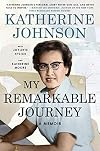
This is the memoir of Katherine Goble Johnson, who was one of the women showcased in the book and movie Hidden Figures. Johnson was a brilliant mathematician who graduated from high school at 16 and made her way to NASA, where she calculated launch and orbit trajectories for the U.S. space program in the 1960s and helped put Apollo 11 on the Moon. Famously, she was also the person that John Glenn wanted to have cross-check the figures put out by the then-new-fangled computer for his orbital show more mission.
This book was written in collaboration with two of Johnson’s daughters, Joylette and Katherine (known as Kathy). Johnson’s voice is unmistakeable throughout as she talks about all aspects of her life: family, work, school, church, and the civil rights movement. She lived to be 101 and saw a lot of change in her life—one fact that struck me was that she was 10 years old when sliced bread was invented! To pack all of those changes, developments, and advances into 256 pages is an impressive feat.
I would recommend this if you’ve read or seen Hidden Figures, are interested in the history of the space program, and/or want to read about awesome women. show less
This book was written in collaboration with two of Johnson’s daughters, Joylette and Katherine (known as Kathy). Johnson’s voice is unmistakeable throughout as she talks about all aspects of her life: family, work, school, church, and the civil rights movement. She lived to be 101 and saw a lot of change in her life—one fact that struck me was that she was 10 years old when sliced bread was invented! To pack all of those changes, developments, and advances into 256 pages is an impressive feat.
I would recommend this if you’ve read or seen Hidden Figures, are interested in the history of the space program, and/or want to read about awesome women. show less
Autobiography of Katherine Johnson, of Hidden Figures fame. Born in 1918, she lived 101 years and truly led a remarkable life. This book tells of her early life in West Virginia, how her father ensured education for all his children, early influences in developing her gifts in mathematics, and how she ended up working in America’s space program. All this occurred in the face of widespread racial prejudice before civil rights legislation was passed. This book covers more than her life. She show more puts her experiences into the context of significant historical events of the 20th century. She overcame many barriers and endured multiple personal tragedies. We get a sense for her intelligence, humility, sense of humor, love for family, and perseverance. She was awarded the Presidential Medal of Freedom in 2015. I found it inspirational. show less
Lists
Awards


You May Also Like


Associated Authors
Statistics
- Works
- 3
- Members
- 496
- Popularity
- #49,830
- Rating
- 4.1
- Reviews
- 17
- ISBNs
- 43
- Languages
- 1