
Emily Rapp
Author of The Still Point of the Turning World
About the Author
Works by Emily Rapp
Associated Works
About Us: Essays from the Disability Series of the New York Times (2019) — Contributor — 91 copies, 1 review
Tagged
Common Knowledge
- Birthdate
- 1974-07-12
- Gender
- female
- Education
- Harvard University
Saint Olaf College
Trinity College, Dublin
University of Texas, Austin - Occupations
- professor
- Organizations
- Antioch University-Southern California
- Nationality
- USA
- Places of residence
- Laramie, Wyoming, USA
Los Angeles, California, USA - Associated Place (for map)
- USA
Members
Reviews
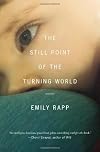
I don't get memoirists who spend their whole book feeding you other author's quotes. It's like being in a relationship with someone who gives you mix tapes instead of actually talking with you.
So, yeah, this book is crammed with epigraphs, quotes, and literary analysis as the author writes an academic examination of grief while dealing with the terminal diagnosis for her infant son. I found it hard to engage with the author as she constantly pushed other people's thoughts between us.
This is show more not the sort of book I would usually read, but I was intrigued by the notion of reading Emily Rapp's take on the same events covered in her ex-husband's recent and moving graphic memoir, Ronan and the Endless Sea of Stars. Their takes on the events aren't different, per se, but the way they processed them into their writing is very different. Reading the two together is sort of interesting, but if you can only read one, go for the graphic novel. show less
So, yeah, this book is crammed with epigraphs, quotes, and literary analysis as the author writes an academic examination of grief while dealing with the terminal diagnosis for her infant son. I found it hard to engage with the author as she constantly pushed other people's thoughts between us.
This is show more not the sort of book I would usually read, but I was intrigued by the notion of reading Emily Rapp's take on the same events covered in her ex-husband's recent and moving graphic memoir, Ronan and the Endless Sea of Stars. Their takes on the events aren't different, per se, but the way they processed them into their writing is very different. Reading the two together is sort of interesting, but if you can only read one, go for the graphic novel. show less
This was beautifully written and unimaginably brutal. I nearly had to abandon it because of the impossibility of reading it while my 2 year old son played in the same room. I forced myself to persevere almost out of a sense of guilt that I had the privilege of looking away when Rapp did not.
Narratives about a child's illness are a tough genre that have to tread a line between exploiting the child and turning it into something that is all about the parent. Rapp has chosen the latter, but her show more focus is on her own experience of grieving a child who has not yet died (at the time of writing). What might be narcissistic in other hands is simply pain flung onto the page. It is immediate and almost unbearable, asking us to look up close at the thing parents least want to consider. show less
Narratives about a child's illness are a tough genre that have to tread a line between exploiting the child and turning it into something that is all about the parent. Rapp has chosen the latter, but her show more focus is on her own experience of grieving a child who has not yet died (at the time of writing). What might be narcissistic in other hands is simply pain flung onto the page. It is immediate and almost unbearable, asking us to look up close at the thing parents least want to consider. show less
The Still Point of the Turning World (TSPOTTW) is to having a child with a fatal genetic disorder what Cheryl Strayed's Wild is to hiking the Pacific Crest Trail. In other words, the book is ostensibly about one thing, but it's actually about quite another. Both TSPOTTW and Wild are about the emotional lives of the authors.
TSPOTTW goes into great detail about Emily Rapp's worldwide travels and her literary interests, and tells much less about her son's brief life with Tay-Sach's disease. show more The book also lacks the scientific and medical detail that would make it valuable to a broader audience.
On the one hand it seems crass to criticize a book by a mother whose child died after a long, slow, heartbreaking decline. But on the other, I felt about this book the same way I felt about Wild. I'm glad I read both books, but by the time I got to the conclusions of both of them, I had had quite enough of both authors. show less
TSPOTTW goes into great detail about Emily Rapp's worldwide travels and her literary interests, and tells much less about her son's brief life with Tay-Sach's disease. show more The book also lacks the scientific and medical detail that would make it valuable to a broader audience.
On the one hand it seems crass to criticize a book by a mother whose child died after a long, slow, heartbreaking decline. But on the other, I felt about this book the same way I felt about Wild. I'm glad I read both books, but by the time I got to the conclusions of both of them, I had had quite enough of both authors. show less
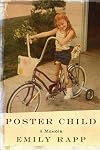
Although I had a stack of books to choose from, I read this one first because I was so taken with the photo on the cover.
Emily is a little girl on a pretty bike with training wheels. Her red hair is long. She looks like a fun but girly girl wearing white lacy socks and white sandals. But there is one thing amiss in the photo–the girl has an artificial leg.
I read Emily’s book not long after reading Lucy Grealy’s memoir. Both are about childhoods filled with surgeries and medical show more problems. In this case, Emily’s foot was amputated by doctors as a treatment for proximal femoral focal deficiency (PFFD).
This memoir pulled me in because the voice is that of a friend, and she tells her story with honesty, humility, and intelligence.
This book is so graceful and appears as if it has written itself. But I now know better. A lot of hard work went into making it all look simple. Rapp didn’t spend that much time writing it either. And her degree was in theology, not writing. She graduated from Divinity School at age 23. So impressive. show less
Emily is a little girl on a pretty bike with training wheels. Her red hair is long. She looks like a fun but girly girl wearing white lacy socks and white sandals. But there is one thing amiss in the photo–the girl has an artificial leg.
I read Emily’s book not long after reading Lucy Grealy’s memoir. Both are about childhoods filled with surgeries and medical show more problems. In this case, Emily’s foot was amputated by doctors as a treatment for proximal femoral focal deficiency (PFFD).
This memoir pulled me in because the voice is that of a friend, and she tells her story with honesty, humility, and intelligence.
This book is so graceful and appears as if it has written itself. But I now know better. A lot of hard work went into making it all look simple. Rapp didn’t spend that much time writing it either. And her degree was in theology, not writing. She graduated from Divinity School at age 23. So impressive. show less
Awards

You May Also Like


Associated Authors
Statistics
- Works
- 4
- Also by
- 3
- Members
- 339
- Popularity
- #70,284
- Rating
- 3.8
- Reviews
- 9
- ISBNs
- 20
- Languages
- 1