
Frederick W. Turner
Author of The Portable North American Indian Reader
About the Author
Works by Frederick W. Turner
IN THE LAND OF TEMPLE CAVES: From St. Emilion to Paris's St. Sulpice : Notes on Art and the Human Spirit (2004) 33 copies, 1 review
Associated Works
Geronimo: His Own Story: The Autobiography of a Great Patriot Warrior (1906) — Editor, some editions — 569 copies, 10 reviews
Tagged
Common Knowledge
- Legal name
- Turner III, Frederick William
- Birthdate
- 1937-06-08
- Gender
- male
- Education
- University of Pennsylvania (Ph.D|1965)
Ohio State University (M.A.|1961)
Denison University (B.A.|1959) - Occupations
- writer
historian - Organizations
- University of Massachusetts, Amherst
The Kent State Library Quarterly
The Centennial Review - Awards and honors
- National Endowment for the Arts Fellowship (1996)
Guggenheim Fellowship (1981) - Nationality
- USA
- Birthplace
- Chicago, Illinois, USA
- Places of residence
- Santa Fe, New Mexico, USA
- Associated Place (for map)
- USA
Members
Reviews

In Beyond Geography Frederick Turner endeavors to explain the socio-psychological impetus behind the explorations and conquests undertaken by the nations of Europe. Undertaking what he calls “an essay in spiritual history” (p. 7), but what could be more conventionally termed an intellectual history, Turner highlights the inner yearnings and thoughts of Europeans that made them different from other peoples and allowed them to “subjugate” the globe. In doing so he dismisses worn out show more theories on European racial (or even cultural) superiority and downplays any ecological factors espoused by scholars such as Alfred Crosby. In the place of these hypotheses he asserts that Europe’s belief in a cold, historically-minded, and unmythological Christianity spawned a psychological need for expansion (to perhaps create new mythologies) and allowed Europeans to rape the lands it discovered, and tame them, and to bend any newfound populations to their will (because the land was not imbued with spirit and the indigenes lacked religion). What Turner offers is a new explanation for the rather wide diaspora of Europeans throughout the world.
Turner’s book lies in the epistemological backwater of intellectual history, an area of study that his hard to “prove” beyond any reasonable doubt. (How does the historian enter the minds of men?) Beyond Geography is a theoretical work and preaches a deterministic, almost teleological, philosophy of history – the psycho-religious history that created Western Christianity then drove Europe to expand into the wilderness and subjugate it. He gathers his argument principally from secondary sources across many disciplines, such as history, theology, and anthropology. For his analysis of various myths he does cite the occasional primary source. Some of his secondary sources, however, are rather unconventional. In the notes on sources for the chapter entitled “Estrangement” he references books outside mainstream history, such as Cyrus Gordon’s Before Columbus and Barry Fell’s America B.C. The lack of footnotes makes it hard to determine from what works his arguments derive. Still, the book is a thought-provoking and entertaining read.
Turner’s book is split into three parts, each with distinct themes. The first section discusses the rise of Western religion from the dawn of civilization to the eve of the Age of Discovery. In the first chapter, “Estrangement” introduces his thesis: the true impetus behind Western expansion lies in the history of its spirituality, the forging of an inner impulse to expand. The next chapter, “Necessary Myths,” attempts to show that mythology is an essential component in the make-up of mankind, a process that helps man to make sense of his world. In “Bearings from the Ancient Near East” Turner begins introducing a theme that reaches its culmination in Christianity. The development of religion spawned a coeval marginalization and fear of nature. Religion established pockets of order in a world that was cruel and harsh. These Mesopotamian mythologies, evolved into Judaism, a religion, so he explains in “The People of the Book,” that wholly separated its god, YHWH, from nature. The abstract monotheism of Judaism created an even sharper line of discontinuity between nature and good. The Israelites were not bound to nature and mythology, but they strove to resist the evil and temptations of the wilderness. They even sacrificing scapegoats to Azazel, the demigod of the wild margins (p. 46). In the next three chapters, entitled “A Crisis Cult,” “Hecatombs,” and “Loomings,” Turner discusses the rise of Christianity from Judaism and the uncertainties of the Jesus’ Judea and the crumbling Roman Empire. According to Turner, Christianity, like all cults, arose during a crisis period, in this case the millennial era in Judea looking for a messiah. Cults that survive the crisis period intact, as Christianity did in the era of Paul, become organized churches. Christianity’s emphasis on a historical Jesus demythologized it, and the absence of any new divine revelations widened the divide between the body and the soul. In “Loomings,” this “fatal divorce between body and soul” (p. 73) opens a wide rift between nature and man – wider than that that existed in Judaism. According to Turner, Christians viewed the wilderness as inherently evil, a temptation that needed to be overcome. His evidence for such a theory lies, not only on his theory, but such examples as the unseemly breast of immoral nature’s physical woman as viewed by Raymond Lully (p.86). This illustration, as in other intellectual histories, leaves much to be desired.
In the second section of his book he begins with “Mythic Zones,” a chapter detailing various myths held by the inhabitants of the New World, presenting a sharp contrast to his de-mythologized Christianity. In two chapters with the oddly sexual (did he do this on purpose?) titles of “Defloration” and “Penetration,” introduces his next theme: the almost instinctual urge of Europeans to conquer the unrelenting and unfamiliar evil of the wilderness. Turner seems to imply that the explorers in Columbus’s wake yearned for new myths but because of Christianity they found these new lands hollow and frightening – a terra nullis to be subdued and shaped into Christian civilization. Throughout these chapters he highlights the extreme disconnect between the religion of the invaders and the close-to-nature mythologies of the indigenous populations. Turner’s take on the Roanoke and Massachusetts in the following chapters colonies share this similar theme. The English, like the Iberians, came to conquer the wilderness because they could not live in harmony and understanding with it as the Indians could. The Roanoke colonists failed to emulate the “superior” skills of the natives because they held them in contempt, unable to see their usefulness. These skills were “simple” and emanated from pagans in touch with the vile wilds and not living in the light of God. Turner points to the statement of Cotton Mather that “this little Israel [was] now going into a Wilderness” as an example of the rift Westerners harbored between nature and themselves. To the Puritans and their ilk, the primeval forests of the New World were the abode of the devil, and the savage Indians little better than demons (if unconverted). Like the Iberians, the English settlers, who held little spiritual respect for the land, had a yearning desire to conquer and transform the wilds of America into a familiar Christian land. This, according to Turner spurned Europe’s imperialism.
In the final third of his book, Turner discusses such seemingly disparate things as Indian captives and the frontier, yet manages to tie it into his theme that Europeans are inured with an innate fear and loathing of the wilderness due to Christianity. He also suggests in this section that the Europeans missed the opportunity to mix their intellectual savvy with the natural and soothing mythologies of the Native Americans. Here again Turner intimates that this lack of respect in nature and myth in whites leaves a void that yearns to be filled. Even Benjamin Franklin noted that Indian children raised by colonists retained their native habits but white children take to Indian living very quickly. There is a palpable sense that Turner believes the Amerindians were “in tune” with nature and that this mythology is an essential characteristic of the human condition that is lacking in Europeans.
Turner’s “spiritual determinism” is the corrective to the cold determinism of Crosby’s ecological imperialism. Crosby held that ecological factors beyond the control of Europeans, their animals, crops, and pathogens, enabled them to transform certain sections of the world into little “Neo-Europes.” Crosby, at one point in Ecological Imperialism, quickly mentions the fact that Europeans had found the will to expand beyond their homeland but just as swiftly he returns to his argument. In Beyond Geography, Turner advocates that the Christian religion of the European West was the factor that spurred the West to explore, subjugate, and mold the foreboding wild places of the world into something familiar and befitting their unmythological intellectual worldview. The problems with Turner’s monocausal theory are manifold. Like Crosby, Turner de-emphasizes and does not even mention any other plausible hypotheses that might explain Europe’s dominance of much of the globe. Is a need to control and demystify nature what spurned the technological innovations preceding the Age of Exploration? Many such inventions were borrowed from other societies such as China and the Muslim world (which Turner does not touch upon). Surely in Turner’s paradigm, the Chinese are “closer to nature” than their Western counterparts on the Eurasian landmass? Do the Chinese exhibit a yearning to control and subdue the evils of the natural world? Also, Turner’s thesis rests on squarely on his interpretation of Western Christianity. Is Christianity truly devoid of mythology? Does the fact that Jesus existed as a historical character detract from the fact that, according to what can only be called Christian myth, he supernaturally defied the physical laws of death and ascended into heaven? Are the Amerindians truly “in touch” with nature? If they possessed the same technology as the Europeans, would they have molded nature to their means? The Incas terraced their hills to grow their crops, transforming nature. Still, Turner’s thesis does provide for much initial thought on finding some sort of spiritual or intellectual reason for Europe’s global expansion and dominance since the fifteenth century. show less
Turner’s book lies in the epistemological backwater of intellectual history, an area of study that his hard to “prove” beyond any reasonable doubt. (How does the historian enter the minds of men?) Beyond Geography is a theoretical work and preaches a deterministic, almost teleological, philosophy of history – the psycho-religious history that created Western Christianity then drove Europe to expand into the wilderness and subjugate it. He gathers his argument principally from secondary sources across many disciplines, such as history, theology, and anthropology. For his analysis of various myths he does cite the occasional primary source. Some of his secondary sources, however, are rather unconventional. In the notes on sources for the chapter entitled “Estrangement” he references books outside mainstream history, such as Cyrus Gordon’s Before Columbus and Barry Fell’s America B.C. The lack of footnotes makes it hard to determine from what works his arguments derive. Still, the book is a thought-provoking and entertaining read.
Turner’s book is split into three parts, each with distinct themes. The first section discusses the rise of Western religion from the dawn of civilization to the eve of the Age of Discovery. In the first chapter, “Estrangement” introduces his thesis: the true impetus behind Western expansion lies in the history of its spirituality, the forging of an inner impulse to expand. The next chapter, “Necessary Myths,” attempts to show that mythology is an essential component in the make-up of mankind, a process that helps man to make sense of his world. In “Bearings from the Ancient Near East” Turner begins introducing a theme that reaches its culmination in Christianity. The development of religion spawned a coeval marginalization and fear of nature. Religion established pockets of order in a world that was cruel and harsh. These Mesopotamian mythologies, evolved into Judaism, a religion, so he explains in “The People of the Book,” that wholly separated its god, YHWH, from nature. The abstract monotheism of Judaism created an even sharper line of discontinuity between nature and good. The Israelites were not bound to nature and mythology, but they strove to resist the evil and temptations of the wilderness. They even sacrificing scapegoats to Azazel, the demigod of the wild margins (p. 46). In the next three chapters, entitled “A Crisis Cult,” “Hecatombs,” and “Loomings,” Turner discusses the rise of Christianity from Judaism and the uncertainties of the Jesus’ Judea and the crumbling Roman Empire. According to Turner, Christianity, like all cults, arose during a crisis period, in this case the millennial era in Judea looking for a messiah. Cults that survive the crisis period intact, as Christianity did in the era of Paul, become organized churches. Christianity’s emphasis on a historical Jesus demythologized it, and the absence of any new divine revelations widened the divide between the body and the soul. In “Loomings,” this “fatal divorce between body and soul” (p. 73) opens a wide rift between nature and man – wider than that that existed in Judaism. According to Turner, Christians viewed the wilderness as inherently evil, a temptation that needed to be overcome. His evidence for such a theory lies, not only on his theory, but such examples as the unseemly breast of immoral nature’s physical woman as viewed by Raymond Lully (p.86). This illustration, as in other intellectual histories, leaves much to be desired.
In the second section of his book he begins with “Mythic Zones,” a chapter detailing various myths held by the inhabitants of the New World, presenting a sharp contrast to his de-mythologized Christianity. In two chapters with the oddly sexual (did he do this on purpose?) titles of “Defloration” and “Penetration,” introduces his next theme: the almost instinctual urge of Europeans to conquer the unrelenting and unfamiliar evil of the wilderness. Turner seems to imply that the explorers in Columbus’s wake yearned for new myths but because of Christianity they found these new lands hollow and frightening – a terra nullis to be subdued and shaped into Christian civilization. Throughout these chapters he highlights the extreme disconnect between the religion of the invaders and the close-to-nature mythologies of the indigenous populations. Turner’s take on the Roanoke and Massachusetts in the following chapters colonies share this similar theme. The English, like the Iberians, came to conquer the wilderness because they could not live in harmony and understanding with it as the Indians could. The Roanoke colonists failed to emulate the “superior” skills of the natives because they held them in contempt, unable to see their usefulness. These skills were “simple” and emanated from pagans in touch with the vile wilds and not living in the light of God. Turner points to the statement of Cotton Mather that “this little Israel [was] now going into a Wilderness” as an example of the rift Westerners harbored between nature and themselves. To the Puritans and their ilk, the primeval forests of the New World were the abode of the devil, and the savage Indians little better than demons (if unconverted). Like the Iberians, the English settlers, who held little spiritual respect for the land, had a yearning desire to conquer and transform the wilds of America into a familiar Christian land. This, according to Turner spurned Europe’s imperialism.
In the final third of his book, Turner discusses such seemingly disparate things as Indian captives and the frontier, yet manages to tie it into his theme that Europeans are inured with an innate fear and loathing of the wilderness due to Christianity. He also suggests in this section that the Europeans missed the opportunity to mix their intellectual savvy with the natural and soothing mythologies of the Native Americans. Here again Turner intimates that this lack of respect in nature and myth in whites leaves a void that yearns to be filled. Even Benjamin Franklin noted that Indian children raised by colonists retained their native habits but white children take to Indian living very quickly. There is a palpable sense that Turner believes the Amerindians were “in tune” with nature and that this mythology is an essential characteristic of the human condition that is lacking in Europeans.
Turner’s “spiritual determinism” is the corrective to the cold determinism of Crosby’s ecological imperialism. Crosby held that ecological factors beyond the control of Europeans, their animals, crops, and pathogens, enabled them to transform certain sections of the world into little “Neo-Europes.” Crosby, at one point in Ecological Imperialism, quickly mentions the fact that Europeans had found the will to expand beyond their homeland but just as swiftly he returns to his argument. In Beyond Geography, Turner advocates that the Christian religion of the European West was the factor that spurred the West to explore, subjugate, and mold the foreboding wild places of the world into something familiar and befitting their unmythological intellectual worldview. The problems with Turner’s monocausal theory are manifold. Like Crosby, Turner de-emphasizes and does not even mention any other plausible hypotheses that might explain Europe’s dominance of much of the globe. Is a need to control and demystify nature what spurned the technological innovations preceding the Age of Exploration? Many such inventions were borrowed from other societies such as China and the Muslim world (which Turner does not touch upon). Surely in Turner’s paradigm, the Chinese are “closer to nature” than their Western counterparts on the Eurasian landmass? Do the Chinese exhibit a yearning to control and subdue the evils of the natural world? Also, Turner’s thesis rests on squarely on his interpretation of Western Christianity. Is Christianity truly devoid of mythology? Does the fact that Jesus existed as a historical character detract from the fact that, according to what can only be called Christian myth, he supernaturally defied the physical laws of death and ascended into heaven? Are the Amerindians truly “in touch” with nature? If they possessed the same technology as the Europeans, would they have molded nature to their means? The Incas terraced their hills to grow their crops, transforming nature. Still, Turner’s thesis does provide for much initial thought on finding some sort of spiritual or intellectual reason for Europe’s global expansion and dominance since the fifteenth century. show less

As Turner warns the reader in the preface, Beyond Geography may seem more like poetry than history at times. That sentiment encapsulates the style of the book perfectly. The substance of the book, while spanning subjects and eras as diverse as any I've ever encountered, manages somehow to tease from an awesome body of historical and other sources insights of profundity perhaps only matched in poetry. The result is a devastating, morally convincing thesis that literally strikes at the soul of show more Western civilization.
The theme introduced early on is the necessity of myth--that is, the ubiquity of the mythical view of the world prior to the formation of Western civilization, which has decisively supplanted myth with history, cyclical time with linear, renewal with progress, etc.
Turner begins his tour through history with the death of mythical thinking in ancient Mesopotamia where the first city walls were erected in an attempt to separate society from nature, creating the wilderness, ever-threatening to repossess the isolated new civilization. Expansion was the response to the perennial encroachment of the wild. Historical thinking is the fruition of the revolt against myth which Turner argues is first evident in the account of the Israelites seeking the Promised Land, a distant objective requiring relentless pursuit--which never seems to stop. No longer would myth and renewal be manifest in the spiritual or social lives of the People of the Book or any they would leave in their wake. Turner follows these themes through the defining moments in Western history up to the 20th century.
This is a beautifully written tragic memoir of our culture. It is intelligent and morally committed, which I strongly appreciate. show less
The theme introduced early on is the necessity of myth--that is, the ubiquity of the mythical view of the world prior to the formation of Western civilization, which has decisively supplanted myth with history, cyclical time with linear, renewal with progress, etc.
Turner begins his tour through history with the death of mythical thinking in ancient Mesopotamia where the first city walls were erected in an attempt to separate society from nature, creating the wilderness, ever-threatening to repossess the isolated new civilization. Expansion was the response to the perennial encroachment of the wild. Historical thinking is the fruition of the revolt against myth which Turner argues is first evident in the account of the Israelites seeking the Promised Land, a distant objective requiring relentless pursuit--which never seems to stop. No longer would myth and renewal be manifest in the spiritual or social lives of the People of the Book or any they would leave in their wake. Turner follows these themes through the defining moments in Western history up to the 20th century.
This is a beautifully written tragic memoir of our culture. It is intelligent and morally committed, which I strongly appreciate. show less
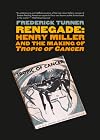
When I first discovered Henry Miller for myself in the early 1990s, I was mildly frustrated by the small number of academic works to be found on the author’s books, and on Tropic of Cancer in particular. Naturally, it seemed that Miller was straightforward enough with his intentions in his own novels and essays, but I was confused as to the literary establishment’s seemingly mute response to the American “renegade”. One of my first reactions upon confronting, at age 18, the pure show more vitality and anti-establishment fearlessness of Tropic of Cancer was: how come nobody ever told me about this guy?
It turned out that Miller was not the secret to the world that he had been to me, yet I still found it hard to locate good academic material about Miller’s book. And frequently when I did I was disappointed; oftentimes I found his biographers simply tweaking or reviewing what Miller himself had already written, and I found the literary essayists approaching too carefully or too obsessively the problematic issues of misogyny, anti-Semitism, obscenity and anti-Americanism in Miller’s works, to the detriment of what I felt Miller really had to offer through his tone, his frustration, and his glorious, reality-confirming conclusions. If Frederick Turner’s Renegade: Henry Miller and the Making of Tropic of Cancer had been published in 1991, I would have found it a welcome vindication.
Renegade benefits from its refreshing lack of interest in making justifications or excuses for treating Miller as an American writer worthy of study, as Turner takes for granted that Miller has an important legacy in the pantheon of American writers and artists. After the framing first chapter, Turner undergoes an examination of the America that gave birth to Henry Miller. He traces the tensions of the New World and new country through both its writers (Crèvecoeur, Whitman, Twain) and its expressions (folklore, vulgarity, burlesque), arriving in early 20th century New York to explore the immediate context of Miller’s development. We then follow Miller through his rosy crucifixion days, his move to Paris, and his breakthrough in finally finding his artistic voice. Turner is confident and concise in guiding the reader through Miller’s development and has plenty to say about the artistic context of Tropic of Cancer.
One chapter near the end, “The Grounds of Great Offense”, particularly stands out as exactly what I was looking for when as a teenager I shook the libraries looking for commentary on Tropic. But overall, the entire book is a satisfying explanation of how Miller the artist and Tropic of Cancer came to be. Turner’s voice is objective, academic, and subtly humorous. Despite some of the range of his argument (concerning the relevance of early American folklore and the “liberal profanity” of continent-breaking trailblazers) the book is quite focused. I dare think it may be an interesting book even if one has never read Tropic of Cancer. I no longer read Miller much myself—I exhausted his oeuvre within a few years of encountering him—but reading Renegade was a good reminder of Miller’s most important achievement and the effect Tropic of Cancer has had on American literature—whether America wants to acknowledge it, or not. show less
It turned out that Miller was not the secret to the world that he had been to me, yet I still found it hard to locate good academic material about Miller’s book. And frequently when I did I was disappointed; oftentimes I found his biographers simply tweaking or reviewing what Miller himself had already written, and I found the literary essayists approaching too carefully or too obsessively the problematic issues of misogyny, anti-Semitism, obscenity and anti-Americanism in Miller’s works, to the detriment of what I felt Miller really had to offer through his tone, his frustration, and his glorious, reality-confirming conclusions. If Frederick Turner’s Renegade: Henry Miller and the Making of Tropic of Cancer had been published in 1991, I would have found it a welcome vindication.
Renegade benefits from its refreshing lack of interest in making justifications or excuses for treating Miller as an American writer worthy of study, as Turner takes for granted that Miller has an important legacy in the pantheon of American writers and artists. After the framing first chapter, Turner undergoes an examination of the America that gave birth to Henry Miller. He traces the tensions of the New World and new country through both its writers (Crèvecoeur, Whitman, Twain) and its expressions (folklore, vulgarity, burlesque), arriving in early 20th century New York to explore the immediate context of Miller’s development. We then follow Miller through his rosy crucifixion days, his move to Paris, and his breakthrough in finally finding his artistic voice. Turner is confident and concise in guiding the reader through Miller’s development and has plenty to say about the artistic context of Tropic of Cancer.
One chapter near the end, “The Grounds of Great Offense”, particularly stands out as exactly what I was looking for when as a teenager I shook the libraries looking for commentary on Tropic. But overall, the entire book is a satisfying explanation of how Miller the artist and Tropic of Cancer came to be. Turner’s voice is objective, academic, and subtly humorous. Despite some of the range of his argument (concerning the relevance of early American folklore and the “liberal profanity” of continent-breaking trailblazers) the book is quite focused. I dare think it may be an interesting book even if one has never read Tropic of Cancer. I no longer read Miller much myself—I exhausted his oeuvre within a few years of encountering him—but reading Renegade was a good reminder of Miller’s most important achievement and the effect Tropic of Cancer has had on American literature—whether America wants to acknowledge it, or not. show less

Jazz and the 1920s are subjects I love, so I was happy to come across this book. It had lots of wonderful reviews, too, so I jumped right into it. But it took quite a while for me to feel the story; it’s a fictionalized biography of jazz coronetist Bix Beiderbecke but in the beginning it focuses just as much on the gang activity in Chicago, largely as experienced by Henry Wise (not his original name), former mechanic and driver for Al Capone, and his sister Helen/Hellie/Lulu, who is the show more girlfriend of Machine Gun Jack McGurn (the Wise siblings are fictional). In fact, the book starts in modern days, at the annual celebration of Beiderbecke, the Bix Fest, with Wise reminiscing at Bix’s grave. As Wise remembers, Bix moves from peripheral character to main, then the narrative viewpoint leaves Wise behind completely and becomes all Bix- but never from Bix’s actual point of view. He always remains viewed from the outside; we never get to see more than he shares with other people. And he shared very, very little. The people around him can never figure him out, can never make a real connection with him. He’s a (mostly) gentle person, and quiet a lot of the time, but he has a totally flat affect. Despite my respect for his work, I had trouble caring about him as a character in this book. But it’s not just him; the other characters don’t fare much better. We get celebrities- Bing Crosby, Clara Bow, Maurice Ravel (I never knew he liked jazz), bandleader Paul Whiteman, Louis Armstrong and others- but only Clara comes to life at all.
Bix was a mainly self-taught player; he couldn’t read music very well but had an incredible ear. Along with horn, he played piano. Sadly, he was an alcoholic and during Prohibition what was sold wasn’t always safe to drink. He was known to drink some stuff (alcohol with a poisonous denaturant) that ended up killing thousands of people, and it was likely that which caused his short life as much as drinking regular booze. He was only 28 when he died, having been sent to ‘dry out’ a few times by his family but always going back to booze when he got out. He was sad example of ‘live fast, die young’ and the world lost a great talent when he died.
The prose is fast paced and jerky; it barely stops for a breath. It’s like the words are doing the Charleston. While I get that this was to make the reader feel like they were in that fast paced decade, it got tiring to read. There is no real plot; it’s a telling of “and then so and so did this; then that”. I can understand why; a person’s life rarely has a plot like fiction does. I have conflicting feelings about this book; I didn’t really enjoy reading it (and thought at times of not finishing it) but I don’t feel it was a waste of time. I’m not sure if it’s the book or if I’m missing something. show less
Bix was a mainly self-taught player; he couldn’t read music very well but had an incredible ear. Along with horn, he played piano. Sadly, he was an alcoholic and during Prohibition what was sold wasn’t always safe to drink. He was known to drink some stuff (alcohol with a poisonous denaturant) that ended up killing thousands of people, and it was likely that which caused his short life as much as drinking regular booze. He was only 28 when he died, having been sent to ‘dry out’ a few times by his family but always going back to booze when he got out. He was sad example of ‘live fast, die young’ and the world lost a great talent when he died.
The prose is fast paced and jerky; it barely stops for a breath. It’s like the words are doing the Charleston. While I get that this was to make the reader feel like they were in that fast paced decade, it got tiring to read. There is no real plot; it’s a telling of “and then so and so did this; then that”. I can understand why; a person’s life rarely has a plot like fiction does. I have conflicting feelings about this book; I didn’t really enjoy reading it (and thought at times of not finishing it) but I don’t feel it was a waste of time. I’m not sure if it’s the book or if I’m missing something. show less
Awards

You May Also Like


Associated Authors
Statistics
- Works
- 15
- Also by
- 3
- Members
- 996
- Popularity
- #25,870
- Rating
- 3.8
- Reviews
- 13
- ISBNs
- 48
- Languages
- 1
- Favorited
- 1