
Daniel Abraham
Author of A Shadow in Summer
About the Author
Disambiguation Notice:
Daniel Abraham uses the pen name James S. A. Corey when writing with Ty Franck, see separate author entry.
Image credit: Photo by Liza Groen of Trombi/Locus
Series
Works by Daniel Abraham
Mechanisms of Grace 6 copies
Leviathan Wept [novelette] 4 copies
Hurt Me 4 copies
The Support Technician Tango 2 copies
Juego de tronos 2 copies
The Dragon's Path/Leviathan Wakes (The Dagger and the Coin, #1) — Author — 2 copies
Gandhi Box [short story] 2 copies
Real People Really Dying 1 copy
A Bad Day in Cairo 1 copy
Jonathan Hive Sells Out! 1 copy
Better Than Television 1 copy
First Among Losers 1 copy
Who the Fuck Was Jetboy? 1 copy
Dogs 1 copy
Ghost Chocolate 1 copy
Pagliacci's Divorce 1 copy
The Bird of Paradise 1 copy
Skin Trade #3 1 copy
Give the Wookie a Medal 1 copy
Juego de tronos 1 copy
The High King Dreaming 1 copy
Locust-mind 1 copy
Skin Trade #4 1 copy
The Pretender's Tourney 1 copy
Exclusion (short story) 1 copy
The Best Monkey 1 copy
Associated Works
Songs of Love and Death: All Original Tales of Star Crossed Love (2010) — Contributor — 805 copies, 36 reviews
The Year's Best Science Fiction: Twenty-Second Annual Collection (2005) — Contributor — 578 copies, 11 reviews
The Year's Best Fantasy and Horror 2008: 21st Annual Collection (2008) — Contributor — 177 copies, 5 reviews
The Best Science Fiction and Fantasy of the Year Volume Two (2008) — Contributor — 175 copies, 4 reviews
Beyond the Wall: Exploring George R. R. Martin's A Song of Ice and Fire, From A Game of Thrones to A Dance with Dragons (2012) — Contributor — 174 copies, 7 reviews
The Best Science Fiction and Fantasy of the Year Volume Twelve (2018) — Contributor — 47 copies, 2 reviews
Last Drink Bird Head : A Flash Fiction Anthology for Charity (2009) — Contributor — 33 copies, 1 review
The Magazine of Fantasy and Science Fiction March 2009, Vol. 116, No. 3 (2009) — Author — 13 copies, 1 review
Asimov's Science Fiction: Vol. 24, No. 10 & 11 [October/November 2000] (2000) — Contributor — 10 copies, 1 review
Tagged
Common Knowledge
- Legal name
- Abraham, Daniel James
- Other names
- Hanover, M. L. N. (pseudonym)
Corey, James S. A. (with Ty Franck) - Birthdate
- 1969-11-14
- Gender
- male
- Education
- Clarion West (1998)
- Occupations
- novelist
- Organizations
- Science Fiction and Fantasy Writers of America (SFWA)
- Awards and honors
- Jack Williamson Lectureship (2012)
- Agent
- The McCarthy Agency
- Nationality
- USA
- Birthplace
- Albuquerque, New Mexico, USA
- Disambiguation notice
- Daniel Abraham uses the pen name James S. A. Corey when writing with Ty Franck, see separate author entry.
- Associated Place (for map)
- New Mexico, USA
Members
Reviews
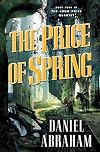
The Price of Spring is the fourth and final book of Daniel Abraham's Long Price Quartet. The series title is quite apt. There is both a high price to pay and yet even more time has passed between books. Fifteen years to be precise. Otah Machi now rules the Khaiem as Emperor and he has decided to ally with his country's rival nation and mortal enemy in order to save both countries. To say that Otah's decision for his country is unpopular is putting it mildly.
I found this book to be a fitting show more end to the series. The theme of the cycle of life, the passing of the torch from one generation to the next, and how the passage of time changes people (or not in some cases) is strongly felt. It's an impressive feat to have pulled off and it makes for a series that is likely more appreciated by older audience than perhaps a younger one.
I'm happy to say I finally found a characters I could get behind in Eieh and, eventually, Danat and Ana. Poor, poor Maati. He has to be one of the most tragic and misguided characters I've read about in a long time. I both feel bad for him and disgusted by him. Vanjit was another interesting and different villain. I was mostly able to predict where she was headed given her situation, though I was still surprised just how far she went in the end.
As much as I enjoyed the book there were several things that also bothered me.Otah's grand plan to unite with the Galt's for example. There are many more nations based on the map of the world. Why did he have to pick the people that ruined and almost conquered his country? Why not one of the otheres, one that might have been easier for the people of the Khaiem to accept? Also, the Khaiem are such oddballs. It's like the worst case of nationalized xenophobia ever! They'd rather die than see their children marry and procreate with anyone outside of their society. That whole solution never quite made sense to me other than Otah assuaging his guilt by forcing his country into a situation they hated. I also found the final resolution to be anticlimactic. I'm glad it worked out the way it did - it was just over too fast, basically wrapping up in a page and a half.
While I don't think I'll ever reread this series, I'm glad to have read it. I truly enjoy Abraham's writing and had an interesting time visiting the world of the andat. I think I'll be picking up the author's Expanse series sometime in the future. show less
I found this book to be a fitting show more end to the series. The theme of the cycle of life, the passing of the torch from one generation to the next, and how the passage of time changes people (or not in some cases) is strongly felt. It's an impressive feat to have pulled off and it makes for a series that is likely more appreciated by older audience than perhaps a younger one.
I'm happy to say I finally found a characters I could get behind in Eieh and, eventually, Danat and Ana. Poor, poor Maati. He has to be one of the most tragic and misguided characters I've read about in a long time. I both feel bad for him and disgusted by him. Vanjit was another interesting and different villain. I was mostly able to predict where she was headed given her situation, though I was still surprised just how far she went in the end.
As much as I enjoyed the book there were several things that also bothered me.
While I don't think I'll ever reread this series, I'm glad to have read it. I truly enjoy Abraham's writing and had an interesting time visiting the world of the andat. I think I'll be picking up the author's Expanse series sometime in the future. show less
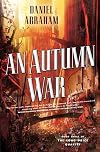
What a joy to read. I can't honestly recall the last time a book created such tension, such a war between my interest and care for characters, and an irresistible sense of impending doom. I wanted to read it through in one sitting, but I hated to see these deep, breathing, living characters suffer at all.
I won't bother with a synopsis, there are a dozen out there. Suffice it to say, where the first two books in the quartet were engaging, well crafted fantasies, this is a work of deep, show more almost painful humanity. I honestly can't imagine how Abraham followed this, and I can't wait to find out. show less
I won't bother with a synopsis, there are a dozen out there. Suffice it to say, where the first two books in the quartet were engaging, well crafted fantasies, this is a work of deep, show more almost painful humanity. I honestly can't imagine how Abraham followed this, and I can't wait to find out. show less
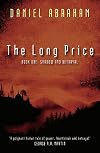
Two books in this, and they really are two almost completely different stories, including some of the same characters in the second book, a dozen or so years later and at the other end of the country. There are some themes that carry over, some that counterpoint.
First, let me talk the world and the rich, glorious detail of it that seeps through in the crack of every lovely sentence Abraham crafts. Because I'd read a hundred and more pages of this without any clear driving sense of the story, show more but the world was just so magnificent and interesting and rich that I didn't care. It's intricate and charming and ruthless and I could just marry the concept of magic through binding a concept in poetry. MARRY IT.
When I finished A Shadow in Summer, I was a little confused about how small and careful and gentle a story it was - a tale of how much a person can take and bend, or break, and what we'll do to avoid greater horrors. This isn't something you see a lot of in fantasy - fantasy tends to be about the greater horrors, about war and acts of fell enormity and magic that can change the fate of the world.
Having finished the whole thing, I look back and see that Summer, too, was a tale of self-authored personal tragedies. It's just that A Betrayal in Winter was a sweeping, blistering, majestic delivery of tight-bound, screaming-inevitability self-authored personal tragedies. It's Shakespearean. It's Russian. It's a thousand twists of the knife that cannot be dodged without changing, fundamentally, who the characters are.
I am so impressed.
So while I have absolutely no idea what could possibly transpire in the third and fourth books of the series - there's still no driving direction to the overall story, and it wouldn't surprise me to jump another dozen years and to another location with another character (I have my suspicions who) - I will be getting on board, because this is some great storytelling write up my personal-tragedies alley. show less
First, let me talk the world and the rich, glorious detail of it that seeps through in the crack of every lovely sentence Abraham crafts. Because I'd read a hundred and more pages of this without any clear driving sense of the story, show more but the world was just so magnificent and interesting and rich that I didn't care. It's intricate and charming and ruthless and I could just marry the concept of magic through binding a concept in poetry. MARRY IT.
When I finished A Shadow in Summer, I was a little confused about how small and careful and gentle a story it was - a tale of how much a person can take and bend, or break, and what we'll do to avoid greater horrors. This isn't something you see a lot of in fantasy - fantasy tends to be about the greater horrors, about war and acts of fell enormity and magic that can change the fate of the world.
Having finished the whole thing, I look back and see that Summer, too, was a tale of self-authored personal tragedies. It's just that A Betrayal in Winter was a sweeping, blistering, majestic delivery of tight-bound, screaming-inevitability self-authored personal tragedies. It's Shakespearean. It's Russian. It's a thousand twists of the knife that cannot be dodged without changing, fundamentally, who the characters are.
I am so impressed.
So while I have absolutely no idea what could possibly transpire in the third and fourth books of the series - there's still no driving direction to the overall story, and it wouldn't surprise me to jump another dozen years and to another location with another character (I have my suspicions who) - I will be getting on board, because this is some great storytelling write up my personal-tragedies alley. show less

4 & 1/2 STARS
Once again I managed to let a long time elapse between this book and its predecessor, but once I returned to this world I discovered that my memory of it was as fresh and sharp as if I had finished Book 2 just yesterday, and this can show you the measure of Daniel Abraham's skill as a storyteller and the impact of his characters on a reader's imagination.
When considering epic fantasy it's easy to think about grand, sweeping stories that encompass vast expanses of territory and a show more huge cast of characters, and while Abraham's The Dagger and the Coin series does take place in such a background, it manages to advance the plot through a limited number of P.O.V. characters, namely four, and to switch seamlessly between them keeping a constant rhythm that helps you fly through the novel and find yourself at the end of the book wanting for more. Granted, The Tyrant's Law is in the unenviable position of being the middle book in a series of five, and there are moments when it seems to lag a little, but it's just an impression, and an incorrect one, since in the end I saw what the author was doing here, which is build some momentum that will certainly propel the final two books toward their intended goal.
The world in which this story grows has never been a peaceful one: legends speak of bloody conflicts in the past - an era in which dragons ruled, the only sign of their existence in present times represented by the jade-paved roads that connect the cities - and the co-existence among the thirteen races who roam through the lands is not an easy one; moreover, in the first book readers witnessed the wanton destruction of a flourishing city and the slaughter of its inhabitants. Now, however, those conflicts seem to have been rekindled with a vengeance, and the unrest that fueled a civil war in the imperial city of Camnipol is spreading throughout the world, taking on the ugly new face of a bid for power masked under a cultural, religious and racial battle for supremacy through conquest and submission.
The new, rising power is represented by the spider goddess' priests and their goal to subjugate everyone under the goddess' banner: after securing themselves a position of supremacy by backing the former nobody Geder Palliako, they proceed to focus their conquering drive by finding a convenient scapegoat in the form of one of the thirteen races, the Timzinae, and conducting a genocidal campaign of hate and distrust that justifies any action they take. It's nothing new either in the imagined or in the real world, and this awareness keeps imbuing the story with chilling overtones that feel even more terrifying for their historical familiarity.
Two of the main characters, Captain Marcus Wester and Master Kit (former priest now turned apostate and hiding as an actor troupe leader) try to find a weapon against the encroaching power of the goddess and her priesthood, and embark on a long, dangerous journey in search of a powerful artifact that might destroy the goddess herself. I already remarked, in my review of the previous book, how diminished Marcus Wester looked once he stepped away from his role as a military leader, and here he still has not regained that former strength that had made him stand out as a character at the beginning of the narrative arc. Even through the hardships he and Kit have to face, and despite the great resilience he shows in the course of their quest, I found it difficult to really feel interested in Marcus' journey, and I have to admit that I found his P.O.V. chapters the less engaging of the book, at least in comparison with what happens to the other characters. The last segment where he appears, though, holds the promise of a big change, and I look forward to seeing what will happen with the amazing discovery he and Master Kit are faced with at the end of the novel.
Despite being confined somewhat in the sidelines here, Cithrin enjoys a much more interesting character arc: after demonstrating to her employers, the Medean bank, that she is an able businesswoman, she is officially apprenticed to an important branch in Timzinae territory, and finds herself a little lost, and disappointed. The harsh experiences that tempered her in the fateful escape from Vanai led her to believe she could do anything, and made her not a little self-centered: here she must deal with the knowledge that she still has a great deal to learn, especially where the real value of money is concerned. When Geder's army takes control of the city and starts its cruel oppression of the Timzinae, she realizes what the true power of money is, and it's the kind of revelation that is bound to change her outlook and thought processes in a major way - this becomes clear in a fateful choice she makes that will certainly have major repercussions along the way, and I can't wait to see which will be the direction that Daniel Abraham has chosen for this girl who is finally starting to perceive the realities beyond the bank's ledgers.
As for Geder… well, he is a wonderful character in the sense that he's complex and unpredictable at the same time, but he's also a horrible one. While reviewing the two previous books I already commented on his decisions to mete unthinking destruction with the same lack of empathy one might reserve for insects, but it's the changes through which he is going that prove to be the most appalling. The man who started out as a bumbling, book-loving nerd, finds himself suddenly gifted with great power, flattered and bowed to by the same people who used to despise and ridicule him, and while he does not gloat about his change of fortunes, there is a deep well of unexpressed resentment in him, of desire for retribution, that drives his actions in the most nasty and shocking of directions. The person who best describes him is indeed Cithrin, with whom he fell in love as they hid in a basement during the worst of the civil unrest in Camnipol:
“Geder’s not a cunning man,” Cithrin said. “He’s… he’s just a man of too little wisdom and too much power.”
“He is a terrible person, you know. But he’s also not. I don’t think I’ve ever known anyone who managed to make himself so alone.”
And it's Geder's infatuation for Cithrin which might be the proverbial straw that will snap his last, feeble ties with reason and humanity and send him further down the road to hell. Whether I will still pity him in the future, as I did in the past… only time will tell.
I've saved discussing my favorite character for last, because her chapters were the ones I most looked forward to, and her arc the most intriguing and fascinating of the whole saga: Clara Kalliam, former lady of substance in the community of Camnipol, is now the widow of a traitor and has fallen down to the bottom of social standing, but being the dragon lady she is, she might be powerless but she is not broken. I totally loved how she maintains appearances and keeps working her contacts, a true spider weaving a complex web geared toward the fulfillment of her plan - because she has one, and it's both ambitious and far-reaching. Where other women might have fallen prey to despair and given up the fight, she understands that her reduced standing has given her a freedom of movement that she did not possess when she had to conform to society's strict rules:
Her actions and opinions were impotent, and so they could be anything. She was already fallen, and so she’d been freed.
What Clara has set in motion will certainly change the fate of many, and I am beyond eager to see where her machinations will take the rest of the story: the simple fact that the next book's title is The Widow's House sounds very, very promising…
As a middle book in the narrative arc, The Tyrant's Law might deceptively look like a transition novel, but in the end it proved to be the beginning of a huge game change, one that will keep me reading on with keen interest. show less
Once again I managed to let a long time elapse between this book and its predecessor, but once I returned to this world I discovered that my memory of it was as fresh and sharp as if I had finished Book 2 just yesterday, and this can show you the measure of Daniel Abraham's skill as a storyteller and the impact of his characters on a reader's imagination.
When considering epic fantasy it's easy to think about grand, sweeping stories that encompass vast expanses of territory and a show more huge cast of characters, and while Abraham's The Dagger and the Coin series does take place in such a background, it manages to advance the plot through a limited number of P.O.V. characters, namely four, and to switch seamlessly between them keeping a constant rhythm that helps you fly through the novel and find yourself at the end of the book wanting for more. Granted, The Tyrant's Law is in the unenviable position of being the middle book in a series of five, and there are moments when it seems to lag a little, but it's just an impression, and an incorrect one, since in the end I saw what the author was doing here, which is build some momentum that will certainly propel the final two books toward their intended goal.
The world in which this story grows has never been a peaceful one: legends speak of bloody conflicts in the past - an era in which dragons ruled, the only sign of their existence in present times represented by the jade-paved roads that connect the cities - and the co-existence among the thirteen races who roam through the lands is not an easy one; moreover, in the first book readers witnessed the wanton destruction of a flourishing city and the slaughter of its inhabitants. Now, however, those conflicts seem to have been rekindled with a vengeance, and the unrest that fueled a civil war in the imperial city of Camnipol is spreading throughout the world, taking on the ugly new face of a bid for power masked under a cultural, religious and racial battle for supremacy through conquest and submission.
The new, rising power is represented by the spider goddess' priests and their goal to subjugate everyone under the goddess' banner: after securing themselves a position of supremacy by backing the former nobody Geder Palliako, they proceed to focus their conquering drive by finding a convenient scapegoat in the form of one of the thirteen races, the Timzinae, and conducting a genocidal campaign of hate and distrust that justifies any action they take. It's nothing new either in the imagined or in the real world, and this awareness keeps imbuing the story with chilling overtones that feel even more terrifying for their historical familiarity.
Two of the main characters, Captain Marcus Wester and Master Kit (former priest now turned apostate and hiding as an actor troupe leader) try to find a weapon against the encroaching power of the goddess and her priesthood, and embark on a long, dangerous journey in search of a powerful artifact that might destroy the goddess herself. I already remarked, in my review of the previous book, how diminished Marcus Wester looked once he stepped away from his role as a military leader, and here he still has not regained that former strength that had made him stand out as a character at the beginning of the narrative arc. Even through the hardships he and Kit have to face, and despite the great resilience he shows in the course of their quest, I found it difficult to really feel interested in Marcus' journey, and I have to admit that I found his P.O.V. chapters the less engaging of the book, at least in comparison with what happens to the other characters. The last segment where he appears, though, holds the promise of a big change, and I look forward to seeing what will happen with the amazing discovery he and Master Kit are faced with at the end of the novel.
Despite being confined somewhat in the sidelines here, Cithrin enjoys a much more interesting character arc: after demonstrating to her employers, the Medean bank, that she is an able businesswoman, she is officially apprenticed to an important branch in Timzinae territory, and finds herself a little lost, and disappointed. The harsh experiences that tempered her in the fateful escape from Vanai led her to believe she could do anything, and made her not a little self-centered: here she must deal with the knowledge that she still has a great deal to learn, especially where the real value of money is concerned. When Geder's army takes control of the city and starts its cruel oppression of the Timzinae, she realizes what the true power of money is, and it's the kind of revelation that is bound to change her outlook and thought processes in a major way - this becomes clear in a fateful choice she makes that will certainly have major repercussions along the way, and I can't wait to see which will be the direction that Daniel Abraham has chosen for this girl who is finally starting to perceive the realities beyond the bank's ledgers.
As for Geder… well, he is a wonderful character in the sense that he's complex and unpredictable at the same time, but he's also a horrible one. While reviewing the two previous books I already commented on his decisions to mete unthinking destruction with the same lack of empathy one might reserve for insects, but it's the changes through which he is going that prove to be the most appalling. The man who started out as a bumbling, book-loving nerd, finds himself suddenly gifted with great power, flattered and bowed to by the same people who used to despise and ridicule him, and while he does not gloat about his change of fortunes, there is a deep well of unexpressed resentment in him, of desire for retribution, that drives his actions in the most nasty and shocking of directions. The person who best describes him is indeed Cithrin, with whom he fell in love as they hid in a basement during the worst of the civil unrest in Camnipol:
“Geder’s not a cunning man,” Cithrin said. “He’s… he’s just a man of too little wisdom and too much power.”
“He is a terrible person, you know. But he’s also not. I don’t think I’ve ever known anyone who managed to make himself so alone.”
And it's Geder's infatuation for Cithrin which might be the proverbial straw that will snap his last, feeble ties with reason and humanity and send him further down the road to hell. Whether I will still pity him in the future, as I did in the past… only time will tell.
I've saved discussing my favorite character for last, because her chapters were the ones I most looked forward to, and her arc the most intriguing and fascinating of the whole saga: Clara Kalliam, former lady of substance in the community of Camnipol, is now the widow of a traitor and has fallen down to the bottom of social standing, but being the dragon lady she is, she might be powerless but she is not broken. I totally loved how she maintains appearances and keeps working her contacts, a true spider weaving a complex web geared toward the fulfillment of her plan - because she has one, and it's both ambitious and far-reaching. Where other women might have fallen prey to despair and given up the fight, she understands that her reduced standing has given her a freedom of movement that she did not possess when she had to conform to society's strict rules:
Her actions and opinions were impotent, and so they could be anything. She was already fallen, and so she’d been freed.
What Clara has set in motion will certainly change the fate of many, and I am beyond eager to see where her machinations will take the rest of the story: the simple fact that the next book's title is The Widow's House sounds very, very promising…
As a middle book in the narrative arc, The Tyrant's Law might deceptively look like a transition novel, but in the end it proved to be the beginning of a huge game change, one that will keep me reading on with keen interest. show less
Lists
Awards


You May Also Like


Associated Authors
Statistics
- Works
- 130
- Also by
- 43
- Members
- 12,978
- Popularity
- #1,799
- Rating
- 3.8
- Reviews
- 541
- ISBNs
- 288
- Languages
- 15
- Favorited
- 23
