

Hal Niedzviecki
Author of Hello, I'm Special: How Individuality Became the New Conformity
About the Author
Works by Hal Niedzviecki
The Peep Diaries: How We're Learning to Love Watching Ourselves and Our Neighbors (2009) 102 copies, 5 reviews
Associated Works
Tagged
Common Knowledge
- Birthdate
- 1971-01-09
- Gender
- male
- Nationality
- Canada
- Places of residence
- Toronto, Ontario, Canada
- Associated Place (for map)
- Ontario, Canada
Members
Reviews
The Peep Diaries: How We're Learning to Love Watching Ourselves and Our Neighbors by Hal Niedzviecki
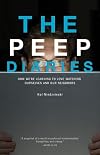
Now I feel kind of guilty for poking fun at all those people who referred to Facebook’s news updates as a “stalker feed.”
Hal Niedzviecki’s book, “The Peep Diaries,” is an exploratiion into what he terms “Peep” culture. In Niedzviecki’s view, modern pop culture has been co-opted and transformed into one that is concerned with the minutiae of everyone else – a nation of Peeping Toms.
Citing examples ranging from reality TV to Facebook to London’s CCTV surveillance system, show more Niedzviecki assembles a compelling portrait of our narcissistic impulses. He argues that modern society, like apes and primitive humans, desire a sense of community that, unfortunately, no longer exists. Rather than interacting with our neighbors and hosting block parties, we instead receive our interactions vicariously through Facebook statuses and tweets.
We are now simultaneously concerned with learning the smallest things about everyone else, while at the same time broadcasting our smallest movements. We create a microcosm of celebrity – after all, what is fame but having some number of people care about what you do?
If you’re at all interested in where our culture is at this point, this is the book for you. Constructed primarily around interviews with people who are embracing Peep culture (including couples who post erotic images online and the guy behind Justin.tv) and narratives about personal encounters with it, the book serves as a fairly quick primer on modern society.
A work like this seems especially poignant in the wake of the public effusion of grief following the death of the King of Pop, so I surfed over to Niedzviecki’s Web site to gauge his reaction. In his only post on the subject, one day after Michael Jackson’s death, Niedzviecki posited Jackson will be remembered equally for his outlandish persona and his music. Niedzviecki also thinks that Jackson’s life influenced the way media covers celebrities in general, pointing to Susan Boyle, Britney Spears and OJ Simpson as recipients of the “Jackson treatment.”
Regardless of whether I agree with his points (and he clearly underestimated our willingness to overlook Jackson’s craziness), the very act of my going to his blog reinforces a lot of the points he makes in his book. Rather than discuss it with my friends, neighbors or family (as I might have done before the Internet), I instead seek out the opinions of a stranger.
I know his thoughts, but he is completely unaware of mine – or that I even exist. I get the satisfaction of connecting with someone else, but I don’t have to go through the legwork of actually engaging in a quid pro quo discussion, or even being forced to acknowledge his ideas longer than I want to – a simple click of the mouse dissolves the relationship.
His Web site also features information about an upcoming documentary based around Niedzviecki’s idea to leap from the “ivory tower” down into the culture of Peep. This brings up any number of alarming questions. What is his motivation? Is he doing it strictly for “research” (the book is out now, mind you), and will he include other Peep exhibitionists?
Regardless of his reasons, the documentary seems to be straddling a fine line. After all, a good percentage of people interviewed by Niedzviecki for the book claimed to be doing it for “a sense of community” – while the reader naturally assumes they’re doing it for the celebrity, however minute an amount they receive. Perhaps the author has succumbed to the same impulses – or maybe he’s just trying to find community where previously he had none. After all, who would know better than him? show less
Hal Niedzviecki’s book, “The Peep Diaries,” is an exploratiion into what he terms “Peep” culture. In Niedzviecki’s view, modern pop culture has been co-opted and transformed into one that is concerned with the minutiae of everyone else – a nation of Peeping Toms.
Citing examples ranging from reality TV to Facebook to London’s CCTV surveillance system, show more Niedzviecki assembles a compelling portrait of our narcissistic impulses. He argues that modern society, like apes and primitive humans, desire a sense of community that, unfortunately, no longer exists. Rather than interacting with our neighbors and hosting block parties, we instead receive our interactions vicariously through Facebook statuses and tweets.
We are now simultaneously concerned with learning the smallest things about everyone else, while at the same time broadcasting our smallest movements. We create a microcosm of celebrity – after all, what is fame but having some number of people care about what you do?
If you’re at all interested in where our culture is at this point, this is the book for you. Constructed primarily around interviews with people who are embracing Peep culture (including couples who post erotic images online and the guy behind Justin.tv) and narratives about personal encounters with it, the book serves as a fairly quick primer on modern society.
A work like this seems especially poignant in the wake of the public effusion of grief following the death of the King of Pop, so I surfed over to Niedzviecki’s Web site to gauge his reaction. In his only post on the subject, one day after Michael Jackson’s death, Niedzviecki posited Jackson will be remembered equally for his outlandish persona and his music. Niedzviecki also thinks that Jackson’s life influenced the way media covers celebrities in general, pointing to Susan Boyle, Britney Spears and OJ Simpson as recipients of the “Jackson treatment.”
Regardless of whether I agree with his points (and he clearly underestimated our willingness to overlook Jackson’s craziness), the very act of my going to his blog reinforces a lot of the points he makes in his book. Rather than discuss it with my friends, neighbors or family (as I might have done before the Internet), I instead seek out the opinions of a stranger.
I know his thoughts, but he is completely unaware of mine – or that I even exist. I get the satisfaction of connecting with someone else, but I don’t have to go through the legwork of actually engaging in a quid pro quo discussion, or even being forced to acknowledge his ideas longer than I want to – a simple click of the mouse dissolves the relationship.
His Web site also features information about an upcoming documentary based around Niedzviecki’s idea to leap from the “ivory tower” down into the culture of Peep. This brings up any number of alarming questions. What is his motivation? Is he doing it strictly for “research” (the book is out now, mind you), and will he include other Peep exhibitionists?
Regardless of his reasons, the documentary seems to be straddling a fine line. After all, a good percentage of people interviewed by Niedzviecki for the book claimed to be doing it for “a sense of community” – while the reader naturally assumes they’re doing it for the celebrity, however minute an amount they receive. Perhaps the author has succumbed to the same impulses – or maybe he’s just trying to find community where previously he had none. After all, who would know better than him? show less
The Original Canadian City Dweller's Almanac: Facts, Rants, Anecdotes and Unsupported Assertions for Urban Residents by Hal Niedzviecki
Worth buying for "How to Gracefully Exit a Poetry Reading " alone, but dotted with many other gems of urban information and survival tips.
The Peep Diaries: How We're Learning to Love Watching Ourselves and Our Neighbors by Hal Niedzviecki
Hal Niedzviecki's "The Peep Diaries" explores how and why popular culture has evolved into one in which so many people suffer from the TMI (Too Much Information) syndrome. Not only are millions of exhibitionists willing to share the most intimate details of their lives with perfect strangers, they work hard to make sure as many people as possible view those details. As Niedzviecki notes on the first page of his book, "Webster's New World Dictionary" added a new verb to its 2008 edition to show more describe this very phenomenon: overshare - to divulge excessive personal information, as in a blog or broadcast interview, prompting reactions ranging from alarmed discomfort to approval.
But let us be honest. There would be far fewer exhibitionists if the rest of us did not relish watching them make fools of themselves. Not only are we a culture of exhibitionists; we are a culture of voyeurs.
Niedzviecki believes that Peep Culture emerged because people find it more difficult today than ever before to develop close, long-lasting relationships. We might live in larger and larger cities, surrounded by more people than ever, but the pace at which we live our lives makes it near impossible to connect with like-minded people or to maintain such relationships over the long term. So what could be more tempting, or addicting, than how easy it is to find hundreds of new "friends" on websites like Facebook, MySpace and YouTube - especially when we can choose people who think and believe exactly as we do?
In order to test his theory, Niedzviecki became a direct participant in Peep Culture. Among other things, he blogged and he tweeted; he participated in what is humorously called "reality TV;" he met with a group of people who post nude photos of themselves on soft-porn websites; he researched the latest tech gadgets that allow us to spy upon one another; he made over 700 new friends on Facebook; and he filled out online surveys in which he exposed his personal details to companies that profit by selling his information to others. In other words, he did the very things so many of us have been doing for a number of years (well, maybe with the exception of posing in the nude for web photos).
Niedzviecki thoroughly explores the downside of Peep Culture, a downside that is particularly dangerous to young people on the cusp of maturing into the adults they will be for the rest of their lives. He notes that college administrators, hiring managers, credit managers, insurance investigators and others, are as aware of sites like Facebook, MySpace and YouTube as anyone else - and that they often pre-screen applicants based on what they see on those sites. Not surprisingly, what makes a high school or college student popular among his peers (primarily an ability to party with the best of them), is the very thing that could cost him admittance to the college of his choice, a high-paying job after college, or reasonably priced car or health insurance.
Niedzviecki spends surprisingly little time exploring the more positive aspects of Peep Culture. How, for instance, those finding it most difficult to make face-to-face friends often eliminate depression and raise self-esteem in the process of making dozens of new friends on-line - even to the point of using their new found confidence to make friends locally. Or how easy it is for like-minded people to find each other and share a passion about some obscure subject so few others seem to care about. But regardless of whether or not there is a Peep Culture "pro" to match every Peep Culture "con," there is no going back to the way we were even two decades ago. The world has never been smaller, and never before have people been so interconnected for so many hours of the day.
The repetitiveness of Niedzviecki's arguments does, at times, make for dry reading, but "The Peep Diaries" is a nice snapshot of where Peep Culture is today, if not necessarily where it will be this time tomorrow.
Rated at: 3.0 show less
But let us be honest. There would be far fewer exhibitionists if the rest of us did not relish watching them make fools of themselves. Not only are we a culture of exhibitionists; we are a culture of voyeurs.
Niedzviecki believes that Peep Culture emerged because people find it more difficult today than ever before to develop close, long-lasting relationships. We might live in larger and larger cities, surrounded by more people than ever, but the pace at which we live our lives makes it near impossible to connect with like-minded people or to maintain such relationships over the long term. So what could be more tempting, or addicting, than how easy it is to find hundreds of new "friends" on websites like Facebook, MySpace and YouTube - especially when we can choose people who think and believe exactly as we do?
In order to test his theory, Niedzviecki became a direct participant in Peep Culture. Among other things, he blogged and he tweeted; he participated in what is humorously called "reality TV;" he met with a group of people who post nude photos of themselves on soft-porn websites; he researched the latest tech gadgets that allow us to spy upon one another; he made over 700 new friends on Facebook; and he filled out online surveys in which he exposed his personal details to companies that profit by selling his information to others. In other words, he did the very things so many of us have been doing for a number of years (well, maybe with the exception of posing in the nude for web photos).
Niedzviecki thoroughly explores the downside of Peep Culture, a downside that is particularly dangerous to young people on the cusp of maturing into the adults they will be for the rest of their lives. He notes that college administrators, hiring managers, credit managers, insurance investigators and others, are as aware of sites like Facebook, MySpace and YouTube as anyone else - and that they often pre-screen applicants based on what they see on those sites. Not surprisingly, what makes a high school or college student popular among his peers (primarily an ability to party with the best of them), is the very thing that could cost him admittance to the college of his choice, a high-paying job after college, or reasonably priced car or health insurance.
Niedzviecki spends surprisingly little time exploring the more positive aspects of Peep Culture. How, for instance, those finding it most difficult to make face-to-face friends often eliminate depression and raise self-esteem in the process of making dozens of new friends on-line - even to the point of using their new found confidence to make friends locally. Or how easy it is for like-minded people to find each other and share a passion about some obscure subject so few others seem to care about. But regardless of whether or not there is a Peep Culture "pro" to match every Peep Culture "con," there is no going back to the way we were even two decades ago. The world has never been smaller, and never before have people been so interconnected for so many hours of the day.
The repetitiveness of Niedzviecki's arguments does, at times, make for dry reading, but "The Peep Diaries" is a nice snapshot of where Peep Culture is today, if not necessarily where it will be this time tomorrow.
Rated at: 3.0 show less
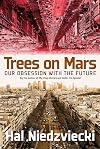
Trees on Mars: Our Obsession with the Future by Hal Niedzviecki is an invaluable book that explores the pop culture of chasing tomorrow. The book reminded the reader of Alvin Toffler’s The Third Wave at first glance. Based on many social surveys, interviews of people from all walks of life, and tremendous research, the author has provided the reader with facts and provoking thoughts on technology and the future. Many unique points have been made and can be adopted by think tanks. The parts show more about students and schools interest the reader the most. It is surprising facts that many college students were encouraged to join tech sectors as a way of chasing the future even before they finished their degrees and that a pursuit of higher education was considered as a waste of time and money. Meanwhile many elementary school students were offered iPads as a way to prepare them ready for the future. The phenomena raise these questions: Is the ability to read and write less important than the ability to use a digital device? Is higher education less important than just learning instant lessons about technology? Can innovation really help the young generation embrace the unknown future?
Using the time of Homo erectus to the civilization of Mesopotamia and the culture of the Chumash people on Southern California’s Channel Islands as evidences, the author offers his thought that “for most of human life there is little tradition of embracing chaos, of fostering the new, of empowering people to be change agents.” (P.180) It is not shocking to know that the result of the author’s focus group of university graduates that they “have grown up with every possible privilege. And yet they are confused and wounded with no idea of what is coming next,” (P. 227) as Niedzviecki concludes.
The reader enjoys The End chapter of the book and admires Christy Foley for her ambition and bravery getting ready to explore Mars. The life cycle of birth and death also applies to Earth. If we humans desire to outlive the planet Earth, colonization on Mars is perhaps an excellent option.
Y Generation does not have Baby Boomers’ luck, neither has gained enough life experience and establishment as X Generation has, but Y Generation doe own more future even though they face more challenge. However, standing on the shoulders of the older generations, they are living their lives, ups and downs, through the future shock era. show less
Using the time of Homo erectus to the civilization of Mesopotamia and the culture of the Chumash people on Southern California’s Channel Islands as evidences, the author offers his thought that “for most of human life there is little tradition of embracing chaos, of fostering the new, of empowering people to be change agents.” (P.180) It is not shocking to know that the result of the author’s focus group of university graduates that they “have grown up with every possible privilege. And yet they are confused and wounded with no idea of what is coming next,” (P. 227) as Niedzviecki concludes.
The reader enjoys The End chapter of the book and admires Christy Foley for her ambition and bravery getting ready to explore Mars. The life cycle of birth and death also applies to Earth. If we humans desire to outlive the planet Earth, colonization on Mars is perhaps an excellent option.
Y Generation does not have Baby Boomers’ luck, neither has gained enough life experience and establishment as X Generation has, but Y Generation doe own more future even though they face more challenge. However, standing on the shoulders of the older generations, they are living their lives, ups and downs, through the future shock era. show less
Lists
culture (1)
Awards


You May Also Like


Associated Authors
Statistics
- Works
- 18
- Also by
- 1
- Members
- 480
- Popularity
- #51,407
- Rating
- 3.4
- Reviews
- 11
- ISBNs
- 31
- Languages
- 1
- Favorited
- 2