
Lance Olsen
Author of Girl Imagined by Chance
About the Author
Works by Lance Olsen
Associated Works
The Thackery T. Lambshead Pocket Guide to Eccentric and Discredited Diseases (2003) — Contributor — 809 copies, 20 reviews
It's Only Rock and Roll: An Anthology of Rock and Roll Short Stories (1998) — Contributor — 24 copies
Fairy Tale Review: The Grey Issue — Contributor — 2 copies
Tagged
Common Knowledge
- Birthdate
- 1956-10-14
- Gender
- male
- Education
- Iowa Writers' Workshop (MFA)
University of Virginia (PhD) - Organizations
- Fiction Collective Two
- Relationships
- Olsen, Andi (spouse)
- Nationality
- USA
- Places of residence
- Salt Lake City, Utah, USA
- Associated Place (for map)
- Utah, USA
Members
Reviews
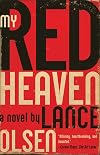
'Otto found that moment's ordinariness stunning.'
Lance Olsen's new novel takes place over one day - June 10th, 1927 - in Berlin. As the day progresses we get a glimpse of the lives of those who live there, the famous and the everyday normal people, artists and truck drivers. He uses a variety of styles and techniques: stream of consciousness, transcripts of newsreels and play scripts, poems, photographs, which culminate in the final paragraph being superimposed upon itself over and over, show more turned and repeated, until the text becomes just a black mess.
Like a camera panning over the city, we get a glimpse of an extraordinary moment, in that this is a still point between two other extraordinary moments. All of the characters that we meet have either been affected by the previous war, or will be affected by the upcoming war. The narrative frequently jumps back and forward in time to allow the reader to learn the fate or the history of a character. These moments of ordinary 1927 become fragile, transient, impossible to hold on to.
The overall effect of the book is a stunning exploration of art, literature, science and politics. As the characters interact or glimpse each other in passing, we get a sense of a vibrant and open city, a cultural and sexual hedonism that is at its peak. The prose is wonderfully lyrical and exact, and Olsen draws on so many 'real' characters that a reader might find themselves frantically trying to figure out who they are. This is a textured, indeed abstract, novel, taking its inspiration from Otto Freundlich's 1933 abstract painting 'Mein roter Himmel'. As Olsen adds on each layer the overall panorama of the book reaches its conclusion in an extraordinary final chapter. This is a remarkable and cultured book, that will reward a second and third reading. Definitely a strongly recommended 4.5 stars. show less
Lance Olsen's new novel takes place over one day - June 10th, 1927 - in Berlin. As the day progresses we get a glimpse of the lives of those who live there, the famous and the everyday normal people, artists and truck drivers. He uses a variety of styles and techniques: stream of consciousness, transcripts of newsreels and play scripts, poems, photographs, which culminate in the final paragraph being superimposed upon itself over and over, show more turned and repeated, until the text becomes just a black mess.
Like a camera panning over the city, we get a glimpse of an extraordinary moment, in that this is a still point between two other extraordinary moments. All of the characters that we meet have either been affected by the previous war, or will be affected by the upcoming war. The narrative frequently jumps back and forward in time to allow the reader to learn the fate or the history of a character. These moments of ordinary 1927 become fragile, transient, impossible to hold on to.
The overall effect of the book is a stunning exploration of art, literature, science and politics. As the characters interact or glimpse each other in passing, we get a sense of a vibrant and open city, a cultural and sexual hedonism that is at its peak. The prose is wonderfully lyrical and exact, and Olsen draws on so many 'real' characters that a reader might find themselves frantically trying to figure out who they are. This is a textured, indeed abstract, novel, taking its inspiration from Otto Freundlich's 1933 abstract painting 'Mein roter Himmel'. As Olsen adds on each layer the overall panorama of the book reaches its conclusion in an extraordinary final chapter. This is a remarkable and cultured book, that will reward a second and third reading. Definitely a strongly recommended 4.5 stars. show less

The cover art is amazing. The title is clever, contextually to the book.
The Goodreads reviewer (John) who recommends this one for "readers w/ a spine, a sense of history, & an openness to discovery that comes via great fear" -- yes. Just yes.
Wow, artistically, it's an amazing conceptual piece.
And, I'm horrified. I can't even explain how I felt reading this book. I wanted to read it. I wanted to stop reading it. But I didn't. I couldn't really. The power of this piece made my chest hurt, my show more heart hurt, my head hurt. I was physically in pain while reading this; even after reading this. I think this is the most visceral, most stressful reading I have ever experienced. I don't even know what to say now that I'm finished. show less
The Goodreads reviewer (John) who recommends this one for "readers w/ a spine, a sense of history, & an openness to discovery that comes via great fear" -- yes. Just yes.
Wow, artistically, it's an amazing conceptual piece.
And, I'm horrified. I can't even explain how I felt reading this book. I wanted to read it. I wanted to stop reading it. But I didn't. I couldn't really. The power of this piece made my chest hurt, my show more heart hurt, my head hurt. I was physically in pain while reading this; even after reading this. I think this is the most visceral, most stressful reading I have ever experienced. I don't even know what to say now that I'm finished. show less
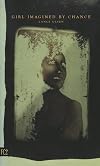
Lance Olsen wrote a cool entry for “Dr Thackery T. Lambshead’s Pocket guide for eccentric and discredited diseases”, and I ordered this book shortly afterwards. But when it arrived it intimidated me. The back blurb talked about “critifiction”, “the media-ization of the consciousness” and “as protean and unknowable as the future”, it was written in second person (gah), and opening it randomly I’d encounter passages like:
“The sound haze of different languages on the show more streets of a foreign country.
It of course felt slightly desperate.
Desperate and thrilling.
You could only inhabit so many channels, so you had to choose which ones to start inhabiting right now.
To choose being to change.”
In short, it felt just like the kind of book where I could get bogged down for precious weeks, duty reading all the way. It stood on my shelves for two and a half years.
As it turns out, I shouldn’t have worried. Quite the opposite. This is a very readable book, tender and gentle rather than cerebral and clever, pretty funny at times, often heart-breaking, and full of interesting ideas. Sure, it does have a strong style that takes a few pages to get used to. Olsen’s narrator often follows several thoughts at once, bouncing back and forth between memory, thought and what’s happening right now. But once you relax into it, it flows very well and is virtually never confusing. Even the second person ploy quickly feels natural.
A successful east coast couple, who long ago decided not to have children (indeed eliminating the possibility through surgery) now find all of their friends in the process of building families. They find themselves hanging out with younger and younger people by necessity, none of them need to be physically at their offices. They decide to do something radical, and move to a big house in rural Idaho. They quickly fall in love with their new environment. Life makes sense again.
But back east is one important person left: Angie’s old grandma, the only relative with which she has a strong bond. And Grannam is scared of them moving away, feeling she will lose them. Without really thinking it through, the couple makes up something to make Grannam happy. They tell her they are expecting a baby. Grannam spreads the word among the relatives like wildfire, and word gets to their old friends back east. Pretty soon this imaginary fetus, then baby, then child, plays a central role in the couple’s lives. They do research. They manufacture photos. They practice baby talk to perform in the background of phone calls. They spend lots of time with the children of their new Idaho friends (to whom they are the childless couple, soon too old to have any). And Grannam keeps sending checks, begging them to come visit. One day Angie caves in and accepts, and a date is set. Now what?
This book is a thoughtful, sad and funny look at what defines us as people, about childhood and parenthood, about the nature of sorrow and photography. All played against a backdrop of the rural landscape and people of Idaho, beautifully captured. It touched me deeply. show less
“The sound haze of different languages on the show more streets of a foreign country.
It of course felt slightly desperate.
Desperate and thrilling.
You could only inhabit so many channels, so you had to choose which ones to start inhabiting right now.
To choose being to change.”
In short, it felt just like the kind of book where I could get bogged down for precious weeks, duty reading all the way. It stood on my shelves for two and a half years.
As it turns out, I shouldn’t have worried. Quite the opposite. This is a very readable book, tender and gentle rather than cerebral and clever, pretty funny at times, often heart-breaking, and full of interesting ideas. Sure, it does have a strong style that takes a few pages to get used to. Olsen’s narrator often follows several thoughts at once, bouncing back and forth between memory, thought and what’s happening right now. But once you relax into it, it flows very well and is virtually never confusing. Even the second person ploy quickly feels natural.
A successful east coast couple, who long ago decided not to have children (indeed eliminating the possibility through surgery) now find all of their friends in the process of building families. They find themselves hanging out with younger and younger people by necessity, none of them need to be physically at their offices. They decide to do something radical, and move to a big house in rural Idaho. They quickly fall in love with their new environment. Life makes sense again.
But back east is one important person left: Angie’s old grandma, the only relative with which she has a strong bond. And Grannam is scared of them moving away, feeling she will lose them. Without really thinking it through, the couple makes up something to make Grannam happy. They tell her they are expecting a baby. Grannam spreads the word among the relatives like wildfire, and word gets to their old friends back east. Pretty soon this imaginary fetus, then baby, then child, plays a central role in the couple’s lives. They do research. They manufacture photos. They practice baby talk to perform in the background of phone calls. They spend lots of time with the children of their new Idaho friends (to whom they are the childless couple, soon too old to have any). And Grannam keeps sending checks, begging them to come visit. One day Angie caves in and accepts, and a date is set. Now what?
This book is a thoughtful, sad and funny look at what defines us as people, about childhood and parenthood, about the nature of sorrow and photography. All played against a backdrop of the rural landscape and people of Idaho, beautifully captured. It touched me deeply. show less
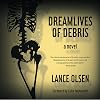
Five Thoughts:
1. This book will play with you and try your patience and that is what it's trying to do and sometimes you will like it and sometimes you will not but the journey is worth it even if you might not understand where you are at the end.
2. There are no page numbers.
3. This book could be read in a day by an average reader yet it took me two months.
4. I kinda want to read it again.
5. After you finish it you might find yourself. Writing like this.
1. This book will play with you and try your patience and that is what it's trying to do and sometimes you will like it and sometimes you will not but the journey is worth it even if you might not understand where you are at the end.
2. There are no page numbers.
3. This book could be read in a day by an average reader yet it took me two months.
4. I kinda want to read it again.
5. After you finish it you might find yourself. Writing like this.
Lists
Awards

You May Also Like


Associated Authors
Statistics
- Works
- 31
- Also by
- 15
- Members
- 456
- Popularity
- #53,830
- Rating
- 3.6
- Reviews
- 13
- ISBNs
- 49
- Languages
- 1
- Favorited
- 1