
Bennett Cerf (1898–1971)
Author of Bennett Cerf's Book of Riddles
About the Author
Bennett Cerf was born in 1898, in Manhattan. He was educated at Columbia University. In 1925 he acquired the Modern Library with Donald Klopfer, providing the foundation for their next publishing venture, Random House. A major figure of American publishing for more than four decades, Cerf died in show more 1971. show less
Image credit: Courtesy of the NYPL Digital Gallery (image use requires permission from the New York Public Library)
Series
Works by Bennett Cerf
Twelve Famous Plays of the Restoration and Eighteenth Century (1933) — Editor — 160 copies, 1 review
Bennett Cerf's Out on a Limerick: A Collection of over 300 of the World's Best Printable Limericks (1987) 65 copies
Dear Donald, Dear Bennett: The Wartime Correspondence of Bennett Cerf and Donald Klopfer (2002) 26 copies
Famous Plays of Crime and Detection, from Sherlock Holmes to Angel Street (1977) — Editor — 17 copies, 1 review
The Laugh Round-up 4 copies
Book of Animal Riddles 2 copies
The case of Ezra Pound 1 copy
Bennett Cerf's Best Laughs 1 copy
try and stop me Dup)? 1 copy
good for a laugh 1 copy
Riddles 1 copy
Bennet Cerf's Bumper Crop 1 copy
15 Famous European Plays 1 copy
Laugh's on Me. The 1 copy
try and stop me 1 copy
Associated Works
The Arabian Nights: Tales from a Thousand and One Nights [Modern Library] (2001) — Editor, some editions — 1,925 copies, 24 reviews
The Best Short Stories of O. Henry [edited by Cerf and Cartmell] (1977) — Introduction; Editor — 839 copies, 3 reviews
Arabian Nights: The Marvels And Wonders Of The Thousand And One Nights (Signet Classics) (1991) — Editor, some editions — 624 copies, 6 reviews
Tagged
Common Knowledge
- Legal name
- Cerf, Bennett Alfred
- Birthdate
- 1898-05-25
- Date of death
- 1971-08-27
- Gender
- male
- Education
- Columbia University (AB|1919|Litt.B|Journalism|1920)
- Occupations
- publisher
humorist - Organizations
- Famous Writers School
Random House
Boni & Liveright
New York Herald Tribune - Relationships
- Cerf, Christopher (son)
Wagner, Phyllis Cerf (second wife)
Sidney, Sylvia (first wife) - Nationality
- USA
- Birthplace
- Manhattan, New York, USA
- Places of residence
- New York, New York, USA
Mount Kisco, New York, USA - Place of death
- Mount Kisco, New York, USA
- Burial location
- Cremated, Ashes scattered at his Mount Kisco, New York home
- Associated Place (for map)
- New York, USA
Members
Reviews
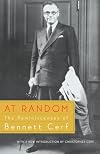
I vaguely remember watching Cerf on "What's My Line" back in the early 60s and loving his wit & humor, so when I found his 'autobiography,' AT RANDOM (1977, re-issued 2003), on sale this past summer, I snapped it up. Calling it a memoir or autobiography is not quite accurate, however, as Cerf died before he ever had the chance to do the book. But, per his son's intro, Bennet Cerf had recorded numerous interviews over his lifetime that were filled with anecdotes, stories and memories from his show more forty-plus years in the publishing business, and so much of what's in here comes from transcriptions of those interviews, as well as from Cerf's copious journals and notes. So what you get is a narrative that makes you feel like he's right there in the room with you, talking and remembering and laughing, etc. And there are plentiful stories of his interactions and friendships with some pretty notable authors, folks like John O'Hara, Moss Hart, Eugene O'Neil, Truman Capote and more - all of which I found most entertaining. He also gives you an insider's close-up look at the publishing business in its heyday, from the 1920s all the way up into the sixties, when even the authors could make a living. Not so easy today in the digital age. The book became a bit less interesting in the final chapters when he talked more about big money and mergers among the major publishing houses. But all the rest of it was fascinating as hell. Bennet Cerf was one of a kind. Recommended highly for book nerds.
- Tim Bazzett, author of the memoir, BOOKLOVER show less
- Tim Bazzett, author of the memoir, BOOKLOVER show less
[Reprinted from the Chicago Center for Literature and Photography (cclapcenter.com). I am the original author of this essay, as well as the owner of CCLaP; it is not being reprinted illegally.]
Recently at a party, someone favorably compared me to Random House co-founder Bennett Cerf; and that inspired me to read his autobiography, because not only did I know barely anything about him, but indeed about the entire formation of the modern American publishing industry, other than the vague show more realization like many others that there used to be no publishing companies, then at some point a lot, then at some point a few again, which then all got bought up by multinational corporate conglomerates in the 1970s and '80s. And the big surprise is that this turned out to be one of the most riveting and entertaining books I've read in years, precisely because there turned out to be so much drama and so many anecdotes leading to the rise of American literature in the early 20th century into the mainstream powerhouse it now is, and to the establishment and then consolidation of what's now known as the "Big Six" in the publishing world, around for so long and so powerful for so long that we tend to now think of them as unmoving monoliths. But when Random House first started almost a hundred years ago, it was just Cerf and his buddy around, two stockbrokers with naughty sides who enjoyed hanging out with bohemians, and thought it'd be a lot more fun to publish them for a living than work at a bank; and that's essentially how this raconteur's memoirs read, as half business and half drunken party all the time back then, with not only all the eventual giants of the publishing industry turning out to have all been friends, but with all of them essentially flying by the seat of their pants just as the Early Modernist era was starting to take shape, what seems now like a deliberate and crafty plan to change the entire arts community as they knew it, but in reality more like all these people just throwing crap at a wall every day and seeing what stuck.
And man, Cerf has just a ton of anecdotes to share here, both praising and pissy in nature, with dozens of pages in this fast-turning and endlessly titillating book devoted to embarrassingly personal tales regarding Theodore Dreiser, Dorothy Parker, James Michener, William Faulkner, Ayn Rand, and the scores of other writers and drinking pals who he almost single-handedly turned into the literary icons we know today. Along the way, then, he also offers up lots of advice for others who want to become editors and publishers, stuff that surprisingly mirrors a lot of the best lessons of the high-tech startup industry: avoid outside money (either loans or investments) as long as you possibly can, treat your talent like the rock stars they are, be funny when your competitors are serious and serious when they're funny, and pounce on those competitors' employees in the cases where they become disgruntled with their working conditions and quit. Bawdy, confessional, laugh-out-loud funny, sometimes jaw-droppingly unbelievable in the sheer audacity of these arts-industry mavericks, this is easily one of the best "insider" books you'll ever read about the publishing industry, and it comes strongly recommended to those like me who are interested in learning more. show less
Recently at a party, someone favorably compared me to Random House co-founder Bennett Cerf; and that inspired me to read his autobiography, because not only did I know barely anything about him, but indeed about the entire formation of the modern American publishing industry, other than the vague show more realization like many others that there used to be no publishing companies, then at some point a lot, then at some point a few again, which then all got bought up by multinational corporate conglomerates in the 1970s and '80s. And the big surprise is that this turned out to be one of the most riveting and entertaining books I've read in years, precisely because there turned out to be so much drama and so many anecdotes leading to the rise of American literature in the early 20th century into the mainstream powerhouse it now is, and to the establishment and then consolidation of what's now known as the "Big Six" in the publishing world, around for so long and so powerful for so long that we tend to now think of them as unmoving monoliths. But when Random House first started almost a hundred years ago, it was just Cerf and his buddy around, two stockbrokers with naughty sides who enjoyed hanging out with bohemians, and thought it'd be a lot more fun to publish them for a living than work at a bank; and that's essentially how this raconteur's memoirs read, as half business and half drunken party all the time back then, with not only all the eventual giants of the publishing industry turning out to have all been friends, but with all of them essentially flying by the seat of their pants just as the Early Modernist era was starting to take shape, what seems now like a deliberate and crafty plan to change the entire arts community as they knew it, but in reality more like all these people just throwing crap at a wall every day and seeing what stuck.
And man, Cerf has just a ton of anecdotes to share here, both praising and pissy in nature, with dozens of pages in this fast-turning and endlessly titillating book devoted to embarrassingly personal tales regarding Theodore Dreiser, Dorothy Parker, James Michener, William Faulkner, Ayn Rand, and the scores of other writers and drinking pals who he almost single-handedly turned into the literary icons we know today. Along the way, then, he also offers up lots of advice for others who want to become editors and publishers, stuff that surprisingly mirrors a lot of the best lessons of the high-tech startup industry: avoid outside money (either loans or investments) as long as you possibly can, treat your talent like the rock stars they are, be funny when your competitors are serious and serious when they're funny, and pounce on those competitors' employees in the cases where they become disgruntled with their working conditions and quit. Bawdy, confessional, laugh-out-loud funny, sometimes jaw-droppingly unbelievable in the sheer audacity of these arts-industry mavericks, this is easily one of the best "insider" books you'll ever read about the publishing industry, and it comes strongly recommended to those like me who are interested in learning more. show less
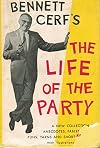
I found this one in a thrift store, pretty much like all the other joke books I have. It was an easy and light read but as with most old joke books, there are some collar tuggers, casual misogyny, and uncomfortable racial stereotyping. Fortunately, it is not a large portion of the book but it's there as it was published in the 1950s. The only really egregious bit of racism is in a single illustration of an African tribesman. It also does start the short section on Lady Drivers with a short show more statistical anecdote about how male drivers are more prone to accidents than their housewife counterparts before going into the typical lady driver jokes (I wonder if that's a joke in and of itself but anyway...).
I did enjoy some of the routines inside finding a few genuinely funny especially the too few retellings of old vaudeville schticks. However, the typical joke in this book is dry, somewhat tongue-in-cheek, and often safe. Sexual innuendo does show up here but in the expected 1950s way. As for an example of the average bit found in the book, there's this:
There are numerous references in here I definitely missed thereby many jokes I simply didn't get as I lacked the necessary frame of reference. Although I was able to make the majority out, I just didn't find many funny. A few others I did find funny only because they are the typical Dad-Joke through and through. So far, my favorite (non-dad-joke) is as follows:
I did not like the pun section though. I should have taken what the title page illustration said to heart: "WARNING! Does punning send you into rages? Is wordplay less than funful? You'd better skip the next few pages - you'll find this chapter punful!" I didn't find the limerick section that much fun either even though I do like limericks. I guess with the number of routines in here there are bound to be more hits than misses but I think time also has blunted some of the humor, in particular the referential bits.
There are also some morbid yarns in here usually concerning animals getting dead but there's also a very gruesome anecdote about a Chinese immigrant named Loo Ching. He was a laundryman who violated a fundamental law of the Tong and thus was condemned to death. However, since American law prohibited any violence in carrying his sentence out they simply declared him dead. The entirety of Chinatown treated him as such and as he could not speak any other language besides Chinese and American ways were alien to him, he eventually starved and then froze to death in front of a teashop. I especially found the inclusion of this one strange, don't get me wrong, I'm as morbid as the next fellow, well... maybe a little more than usual. I liked it but it does stick out.
Overall, if any bit of my commentary seems interesting and you like joke books, then I'd recommend it otherwise, not at all. Will I continue to buy old joke books like this one from thrift stores and used book places? Yes. Yes, I will. show less
I did enjoy some of the routines inside finding a few genuinely funny especially the too few retellings of old vaudeville schticks. However, the typical joke in this book is dry, somewhat tongue-in-cheek, and often safe. Sexual innuendo does show up here but in the expected 1950s way. As for an example of the average bit found in the book, there's this:
Wall Street was buzzing the other day with the story of a slaphappy hostess at a cocktail party who collared a bewildered author to tell him, " I read your book as a magazine serial, in book form, and as a condensation, and now I've seen it in the movies and on television. Frankly, Mr. Ingold, just what the hell are you trying to say?"
There are numerous references in here I definitely missed thereby many jokes I simply didn't get as I lacked the necessary frame of reference. Although I was able to make the majority out, I just didn't find many funny. A few others I did find funny only because they are the typical Dad-Joke through and through. So far, my favorite (non-dad-joke) is as follows:
McGregor lay breathing his last. He roused himself to whisper to the assemblage round his bedside, "Tannish owes me fifty pounds." "It's a great mind the man has," marveled his wife. "Clear as a bell to the very end." McGregor spoke again: "I believe I owe Sandy Mollinson a hundred pounds." "Ach, the poor mon," sobbed Mrs. McGregor. "Take no notice of his delirious meanderings!"
I did not like the pun section though. I should have taken what the title page illustration said to heart: "WARNING! Does punning send you into rages? Is wordplay less than funful? You'd better skip the next few pages - you'll find this chapter punful!" I didn't find the limerick section that much fun either even though I do like limericks. I guess with the number of routines in here there are bound to be more hits than misses but I think time also has blunted some of the humor, in particular the referential bits.
There are also some morbid yarns in here usually concerning animals getting dead but there's also a very gruesome anecdote about a Chinese immigrant named Loo Ching. He was a laundryman who violated a fundamental law of the Tong and thus was condemned to death. However, since American law prohibited any violence in carrying his sentence out they simply declared him dead. The entirety of Chinatown treated him as such and as he could not speak any other language besides Chinese and American ways were alien to him, he eventually starved and then froze to death in front of a teashop. I especially found the inclusion of this one strange, don't get me wrong, I'm as morbid as the next fellow, well... maybe a little more than usual. I liked it but it does stick out.
Overall, if any bit of my commentary seems interesting and you like joke books, then I'd recommend it otherwise, not at all. Will I continue to buy old joke books like this one from thrift stores and used book places? Yes. Yes, I will. show less

Strangely disappointing collection. It is difficult to discern the principle of selection. If "famous" is truly the key, that at least explains the inclusion of some old chestnuts that are really not very good. But then there are quite a few that just aren't well known. There is a great skew toward very dark stories. It is tempting to see the collection as a good representation of mid-twentieth century malaise and worse. There's also a skew toward the clever, and clever doesn't work well on show more the second and subsequent readings. show less
Lists
Awards

You May Also Like


Associated Authors
Statistics
- Works
- 100
- Also by
- 8
- Members
- 5,117
- Popularity
- #4,880
- Rating
- 4.0
- Reviews
- 51
- ISBNs
- 86
- Languages
- 3
- Favorited
- 6

