
Virginia Spencer Carr (1929–2012)
Author of The Lonely Hunter: A Biography of Carson McCullers
About the Author
Virginia Spencer Carr was born in West Palm Beach, Florida on July 21, 1929. She received a bachelor's degree from Florida State University, a master's degree in English from the University of North Carolina, and a doctorate from Florida State University. She is best known for her book The Lonely show more Hunter, which was published in 1975 and was the first full-length biography of Carson McCullers. Her other works include Dos Passos: A Life, Paul Bowles: A Life, and Understanding Carson McCullers. She was also the editor of Flowering Judas: Katherine Anne Porter. She died of liver disease on April 10, 2012 at the age of 82. (Bowker Author Biography) show less
Works by Virginia Spencer Carr
"Flowering Judas": Katherine Anne Porter (Women Writers: Texts and Contexts) (1993) 20 copies, 2 reviews
Associated Works
Tagged
Common Knowledge
- Birthdate
- 1929-07-21
- Date of death
- 2012-04-10
- Gender
- female
- Occupations
- biographer
- Nationality
- USA
- Birthplace
- West Palm Beach, Florida, USA
- Places of residence
- West Palm Beach, Florida, USA
- Place of death
- Lynn, Massachusetts, USA
- Associated Place (for map)
- Florida, USA
Members
Reviews
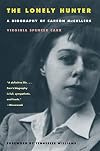
It takes an extraordinary person to write such remarkable literature, and Carson McCullers was extraordinary to say the least. She has a complicated personality that ranged from vivacious and sweet to cold and sullen. She was an indulged child and an over-protected adult who lived as much in her own fantasies as she did in reality. She had an unusual number of friends who went to extreme lengths to prove their friendship, among them such notables as Tennessee Williams. She fed off of people show more and belonging, but I wonder if she ever felt a true part of anyone outside of herself.
She could sometimes seem very fragile, but her determination was limitless. Plagued by bad health and bad habits, she navigated her life like it was a story with an ever-changing plot, but belonging to someone else. After having known her husband Reeves for almost her entire life and having divorced and remarried him, and despite his attentive care during her illnesses, she dismissed his death as if it were just an inconvenience to her. That relationship seemed to me to speak volumes about her true character.
I do not think I would have liked her at all. She was far too needy and egotistical. Had she not been a brilliant writer, I doubt she would have garnered the love of so many. She was excused so much by everyone because of her genius and she seemed to take for granted that everyone else's needs would, by right, come in line behind her own. I would have loved to have had one ounce of her talent, however, and we could all do with some of her perseverance.
Carr managed to approach a very difficult subject with a great deal of care and honesty. She did not paint McCullers as anything other than a complex human being, neither good nor evil. I particularly enjoyed the section that dealt with the production of The Member of the Wedding for Broadway. So many of the people who made up McCullers friends and colleagues were well-known in their time, which made the reading all the more interesting. By the end of this thorough biography, you cannot help feeling that you know much of what made McCullers tick and have a deeper understanding of how her own life influenced her subjects and her work. show less
She could sometimes seem very fragile, but her determination was limitless. Plagued by bad health and bad habits, she navigated her life like it was a story with an ever-changing plot, but belonging to someone else. After having known her husband Reeves for almost her entire life and having divorced and remarried him, and despite his attentive care during her illnesses, she dismissed his death as if it were just an inconvenience to her. That relationship seemed to me to speak volumes about her true character.
I do not think I would have liked her at all. She was far too needy and egotistical. Had she not been a brilliant writer, I doubt she would have garnered the love of so many. She was excused so much by everyone because of her genius and she seemed to take for granted that everyone else's needs would, by right, come in line behind her own. I would have loved to have had one ounce of her talent, however, and we could all do with some of her perseverance.
Carr managed to approach a very difficult subject with a great deal of care and honesty. She did not paint McCullers as anything other than a complex human being, neither good nor evil. I particularly enjoyed the section that dealt with the production of The Member of the Wedding for Broadway. So many of the people who made up McCullers friends and colleagues were well-known in their time, which made the reading all the more interesting. By the end of this thorough biography, you cannot help feeling that you know much of what made McCullers tick and have a deeper understanding of how her own life influenced her subjects and her work. show less
"Flowering Judas": Katherine Anne Porter (Women Writers: Texts and Contexts) by Virginia Spencer Carr
A sprinkling of sparkling snippets in an otherwise bit obscure rendition. So supposedly KAP sees this "couple" through a window while she's self-exiling in Mexico, and years later determines to use these window views of her time abroad, coupled with the pair, not knowing whether she knew more about them specifically and transpose onto paper a fitting backdrop for all this. There's some sonic passages here, some cobbling of concepts, in a fitful delivery. It's almost as though she's show more purposefully writing at the agonizing inducing level one must have felt from the discordant serenades to an afficionado and the multiple other grating moments consuming the wilting main character. If so, then we must give her due credit for so pervasively offending our sensibilities. show less
"Flowering Judas": Katherine Anne Porter (Women Writers: Texts and Contexts) by Virginia Spencer Carr
The 31st piece I’ve read with The Short Story Club is the first I’ve actively disliked, which is pretty impressive.
Backdrop
Laura is a young American Catholic who’s gone to Mexico to support Braggioni, a revolutionist [sic] leader, in the 1920s.
She seems lost, detached, naive, and finds occasional solace in beauty:
“Laura, who haunts the markets listening to the ballad singers, and stops every day to hear the blind boy playing his reed-flute in Sixteenth of September Street, listens show more to Braggioni with pitiless courtesy, because she dares not smile at his miserable performance.”
She struggles to live by her political principles: beautiful lace, even though it’s machine-made, is her secret vice.
Braggioni is an unpleasant man who uses and seduces people, and cares little about the consequences for them. He is happy to live outside the principles he preaches:
“Over the tops of his glossy yellow shoes Braggioni swells with ominous ripeness.”
Like any autocratic cult leader, he has a hold on his followers, even as the scales begin to fall from their eyes:
“The gluttonous bulk of Braggioni has become a symbol of her many disillusions, for a revolutionist should be lean, animated by heroic faith, a vessel of abstract virtues.”
Laura does his bidding, for the cause. A cause and leader she is increasingly disillusioned with, and even afraid of.
“He has the malice, the cleverness, the wickedness, the sharpness of wit, the hardness of heart, stipulated for loving the world profitably.”
Image: A Judas tree (Cercis siliquastrum). A pink flowering tree, allegedly of the type Judas hanged himself from. It’s native to Southern Europe and Western Asia - not Mexico. (Source)
But… so many buts
That’s the setup. I never felt immersed in it, despite the present tense. I couldn’t picture it. I didn’t really understand the context. I didn't really care.
The distastefulness of the situation, and especially of Braggioni, was not contrasted with the presumably positive vision they were supposedly fighting for.
What prompted Laura to go there? There are autobiographical aspects, so Porter must know.
What were they trying to achieve? You won't find out on these pages. Perhaps that's my fault for having zero prior knowledge of a Communist uprising in Mexico on the 1920s. Regardless, it added to my inability to connect with the story, and robbed it of necessary balance.
We only see Braggioni's many repellent aspects. So how and why does he hold such sway over his followers? I need a sliver of something before I can believe in his power.
The long final paragraph was a total surprise. It was so jarring, I had to read it three times to understand it. Not a plot twist, so much as a switch of genre, full of religious allegory suggested by the title. It didn’t improve my feelings about the story, and the longer I thought about it and reread it, the more I disliked it.
Short story club
I read this as one of the stories in The Art of the Short Story, by Dana Gioia, from which I'm aiming to read one story a week with The Short Story Club, starting 2 May 2022.
You can read this story here.
You can join the group here. show less
Backdrop
Laura is a young American Catholic who’s gone to Mexico to support Braggioni, a revolutionist [sic] leader, in the 1920s.
She seems lost, detached, naive, and finds occasional solace in beauty:
“Laura, who haunts the markets listening to the ballad singers, and stops every day to hear the blind boy playing his reed-flute in Sixteenth of September Street, listens show more to Braggioni with pitiless courtesy, because she dares not smile at his miserable performance.”
She struggles to live by her political principles: beautiful lace, even though it’s machine-made, is her secret vice.
Braggioni is an unpleasant man who uses and seduces people, and cares little about the consequences for them. He is happy to live outside the principles he preaches:
“Over the tops of his glossy yellow shoes Braggioni swells with ominous ripeness.”
Like any autocratic cult leader, he has a hold on his followers, even as the scales begin to fall from their eyes:
“The gluttonous bulk of Braggioni has become a symbol of her many disillusions, for a revolutionist should be lean, animated by heroic faith, a vessel of abstract virtues.”
Laura does his bidding, for the cause. A cause and leader she is increasingly disillusioned with, and even afraid of.
“He has the malice, the cleverness, the wickedness, the sharpness of wit, the hardness of heart, stipulated for loving the world profitably.”
Image: A Judas tree (Cercis siliquastrum). A pink flowering tree, allegedly of the type Judas hanged himself from. It’s native to Southern Europe and Western Asia - not Mexico. (Source)
But… so many buts
That’s the setup. I never felt immersed in it, despite the present tense. I couldn’t picture it. I didn’t really understand the context. I didn't really care.
The distastefulness of the situation, and especially of Braggioni, was not contrasted with the presumably positive vision they were supposedly fighting for.
What prompted Laura to go there? There are autobiographical aspects, so Porter must know.
What were they trying to achieve? You won't find out on these pages. Perhaps that's my fault for having zero prior knowledge of a Communist uprising in Mexico on the 1920s. Regardless, it added to my inability to connect with the story, and robbed it of necessary balance.
We only see Braggioni's many repellent aspects. So how and why does he hold such sway over his followers? I need a sliver of something before I can believe in his power.
The long final paragraph was a total surprise. It was so jarring, I had to read it three times to understand it. Not a plot twist, so much as a switch of genre, full of religious allegory suggested by the title. It didn’t improve my feelings about the story, and the longer I thought about it and reread it, the more I disliked it.
Short story club
I read this as one of the stories in The Art of the Short Story, by Dana Gioia, from which I'm aiming to read one story a week with The Short Story Club, starting 2 May 2022.
You can read this story here.
You can join the group here. show less
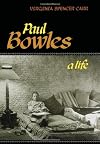
In 1989, Virginia Carr Spencer was researching into a biography of Tennessee Williams. Travelling to Tangier, Morocco, to interview William’s friend Paul Bowles, she quickly scrapped her plans, finding the author and composer much more interesting.
Carr rapidly became friends with the writer, well known for his tight-lipped attitude on his personal affairs, visiting and researching until Bowles’ death in 1999. Five years later, in Paul Bowles: A Life, Carr has released an engrossing yet show more superficial account of a life even richer than his fiction would hint at.
“At birth I was an exceptionally ugly infant,” Bowles begins his story. “I think my ugliness caused the dislike which my father immediately formed for me.”
Born to an authoritative father and a somewhat loving mother, Bowles developed a habit of ingrained secrecy that would last throughout his life. Embracing anything his father abhorred, Bowles ran away to Paris, trying his hand at every form of artistic expression.
Soon, Bowles’ life developed into a litany of the famous. He exchanges letters with Gertrude Stein. He becomes the student and lover of composer Aaron Copland. He writes the musical scores for Broadway productions by Williams, Orson Welles, and many others.
Later, his unusual marriage to Jane Auer, the both of them homosexual, would provide Bowles with a lifelong companion to his constant wanderlust. Wandering Europe and Africa with Jane in tow, each taking lovers along the way, provided Bowles with the impetus to try his hand at writing. His first novel, The Sheltering Sky, is a seminal classic of Western alienation in a foreign land.
If there’s any aspect where Carr’s book truly suffers, it is that Bowles’ life was so full, so rich in detail, that a fully comprehensive picture of his life would be enormous. In trying to encompass a life devoted to exploration of the world and the self, a single-volume biography cannot help but seem shallow in comparison.
Where Carr succeeds is in illuminating portions of a life that up until now have remained shrouded, providing context where none previously existed. Bowles’ own biography, Without Stopping, a more poetic work than Carr’s, was so devoid of personal details, author William S. Burroughs famously described it as “without telling.”
It is also a lively representation of a bygone age of experimentation, where artists left America and traipsed the globe, suspicious of their homeland’s obsession with communism and fear of the unusual. There is a palpable sense of the end of an era when Jane falls ill, leading to Bowles’s realization that “at some point when I was not paying attention [life] had turned into a different sort of experience, to whose grimness I had grown so accustomed that I now took it for granted.”
Carr does not attempt any literary appreciation of Bowles’ writings, nor should she. Bowles’ many works stand alone as monuments of fiction. While not wholly satisfying, Paul Bowles: A Life proves that “Bowles was not a tourist, but a traveller.” A man of limitless gifts, Bowles was an explorer of the soul who never stopped. show less
Carr rapidly became friends with the writer, well known for his tight-lipped attitude on his personal affairs, visiting and researching until Bowles’ death in 1999. Five years later, in Paul Bowles: A Life, Carr has released an engrossing yet show more superficial account of a life even richer than his fiction would hint at.
“At birth I was an exceptionally ugly infant,” Bowles begins his story. “I think my ugliness caused the dislike which my father immediately formed for me.”
Born to an authoritative father and a somewhat loving mother, Bowles developed a habit of ingrained secrecy that would last throughout his life. Embracing anything his father abhorred, Bowles ran away to Paris, trying his hand at every form of artistic expression.
Soon, Bowles’ life developed into a litany of the famous. He exchanges letters with Gertrude Stein. He becomes the student and lover of composer Aaron Copland. He writes the musical scores for Broadway productions by Williams, Orson Welles, and many others.
Later, his unusual marriage to Jane Auer, the both of them homosexual, would provide Bowles with a lifelong companion to his constant wanderlust. Wandering Europe and Africa with Jane in tow, each taking lovers along the way, provided Bowles with the impetus to try his hand at writing. His first novel, The Sheltering Sky, is a seminal classic of Western alienation in a foreign land.
If there’s any aspect where Carr’s book truly suffers, it is that Bowles’ life was so full, so rich in detail, that a fully comprehensive picture of his life would be enormous. In trying to encompass a life devoted to exploration of the world and the self, a single-volume biography cannot help but seem shallow in comparison.
Where Carr succeeds is in illuminating portions of a life that up until now have remained shrouded, providing context where none previously existed. Bowles’ own biography, Without Stopping, a more poetic work than Carr’s, was so devoid of personal details, author William S. Burroughs famously described it as “without telling.”
It is also a lively representation of a bygone age of experimentation, where artists left America and traipsed the globe, suspicious of their homeland’s obsession with communism and fear of the unusual. There is a palpable sense of the end of an era when Jane falls ill, leading to Bowles’s realization that “at some point when I was not paying attention [life] had turned into a different sort of experience, to whose grimness I had grown so accustomed that I now took it for granted.”
Carr does not attempt any literary appreciation of Bowles’ writings, nor should she. Bowles’ many works stand alone as monuments of fiction. While not wholly satisfying, Paul Bowles: A Life proves that “Bowles was not a tourist, but a traveller.” A man of limitless gifts, Bowles was an explorer of the soul who never stopped. show less
Awards

You May Also Like


Statistics
- Works
- 5
- Also by
- 1
- Members
- 324
- Popularity
- #73,084
- Rating
- 4.0
- Reviews
- 8
- ISBNs
- 14