
Penny Colman
Author of Girls: A History of Growing Up Female in America
About the Author
Penny Colman is a widely published author of books, essays, stories, and articles. She is an educator, a lecturer, and a consultant
Works by Penny Colman
Tagged
Common Knowledge
- Legal name
- Morgan, Penelope Granger
- Birthdate
- 1944-09-02
- Gender
- female
- Nationality
- USA
- Birthplace
- Denver, Colorado, USA
- Associated Place (for map)
- Colorado, USA
Members
Reviews
I'm sick in bed and NaNo is over for the year, so I can finally catch up on some book reviewing.
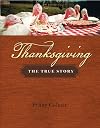
"Thanksgiving: The True Story" is exactly what it claims to be. Amazingly for a book on the subject of America's most controversial holiday, it keeps an even tone *and* a firm grip on reality.
It begins with what seems like a simple question: what was the first Thanksgiving? Colman explores 12 competing claims. In the course of doing so, she helps us sort out fact from fantasy. She delves into what show more she calls "the 'pilgrim and Indian' story." She discusses, with obvious admiration but without hero worship, the woman who spent decades trying to get Thanksgiving declared a national holiday. She writes movingly of what Thanksgiving has meant and continues to mean to recent immigrants to America.
My son and I both read this book for a history unit this November. I want to say "I strongly recommend this," but that doesn't go far enough. This book should be required reading for all ages. show less
"Thanksgiving: The True Story" is exactly what it claims to be. Amazingly for a book on the subject of America's most controversial holiday, it keeps an even tone *and* a firm grip on reality.
It begins with what seems like a simple question: what was the first Thanksgiving? Colman explores 12 competing claims. In the course of doing so, she helps us sort out fact from fantasy. She delves into what show more she calls "the 'pilgrim and Indian' story." She discusses, with obvious admiration but without hero worship, the woman who spent decades trying to get Thanksgiving declared a national holiday. She writes movingly of what Thanksgiving has meant and continues to mean to recent immigrants to America.
My son and I both read this book for a history unit this November. I want to say "I strongly recommend this," but that doesn't go far enough. This book should be required reading for all ages. show less
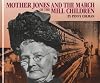
I might be slightly biased since I am coming off another book that tells the same story (in my opinion) rather poorly, but I feel Penny Coleman's version of the tale of Mary Harris Jones is an effective, historical, and engaging perspective on an important story in American labor rights history. Unlike "On the Way to Oyster Bay," this story is a specialized, narrative-driven, bibliographical story book for kids that tells the entire story of Mary Harris Jones from her humble beginnings in show more Ireland to her tragic past in Memphis and her eventual engagement with the labor rights movement.
Probably the most effective difference between this and "On the Way to Oyster Bay" is the shift in perspective and the resulting shift in tone. This book is told from the third person perspective with a narrative focus on Mary Harris Jones and her life leading up to the famous march. This results in a much more sympathetic, emotional, and full picture of the character where you see why she became who she did and why she would feel especially compelled to help and defend children. The other book's first person perspective from the point of view of one of the children ultimately ends up with an incomplete picture and a rather patronizing tone to the writing.
Structurally, I think the context of the labor conditions in the period and regarding Mother Jones's life up to this point is essential for understanding the motivations that led to this march. This is accented by wonderful choices of art, pictures, propaganda, and satirical art that that figuratively paint the mood and mindsets of the time. All of this is very essential for the book's informative tone to not come off as patronizing or biased.
I understand that you must always consider your audience when writing a book, and both this book and "On the Way to Oyster Bay" are aimed at very young children. The big difference between these two books is that this one chooses to show the human struggle and the cruelty of the working conditions that led to children marching with Mother Jones. The other book just treats the march as a quaint little holiday trek. Even for a story intended for children, I find that a little insulting. This book might be getting a little bit of bump from favorable comparison, but I still think Penny Coleman has made a great history book for children. The author's notes are informative, the index is useful, and she lists her sources and places people can go to find out more information. All of this makes for a much more compelling reading experience in my book. show less
Probably the most effective difference between this and "On the Way to Oyster Bay" is the shift in perspective and the resulting shift in tone. This book is told from the third person perspective with a narrative focus on Mary Harris Jones and her life leading up to the famous march. This results in a much more sympathetic, emotional, and full picture of the character where you see why she became who she did and why she would feel especially compelled to help and defend children. The other book's first person perspective from the point of view of one of the children ultimately ends up with an incomplete picture and a rather patronizing tone to the writing.
Structurally, I think the context of the labor conditions in the period and regarding Mother Jones's life up to this point is essential for understanding the motivations that led to this march. This is accented by wonderful choices of art, pictures, propaganda, and satirical art that that figuratively paint the mood and mindsets of the time. All of this is very essential for the book's informative tone to not come off as patronizing or biased.
I understand that you must always consider your audience when writing a book, and both this book and "On the Way to Oyster Bay" are aimed at very young children. The big difference between these two books is that this one chooses to show the human struggle and the cruelty of the working conditions that led to children marching with Mother Jones. The other book just treats the march as a quaint little holiday trek. Even for a story intended for children, I find that a little insulting. This book might be getting a little bit of bump from favorable comparison, but I still think Penny Coleman has made a great history book for children. The author's notes are informative, the index is useful, and she lists her sources and places people can go to find out more information. All of this makes for a much more compelling reading experience in my book. show less
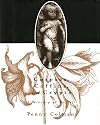
Published in 1997, Corpses, Coffins, and Crypts: A History of Burial, written by Penny Colman, offers a conversational approach to a topic that is often difficult to talk about. Her purpose in this book is just that - to talk about death and how it is handled in a variety of settings, as well as to explore personal experiences with death, both hers and those of others. The writing is informal; academic language is not distinct in this book, and the text is accessible to a variety of readers. show more The book is organized in the following sections: defining death, understanding death, studying various ways of handling corpses and/or burying people, and making connections between death and art. Colman is brave in that she tackles a topic in which no one person could possible be an expert but with which everyone has experience. I see that as an advantage in her writing because this book could appeal to a wide range of audiences. I chose to read the book for two reasons: one, my grandfather was a mortician and funeral home director, and two, because I recently lost a close friend of mine, but there are hundreds of other reasons to pick up this text, none of which are exclusive.
The only major weakness I saw in this book is that the narrative lacked voice. The writing was nothing spectacular; it wasn’t bad but it wasn’t memorable. Colman communicated her ideas well but does not necessarily stand out as a writer. Overall, though, if one finds death interesting, one would find something about this book with which he or she can connect. show less
The only major weakness I saw in this book is that the narrative lacked voice. The writing was nothing spectacular; it wasn’t bad but it wasn’t memorable. Colman communicated her ideas well but does not necessarily stand out as a writer. Overall, though, if one finds death interesting, one would find something about this book with which he or she can connect. show less
Colman's take on death is poignant and at moments almost clinical in its explanation of the various processes and practices that surround life's ultimate end. Anecdotes breathe life into what might otherwise be a dry subject, leading the reader towards personal reflection and connections with their own experiences. Colman tries to cover a wide variety of world cultures and customs related to death and burial, creating a perspective of death as human condition. I appreciated Colman's effort show more to be inclusive and comprehensive, but I thought there was a disappointing lack of references to New Orleans, especially as she addresses the logistics of different burial customs, the idea of cemeteries as social gathering places, and famous graves as tourist attractions. I immediately thought of cemetery tours, Marie Laveau, and New Orleans' wealth of cemetery history and scenic tombs, but Colman seems to only pick up on the idea of a second line, which she even fails to mention by name. On a positive note, the pictures are really cool, but obviously came from the author's personal collection rather than a professional photographer. Corpses, Coffins, and Crypts might have limited use in the classroom, but it would serve as a decent source to any student interested in researching death and burial practices, perhaps as part of a larger project or research paper. show less
Awards


You May Also Like


Statistics
- Works
- 23
- Members
- 1,192
- Popularity
- #21,563
- Rating
- 3.9
- Reviews
- 27
- ISBNs
- 51
- Languages
- 1
