
John McNally
Author of Who Can Save Us Now? Brand-New Superheroes and Their Amazing (Short) Stories
About the Author
John McNally is the author or editor of seventeen previous books, including The Book of Ralph: A Novel and The Boy Who Really, Really Wanted to Have Sex: The Memoir of a Fat Kid. A graduate of the Iowa Writers' Workshop. McNally is Writer-in-Residence and the Dr. Doris Meriwether/BORSF Professor in show more English at the University of Louisiana at Lafayette. show less
Image credit: Photo credit: John McNally
Series
Works by John McNally
Who Can Save Us Now? Brand-New Superheroes and Their Amazing (Short) Stories (2008) — Editor; Contributor — 160 copies, 7 reviews
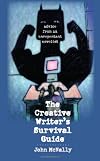
The Creative Writer's Survival Guide: Advice from an Unrepentant Novelist (2010) 49 copies, 11 reviews
When I Was a Loser: True Stories of (Barely) Surviving High School (2007) — Editor — 38 copies, 2 reviews
High Infidelity: 24 Great Short Stories About Adultery by Some of Our Best Contemporary Authors (1997) — Editor — 33 copies
Dragon in Paradise 1 copy
Associated Works
Telephone 13 — Contributor — 1 copy
Tagged
Common Knowledge
- Canonical name
- McNally, John
- Gender
- male
- Nationality
- USA
- Associated Place (for map)
- USA
Members
Reviews
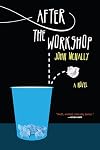
I am the custom-made audience for this book. MFA from Columbia. Stuck on a novel. Worked with insufferable publicists. Familiar with the drudgery and lack of respect media escorts get. Primed to laugh at self-conscious, pretentious literary types, writers with undeserved success, the obsessive quest for literary agents. Everything about this book was utterly familiar, and yet I found no joy in reading it. Perhaps I was too familiar. But there was absolutely zero nuance in any of the show more characters. All of them were stock. The narrator was intensely unlikable. I literally found nothing redeeming in him, even up to the end. The only well-drawn character was the reclusive older writer. I'm almost gutted by my level of disappointment with this book. It's crucial that even the antagonists have one redeeming characteristic for them to be fully human. And the amount of coincidental encounters make this book seem like the setting was a 8x8 foot room, not a medium-sized city, like Iowa City. Also, the thread with Alice, his former fiancee, is not resolved. The way the narrator encounters her for the last time in the book is outright unbelievable. I simply could not suspend disbelief for a book in which, in my case anyway, suspension of disbelief should not even have been necessary. Maybe all the four-star reviews here have to do with the delight we writers take in trying to parse out to which obnoxious writer-of-the-moment this or that pseudonym refers. I also could not believe that his treatment of poets actually evoked compassion in me, rather than laughter. Having gone to school at Columbia University's School of the Arts I am, again, the perfect audience to laugh heartily at the earnestness of poets. But his characterization rang false because it was so exaggerated at every turn. I mean, including a scene in which Naropa students go head to head with Iowa MFA'ers is like shooting fish in a barrel. Too easy, too predictable (down to the poet with the "Janis Joplin hair" and the poet named "Dusty Rhodes" and the unexpected poet located among Iowa City's laboring classes). The only thing I connected with in this book was his treatment of what it feels like to fail.
Damn. I wanted this to be so much better. I just didn't like the writing and I didn't think the farce-like nature of the book held up, even as meta-fiction. I feel that, as a writer, you have to tread that line carefully, where it's just absurd enough to keep the reader engaged, but not so unbelievable that the writer loses faith and begins to feel as if the writer is insulting her intelligence. That's where I was for almost the entire book. Boo. show less
Damn. I wanted this to be so much better. I just didn't like the writing and I didn't think the farce-like nature of the book held up, even as meta-fiction. I feel that, as a writer, you have to tread that line carefully, where it's just absurd enough to keep the reader engaged, but not so unbelievable that the writer loses faith and begins to feel as if the writer is insulting her intelligence. That's where I was for almost the entire book. Boo. show less

John McNally has been a writer for over thirty years, but it hasn't been easy, and this collection of essays is proof. He likens the relationship between a writer and his stories to -
"... that of an analyst to her patient. Our job is to meet regularly with our patient (the story) with the hope that each session will bring about a series of illuminations that lead, ultimately, to an epiphany. The process of revision is that meeting ..."
And, like therapy, sometimes these revisions only take a show more month or two, but sometimes they can go on for years, and sometimes, if a story "has no subtext," it will never take shape, will be " like chasing a mirage."
And McNally admits to having had more than his share of such chases, after stories and novels he worked on for years, and, finally, just had to "let them go."
THE PROMISE OF FAILURE is much more than just an instructional handbook for aspiring writers - although it certainly IS a fine specimen of that. It is also a brutally honest memoir, revealing the growing-up difficulties of always being the fat kid, the child of blue collar parents, moving around between trailer parks and crappy apartments. He also tells of his lifelong struggles with depression, a father who couldn't understand him, two failed marriages, dieting, drinking, drugs, and crushing debt, mostly incurred from student loans for advanced degrees, and from bad decisions.
But McNally has had his successes too, having written or edited more than a dozen books. (One, THE BOY WHO REALLY, REALLY WANTED TO HAVE SEX: THE MEMOIR OF A FAT KID, I really, REALLY want to read.) Reflecting on a couple early successes, he admits that "Being 'on top' ... wasn't all it was cracked up to be." And he lets us in on publisher advances that don't go far, poorly planned book tours, sometimes finding only a few in attendance, getting sick in hotel rooms in strange cities, and other stresses and expenses of being on the road. He writes too of petty feuds , jealousy and hurt feelings within the ranks of fellow writers, all struggling to make a living, many - like McNally himself - teaching.
One of the pleasures of reading these essays is the wry, self-deprecating sense of humor sprinkled throughout. We hear, for example, about "Chunkyobdangle," a play McNally wrote in the fourth grade in which he starred as an overweight superhero. Or a science fiction story attempted with a hero named Nidfo.
On the other hand, the final essay, "194 Days, " about the final weeks, months and days of a dear friend from high school, may reduce you to tears. It is raw, direct and straight from the heart.
McNally says he's spent most of his life in fiction, dabbling some in TV and film writing, and that essays are something new for him, that writing these pieces was hard work. Well, he made them look easy. I was quickly caught up in every one of them. And I suspect writers of every stripe will feel the same way. Very highly recommended.
- Tim Bazzett, author of the memoir, BOOKLOVER show less
"... that of an analyst to her patient. Our job is to meet regularly with our patient (the story) with the hope that each session will bring about a series of illuminations that lead, ultimately, to an epiphany. The process of revision is that meeting ..."
And, like therapy, sometimes these revisions only take a show more month or two, but sometimes they can go on for years, and sometimes, if a story "has no subtext," it will never take shape, will be " like chasing a mirage."
And McNally admits to having had more than his share of such chases, after stories and novels he worked on for years, and, finally, just had to "let them go."
THE PROMISE OF FAILURE is much more than just an instructional handbook for aspiring writers - although it certainly IS a fine specimen of that. It is also a brutally honest memoir, revealing the growing-up difficulties of always being the fat kid, the child of blue collar parents, moving around between trailer parks and crappy apartments. He also tells of his lifelong struggles with depression, a father who couldn't understand him, two failed marriages, dieting, drinking, drugs, and crushing debt, mostly incurred from student loans for advanced degrees, and from bad decisions.
But McNally has had his successes too, having written or edited more than a dozen books. (One, THE BOY WHO REALLY, REALLY WANTED TO HAVE SEX: THE MEMOIR OF A FAT KID, I really, REALLY want to read.) Reflecting on a couple early successes, he admits that "Being 'on top' ... wasn't all it was cracked up to be." And he lets us in on publisher advances that don't go far, poorly planned book tours, sometimes finding only a few in attendance, getting sick in hotel rooms in strange cities, and other stresses and expenses of being on the road. He writes too of petty feuds , jealousy and hurt feelings within the ranks of fellow writers, all struggling to make a living, many - like McNally himself - teaching.
One of the pleasures of reading these essays is the wry, self-deprecating sense of humor sprinkled throughout. We hear, for example, about "Chunkyobdangle," a play McNally wrote in the fourth grade in which he starred as an overweight superhero. Or a science fiction story attempted with a hero named Nidfo.
On the other hand, the final essay, "194 Days, " about the final weeks, months and days of a dear friend from high school, may reduce you to tears. It is raw, direct and straight from the heart.
McNally says he's spent most of his life in fiction, dabbling some in TV and film writing, and that essays are something new for him, that writing these pieces was hard work. Well, he made them look easy. I was quickly caught up in every one of them. And I suspect writers of every stripe will feel the same way. Very highly recommended.
- Tim Bazzett, author of the memoir, BOOKLOVER show less
Review based on ARC.
There is an abundance of information in this small, quick read. It is well written, funny, and even moving at times. Wait, am I talking about a nonfiction "how-to" book directed at creative writers? You bet. Somehow, McNally entertains while giving golden nuggets of ... well, gold. I hesitate to call it advice or information because those words do not seem to quite cover how valuable the information contained within this book is.
I signed up to read the book on Early show more Reviewers because I'm a "someday, maybe" sort of hopeful writer who has several (so many severals...) actual-hopeful writers within my immediate circle. I thought that I would enjoy the read, but that my friends/family would (hopefully) benefit from it. I was spot on.
The book, as implied by the subtitle, will not inspire the weakly-motivated, somewhat ambiguous, would-be writers to take on the enormous and often disheartening world of writing and/or publishing, but it proceeds to give information (gold) upon information (gold) upon information (and more gold) to those writers who legitimately could not imagine a life without writing. I appreciated the honesty... the sometimes very brutal honesty that McNally employs to impart his "guide." And, really, it appears as if it is all there.
For those of you who are tentatively considering writing: read the book. It will not dissuade you, but it will allow you to consider the many different aspects of publishing and, perhaps as it did with me, spark an idea for a slightly-alternative career path. Or it might convince you that writing really is the path for you. Either way, it will inform you. Read it.
For those of you who have no choice but to write: read the book. It provides a logical, practical, manageable path, with advice about how to tackle every step along that path. It is realistic without dashing hopes. It is hopeful without permitting starry-eyed naivety.
For those of you who aren't interested in a career in writing: read the book anyway. It is a fascinating view of the life-of-a-writer and the world of publication. It is eye-opening and, somehow, inspiring, even to those without intention to write.
The only criticism I have is *very* minor. There occasions where I felt that McNally was just a *little* bit snarky about the academic snobs. While I agree that there is no need or even use for that type of academic snobbery (whether it applies to what kind of degree you have, what you have published, with whom, where you are in the writer "hierarchy", etc.), McNally came off as just a little bit bitter despite his successful career. Most of the book is straightforward, optimistic, realistic, positive. But every once in a while, I got just a little hint of a tone of "bounces off of me and sticks onto you" ... but it never lasted long and it's certainly no reason to disregard such a useful tool.
The book is also chock-full of good reading ideas. And I look forward to reading The Book of Ralph...
Overall, excellent. Highly recommend. show less
There is an abundance of information in this small, quick read. It is well written, funny, and even moving at times. Wait, am I talking about a nonfiction "how-to" book directed at creative writers? You bet. Somehow, McNally entertains while giving golden nuggets of ... well, gold. I hesitate to call it advice or information because those words do not seem to quite cover how valuable the information contained within this book is.
I signed up to read the book on Early show more Reviewers because I'm a "someday, maybe" sort of hopeful writer who has several (so many severals...) actual-hopeful writers within my immediate circle. I thought that I would enjoy the read, but that my friends/family would (hopefully) benefit from it. I was spot on.
The book, as implied by the subtitle, will not inspire the weakly-motivated, somewhat ambiguous, would-be writers to take on the enormous and often disheartening world of writing and/or publishing, but it proceeds to give information (gold) upon information (gold) upon information (and more gold) to those writers who legitimately could not imagine a life without writing. I appreciated the honesty... the sometimes very brutal honesty that McNally employs to impart his "guide." And, really, it appears as if it is all there.
For those of you who are tentatively considering writing: read the book. It will not dissuade you, but it will allow you to consider the many different aspects of publishing and, perhaps as it did with me, spark an idea for a slightly-alternative career path. Or it might convince you that writing really is the path for you. Either way, it will inform you. Read it.
For those of you who have no choice but to write: read the book. It provides a logical, practical, manageable path, with advice about how to tackle every step along that path. It is realistic without dashing hopes. It is hopeful without permitting starry-eyed naivety.
For those of you who aren't interested in a career in writing: read the book anyway. It is a fascinating view of the life-of-a-writer and the world of publication. It is eye-opening and, somehow, inspiring, even to those without intention to write.
The only criticism I have is *very* minor. There occasions where I felt that McNally was just a *little* bit snarky about the academic snobs. While I agree that there is no need or even use for that type of academic snobbery (whether it applies to what kind of degree you have, what you have published, with whom, where you are in the writer "hierarchy", etc.), McNally came off as just a little bit bitter despite his successful career. Most of the book is straightforward, optimistic, realistic, positive. But every once in a while, I got just a little hint of a tone of "bounces off of me and sticks onto you" ... but it never lasted long and it's certainly no reason to disregard such a useful tool.
The book is also chock-full of good reading ideas. And I look forward to reading The Book of Ralph...
Overall, excellent. Highly recommend. show less
 This review was written for LibraryThing Early Reviewers.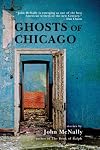
Ghosts of Chicago is the best short story collection that I have ever read. The author is John McNally, a Chicagoan currently in exile at Wake Forest College where he teaches English. Each of the 17 stories show a different side of The Windy City from the viewpoint of the kind of people that you will find here. I found it humorous as I recognized characters that are exactly like people I know here in my hometown.
There are stories about local children's programming that every middle aged show more person watched when they were young. The Goose is one of my favorites. It took me back to one afternoon when Frazier Thomas read one of my jokes on TV and laughed like he thought it was funny. Garfield Goose was a show that every kid I knew watched and one of the show's features was to read a joke submitted by a viewer. I was popular at school for a week after that episode. Yep. Just a week. Whoever said fame is fleeting knew what they were talking about.
Stories about celebrities such as John Belushi, Walter Payton and former Mayors Daley are included as well as one about railroad tycoon George Pullman. Inside this collection you will meet characters who are in love with men on death row, who write inaccurate memoirs and a tattooed female bartender. The final story, "The Contributor's Notes," reads like the notes McNally may have written were it not for this short story.
I cannot write enough positive words about the Ghosts of Chicago. You need to experience it for yourself and you will probably thank me. show less
There are stories about local children's programming that every middle aged show more person watched when they were young. The Goose is one of my favorites. It took me back to one afternoon when Frazier Thomas read one of my jokes on TV and laughed like he thought it was funny. Garfield Goose was a show that every kid I knew watched and one of the show's features was to read a joke submitted by a viewer. I was popular at school for a week after that episode. Yep. Just a week. Whoever said fame is fleeting knew what they were talking about.
Stories about celebrities such as John Belushi, Walter Payton and former Mayors Daley are included as well as one about railroad tycoon George Pullman. Inside this collection you will meet characters who are in love with men on death row, who write inaccurate memoirs and a tattooed female bartender. The final story, "The Contributor's Notes," reads like the notes McNally may have written were it not for this short story.
I cannot write enough positive words about the Ghosts of Chicago. You need to experience it for yourself and you will probably thank me. show less
Lists
Page Turners (1)
Awards

You May Also Like


Associated Authors
Statistics
- Works
- 28
- Also by
- 2
- Members
- 680
- Popularity
- #37,180
- Rating
- 3.8
- Reviews
- 31
- ISBNs
- 54
- Languages
- 4
