
George Washington Cable (1844–1925)
Author of The Grandissimes: A Story of Creole Life
About the Author
Born and raised in New Orleans, in 1844, George Cable left school at age 14 and went to work to support his mother and sisters after his father's death. After serving in the Confederate Army during the Civil War, Cable worked at a variety of jobs before beginning to write. Attracted to certain show more aspects of Creole life, he was anxious to record this life before it entirely disappeared. His sympathies, however, did not extend to what he considered certain moral weaknesses in Creole civilization, particularly in its treatment of African Americans. As time went on, Cable began to speak out ever more openly on racial injustices in Louisiana and in the South generally. This brought a great deal of bitter criticism from fellow southerners and ultimately resulted in his moving to Massachusetts. His most explicit fictional treatment of racial injustice is probably John March: Southerner (1894), which he set in northern Alabama rather than Louisiana to emphasize the regional aspect of the racial problem. He also gave speeches, wrote letters to editors, and published articles on the problems of African-Americans in the South. Cable is especially well known for his stories about Creole life. His most successful literary work is The Grandissimes (1880), which has been compared in power and scope to the fiction of William Faulkner. The novel is somewhat marred by obvious editorializing and some wooden characterization, but it contains powerful scenes and deals with racial injustice, a subject all but taboo in the fiction of the time. Guy A. Cardwell has argued convincingly that Cable significantly altered Mark Twain's racial views when the two men were on a lecture tour together. Cable's treatment of race foreshadowed the work of such later Southern writers as Faulkner and Robert Penn Warren. Cable died in 1925. (Bowker Author Biography) show less
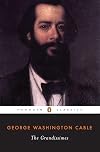
Image credit: 1915 photograph (LoC Prints and Photographs, LC-USZ62-102501)
Works by George Washington Cable
The silent South, together with The freedman's case in equity and The convict lease system (1969) 5 copies
Bylow Hill 2 copies
The Negro Question 1 copy
Bonaventure 1 copy
Gideon's Band 1 copy
Associated Works
Classic American Short Stories [Barnes & Noble Leatherbound Classics] (2001) — Contributor — 175 copies, 1 review
Tagged
Common Knowledge
- Legal name
- Cable, George Washington
- Other names
- Lazarus, Felix
Shot, Drop - Birthdate
- 1844-10-12
- Date of death
- 1925-01-31
- Gender
- male
- Education
- self-educated
- Occupations
- novelist
short story writer
essayist
journalist
historian
soldier (Confederate Army ∙ Civil War) (show all 13)
customhouse clerk
grocery clerk-cashier
state surveyor
secretary to the New Orleans Oil Works Company
columnist
reporter
bookkeeper - Organizations
- Confederate Army
New Orleans Picayune
Home-Culture Club (renamed Northampton People's Institute)
New Orleans Oil Works Company
William C. Black and Company - Awards and honors
- Washington and Lee University (DLitt|1882)
Yale University (AM|1883)
Yale University (DLitt|1901)
Bowdoin College (DLitt|1904) - Relationships
- Twain, Mark (friend)
Brewster, Murr (great granddaughter) - Nationality
- USA
- Birthplace
- New Orleans, Louisiana, USA
- Places of residence
- Northampton, Massachusetts, USA
- Place of death
- St. Petersburg, Florida, USA
- Burial location
- Bridge Street Cemetery, Northampton, Massachusetts, USA
- Associated Place (for map)
- USA
Members
Reviews

Strange True Stories was written in 1888 when history was largely still a branch of literature and the boundaries between fact and fiction were not as clearly defined as today. Cable's stories are true, but one sees the author taking some editorial liberty and blurring the lines. In that sense it is like Truman Capote's In Cold Blood. Cable inserted dialogue and dramatized the stories to pull in the reader and emphasize his message. As a white southerner in the post-reconstruction, Jim Crow, show more "New South" Cable mocked slavery and the hypocrisy of white supremacists, poked fun at the New Orleans elites, and promoted black civil rights through these stories. show less

An amazing and enthralling read. Less florid (and much more 'readable') than most from that era. Recommend it highly to all. Brings history to life on a personal level. Reads like a historical novel but much more compelling as Cable sticks to the facts and cites his sources (though he does include one clearly identified case of local legend and folklore). The primary source 1780s diary and letters which he translated are priceless windows into the past (as is the civil war diary). A riveting show more eye-opener. I put this as one of my top ten amazing reads of the year. [Free E-Book available at Gutenberg.org and/or Archive.org]
"An old book was a time capsule... You only had to turn a page to travel back in time." - Steve Parrish show less
"An old book was a time capsule... You only had to turn a page to travel back in time." - Steve Parrish show less
A fun and well rendered tale of New Orleans in 1803-4, Creoles, Blacks, Quadroons, and Whites amongst the fascinating cast of characters. Sometimes the number of characters and the speech in dialect left me confused but it all fell together by the end.
The Grandissimes by George Washington Cable was published in 1880 after first appearing as a serial novel and tells the tale of two Creole families in early 1800 New Orleans.
I was disappointed that my Kindle edition didn't include the illustrations that accompany the original book. However, I looked them up on Gutenberg.org.
The Grandissimes is a fine piece of literature. There are many well drawn characters and descriptions of life in the exotic setting of New Orleans at the time of the show more Louisiana Purchase. Using the character of Frowenfeld, a northerner of German extraction, as our guide, Cable educates us about Louisiana Creole society and uses Frowenfeld to voice the author's criticisms of slavery.
I found the book to be challenging reading for a number of reasons, all of which I blame on my own shortcomings:
1. The 19th Century writing style is difficult to acclimate to for this modern reader. I took about 9-10 chapters to fully settle into the novel. Even so, I sometimes found myself confused as to what exactly was meant by the author.
2. Cable wrote the dialogue in Creole and Plantation dialect and he did so exceptionally well. However, I found it slowed down my reading quite a bit as I needed to speak the dialogue aloud to myself in order to comprehend what was being said.
3. The style of prose included long descriptions of the landscape and environs interspersed with the narrative also served to limit forward movement of the storyline.
I did learn a lot about the European Creoles, the mixed race Creoles and their interactions with each other and with the slave population.
For anyone who's interested in New Orleans and Creole culture, this book is worth the effort. I'm glad I read The Grandissimes. show less
I was disappointed that my Kindle edition didn't include the illustrations that accompany the original book. However, I looked them up on Gutenberg.org.
The Grandissimes is a fine piece of literature. There are many well drawn characters and descriptions of life in the exotic setting of New Orleans at the time of the show more Louisiana Purchase. Using the character of Frowenfeld, a northerner of German extraction, as our guide, Cable educates us about Louisiana Creole society and uses Frowenfeld to voice the author's criticisms of slavery.
I found the book to be challenging reading for a number of reasons, all of which I blame on my own shortcomings:
1. The 19th Century writing style is difficult to acclimate to for this modern reader. I took about 9-10 chapters to fully settle into the novel. Even so, I sometimes found myself confused as to what exactly was meant by the author.
2. Cable wrote the dialogue in Creole and Plantation dialect and he did so exceptionally well. However, I found it slowed down my reading quite a bit as I needed to speak the dialogue aloud to myself in order to comprehend what was being said.
3. The style of prose included long descriptions of the landscape and environs interspersed with the narrative also served to limit forward movement of the storyline.
I did learn a lot about the European Creoles, the mixed race Creoles and their interactions with each other and with the slave population.
For anyone who's interested in New Orleans and Creole culture, this book is worth the effort. I'm glad I read The Grandissimes. show less
Lists
Awards


You May Also Like


Associated Authors
Statistics
- Works
- 38
- Also by
- 17
- Members
- 855
- Popularity
- #29,931
- Rating
- 3.9
- Reviews
- 10
- ISBNs
- 275
- Languages
- 3
- Favorited
- 3


